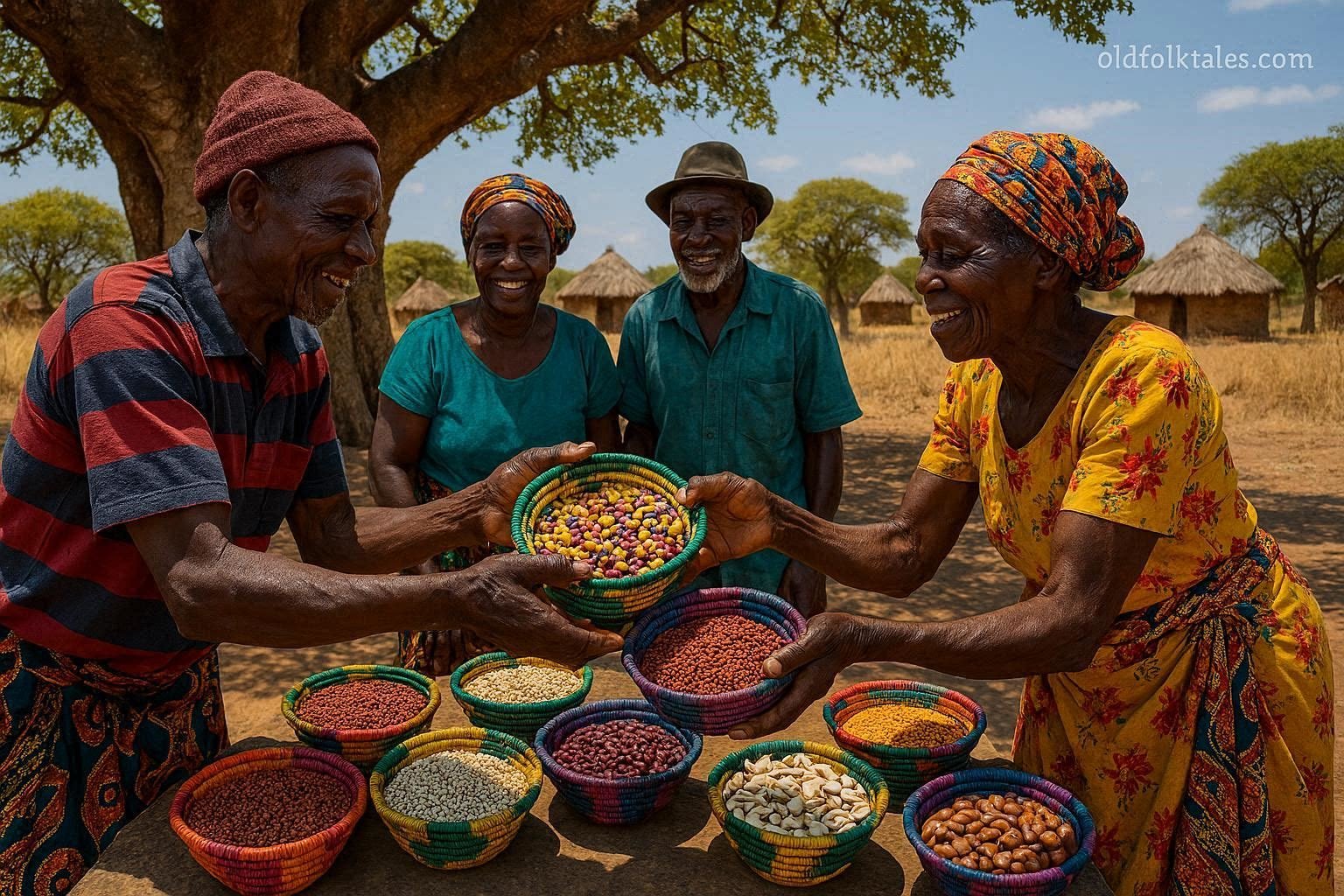
Each year, just before the first rains softened the soil of Central Zambia, Lenje farming communities gathered for an important tradition. Families met to exchange carefully preserved seeds that had been selected from the previous harvest. The gathering was more than an opportunity to prepare for planting. It strengthened friendships, protected valuable crop varieties, and reminded every generation that a single seed carried both food for tomorrow and the wisdom of yesterday. Through patience, cooperation, and generosity, the Lenje people ensured that their land continued to provide for all.
The village of Mukonde was alive with excitement.
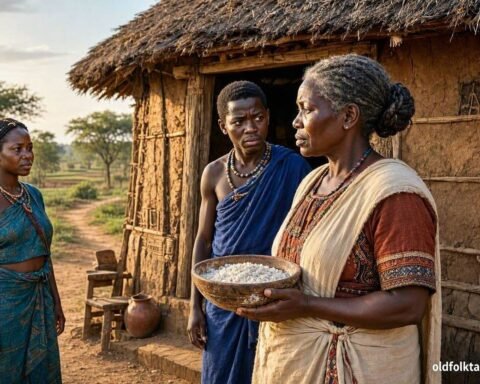
Women swept their courtyards before sunrise while men checked the roofs of their grain stores one final time. Children hurried from house to house asking the same question.
“Has the day arrived?”
Every elder smiled and answered the same way.
“Today we carry tomorrow in our hands.”
For twelve year old Mwewa, this was the happiest day of the farming season.
Unlike previous years, his grandfather had finally decided that he was old enough to attend the annual seed exchange gathering.
For weeks the old farmer had been preparing.
Each evening he spread baskets across the floor of their home.
If you enjoyed this story, explore our full West African folktales collection
Inside each basket rested different seeds collected during the previous harvest.
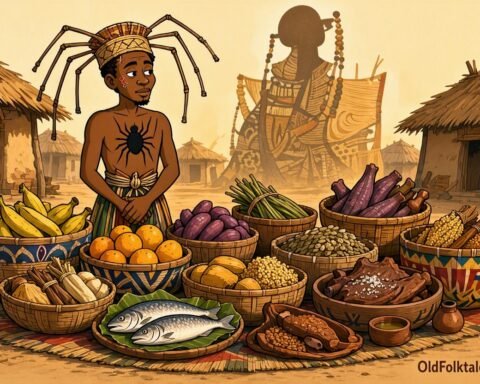
There was white maize.
Red sorghum.
Millet.
Groundnuts.
Pumpkin seeds.
Beans of different colors.
Every basket remained separate.
Every variety had been carefully protected.
Mwewa watched as his grandfather inspected each seed.
Broken seeds were removed.
Discolored seeds were set aside.
Only the healthiest remained.
Unable to contain his curiosity any longer, Mwewa finally asked,
“Grandfather, why do you spend so much time choosing them?”
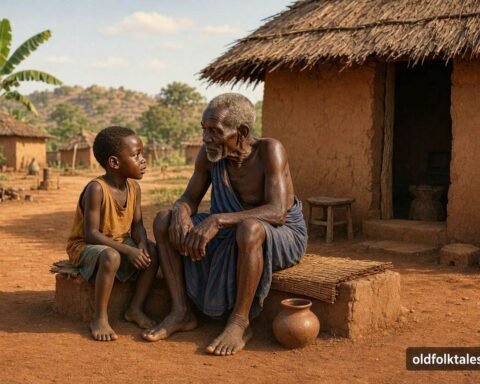
His grandfather gently held up a single maize kernel.
“This little seed carries next year’s harvest.”
“If we begin with the strongest, we give our families the best chance.”
The following morning they began walking toward a wide open field where families from several Lenje villages gathered every year.
As they approached, Mwewa expected to find people bargaining loudly like traders in a busy market.
Instead he found laughter.
Old friends embraced one another.
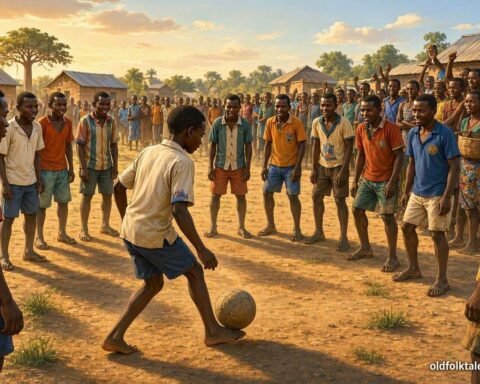
Children played beneath large trees.
Women admired one another’s harvest baskets.
Elders sat together discussing the changing weather and the coming rains.
The atmosphere was peaceful.
Before anyone exchanged a single seed, the oldest village elder stood before everyone.
He raised a woven basket filled with maize.
“Our ancestors taught us that no family farms alone.”
“Rain falls upon every field.”
“The earth feeds every village.”
“So today we share what the earth has first shared with us.”
Everyone nodded quietly.
The exchanges soon began.
A family that had grown particularly healthy groundnuts traded with another known for producing strong millet.
Bean growers exchanged varieties that matured at different times.
Some farmers carried seeds their grandparents had protected for many decades.
Others introduced newly adapted varieties that had survived unusual weather during recent seasons.
Every exchange included a conversation.
People explained how deep they planted certain crops.
They described which soils produced the best harvest.
They shared advice about storing seeds safely during the long dry season.
Knowledge traveled alongside every handful of seeds.
Mwewa noticed that nobody measured every exchange exactly.
Trust mattered more than counting.
His grandfather greeted an elderly woman from a neighboring village.
“I heard your pumpkins survived the heavy rains.”
She smiled warmly.
“They did.”
“But your millet remained strong during the dry weeks.”
Without hesitation they exchanged small baskets.
Neither believed they had lost anything.
Instead both walked away richer.
Mwewa quietly asked,
“How do you know she will be fair?”
His grandfather answered,
“Because fairness grows long before the crops.”
“It grows inside people.”
As they continued walking through the gathering, Mwewa met an elderly farmer carrying unusually dark bean seeds.
The old man placed several into Mwewa’s hand.
“My father protected these.”
“My grandfather protected them before him.”
“Now one day you must do the same.”
Mwewa looked carefully at the tiny seeds.
They suddenly felt more valuable than gold.
Later that afternoon the children gathered beneath a large fig tree.
Several grandmothers began teaching them how to choose seeds for the following season.
One grandmother placed two maize cobs before them.
The first contained large healthy kernels.
The second showed signs of insects.
She asked,
“Which one feeds tomorrow?”
Every child pointed toward the healthier cob.
She nodded.
“A farmer always plants hope.”
Another elder demonstrated proper storage.
Clay pots were cleaned carefully.
Dry grass lined the inside.
Ash was sometimes used according to family tradition to help protect stored seeds from pests.
Everything required patience.
Nothing could be rushed.
Suddenly a worried family arrived late at the gathering.
Heavy winds had damaged the roof of their storage house several weeks earlier.
Rainwater had spoiled nearly every seed they owned.
Without help they would have nothing to plant.
Silence spread across the field.
Then something remarkable happened.
One farmer offered maize.
Another contributed millet.
Someone else shared beans.
Groundnuts followed.
Pumpkin seeds soon filled another basket.
Within minutes the struggling family possessed enough seed to plant an entire season.
Nobody expected payment.
Nobody asked for favors.
The oldest elder simply smiled.
“A harvest shared is never reduced.”
Mwewa watched everything carefully.
He realized the gathering was not truly about seeds.
It was about people.
It was about making sure that no family faced hardship alone.
As evening approached, songs celebrating farming filled the air.
Young people danced.
Children laughed.
Older farmers exchanged stories about seasons long past.
One elder remembered a drought many years earlier when only one traditional sorghum variety had survived.
Because families had continued exchanging seeds, that valuable crop had never disappeared.
“If we had kept everything for ourselves,” he said quietly, “our grandchildren would never have known that harvest.”
Those words remained in Mwewa’s mind long after the celebration ended.
Before returning home, his grandfather handed him one small woven pouch.
“Carry these.”
Mwewa looked inside.
The pouch contained seeds collected from many different families.
“They trusted us with these.”
His grandfather smiled.
“And now we must prove worthy of that trust.”
The journey home felt different.
The seeds seemed light inside the pouch, yet Mwewa understood they carried something much greater than food.
They carried friendship.
They carried history.
They carried hope for seasons still to come.
Mwewa carefully placed the woven pouch inside the family granary after they returned home. His grandfather reminded him that receiving the seeds was only the beginning of their responsibility.
“We have accepted a gift,” he said.
“Now we must care for it well.”
Over the following weeks, the first rains finally arrived. The dry earth softened, and the fields became ready for planting. Families worked side by side from sunrise until evening. Mwewa noticed that the seeds from different villages grew together in the same field, each contributing its own strength. Some crops sprouted quickly after the first showers. Others developed deeper roots that would help them survive if the rains became scarce. His grandfather explained that preserving different seed varieties protected the community against uncertain seasons.
“Nature does not always behave the same way,” he said.
“That is why our ancestors never depended upon only one kind of seed.”
As the months passed, the fields flourished. Green maize swayed gently in the breeze while climbing bean vines wrapped themselves around sturdy stalks. Pumpkin leaves spread across the rich soil, and the millet heads slowly ripened beneath the warm Zambian sun.
When harvest season finally arrived, the village celebrated another successful year.
Before storing the grain, every family followed the custom that had guided the Lenje people for generations. They first selected the healthiest fruits, ears of maize, bean pods, and millet heads for the following season. Nobody waited until the end of the harvest to choose seed. They understood that tomorrow’s crop depended upon today’s careful decisions.
Mwewa proudly helped his grandfather sort the harvest.
As he held each ear of maize, he remembered the lessons beneath the fig tree.
Strong seeds.
Careful storage.
Generous sharing.
Responsible farming.
Each lesson had now become part of his own life.
Several weeks later, an elderly traveler visited the village after hearing about the successful harvest.
He asked the chief why the Lenje people continued exchanging seeds when every family worked hard to produce its own crops.
The chief smiled and picked up a single bean seed.
“If I keep this seed for myself, only my family may benefit.”
“If I share it wisely, many families may prosper.”
“Our ancestors understood that food security grows stronger when knowledge and blessings are shared.”
The traveler nodded with admiration.
Before leaving, he thanked the villagers for preserving a tradition that protected both the people and the land.
Years later, Mwewa became one of the respected farmers who welcomed young children to the annual seed exchange. Whenever someone attended for the first time, he repeated the words his grandfather had spoken many years before.
“Today we carry tomorrow in our hands.”
The children would smile, just as he once had.
One day they too would become caretakers of the seeds, ensuring that the tradition continued across the Lenje plains.
Today, traditional seed preservation remains an important part of indigenous farming knowledge in Zambia. Agricultural heritage studies have shown that exchanging local seed varieties strengthens biodiversity, protects crops against changing weather conditions, and preserves valuable farming knowledge developed over many generations. Among farming communities, these practices continue to demonstrate that cooperation and stewardship are essential to sustainable agriculture and food security.
The story of Seeds of the Lenje Plains reminds us that even the smallest seed can carry the future of a community when it is protected with wisdom, shared with generosity, and planted with hope.
Explore more Southern African folktales here
Moral Lesson
True prosperity grows when people share their knowledge as freely as they share their harvests. By preserving traditional seeds and helping one another, communities protect both their heritage and the future.
Knowledge Check
1. Why did Lenje families gather before the rainy season?
They gathered to exchange carefully preserved traditional seeds and farming knowledge before planting.
2. Why did Mwewa’s grandfather choose only the healthiest seeds?
Healthy seeds produced stronger crops and increased the chances of a successful harvest.
3. What happened when one family lost its seed because of heavy rain?
Other families generously shared their own seeds so the affected family could still plant their fields.
4. Why did the elders encourage families to preserve different seed varieties?
Different varieties survived different weather conditions, helping protect future harvests.
5. What did Mwewa learn from attending the seed exchange?
He learned that cooperation, careful planning, and generosity are as important as farming itself.
6. What is the main lesson of the story?
Communities become stronger when they preserve their heritage, share their resources, and work together for future generations.
Source
Adapted from the traditional farming practices of Lenje communities in Central Zambia, with reference to Zambia agricultural heritage studies, traditional farming research, and studies on indigenous seed systems and agrobiodiversity conservation in Zambia.