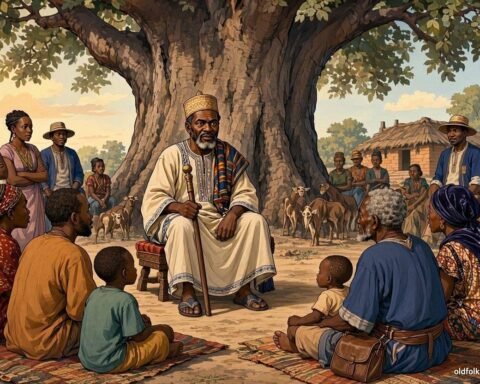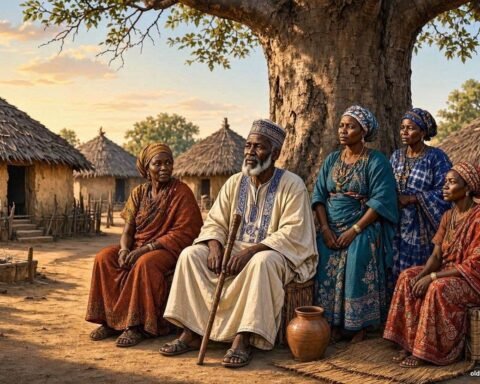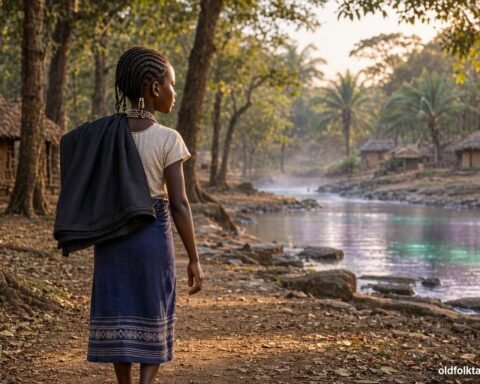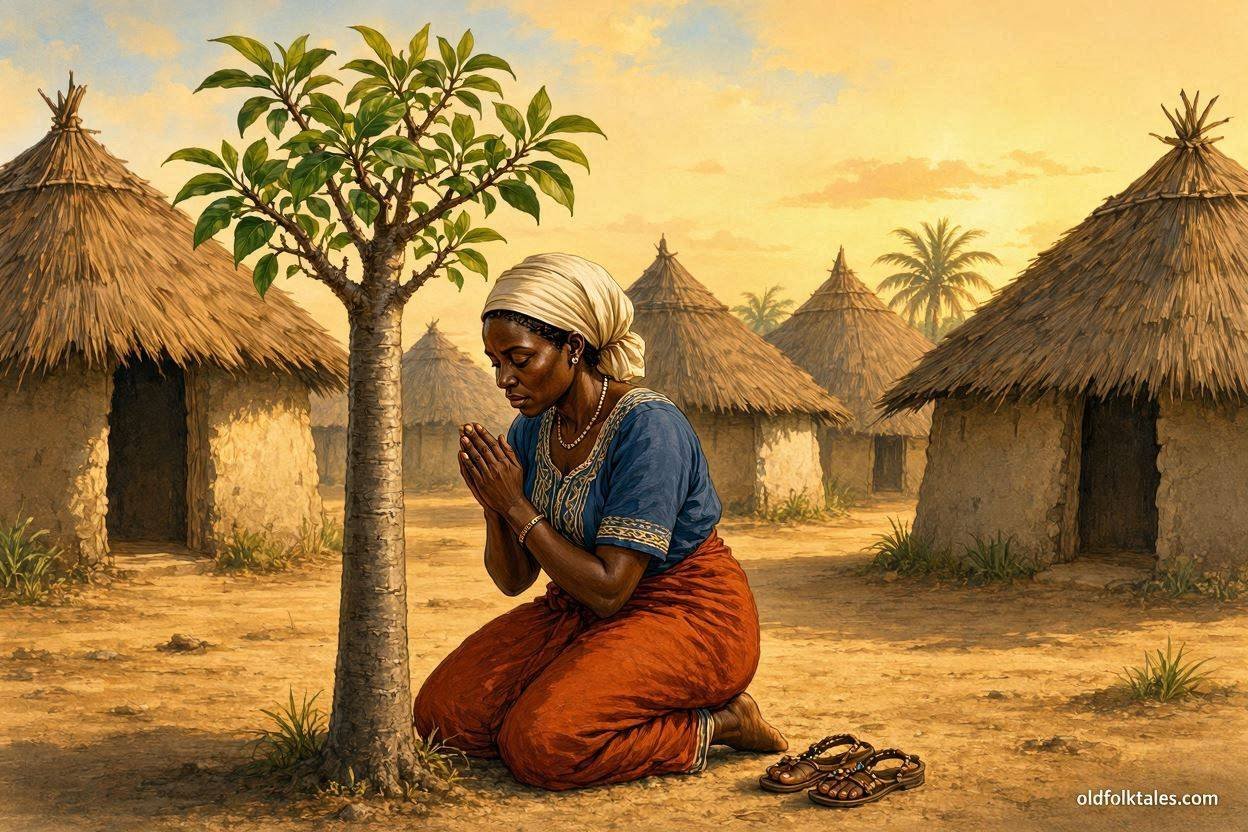
For as long as anyone could remember, the village of Ndar had awakened to the sound of roosters crowing, women pounding millet, and children laughing beneath the broad branches of ancient baobab trees. Every season brought fresh harvests, weddings, and the joyful cries of newborn babies.
Only one courtyard remained painfully quiet.
It belonged to a kind woman named Awa.
Awa and her husband, Lamin, had shared many happy years together. They worked side by side in their millet fields, welcomed travelers into their home, and never allowed a hungry neighbor to leave without a meal. Yet despite their kindness, one prayer remained unanswered.
They had no child.
As the years passed, the silence inside their home became heavier.
Whenever another baby was born, Awa smiled warmly and carried gifts for the new mother. She sang lullabies for other people’s children and celebrated every naming ceremony with genuine happiness.
But each night, after returning home, she knelt quietly beside her sleeping mat and whispered the same prayer.
“Merciful Creator, if it is Your will, bless our home with a child.”
The seasons changed.
The rains came and went.
Harvest followed harvest.
Still, no child arrived.
Some villagers comforted her.
Others spoke carelessly.
“A home without children is like a tree without fruit,” one woman remarked during the market day.
Another whispered, “Perhaps the ancestors have forgotten her.”
Though such words wounded her heart, Awa refused to answer bitterness with bitterness.
Instead, she prayed even more faithfully.
Every Friday she prepared food for elderly neighbors who could no longer farm.
Fascinated by this tale? Discover more North African folktales
She fetched water for widows.
She shared grain with families whose harvest had failed.
When strangers passed through the village, they always found a place to rest beneath her roof.
Lamin admired his wife’s quiet strength.
One evening he said, “Many people pray only when life is easy. You continue praying even when your heart is heavy.”
Awa smiled gently.
“Hope grows strongest when it has every reason to disappear.”
Not far from the village lived an old griot known for his wisdom. One afternoon he visited Awa’s home seeking water after a long journey.
She welcomed him gladly.
She washed the dust from his hands.
She served him cool water, fresh milk, and the finest meal her household could prepare.
Only after he had eaten did he notice tears shining in her eyes.
“My daughter,” the old griot asked softly, “why does sadness hide behind such generous hospitality?”
Awa shared her story.
The old man listened without interrupting.
When she finished, he pointed toward a young baobab growing beside her compound.
“Every morning,” he said, “water this tree before the sun rises.”
Awa looked surprised.
“It is only a tree.”
“So is hope,” replied the griot.
“It begins as something small that many people overlook.”
The next morning, before dawn painted the sky, Awa carried a calabash filled with water to the young baobab.
She poured the water slowly around its roots.
She prayed.
The following morning she returned.
Then the next.
Weeks became months.
Months became another year.
The villagers watched with curiosity.
Some laughed.
“She believes watering a tree will give her a child.”
But Awa ignored every insult.
She continued caring for the little baobab.
Its roots grew deeper.
Its branches stretched wider.
Its leaves became greener with every passing season.
One year, a terrible drought struck the region.
Streams dried.
Fields cracked beneath the scorching sun.
Many families struggled to find enough food.
The young baobab, however, had grown large enough to provide precious shade.
Its deep roots reached hidden moisture beneath the earth.
Travelers rested beneath its branches.
Children gathered there during the hottest hours.
Meetings were held in its cool shadow.
The entire village benefited from the tree that one faithful woman had quietly nurtured.
The village elder called everyone together.
He pointed toward the flourishing baobab.
“This tree stands because one person refused to stop believing.”
The villagers lowered their heads.
They finally understood that Awa’s daily journey had never been about the tree alone.
It had been about faith.
Not long afterward, joyful news spread throughout the village.
Awa was expecting a child.
The same people who had once mocked her now celebrated beside her.
Months later, she gave birth to a healthy baby boy.
The naming ceremony became one of the largest the village had ever witnessed.
The old griot returned.
He smiled as he watched children playing beneath the great baobab.
Then he looked at Awa holding her son.
“Do you understand now?” he asked.
She nodded.
“The Creator was growing two lives at once.”
“The child…”
“And the tree.”
The griot smiled.
“And both were meant to shelter others.”
As the years passed, Awa taught her son the lessons she had learned during her long season of waiting.
She never allowed him to mock those who struggled.
She reminded him that blessings often arrive after patience has done its work.
Whenever someone in the village lost hope, Awa invited them to sit beneath the great baobab.
There she would tell the story of a woman whose prayers were not forgotten, only answered in their proper time.
Long after Awa and Lamin became ancestors, travelers still rested beneath the spreading branches of that magnificent tree.
The elders would point toward it and say,
“Faith grows quietly, just like the deepest roots. Those who remain patient often discover that the greatest blessings arrive when hope has become strong enough to receive them.”
Click here to discover more legendary tales from West Africa
Moral Lesson
True faith is strengthened by patience. Even when answers seem delayed, hope, kindness, and perseverance prepare the heart for blessings that often arrive at the right time.
Knowledge Check
1. Why is Awa remembered in the village?
Because her unwavering faith and kindness inspired generations to remain hopeful during difficult times.
2. What does the baobab tree symbolize in the story?
It symbolizes patient faith, steady growth, and blessings that develop over time.
3. What values does this Wolof folktale teach?
Faith, perseverance, compassion, patience, and generosity.
4. Why did the villagers change their opinion of Awa?
They witnessed how her steadfast hope and kindness eventually brought blessings to both her family and the community.
5. Is The Childless Woman’s Prayers based on a traditional Gambian folktale?
Yes. It is an original adaptation inspired by a documented Wolof folktale preserved in a published Gambian folklore collection.
6. What is the central message of the story?
Hope should never be abandoned, because patience and faith often prepare the way for life’s greatest blessings.
Source
Adapted from: Folk Tales and Fables from The Gambia, Volume 1 by Dembo Fanta Bojang and Sukai Mbye Bojang. This is an original retelling inspired by the documented traditional Wolof folktale.