Long before modern national borders existed in East Africa, the region of Kitara was remembered in oral traditions as a place of powerful rulers, thriving settlements, and influential leaders. Among all the names associated with this period, few were spoken with as much respect as Ndahura. Generations of storytellers, elders, and historians preserved accounts of his reign, describing him as a ruler whose influence extended far beyond his own lifetime.
The kingdom that Ndahura inherited was already respected by neighboring communities. Its people cultivated fertile lands, cared for livestock, practiced trade, and maintained social systems that allowed settlements to prosper. Yet oral traditions suggest that Kitara’s greatest period of expansion and organization occurred during Ndahura’s rule.
From an early age, Ndahura was said to possess qualities that distinguished him from others. Elders observed that he listened carefully before making decisions. He was curious about the concerns of ordinary people and showed an unusual ability to understand different perspectives. While many young nobles focused on displays of status and power, Ndahura devoted considerable attention to learning about governance, diplomacy, and leadership.
Want more? Read more West African folktales now
As he matured, these qualities earned him the respect of advisors and community leaders. When he eventually assumed authority, many believed that the kingdom had entered a promising new era.
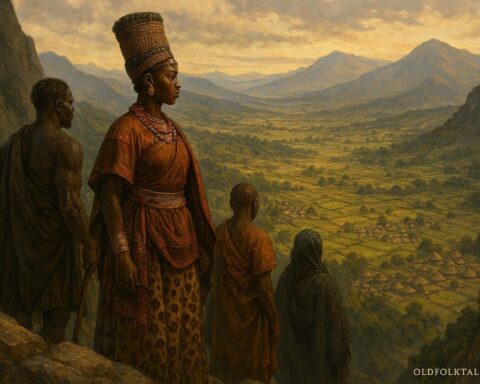
One of Ndahura’s first priorities was strengthening relationships among the various communities under Kitara’s influence. The kingdom included people living in different environments, from pastoral regions to agricultural settlements. Each community possessed its own traditions, customs, and local leadership structures.
Rather than attempting to eliminate these differences, Ndahura encouraged cooperation while respecting local identities. He understood that unity did not require uniformity. Communities could maintain their traditions while contributing to the broader stability of the kingdom.
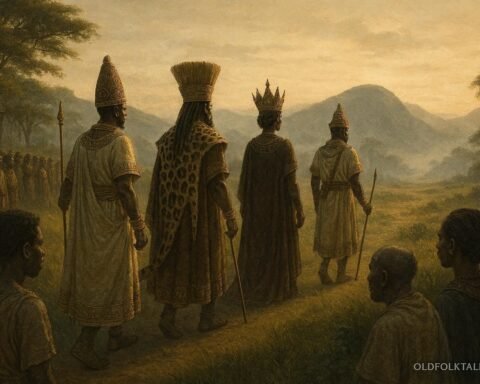
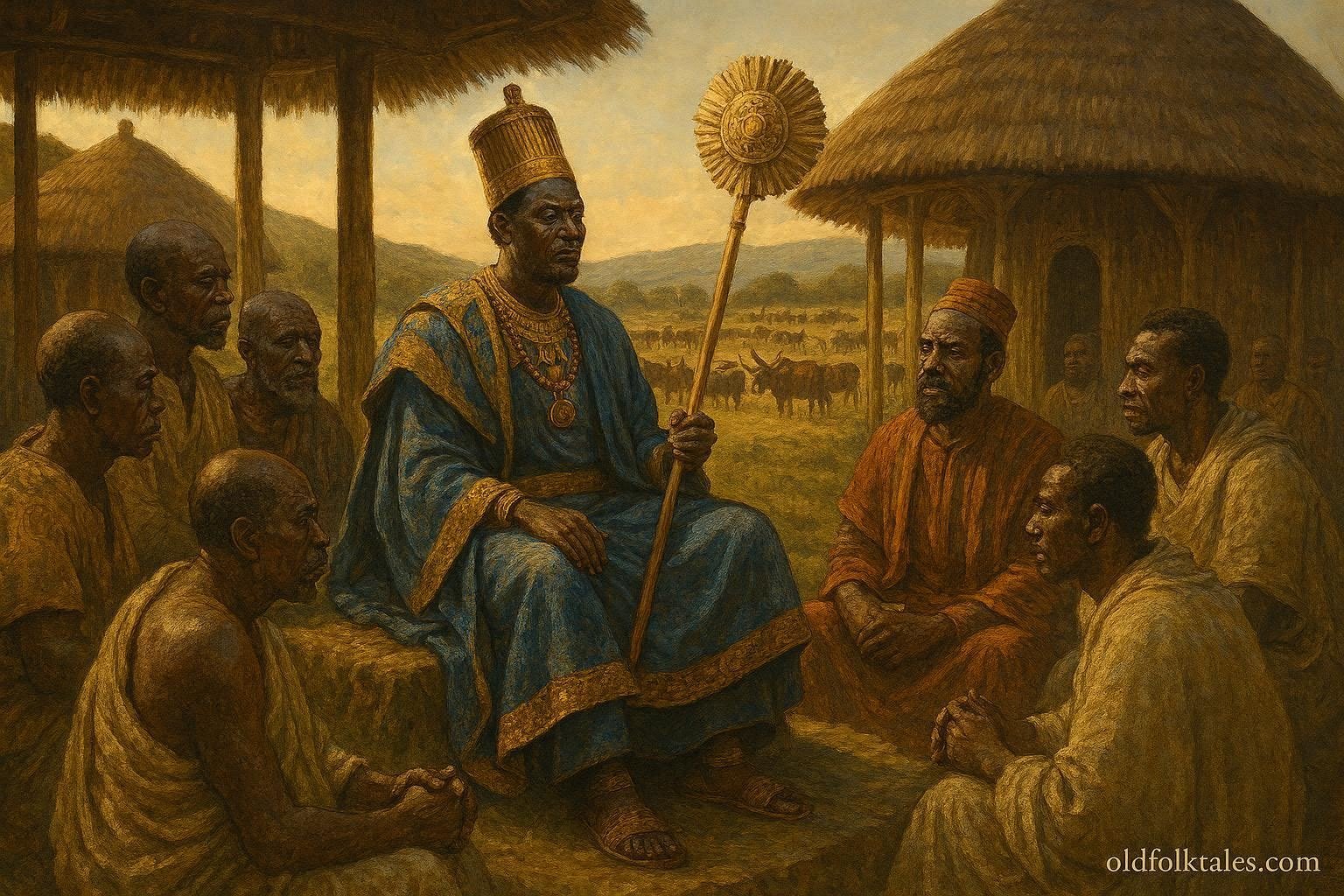
To support this vision, he frequently traveled throughout the territory. Oral traditions describe him visiting villages, meeting elders, inspecting agricultural lands, and listening to concerns raised by local leaders. These journeys helped him understand the needs of the people and strengthened trust between the ruler and his subjects.
As stability increased, economic activity flourished.
Farmers expanded cultivation and improved harvests. Pastoral communities managed growing herds of cattle. Traders traveled more confidently between settlements, exchanging goods and information. Markets became important centers of interaction where people from different regions could cooperate and build relationships.
Ndahura recognized that prosperity depended upon more than natural resources. It required effective administration and fair governance.
He therefore appointed trusted officials to oversee different areas of responsibility. These individuals helped maintain order, resolve disputes, and communicate information throughout the kingdom. Oral traditions portray this system as one of the reasons Kitara became known for organization and stability.
Justice occupied an important place in Ndahura’s leadership philosophy.
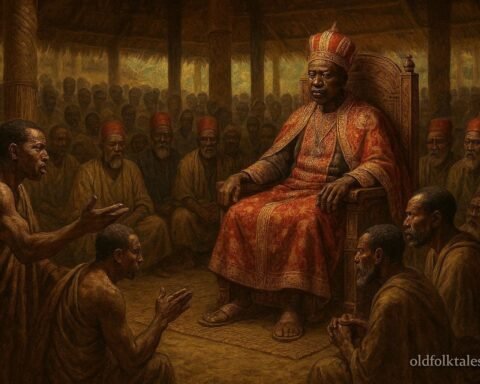
Stories describe him hearing cases involving land, livestock, family disagreements, and community conflicts. Although decisions were not always easy, he sought outcomes that promoted fairness and social harmony. Elders often cited these examples when teaching younger generations about the responsibilities of leadership.
Another aspect of Ndahura’s reign involved expanding the kingdom’s influence.
Oral traditions speak of alliances established with neighboring communities and regions. Some relationships were strengthened through diplomacy, while others emerged through trade and cooperation. As Kitara’s reputation grew, more communities sought connections with the kingdom.
This expansion increased both opportunities and responsibilities.
Managing a larger realm required effective communication and strong institutions. Ndahura responded by strengthening networks of local leaders and encouraging cooperation among different regions. Through these efforts, the kingdom maintained cohesion despite its growing size.
The ruler’s connection to cattle also occupies an important place in oral traditions.
Throughout the Great Lakes region, cattle represented wealth, status, and economic security. Ndahura is often associated with the successful management of herds and the promotion of practices that supported pastoral prosperity. Stories describe thriving cattle populations as symbols of the kingdom’s strength during his reign.
Beyond material success, however, Ndahura became admired for his personal qualities.
He was remembered as disciplined, thoughtful, and committed to the welfare of his people. While oral traditions naturally celebrate legendary rulers, the enduring respect for Ndahura suggests that his reputation rested upon more than military success or political authority.
People admired him because they believed he governed with purpose.
As years passed, Kitara’s influence continued to grow. Travelers carried stories of the kingdom to distant regions. Communities spoke of its organization, prosperity, and leadership. Ndahura’s name became associated with effective governance and wise decision making.
Yet no reign lasts forever.
Eventually, the era of the Bachwezi became surrounded by mystery and legend. Oral traditions describe changes that transformed the political landscape and led to the end of their dominance. Different versions of these events exist, reflecting the rich diversity of Great Lakes storytelling traditions.
Despite these changes, memories of Ndahura endured.
Generations continued recounting stories about his achievements. Elders used his example when discussing leadership responsibilities. Rulers and community leaders reflected upon the lessons associated with his reign.
The survival of these traditions demonstrates the importance of historical memory.
For the Banyoro and related communities, Ndahura represented more than a ruler from the distant past. He embodied ideals that remained relevant across generations. His story encouraged leaders to listen carefully, govern fairly, and place the needs of their people above personal interests.
Over time, oral historians preserved these narratives through songs, ceremonies, and storytelling gatherings. Each generation added its own understanding while maintaining the central themes of leadership, governance, and responsibility.
The legacy of Ndahura also became connected to broader discussions about the Bachwezi and the ancient Kitara kingdom. Historians, anthropologists, and cultural scholars have long studied these traditions because they offer valuable insights into how communities remembered their past and understood the origins of political authority.
Today, the story of Ndahura’s reign remains one of the most significant royal traditions in the oral heritage of western Uganda. It continues to inspire reflection on the qualities required for effective leadership and the importance of balancing authority with responsibility.
His achievements are remembered not simply because he ruled a powerful kingdom but because oral tradition portrays him as a leader who understood that lasting success depends upon justice, cooperation, and good governance.
For this reason, Ndahura’s name continues to occupy a respected place within the cultural memory of the Banyoro people and the wider history of the Great Lakes region.
Continue your journey: Read more East African folktales
Moral Lesson
Great leadership is measured not by power alone but by fairness, wisdom, and dedication to the well being of the people.
Knowledge Check
1. Who was Ndahura?
Ndahura was one of the most celebrated rulers associated with the Bachwezi era and the Kitara kingdom.
2. What qualities made him respected?
Wisdom, fairness, good governance, and concern for his people.
3. How did he strengthen Kitara?
By promoting cooperation, improving administration, and supporting trade and agriculture.
4. Why are cattle important in the story?
They symbolized prosperity, wealth, and economic stability.
5. How was Kitara’s influence expanded during his reign?
Through diplomacy, alliances, trade, and effective leadership.
6. What is the main lesson of the story?
True leadership requires responsibility, justice, and service to others.
Source
Adapted from Banyoro oral traditions concerning Ndahura, Bachwezi historical narratives, and materials preserved in Kitara oral tradition archives and Great Lakes oral history collections.