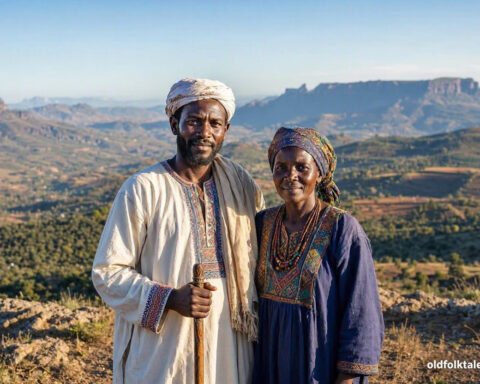
In the cool highlands of Eritrea, where rocky hills rise above scattered fields and acacia trees cast thin shadows across the land, animals and humans alike lived by one unspoken truth:
Strength alone does not guarantee survival.
Fascinated by this tale? Discover more North African folktales
In those lands, cunning often walked ahead of power.
And no creature understood this better than the hare.
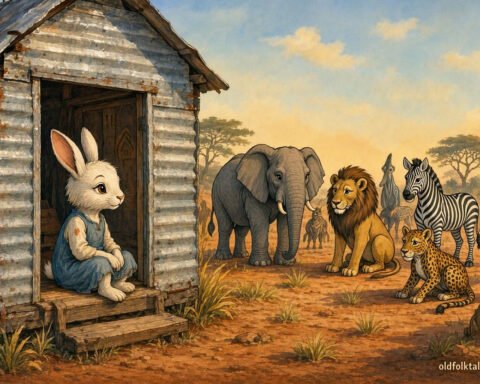
The hare was small, light-footed, and easily overlooked. But beneath his quiet movements lived a sharp mind that observed everything, the habits of others, the changes in the wind, the hidden intentions behind even the simplest actions.
He did not rush.
He did not boast.
He watched.
And he waited.
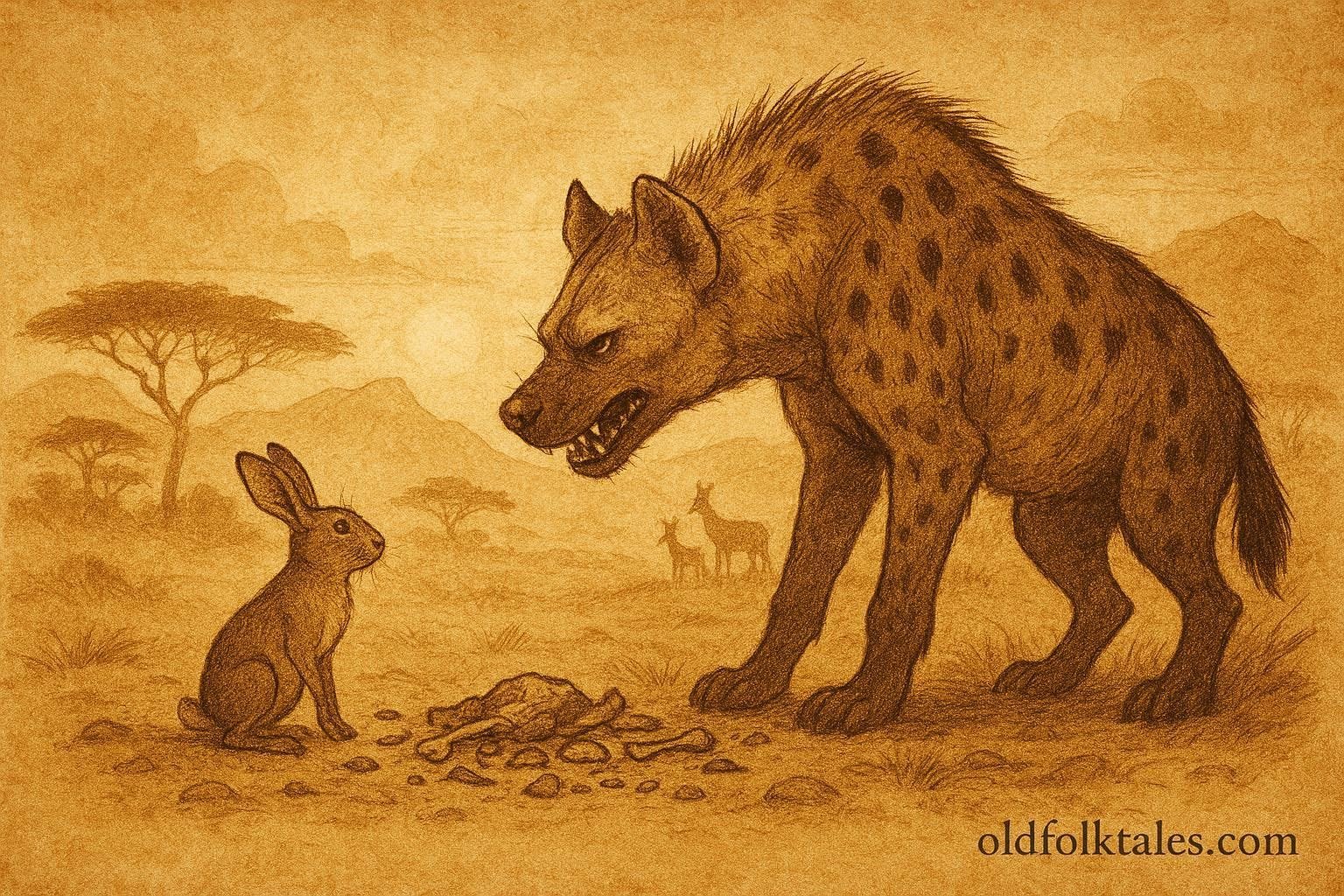
Not far from where the hare lived roamed the hyena.
The hyena was strong, bold, and feared across the land. Its laughter echoed through the night, sending smaller animals into hiding. It did not rely on patience. It relied on force—and on taking what it wanted before others could resist.
But strength alone often carries a weakness.
Greed.
During a season when food grew scarce, the hyena became even more aggressive.
It searched widely, taking more than it needed whenever it found something edible. It did not share. It did not consider others. It saw survival as a competition, not a balance.
And soon, it noticed the hare.
The hare, though small, never seemed to suffer.
He always had something to eat.
Always seemed calm.
Always appeared just out of reach.
The hyena grew curious.
Then suspicious.
Then determined.
One day, the hyena approached the hare with a forced friendliness.
“Hare,” it said, lowering its voice, “you seem to live well in difficult times.”
The hare tilted his head slightly.
“I live carefully,” he replied.
The hyena smiled, though its eyes remained sharp.
“Then perhaps you can show me how,” it said.
The hare knew immediately what stood before him.
Not curiosity.
But intention.
Still, he did not refuse.
He nodded slowly.
“Come tomorrow,” he said. “I will show you where I find food.”
The hyena agreed.
But inside, it had already decided something else.
It would not just learn.
It would take.
The next day, the hare led the hyena along a winding path through rocks and dry grass.
They walked for a long time until they reached a place where food was hidden, small, scattered, but sufficient for those who knew how to gather wisely.
The hare began collecting carefully.
The hyena watched.
Then, suddenly, it lunged forward.
Trying to seize everything at once.
But the hare had expected this.
He moved quickly aside, letting the hyena’s force work against itself.
The hyena stumbled, scattering the very food it had tried to claim.
The hare remained calm.
“You move too fast,” he said quietly. “Food is not taken by force alone.”
The hyena growled.
But it said nothing.
The next day, the hyena returned again.
This time with a different plan.
“Hare,” it said, “perhaps we should share what we find.”
The hare looked at him carefully.
“Sharing requires trust,” he replied.
The hyena forced a smile.
“Then let us build it,” it said.
Again, the hare agreed.
Again, they went out together.
But once more, the hyena tried to trick him—this time pretending to divide the food fairly, only to shift more toward itself when the hare looked away.
But the hare did not look away.
He watched everything.
And when the moment came, he simply stepped back.
Allowing the hyena to reveal its own behavior.
“You do not share,” the hare said calmly.
The hyena snapped.
“I take what I can,” it replied. “That is how the strong survive.”
The hare nodded slowly.
“And yet,” he said, “you are still hungry.”
The words lingered.
The hyena did not answer.
Because they were true.
Days passed, and the hyena grew more frustrated.
Each attempt to outwit the hare failed.
Each plan revealed its own greed.
And slowly, something began to shift, not in the hyena’s strength, but in its position among others.
The other animals were watching.
They saw how the hare moved with patience.
How he avoided conflict without losing anything.
How he protected not just himself, but the balance of what little remained.
One day, the hyena made one final attempt.
It approached the hare openly this time.
“No tricks,” it said. “Show me truly how you survive.”
The hare studied him.
Then he nodded.
He led the hyena once more into the land—not to a hidden place this time, but to a simple patch where food could be found slowly, over time.
The hare began to gather carefully, taking only what he needed.
He did not rush.
He did not hoard.
He left enough behind.
The hyena watched.
And for the first time, it did not move immediately.
It hesitated.
Because it saw something it had never considered.
That survival was not about taking everything.
But about allowing something to remain.
“If you take all,” the hare said quietly, “nothing grows again.”
The hyena remained silent.
“If you leave something,” the hare continued, “you return to something.”
The lesson did not change the hyena instantly.
Greed does not disappear in a single moment.
But it planted something new.
Awareness.
Over time, the hyena’s actions shifted.
Not completely.
But enough.
It took less.
It watched more.
And slowly, it stopped chasing the hare—not because it could not catch him, but because it began to understand him.
The animals of the land took note.
The hare had not defeated the hyena with force.
He had revealed its weakness to itself.
And in doing so, protected more than just his own survival.
He protected the balance of the community.
And so, in the highlands of Eritrea, the story was told for generations:
That a small creature, through patience and wisdom, can stand before even the strongest, and reshape what strength truly means.
Looking for more? Explore the magic of East African folktales here
Moral Lesson
Intelligence and patience overcome brute force. Greed leads to isolation and failure, but wisdom protects both the individual and the community.
Knowledge Check
- What is the main lesson of “The Clever Hare and the Greedy Hyena”?
The story teaches that intelligence and patience are more effective than strength and greed. - Why did the hyena target the hare?
The hyena noticed the hare always had food and wanted to take it through trickery. - How did the hare outsmart the hyena?
The hare used observation, patience, and awareness to avoid traps and expose the hyena’s greed. - What mistake did the hyena repeatedly make?
The hyena relied on force and greed instead of learning balance and patience. - How did the hare protect the community?
By preventing the hyena from exploiting resources and showing a sustainable way to survive. - What cultural themes are reflected in this Eritrean folktale?
Themes include trickster wisdom, survival, community balance, and the value of intelligence in Tigrinya storytelling traditions.
Source: Recorded in Eritrean oral folktale compilations and ethnographic studies of Horn of Africa folklore (1960s–1980s)
Cultural Origin: Tigrinya oral storytelling tradition, highland communities of Eritrea