Long before modern governments and national boundaries existed in East Africa, powerful kingdoms, chiefdoms, and communities flourished across the fertile lands surrounding present day western Uganda. Among the most remarkable places remembered in both archaeology and oral tradition was Bigo Earthworks, a vast complex of ditches, embankments, and enclosures whose origins inspired generations of stories.
For the Banyoro people and the traditions associated with the ancient Kitara kingdom, Bigo was more than an impressive landscape. It was remembered as a place where leaders met, difficult decisions were made, and agreements shaped the future of entire regions.
According to oral tradition, there was a time when neighboring communities faced growing tensions. Although trade connected villages and families often shared cultural ties, disagreements had begun to emerge. Some disputes involved grazing lands used by pastoral communities. Others concerned access to water sources, hunting grounds, and trade routes that crossed different territories.
At first, these disagreements were small.
Village elders usually resolved conflicts through discussion and compromise. However, as populations grew and economic activity increased, disputes became more complicated. Misunderstandings occasionally led to hostility, and many feared that larger conflicts could eventually threaten regional stability.
If you liked this story, see our Central African folktales collection
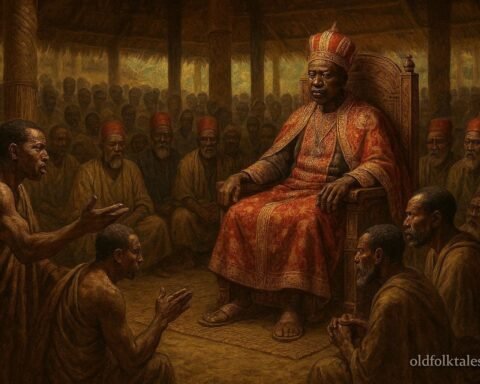
Among the leaders concerned about this situation was a respected ruler named Rukidi. Known for his wisdom and patience, he believed that prosperity depended upon cooperation rather than rivalry.
Rukidi understood that no community existed in isolation.
Farmers depended upon traders.
Traders depended upon safe travel routes.
Pastoralists depended upon access to water and grazing land.
Every group benefited when peace prevailed.
Determined to prevent future conflict, he proposed a gathering unlike any that had taken place before.
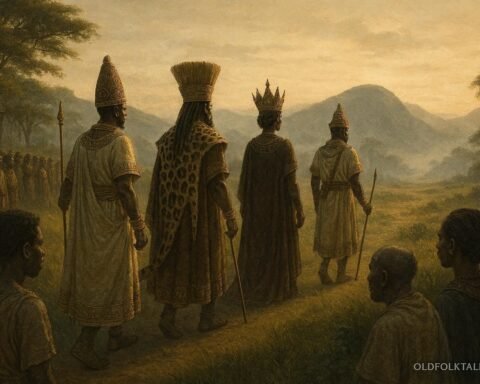
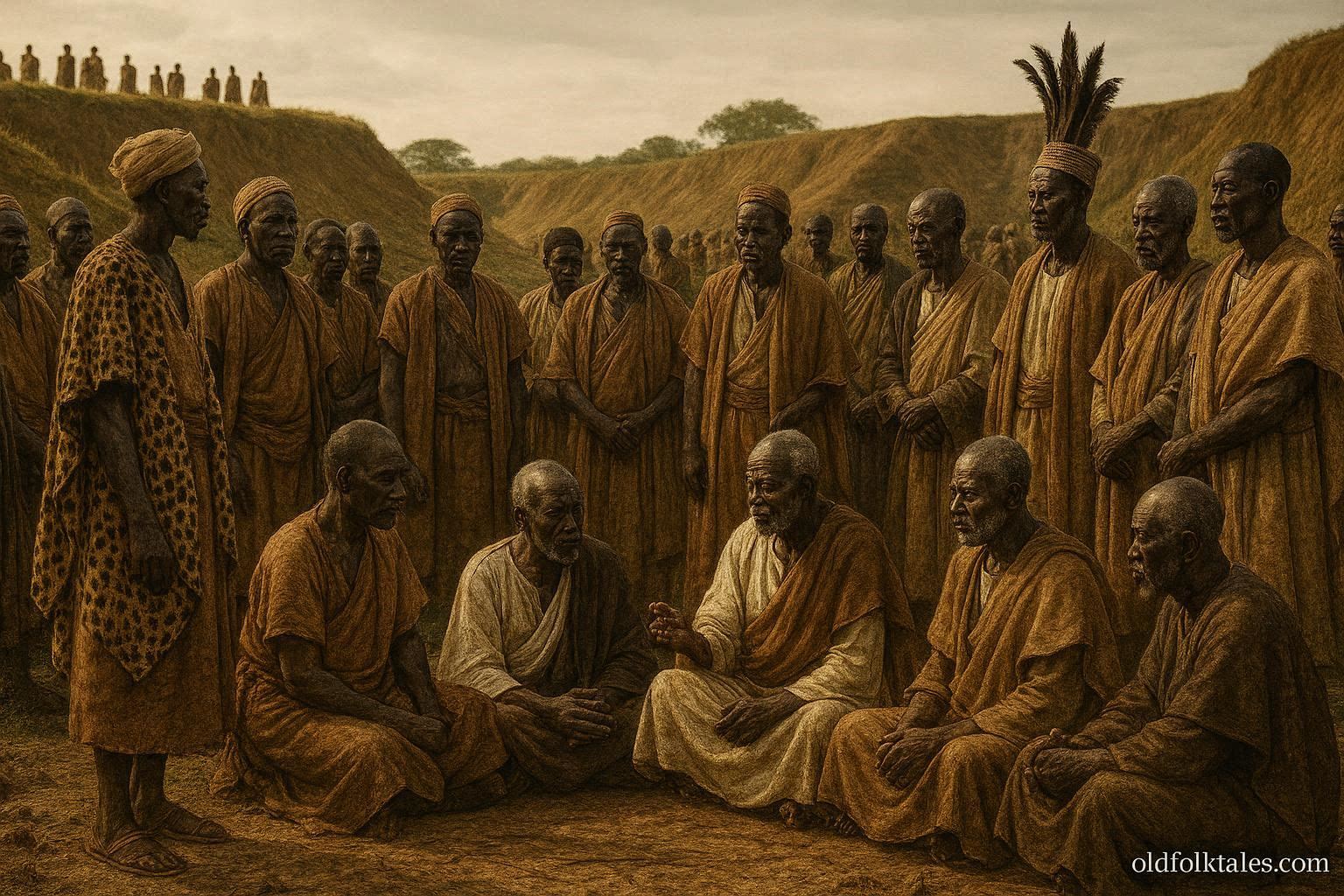
Messengers were sent across the region carrying invitations to chiefs, elders, clan leaders, and representatives from neighboring communities. They were invited to meet at Bigo Earthworks, a location already respected for its historical and cultural significance.
The journey to Bigo took many days for some participants.
Delegations traveled through forests, crossed rivers, and followed ancient paths connecting distant settlements. Along the way, they discussed the challenges facing their communities and considered possible solutions.
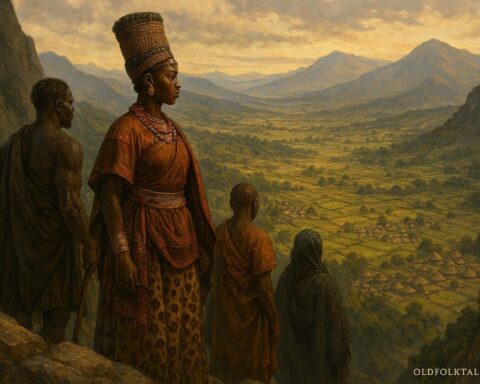
When the delegates finally arrived, they were amazed by the scale of the earthworks.
Massive embankments stretched across the landscape.
Deep ditches formed impressive boundaries.
Large open spaces provided room for gatherings and discussions.
Many believed the site reflected the achievements of earlier generations whose wisdom continued to inspire the present.
The meeting began with ceremonies emphasizing respect and unity.
Elders welcomed visitors and reminded everyone that they had come not as rivals but as partners seeking a better future.
Each delegation was given an opportunity to speak.
Leaders described the concerns affecting their communities.
Farmers explained the importance of protecting fertile land.
Pastoralists discussed seasonal movements of livestock.
Traders highlighted the need for secure routes and fair agreements.
For several days, discussions continued.
Not every conversation was easy.
Some disagreements had existed for many years.
Certain grievances involved painful memories that people found difficult to forget.
Yet the gathering provided something that had often been missing.
People listened.
Instead of relying on rumors or assumptions, leaders heard directly from one another. They discovered that many conflicts resulted from misunderstandings rather than deliberate hostility.
As trust gradually developed, participants began exploring practical solutions.
Shared grazing arrangements were proposed.
Guidelines for using water resources were discussed.
Trade agreements were negotiated.
Methods for resolving future disputes peacefully were carefully considered.
Rukidi encouraged patience throughout the process.
He reminded everyone that lasting peace required effort and compromise. Quick solutions might appear attractive, but only carefully considered agreements would endure.
One evening, after many days of discussion, the elders gathered beneath the stars.
They reflected upon everything that had been accomplished.
For the first time, many felt genuine optimism.
Communities that had once viewed one another with suspicion were beginning to recognize their shared interests.
The following morning, representatives assembled for what became known in oral tradition as the Covenant at Bigo.
The covenant was not a single promise.
It was a collection of commitments designed to strengthen cooperation across the region.
Participants pledged to respect agreed boundaries.
They committed to resolving disputes through dialogue whenever possible.
They promised to support peaceful trade and mutual assistance.
Most importantly, they agreed that future generations should inherit stability rather than conflict.
To mark the occasion, ceremonies were held celebrating unity and friendship.
Songs were performed.
Gifts were exchanged.
Shared meals brought together people from communities that had rarely interacted peacefully before.
The covenant quickly produced positive results.
Trade expanded as travelers felt safer moving between regions.
Agricultural production improved because disputes over land decreased.
Families established new relationships through marriage and cooperation.
The region experienced a period of prosperity that many later remembered with pride.
Years passed.
Some leaders who participated in the gathering grew old and eventually passed away.
Yet the principles established at Bigo continued influencing community life.
Whenever disagreements arose, elders recalled the covenant and encouraged peaceful negotiation.
The story became an important teaching tool.
Parents shared it with their children.
Storytellers included it in community gatherings.
Young leaders learned that strength is not demonstrated solely through power but also through the ability to build consensus and maintain peace.
As generations succeeded one another, the physical earthworks remained.
Their embankments and ditches stood as visible reminders of the past.
People visiting the site reflected upon the achievements of those who came before them.
Some admired the engineering skill required to construct such impressive structures.
Others focused on the lessons preserved through oral tradition.
Both perspectives reinforced the importance of heritage.
Over time, the Covenant at Bigo became a symbol of diplomacy and cooperation.
It demonstrated that communities with different interests could work together when guided by respect and shared goals.
The story also emphasized the importance of dialogue.
Conflicts often seem impossible to resolve when people refuse to communicate. Yet meaningful conversation can reveal common ground and create opportunities for understanding.
Today, Bigo Earthworks remains one of Uganda’s most significant historical and archaeological sites.
Visitors continue exploring its remarkable features.
Researchers study its history and cultural significance.
Meanwhile, oral traditions preserve the memory of the leaders who gathered there seeking peace.
For the Banyoro and many others connected to the legacy of Kitara, the covenant remains a powerful reminder that stability is not achieved by accident.
It is built through cooperation.
It is maintained through trust.
And it endures when communities choose understanding over division.
The story of the Covenant at Bigo Earthworks continues to inspire because its lessons remain relevant.
People still face disagreements.
Communities still encounter challenges.
Yet the example of Bigo reminds everyone that lasting peace becomes possible when individuals work together for the common good.
Looking for more? Explore the magic of East African folktales here
Moral Lesson
Peace and prosperity grow when communities choose dialogue, cooperation, and mutual respect over conflict.
Knowledge Check
1. What is Bigo Earthworks known for in the story?
It was a gathering place where leaders met to establish agreements promoting peace.
2. Why were community leaders concerned?
Growing disputes threatened regional stability and cooperation.
3. Who encouraged the gathering at Bigo?
A respected ruler named Rukidi.
4. What did the covenant promote?
Dialogue, peaceful conflict resolution, cooperation, and mutual support.
5. How did the covenant benefit communities?
It improved trade, reduced conflicts, and encouraged prosperity.
6. What is the main lesson of the story?
Lasting peace requires cooperation, trust, and communication.
Source
Adapted from Bunyoro Kitara oral traditions, historical narratives associated with Bigo Earthworks, and materials preserved in Bigo archaeological and oral history archives.