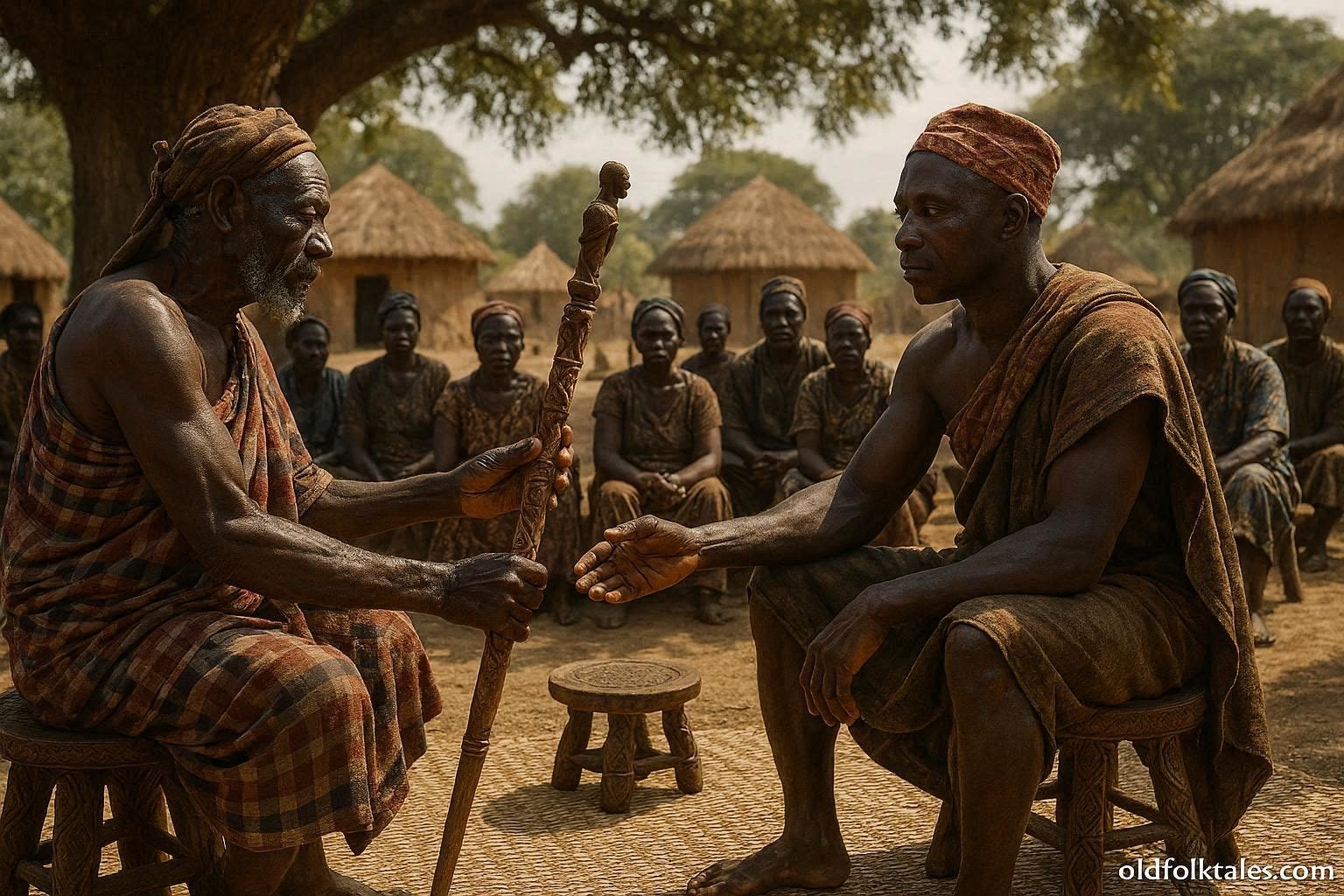
In the fertile highlands of central Angola, the Ovimbundu people built thriving communities where farming, trade, and cooperation sustained everyday life. Villages flourished because every family understood the importance of working together, honoring tradition, and respecting the guidance of their elders. At the center of each community stood a leader known as the soba, whose duty was not to command through fear but to serve with wisdom, fairness, and integrity.
Long before beautifully carved ceremonial staffs became recognized symbols of authority, Ovimbundu oral traditions tell of the first soba who received a simple wooden staff that represented something far greater than power. It reminded every leader that the people entrusted their future to someone who would protect justice above personal ambition.
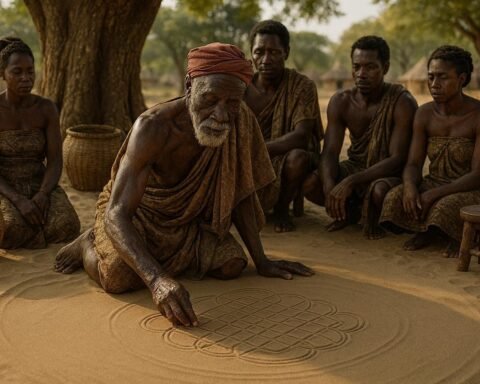
The story begins in a village surrounded by rolling hills and fertile farmland where the people lived peacefully for many generations. They cultivated millet and sorghum, cared for livestock, and welcomed traders traveling between neighboring kingdoms. Whenever disagreements arose, respected elders gathered beneath a broad shade tree to settle them through careful discussion.
For many years, the village prospered under the guidance of an elderly soba named Kandongo.
Looking for more? Explore the magic of East African folktales here
Kandongo had earned the admiration of his people not because he possessed wealth but because he listened patiently before making decisions. He believed every voice deserved to be heard, whether it belonged to a respected elder or a young farmer beginning his first harvest.
As age weakened Kandongo, the elders realized the village would soon need another leader.
They refused to choose a successor quickly.
Leadership shaped the future of every family.
The wrong choice could divide the community for generations.
For many days the council met quietly.
They considered experienced hunters, successful traders, respected farmers, and skilled craftsmen.
Each candidate possessed admirable qualities.
Yet the elders searched for something deeper than talent.
They wanted someone whose character inspired confidence.
Eventually their attention settled upon a quiet man named Chisomo.
Although Chisomo had never sought recognition, people respected him for his honesty.
He often helped neighbors repair damaged homes after heavy storms.
When travelers arrived unexpectedly, he welcomed them generously.
During disagreements, he encouraged peaceful conversation instead of angry argument.
Even so, Chisomo felt unprepared when the elders invited him to their meeting.
The oldest among them spoke gently.
“The people have confidence in your judgment.”
Chisomo lowered his head.
“I have never desired authority.”
The elder smiled.
“That is one reason we believe you are ready.”
Preparations soon began for the installation of the new soba.
Families swept the gathering grounds.
Women prepared food for visitors arriving from neighboring villages.
Musicians rehearsed traditional songs performed only during important community ceremonies.
Woodcarvers searched nearby forests for suitable timber from which a ceremonial staff would be made.
The responsibility fell to an elderly craftsman named Mavinga, whose family had carved sacred objects for generations.
He selected a straight piece of hardwood with great care.
Before beginning his work, he examined every grain and natural marking.
He explained that the staff must be strong enough to endure many years because it symbolized the enduring responsibilities of leadership.
For several days he worked patiently.
He carved simple designs representing unity, justice, cooperation, and continuity between generations.
When the carving was complete, the staff appeared elegant without unnecessary decoration.
Its beauty rested in its meaning rather than its appearance.
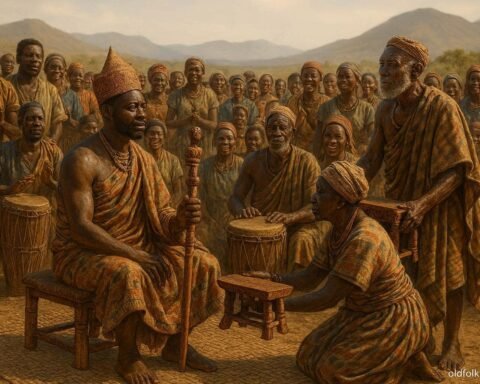
On the morning of the ceremony, the people gathered beneath the village’s great tree.
The elders welcomed guests from neighboring communities.
Traditional songs echoed across the valley while families offered blessings for the future.
When Chisomo entered the gathering, he wore ordinary clothing.
The elders had instructed him not to arrive with displays of importance.
True leadership began with humility.
The oldest elder stepped forward carrying the newly carved staff.
He did not hand it over immediately.
Instead, he held it where everyone could see.
“This staff is not a reward,” he declared.
“It is a reminder.”
He continued speaking.
“It reminds the soba to listen before judging.”
“It reminds the soba to protect those who cannot protect themselves.”
“It reminds the soba that every decision must strengthen the community rather than satisfy personal desires.”
Only after these words were spoken did he place the staff into Chisomo’s hands.
The gathering fell silent.
The new soba felt the weight of the polished wood.
It seemed heavier than he had expected.
Not because of its size, but because of the promises it represented.
The ceremony concluded with songs, dancing, and shared meals.
Yet Chisomo understood that the true meaning of the staff would be revealed only through his actions.
His first challenge arrived sooner than expected.
Two farming families disputed ownership of a fertile field after seasonal floods had erased the traditional boundary markers.
Each family sincerely believed the land belonged to them.
Some villagers urged the soba to decide quickly.
Others supported one side without hearing the full story.
Remembering the elder’s words, Chisomo refused to rush.
He carried the ceremonial staff as he visited the disputed land.
He invited both families to explain their histories.
He listened to neighboring farmers who remembered earlier planting seasons.
He consulted the oldest members of the village, whose memories stretched back many decades.
Only after gathering every perspective did he announce his decision.
The field would remain shared according to the customs followed before the floods changed the landscape.
Neither family received complete victory.
Instead, both received justice.
The community praised the fairness of the judgment.
From that day forward, villagers began seeing the staff differently.
It was no longer simply an object carried during ceremonies.
It became a visible reminder that leadership required careful listening and thoughtful decisions.
Years later, another test emerged.
A traveling merchant offered Chisomo expensive gifts in exchange for favorable treatment during trade negotiations.
The offer tempted some advisers.
Accepting it would bring immediate wealth.
Chisomo quietly placed the ceremonial staff across his lap.
He remembered the promises made during his installation.
The gifts were politely declined.
Trade continued fairly, and the village’s reputation for honesty grew stronger.
Travelers soon preferred visiting the community because they trusted its leaders.
As the seasons passed, younger members of the village often asked why the soba always carried the same wooden staff during important meetings.
Chisomo invited them to touch its smooth surface.
He explained that every mark upon the wood reminded him of a difficult decision, a lesson learned, or a promise kept.
“The staff does not make a leader wise,” he told them.
“It reminds the leader to seek wisdom.”
When Chisomo eventually grew old, the elders prepared to appoint another soba.
Before the new leader accepted the staff, Chisomo shared the lessons he had learned over many years.
He explained that authority faded quickly when separated from justice.
Respect could never be demanded.
It had to be earned through fairness and faithful service.
The staff was then passed to the next soba, carrying with it not only carved wood but also the enduring values of the community.
Generations continued to preserve this tradition.
Although the appearance of ceremonial staffs changed over time, their meaning remained constant.
They reminded every soba that leadership belonged to the people, not to the individual who carried the symbol.
Today, historians and cultural researchers recognize the ceremonial staff as one of the enduring symbols of traditional leadership among many Angolan communities.
For the Ovimbundu, oral traditions continue to celebrate it as a reminder that justice, humility, and responsibility are the true foundations of authority.
The story of The First Soba’s Staff teaches that the greatest symbols of leadership are valuable not because they represent power but because they remind leaders of their duty to serve others with fairness and wisdom.
Don’t miss out: Read more Southern African folktales
Moral Lesson
A leader earns lasting respect by serving with justice, humility, and integrity rather than seeking personal power.
Knowledge Check
1. Who was a soba?
A traditional community leader responsible for governing with fairness and wisdom.
2. Why was Chisomo chosen as the new soba?
Because of his honesty, humility, and commitment to helping others.
3. What did the ceremonial staff symbolize?
The soba’s responsibility to lead with justice, wisdom, and service.
4. How did Chisomo settle the dispute over the farmland?
He listened to everyone involved, consulted the elders, and reached a fair decision based on tradition.
5. Why did Chisomo refuse the merchant’s gifts?
Because accepting them would compromise his duty to govern fairly.
6. What is the main lesson of the story?
True leadership is built on responsibility, fairness, and integrity.
Source
Adapted from Ovimbundu oral traditions on traditional governance, ethnographic studies of sobaship, and materials preserved in Ovimbundu oral governance archives.