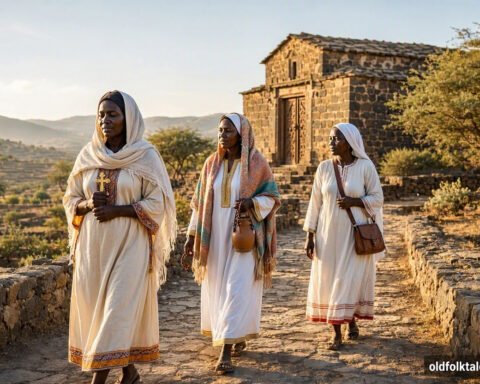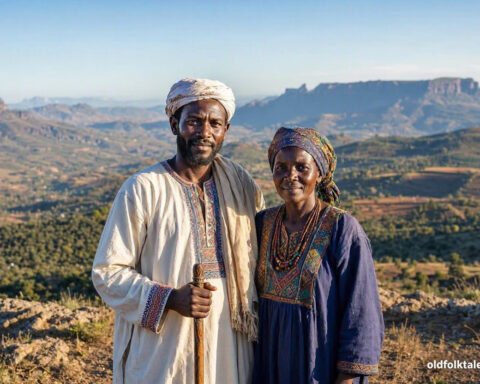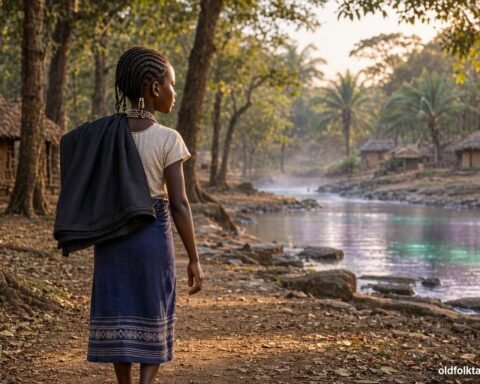
In the dry, sunlit landscapes of rural Eritrea, where life demanded both patience and understanding, there lived a young woman known for her quiet strength and thoughtful nature.
She was not easily swayed by appearances.
Explore the wisdom and wonder of North African folktales
While others admired displays of wealth, she paid closer attention to how people lived, how they spoke, and how they treated others. She had grown up listening to elders who often said:
“Riches may fill your hands, but wisdom fills your life.”
She carried those words carefully within her.
As she came of age, suitors began to visit her family.
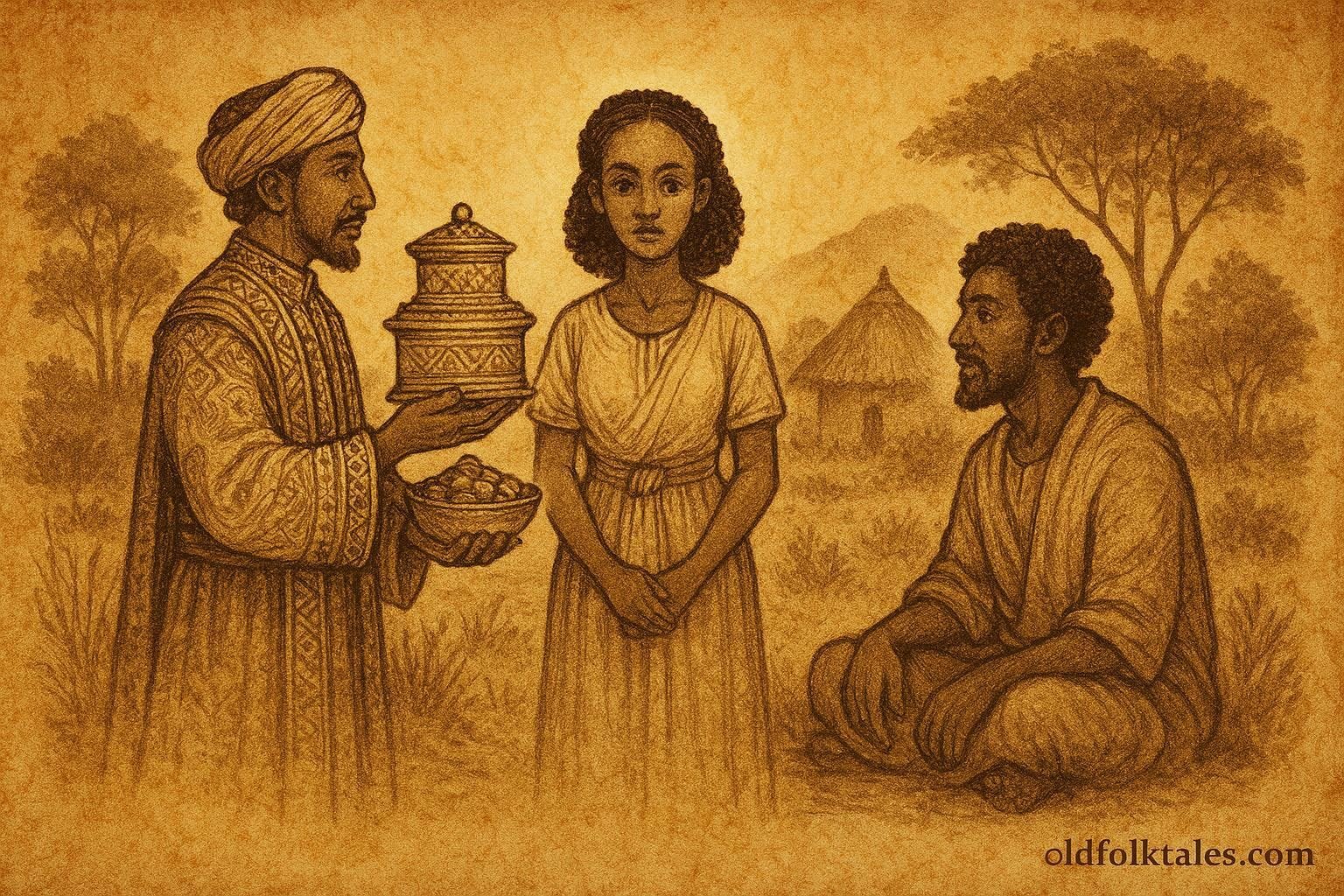
Among them were two men who stood out above the rest.
The first was wealthy.
He arrived with fine clothes, gifts of food, and items that drew attention. Wherever he walked, people noticed him—not only because of what he owned, but because of how confidently he displayed it.
He spoke boldly.
Promised comfort.
Promised ease.
Promised a life free from struggle.
The second man was different.
He came without gifts.
Without decoration.
Without display.
But he carried something less visible.
He listened more than he spoke.
He worked steadily.
And when he spoke, his words were thoughtful, measured, and grounded in understanding.
He did not promise ease.
He spoke of partnership.
Of shared effort.
Of navigating life with care and wisdom.
The village began to talk.
Some said the choice was obvious.
“Why refuse wealth?” they asked.
“Why choose difficulty when comfort is offered?”
Others were more cautious.
“Wealth can fade,” a few elders said quietly. “But wisdom remains.”
The young woman listened to all of it.
But she did not rush.
She observed both men carefully.
She watched how the wealthy suitor treated those who had nothing to offer him. She noticed his impatience when things did not go his way, his reliance on what he owned rather than what he understood.
Then she observed the humble man.
She saw how he treated others equally.
How he approached challenges with thought rather than force.
How he remained steady even when conditions were uncertain.
When the time came to choose, the village gathered.
The decision would shape not only her life, but the example set for others.
The wealthy suitor stood confidently, certain of his victory.
The humble man stood quietly, without expectation.
The young woman stepped forward.
She did not speak loudly.
But her words carried clearly.
“I choose the man who understands life,” she said.
There was a murmur among the people.
Some were surprised.
Others nodded quietly.
The wealthy suitor’s expression changed.
“You refuse what I offer?” he asked.
The young woman met his gaze.
“I refuse what cannot last,” she replied.
And so, she married the humble man.
Life did not become easy.
They worked together daily, farming, building, sharing responsibilities. There were challenges, as there always are. Seasons changed. Resources fluctuated. Nothing was guaranteed.
But they approached everything with thought and cooperation.
And slowly, their life grew steady.
Meanwhile, the wealthy man continued his life with confidence.
He relied on what he owned.
He continued to display his riches.
But over time, circumstances changed.
Trade routes shifted.
Resources diminished.
Opportunities that once brought him wealth began to disappear.
At first, he dismissed it.
Then he resisted it.
But gradually, his wealth began to fade.
Not all at once.
But steadily.
Until what once defined him no longer remained.
Without his riches, he found himself uncertain.
He had not learned to adapt.
He had not practiced patience.
He had relied on possession rather than understanding.
And now, he struggled.
In contrast, the young woman and her husband continued as they had before.
Their life did not depend on sudden gain.
It was built on consistent effort and wise decisions.
They adjusted when needed.
They shared when possible.
They endured when necessary.
And because of this, they remained stable.
One day, the former wealthy man passed through their village again.
He was no longer dressed in fine clothing.
No longer surrounded by attention.
He walked quietly.
He saw the woman and her husband working together.
Not wealthy in appearance.
But steady.
Balanced.
At peace.
For a moment, he stood still.
Then he spoke.
“You chose wisely,” he said.
The woman nodded gently.
“Wisdom chooses for itself,” she replied.
The man lowered his gaze.
Not in shame.
But in understanding.
From that day on, the story was told across the land.
Not as a tale of rejection.
But as a lesson.
That what shines brightly does not always endure.
And what endures is often not what first draws the eye.
Continue your journey: Read more East African folktales
Moral Lesson
True value lies in character and wisdom, not material wealth. Riches may fade, but understanding, patience, and integrity sustain life through every season.
Knowledge Check
- What is the main lesson of “The Girl Who Chose Wisdom Over Wealth”?
The story teaches that wisdom and character are more valuable than material riches. - Why did the girl reject the wealthy suitor?
She recognized that his wealth lacked stability and was not rooted in wisdom or good character. - What qualities did the humble man possess?
He demonstrated wisdom, patience, kindness, and the ability to handle life’s challenges thoughtfully. - What happened to the wealthy man over time?
His riches disappeared, leaving him without the skills needed to adapt or sustain himself. - How did the woman’s choice benefit her life?
Her marriage to a wise partner led to stability, cooperation, and long-term well-being. - What cultural themes are reflected in this Eritrean folktale?
Themes include marriage values, wisdom over wealth, character assessment, and social teachings in Tigre and Tigrinya traditions.
Source: Common motif in Eritrean folktale anthologies and oral narrative studies (1950s–1980s)
Cultural Origin: Tigre and Tigrinya storytelling traditions in rural Eritrean communities