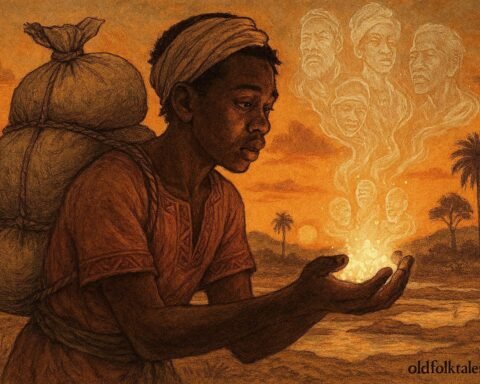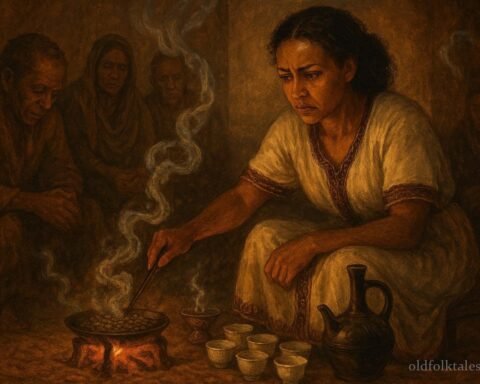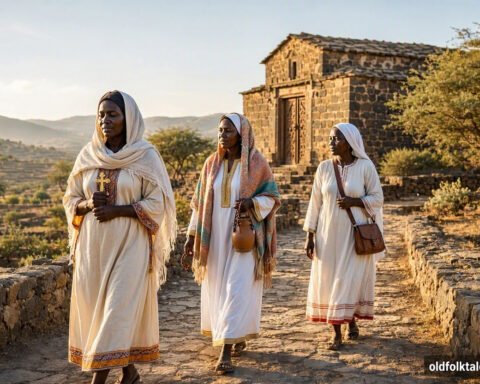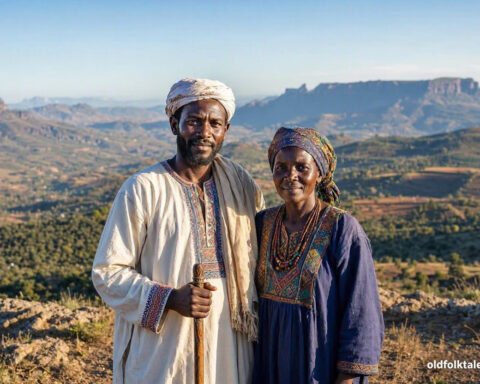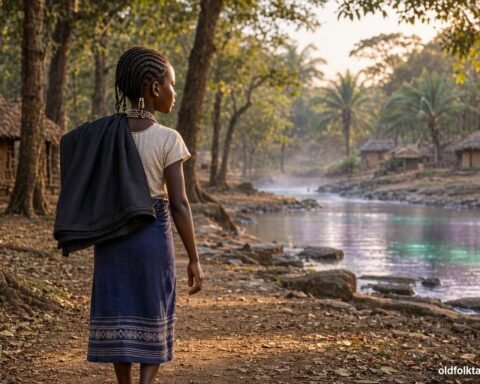
In the wide, sun-warmed lowlands of Eritrea, where the earth stretches open beneath a vast sky and life depends on the careful use of water, there once stood a village built near an ancient well.
The well was older than memory.
Want more? Read more West African folktales now
Its stones were worn smooth by hands that had drawn water for generations. Its edges were marked by time, and its depth held stories as much as it held water. Elders once spoke of it with reverence, calling it not just a source, but a place of connection.
They said the well was protected.
Guarded by unseen spirits who watched over the balance between water and those who depended on it.
In earlier times, the villagers treated the well with respect.
They approached it with quiet voices.
They offered small tokens, drops of water returned, words of gratitude spoken softly into its depths.
They believed that water, like life, must be honored.
And for many years, the well never failed them.
But as time passed, the village changed.
New wells were dug, easier to access, closer to homes, quicker to draw from. These newer sources seemed more convenient, requiring less patience and fewer rituals.
The old well was used less often.
Then rarely.
Then almost never.
The stories surrounding it began to fade.
Children no longer heard the warnings or the teachings of the elders.
The rituals stopped.
The offerings ceased.
And slowly, the well became forgotten, not just in use, but in meaning.
At first, nothing seemed to happen.
Life continued.
Water was still available from other sources.
The villagers felt no immediate consequence.
So, they did not think of the well.
But over time, the land began to change.
The rains became uncertain.
Streams weakened.
New wells that once seemed reliable began to dry earlier than expected.
The ground hardened.
The air felt heavier.
And soon, the village faced a growing scarcity of water.
People searched for answers.
They dug deeper.
They traveled farther.
They argued over what remained.
But none spoke of the old well.
Because it had been forgotten.
Among the villagers lived a young girl who listened more than she spoke.
She had grown up hearing fragments of stories, half-remembered words from elders who no longer spoke often, quiet mentions of spirits and balance that others dismissed.
While others searched for solutions far away, she thought of something closer.
Something overlooked.
One evening, she walked toward the edge of the village where the old well still stood.
It was quiet there.
Untouched.
The stones were dry.
The opening dark and still.
It did not look like a place of life.
But she did not turn away.
She approached slowly.
Not out of fear.
But out of respect she did not fully understand, yet felt deeply.
She stood at the edge and looked down.
The well was nearly empty.
For a moment, she said nothing.
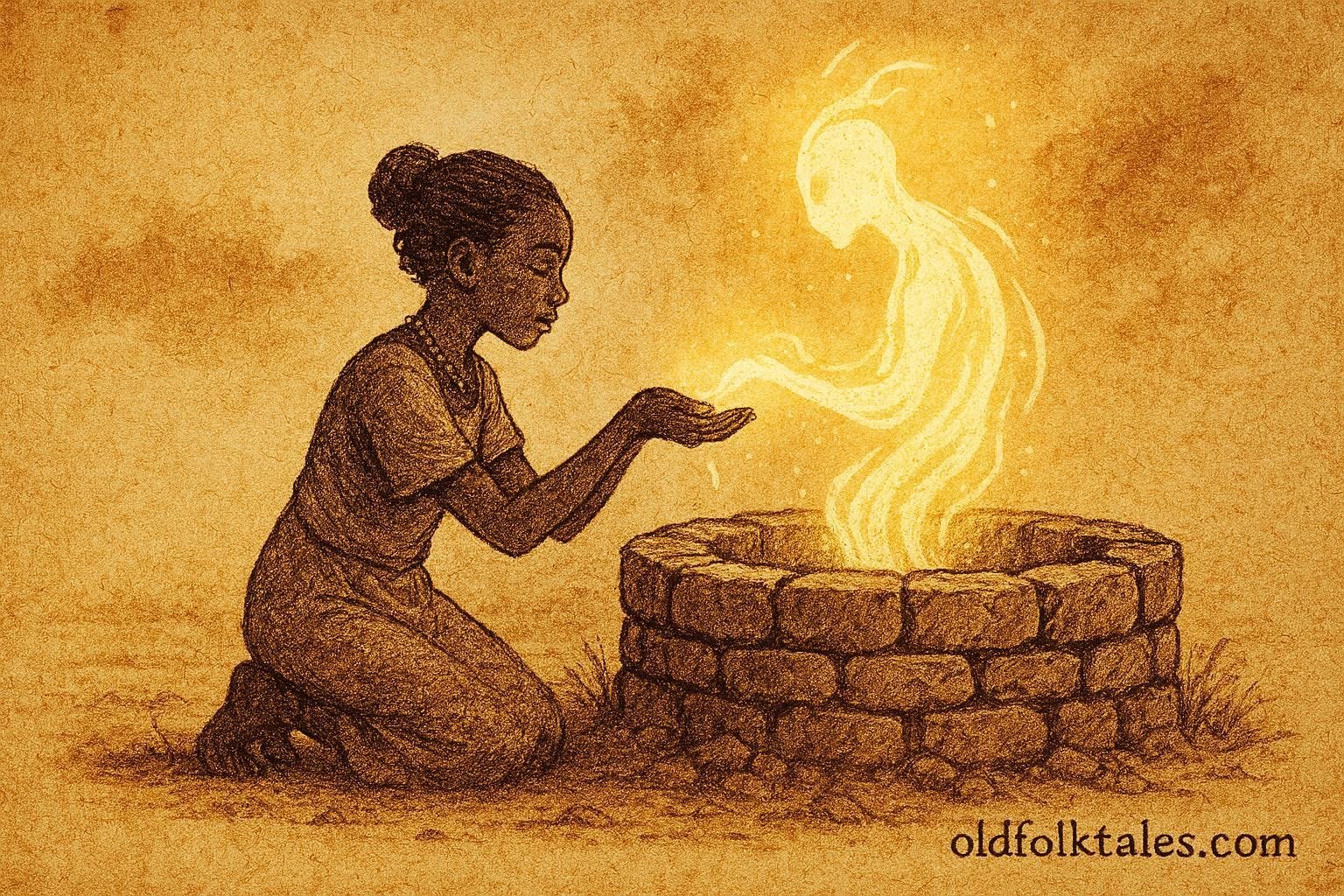
Then she knelt.
Not because she had been told to.
But because it felt right.
“I do not know all the words,” she said softly. “But I remember that you were once honored.”
The air remained still.
But she continued.
“We have forgotten,” she said. “But I have come to remember.”
She poured a small amount of water from the gourd she carried, precious water she could have kept.
It fell into the well with a faint sound.
Then she waited.
Nothing happened immediately.
No voice.
No movement.
Only silence.
But the girl did not leave.
She returned the next day.
And the day after.
Each time bringing a small offering.
Each time speaking quietly.
Not asking for anything.
Only acknowledging.
Only remembering.
Word of her actions spread slowly through the village.
Some laughed.
“Why return water to an empty well?” they asked.
Others shook their heads.
“The old ways are gone,” they said.
But a few watched more closely.
Because something about her persistence felt different.
Days turned into weeks.
The girl continued.
Always quietly.
Always respectfully.
Never demanding a result.
Then one evening, as she knelt once more beside the well, something changed.
The air shifted.
The silence deepened, not emptier, but fuller.
And from within the well, she heard a voice.
“You remember,” it said.
The girl did not move.
She listened.
“We were not gone,” the voice continued. “We were forgotten.”
The girl lowered her head.
“I am here now,” she said softly.
The well seemed to breathe.
Not in sound, but in presence.
“You give without taking,” the voice said. “You honor without demand.”
The girl remained still.
“What must we do?” she asked at last.
“Restore balance,” the spirit replied. “Not just with water, but with respect.”
The girl understood.
Not fully in words.
But clearly in meaning.
The next morning, she returned to the village.
This time, she did not speak only of the well.
She spoke of what had been lost.
Of the forgotten respect.
Of the need to remember, not just the well, but the way they once treated the land itself.
At first, many resisted.
Change is often difficult when it asks people to admit they have forgotten something important.
But the drought remained.
The scarcity did not ease.
And slowly, people began to listen.
The girl guided them—not with authority, but with example.
They returned to the well together.
They cleaned its surroundings.
They approached it with quiet voices once more.
They offered water back before taking.
They remembered.
The process was not immediate.
The well did not fill overnight.
But something began to shift.
The air felt lighter.
The ground softened slightly.
And then, one morning, water appeared at the base of the well.
At first, only a small amount.
But it was clear.
Fresh.
Alive.
The village gathered.
Not in celebration alone.
But in recognition.
They understood then that the well had never truly failed them.
They had failed to honor it.
Over time, the water returned fully.
The well became a place of balance once again, not used carelessly, but respected deeply.
The village learned to treat all water sources differently.
Not as objects.
But as relationships.
And the girl, though still young, became known for something greater than courage.
She became a reminder.
That remembering what matters can restore what is lost.
Don’t stop yet! See our complete East African folktales collection
Moral Lesson
When people neglect respect for nature and tradition, imbalance follows. But through humility, remembrance, and responsibility, harmony between humans and the natural world can be restored.
Knowledge Check
- What is the main lesson of “The Spirit of the Forgotten Well”?
The story teaches that respect for nature and tradition is essential for maintaining balance and survival. - Why did the village face water scarcity?
They neglected the sacred well and abandoned traditional practices that honored the water spirits. - How did the girl restore the well’s water?
She showed respect through offerings, remembrance, and consistent reverence for the well. - What does the well symbolize in the story?
The well symbolizes natural resources, spiritual connection, and the importance of cultural traditions. - What role did the spirit play in the story?
The spirit represented the balance between humans and nature, responding to respect or neglect. - What cultural themes are reflected in this Eritrean folktale?
Themes include environmental respect, spiritual beliefs, tradition, and communal responsibility in Saho and Afar traditions.
Source: Documented in oral heritage preservation efforts and Horn of Africa ethnographic records (1970s–1990s field collections)
Cultural Origin: Saho and Afar-influenced oral traditions in lowland Eritrea