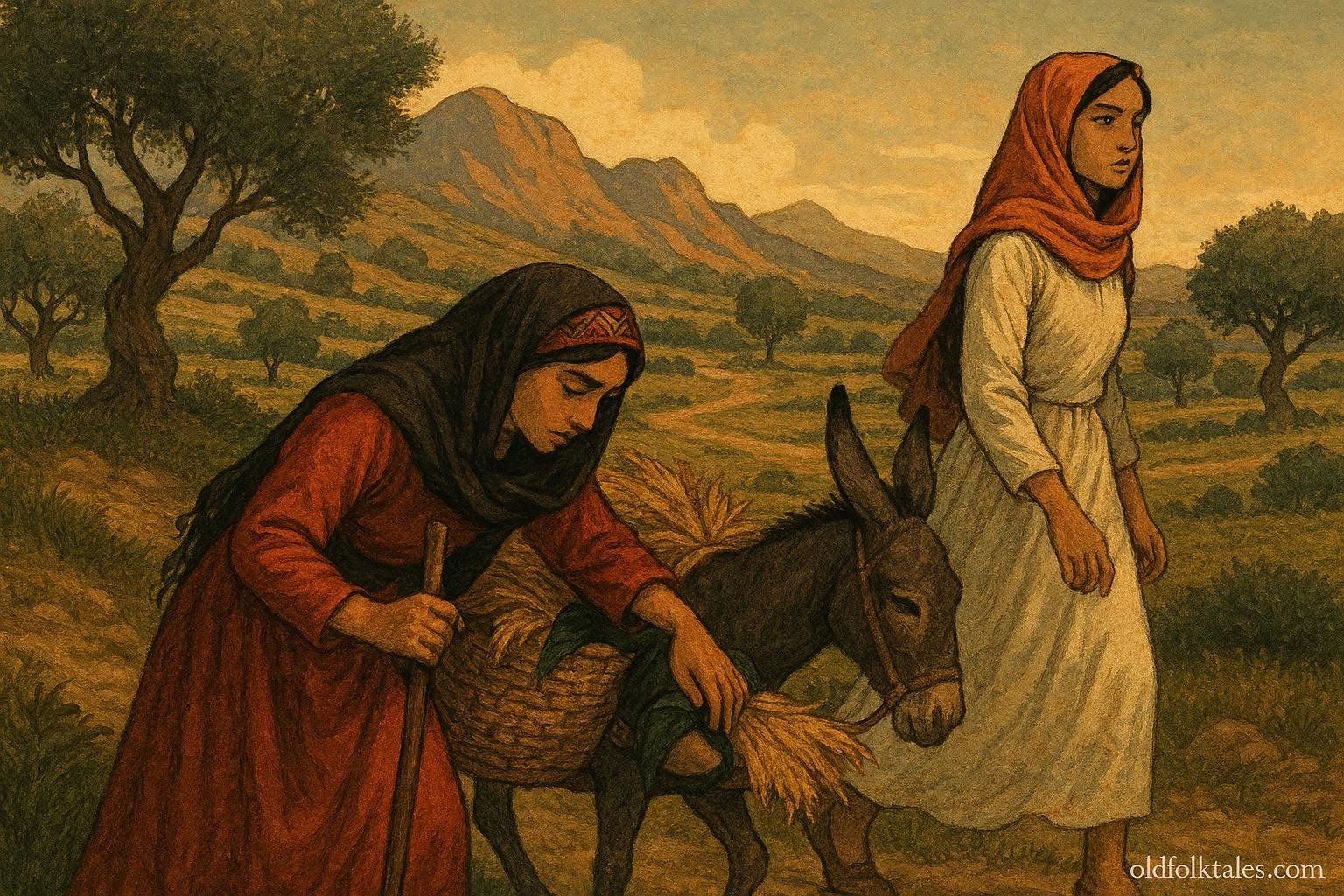
Two sisters grew up in the same household, raised by the same parents and taught the same values. To those who did not know them closely, they appeared similar in every way. They shared the same home, the same routines, and the same expectations placed upon them by their family and community.
Yet beneath this similarity, their characters were very different.
The older sister was known for her patience and kindness. She listened carefully, spoke gently, and showed respect to both elders and strangers. She did not seek attention, and she often chose quiet effort over recognition.
The younger sister, on the other hand, carried a different nature. She was quick to speak and often acted without thinking deeply about her actions. She cared about comfort and recognition and did not like to be inconvenienced. While she was not openly cruel, she lacked the quiet discipline that guided her sister’s behavior.
As they grew older, their differences became more visible. The people around them began to notice how each sister responded to everyday situations. One showed care and humility, while the other often chose ease and self interest.
One day, an unexpected event changed the course of their lives.
If you liked this story, see our Central African folktales collection
A situation arose that required each sister to leave home and travel beyond the familiar paths of their village. It was not a journey taken for comfort or pleasure, but one that carried purpose and uncertainty. They were told to follow a path that would test their character, though the nature of the test was not clearly explained.
The older sister set out first.
She walked along a path that led through open land and quiet surroundings. As she traveled, she encountered moments that required her to make choices. Some of these moments seemed small, but each one demanded attention and care.
At one point, she came across a place that needed order. Without being asked, she took time to set things right. She did not do it for reward, but because it felt like the right thing to do.
Further along her journey, she met situations that required patience. Instead of rushing or ignoring them, she responded calmly. Even when she felt tired, she continued with quiet determination.
Her journey was not easy, but she did not complain. She accepted each moment as part of the path she had been given.
Eventually, she reached the end of her journey. There, she was received with kindness. Her actions, though simple, had been observed and understood. She was given a reward that reflected the character she had shown throughout her journey.
When she returned home, she did not speak proudly of what she had received. Instead, she resumed her life with the same quiet nature she had always carried.
After some time, the younger sister was sent on the same journey.
She began her path with confidence, believing that she would achieve the same result as her sister. However, her approach was different from the beginning.
As she walked, she encountered similar situations to those her sister had faced. However, when she came across tasks that required effort, she chose to ignore them. She believed they were not important and that her time could be better spent moving forward.
When faced with moments that required patience, she became frustrated. Instead of responding calmly, she rushed through situations without care.
Her journey became shorter, not because the path changed, but because she chose not to engage with what the journey required of her.
When she reached the end, she expected the same outcome her sister had received. However, what awaited her was different.
Instead of reward, she was met with disappointment. The path she had walked had revealed her character just as clearly as it had revealed her sister’s. The choices she made along the way had been seen, and they reflected a lack of care and responsibility.
She returned home, not with pride, but with the realization that her actions had consequences she had not considered.
When the two sisters were together again, the difference between them was no longer hidden. Their journeys had revealed what had always existed within them.
The story spread quietly through the community, not as a tale of punishment, but as a reminder. It showed that character is not defined by words or intentions alone, but by actions taken when no one seems to be watching.
From that time, people spoke of the two sisters as an example of how life itself presents trials. These trials do not always appear as obvious tests, but they reveal truth through everyday choices.
Fascinated by this tale? Discover more North African folktales
Moral Lesson
True character is revealed through actions, especially when no one is watching.
Knowledge Check
- Who are the main characters in the story?
Two sisters raised in the same household - What was the purpose of their journey?
To test their character through different situations - How did the older sister behave?
With kindness, patience, and responsibility - How did the younger sister behave?
She ignored tasks and acted without care - What was the result of their choices?
The older sister was rewarded while the younger faced disappointment - What is the main lesson of the story?
Character is revealed through actions, not words
Source
Kabyle folktale, Algeria. Collected by Auguste Mouliéras in Contes populaires d’Algérie (1893).