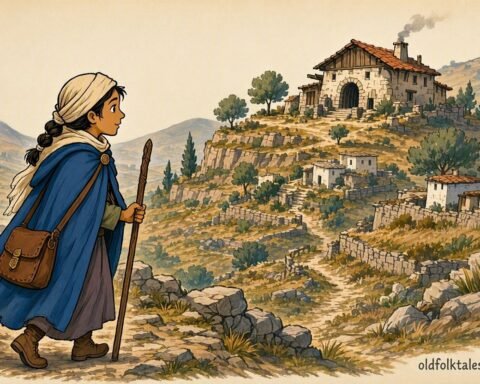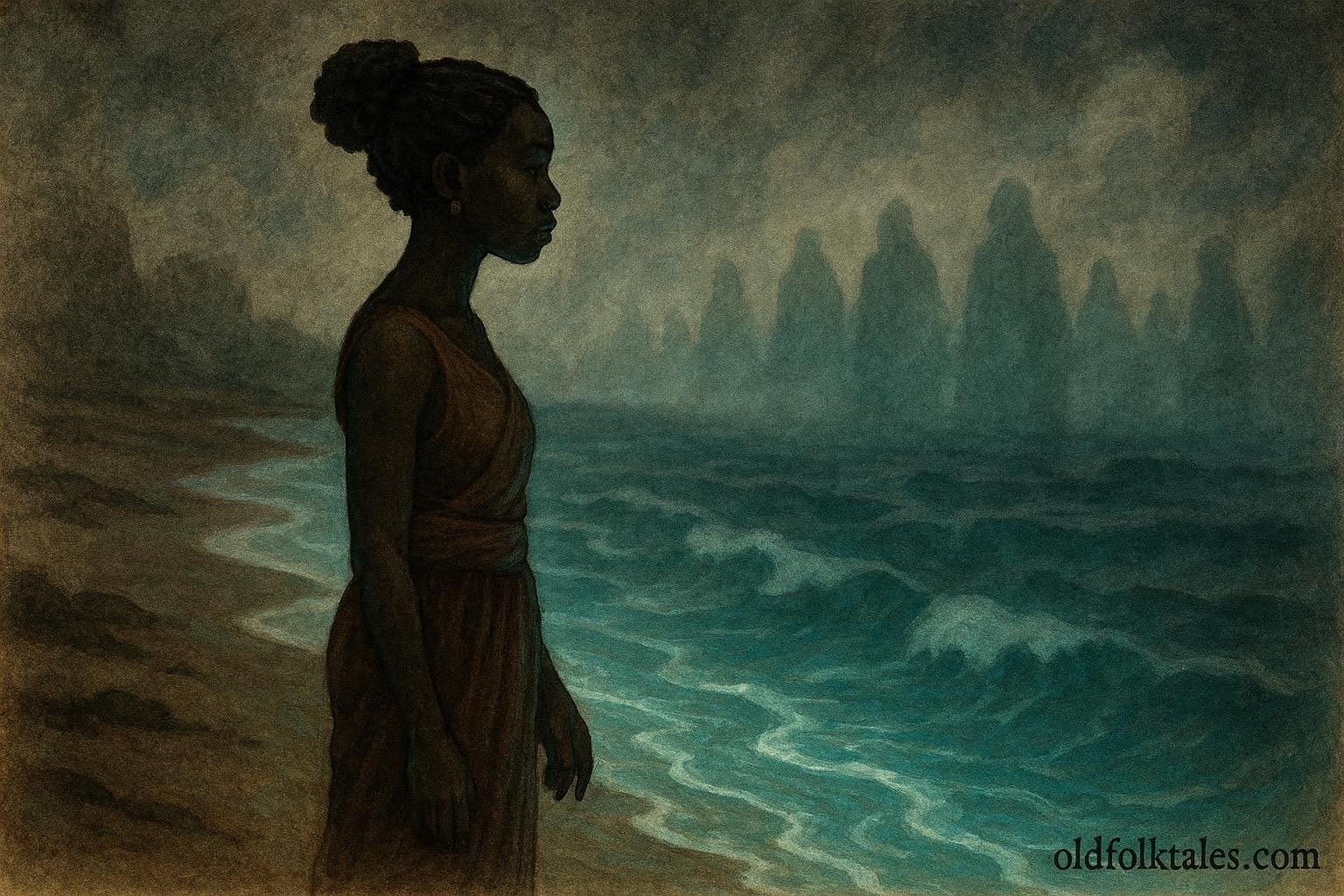
A young woman lived in a coastal community where the sea shaped the rhythm of daily life. The people rose with the tides, fished in the early hours, and returned at sunset with stories carried by the wind. Among them, she was known for her quiet nature and thoughtful presence.
She often walked alone along the shoreline, especially in the evenings when the water reflected the fading light. While others returned home, she remained behind, drawn to the calm and mystery of the sea. It was said that she listened more than she spoke, as though she expected to hear something beyond the ordinary.
Over time, people began to notice her growing distance.
She no longer engaged in conversations as she once did. Her attention seemed divided, her thoughts carried elsewhere. When asked, she would simply smile and give no clear answer.
One evening, as the tide moved gently against the shore, she wandered farther than usual.
Continue your journey: Read more East African folktales
The path she followed was not unfamiliar, yet something about it felt different. The air was still, and the sound of the waves softened into a distant echo. As she walked, she noticed a faint glow ahead, unlike anything she had seen before.
Curiosity led her forward.
She stepped beyond the place where people normally stopped, crossing into a space that felt both real and unfamiliar. The shoreline shifted into something else entirely. The sand appeared smoother, the water clearer, and the atmosphere carried a quiet presence that could not be explained.
Without realizing it, she had entered the spirit world.
At first, she stood still, observing her surroundings. Figures moved in the distance, graceful and calm. They did not appear threatening, yet they were not entirely human. Their movements carried a rhythm that felt older than anything she had known.
One of them approached her.
The figure spoke gently, as though her arrival had been expected. There was no fear in its voice, only a quiet understanding. The woman listened, unsure of how to respond, yet strangely at ease.
She was welcomed.
Days passed, though time did not feel the same. The spirit world held a sense of peace that was different from human life. There were no conflicts, no struggles for survival, and no sense of urgency. Everything existed in balance.
The woman began to adapt.
She learned their ways, observed their customs, and moved among them without resistance. The more she experienced, the more distant her previous life began to feel. The worries and routines of her village no longer seemed important.
Meanwhile, in the human world, her absence was noticed.
Her family searched for her along the shore, calling her name and retracing the paths she used to walk. Days turned into weeks, and concern grew into fear. The elders were consulted, and they spoke of possibilities that were not easily accepted.
They believed she had crossed into a realm beyond the living.
Determined to bring her back, a search was organized. Rituals were performed, and guidance was sought from those who understood the connection between worlds. Eventually, a path was found.
A group followed it.
They moved carefully, guided by knowledge passed down through generations. The journey led them beyond the familiar shoreline, into a place where the boundary between worlds became thin.
There, they found her.
She stood among the spirits, calm and unchanged in appearance, yet different in presence. When she saw them, she did not react with surprise or urgency. Instead, she listened as they called her to return.
They reminded her of her home, her family, and the life she had left behind.
For a moment, silence filled the space between them.
Then she spoke.
Her voice was steady as she explained that she no longer wished to return. The life she had discovered held a peace she had never known. She did not feel lost or taken. She felt that she had found a place where she truly belonged.
Her family pleaded with her.
They spoke of love, responsibility, and the importance of remaining among the living. They urged her to remember who she was and where she came from.
She listened carefully.
But her decision did not change.
The spirits did not interfere. They allowed the conversation to unfold, as though the choice was entirely hers to make.
In the end, the group had no power to force her return.
They understood that some boundaries cannot be crossed without consequence, and some choices cannot be undone once made. With heavy hearts, they turned back, leaving her behind.
The journey home was silent.
When they returned, the story spread through the community. It was told not with anger, but with a sense of understanding. The elders explained that the spirit world is not always a place of danger, but it is not meant for the living to remain.
The woman was never seen again.
Her story became a reminder of the delicate balance between worlds and the choices that shape one’s path. It taught that not all journeys are meant to return, and that some experiences change a person beyond what others can understand.
Even years later, people spoke of her when they walked along the shore at dusk.
They remembered that the boundary between the visible and the unseen is closer than it appears, and that crossing it carries consequences that cannot always be reversed.
Click here to explore more Central African folktales
Moral Lesson
Some choices, once made, cannot be undone, and not every path leads back home.
Knowledge Check
- Where did the woman often go?
She walked along the shoreline - What happened during one of her walks?
She entered the spirit world - How did the spirits treat her?
They welcomed her peacefully - What did her family try to do?
They searched for her and tried to bring her back - Why did she refuse to return?
She preferred the peace of the spirit world - What is the lesson of the story?
Some choices have permanent consequences
Source
Cameroonian folktale. Adapted from coastal traditions documented by Edwin Ardener (1956).