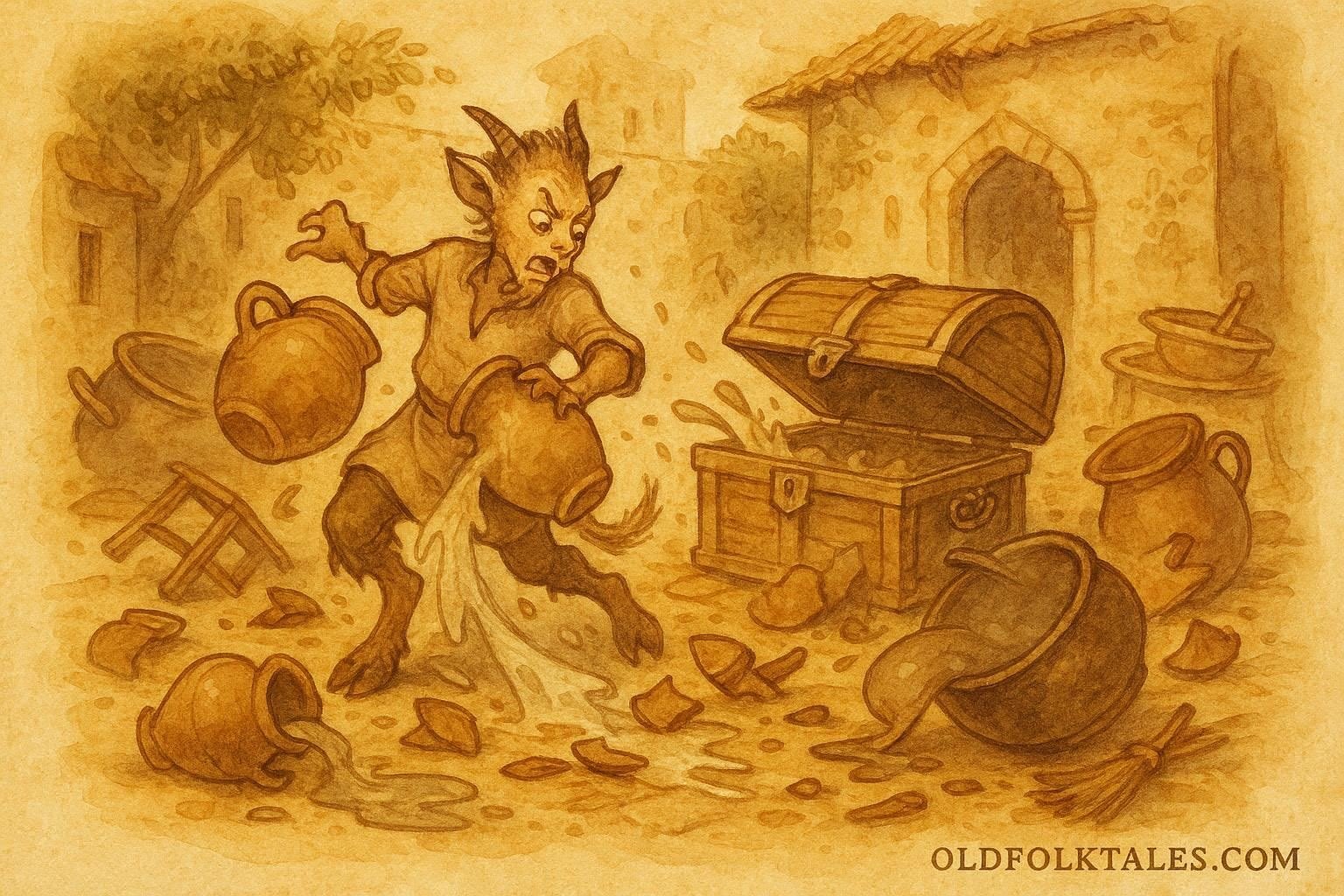
In the bustling town of Abomey, where the streets were lined with clay huts and vibrant market stalls, there lived a wealthy man named Adama. He was respected for his wisdom and fairness, and his household was known across the town for its order and prosperity. Adama’s home bustled with activity, with servants sweeping the courtyards, preparing meals over open fires, and attending to the needs of the family.
Among the servants was a young man named Taye. He was strong and quick, yet he lacked patience and often acted on impulse. Though he had been entrusted with important tasks, he had a habit of ignoring instructions when they seemed too simple or unimportant. The elders in the town often warned him, saying that careful obedience and attention to duty were signs of wisdom. But Taye laughed at their warnings, thinking himself clever enough to manage any situation on his own.
One morning, Adama called Taye to his side. The sun had just begun to rise, spilling golden light across the compound. Birds chirped in the trees, and the aroma of cooking millet filled the air.
“Taye,” Adama said, “today I must attend the council in the town square. I am leaving the household in your care. I will give you a single instruction: Do not open the chest in the inner room, no matter what you hear or see.”
Taye bowed his head respectfully, though his mind was already wandering. “Yes, master,” he said. “I will follow your instructions exactly.”
Looking for more? Explore the magic of East African folktales here
Adama studied him for a moment, then nodded. “Good. Remember, Taye, obedience ensures the safety of this household.” With that, he left for the council, leaving Taye alone in the compound.
At first, Taye attended his duties diligently. He swept the courtyard, fed the chickens, and checked that the firewood was stacked neatly. All seemed ordinary and peaceful. But as the morning wore on, a soft creaking sound drifted from the inner room where the chest lay. It was subtle at first, like the whisper of a breeze through the trees, yet it carried an irresistible curiosity.
Taye paused. His mind began to wander. What could be in that chest? Surely it is only gold or some precious trinket. He told himself he was merely being curious and that a quick glance would do no harm. Yet the warning of his master, the stern words of obedience, lingered at the back of his mind.
After a moment’s hesitation, Taye crept toward the inner room. The door was slightly ajar, inviting him in. The chest sat in the corner, covered in dust but radiating an almost magical allure. He lifted the lid—and at that instant, disaster struck.
The moment the chest opened, a gust of wind seemed to sweep through the room, knocking over lamps and scattering papers. From the chest poured an endless stream of fireflies or so it seemed to Taye at first but soon, the glow intensified, filling the room with strange, flickering light. The floorboards shook beneath his feet, and a sudden clap of thunder echoed through the compound.
Taye stumbled backward in terror, slamming the chest shut. But the damage was done. The wind howled through the house, doors slammed open and closed, and jars of food toppled to the ground. The chickens scattered, and the fire in the hearth nearly went out. Taye tried desperately to fix the chaos, but every action seemed only to make matters worse.
By the time Adama returned from the council, the household was in complete disarray. Pots were broken, food spoiled, and the servants were in panic. Taye knelt before his master, trembling.
“I am sorry, master,” he said. “I disobeyed your instructions. I opened the chest, and I could not control what followed.”
Adama’s face was grave but calm. “Taye, I warned you. Instructions are not given to test patience, but to protect the household. Your failure to obey has caused harm that will take days to repair.”
Taye lowered his head, ashamed. He realized that no cleverness, strength, or speed could undo the consequences of disobedience. The lesson was bitter, but it burned deep in his heart: responsibility is not a burden to evade, but a duty to uphold.
In the days that followed, Taye worked tirelessly to repair the household. He cleaned the broken pots, rebuilt the firewood stacks, and helped restore order to the compound. The other servants watched, some shaking their heads, others offering quiet encouragement. Slowly, the household regained its former harmony.
Yet Taye was changed. No longer did he act on impulse or take shortcuts. He learned to listen carefully, follow instructions exactly, and respect the wisdom of his elders. He understood that obedience was not submission, but a form of strength that ensured safety and harmony.
The villagers also learned from Taye’s mistake. They told the story of the disobedient servant to their children and neighbors, emphasizing that even small acts of neglect or disobedience can bring great misfortune. From that time forward, instructions given with care were respected, and the value of responsibility was remembered throughout the town.
The household of Adama flourished once more, and Taye became known not for his impulsiveness, but for his diligence and careful attention. The chest remained closed, a symbol of wisdom and restraint. And every time a new servant was given a task, the elders would remind them of Taye’s lesson: to follow instructions, to act with responsibility, and to remember that the smallest act of disobedience can bring disaster not only upon oneself but upon others as well.
And so, the tale of the disobedient servant became part of the oral tradition, shared from generation to generation, teaching the people of Benin that obedience and responsibility are the foundations of a prosperous life.
Click here to discover more legendary tales from West Africa
Moral Lesson
Failing to follow instructions and neglecting responsibility can bring harm to oneself and others. Obedience and diligence are essential virtues for safety, harmony, and trust.
Knowledge Check
- Who was the disobedient servant in the story?
Taye, a young servant in Adama’s household. - What instruction did Taye fail to follow?
He was told not to open the chest in the inner room. - What happened when Taye disobeyed?
Opening the chest caused chaos, damaging the household and frightening the servants. - How did Taye respond after his mistake?
He worked hard to restore order and learned the importance of responsibility. - What lesson does the story teach about obedience?
Obedience and diligence prevent disaster and protect both oneself and others. - What is the cultural origin of this folktale?
It is a Fon folktale from Benin.
Source
Dahomean folktale, Benin. Collected by Melville J. Herskovits in Dahomean Narrative (1958).