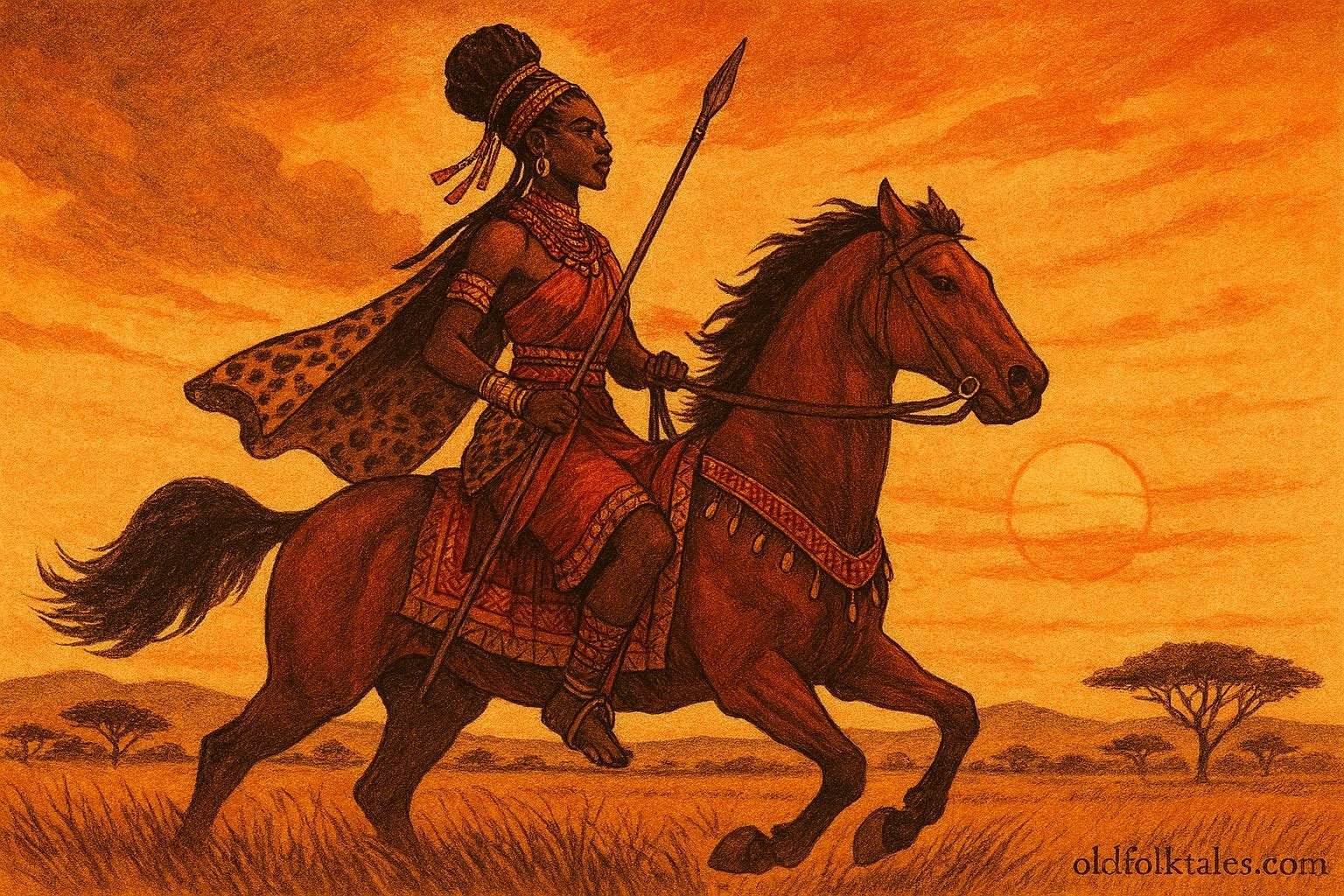
Among the Mossi people of what is now Burkina Faso, one name has endured across generations as a symbol of strength and independence. That name is Yennenga, a royal daughter whose life would change the course of history.
Yennenga was born into a powerful kingdom ruled by her father, a respected king whose authority stretched across vast lands. From an early age, she showed qualities that set her apart. While others expected her to grow into a quiet royal figure, she showed interest in skills rarely associated with princesses.
She learned to ride horses with exceptional confidence.
She trained in combat, discipline, and strategy, proving herself capable in ways that surprised many in the royal court. Her presence on the training grounds became a sign of her determination. She was not content to watch from a distance. She wanted to act, to lead, and to be part of something greater.
Her father noticed her abilities.
At first, he was proud. Yennenga’s strength brought honor to his name. She became known as a warrior, respected not only within the palace but across the kingdom. Her reputation grew, and her courage became widely admired.
But pride slowly turned into concern.
If you liked this story, see our Central African folktales collection
The king began to fear losing control over his daughter’s path. Her independence, which once seemed admirable, now appeared unpredictable. He worried that her desire for freedom would take her away from the life he had planned for her.
As time passed, he made a decision.
He restricted her movements and limited her involvement in activities beyond the palace. The freedom she once enjoyed was replaced by rules and expectations. Yennenga found herself confined, unable to live the life she believed she was meant for.
This change did not sit well with her.
She felt that her identity was being taken from her. The skills she had developed, the strength she had built, and the purpose she felt within herself were now being suppressed.
Her frustration grew into determination.
One night, she made a choice that would define her legacy.
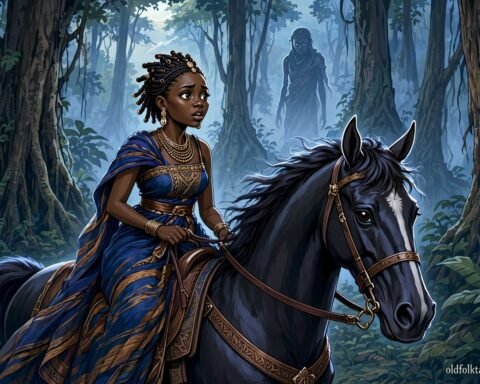
She disguised herself and prepared her horse. Under the cover of darkness, she rode away from the palace, leaving behind everything she had known. The journey ahead was uncertain, but she accepted the risk.
Her departure marked the beginning of a new path.
She traveled far from her father’s kingdom, crossing unfamiliar lands. The journey tested her strength and resilience, but she remained focused. She was no longer just a princess. She was a woman shaping her own destiny.
Eventually, she reached a distant region where she encountered a hunter.
The man lived a simple life, far removed from royal influence. When they met, there was no recognition of status, only a meeting between two individuals. He saw her strength, and she saw his sincerity.
They spoke, and a bond formed.
Yennenga found in him a sense of balance. His life was different from hers, yet it offered something she had been searching for. Over time, their connection deepened, and they built a life together.
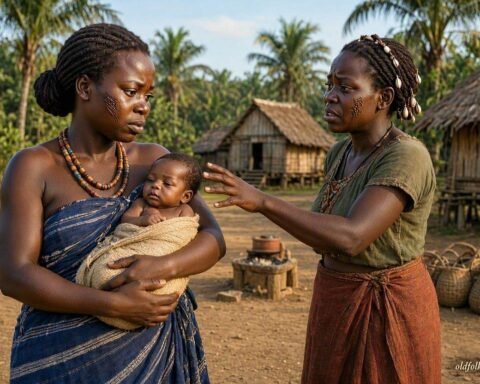
From this union, a child was born.
The child would later be known as Ouédraogo.
Yennenga raised her son with awareness of both his heritage and his future. She did not hide her past from him. Instead, she taught him about his lineage, his responsibility, and the path that lay ahead.
As he grew, it became clear that his life would carry significance.
Yennenga understood that her journey had not been just about her own freedom. It had created something larger. Through her courage, a new lineage had been formed, one that would shape the identity of a people.
When the time was right, her son set out toward his ancestral homeland.
Through him, the foundation of the Mossi kingdom was established. His leadership reflected the strength of his mother and the balance of his upbringing.
Yennenga’s role in this story remained central.
She was not only the beginning of a lineage but also the force that made it possible. Her decision to leave, her refusal to be confined, and her willingness to embrace the unknown all contributed to a legacy that endured.
Over time, her story became more than a personal journey.
It became a legend.
It was told as a reminder of courage, independence, and the power of choice. Her life showed that true strength lies not only in physical ability but in the courage to follow one’s own path.
Even generations later, her name continued to carry meaning.
She remained a symbol of what it means to challenge expectations and create something lasting.
Click here to discover more legendary tales from West Africa
Moral Lesson
Courage and independence can shape not only one’s own destiny but the future of generations.
Knowledge Check
- Who was Yennenga?
A Mossi princess and warrior - What made her different from others?
She trained in combat and rode horses - Why did she leave the palace?
She wanted freedom and independence - Who did she meet during her journey?
A hunter - Who was her son?
Ouédraogo - What is the lesson of the story?
Courage and independence shape destiny
Source
Burkinabè oral tradition. Adapted from Mossi narratives documented by Michel Izard in Gens du pouvoir, gens de la terre (1985).