In the heart of Madagascar, where land and life are deeply intertwined, there once flowed a river that the people depended on for everything.
It was more than water.
Click here to discover more legendary tales from West Africa
It was movement. It was memory. It was life itself.
The river ran through the village like a living thread, carrying with it the rhythm of seasons, the growth of crops, and the quiet comfort of continuity. Children played along its edges, elders rested in its shade, and fishermen depended on its generosity.
For as long as anyone could remember, it had never failed them.
It was believed, as is common in Malagasy tradition, that rivers are not merely natural formations but living presences, watched over by spirits, bound by respect, and guided by balance. The river was not owned. It was shared.
And it was respected.
At least, it once was.
Over time, the village began to change.
The needs of the people grew, and slowly, so did their disregard. What had once been taken with gratitude began to be taken without thought. The riverbanks, once treated as sacred boundaries, became places of careless activity. The water, once used with restraint, was drawn more and more heavily.
What had been balance began to shift.
At first, the river did not react.
It continued to flow, steady and familiar, as it always had.
But nature remembers what humans forget.
And the river was watching.
Then, one day, something changed.
The flow weakened.
It was subtle at first, nothing that could be immediately named. But those who depended on the river felt it. The current was slower. The sound of water softer. The certainty of its presence less dependable.
Days passed.
The river grew quieter still.
Until, finally, it stopped.
No rushing current. No gentle movement. No familiar sound weaving through the village.
Only stillness.
The river that had always given itself freely had refused to flow.
At first, the villagers did not understand.
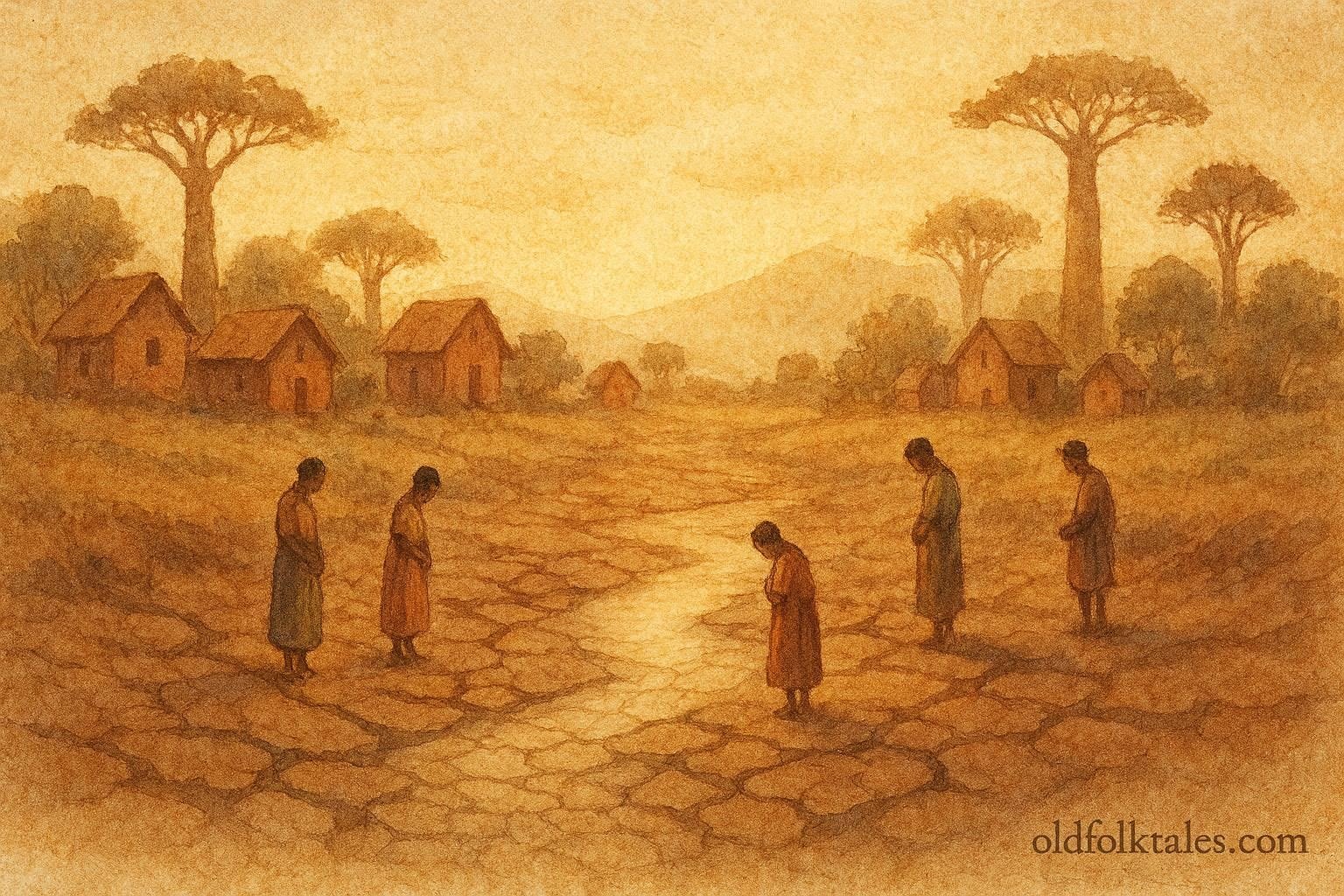
They searched upstream, believing it to be a seasonal change, a natural delay, something temporary. But there was no explanation in the land itself. The skies remained open. The rains had not abandoned them.
Yet the river remained still.
And as stillness settled, so did fear.
The fields began to dry. The soil hardened. The once-living edges of the land began to lose their strength. Without the river’s presence, everything that depended on it began to weaken.
It was then that the people began to remember something they had long ignored.
The river was not only a resource.
It was a presence that could withdraw.
Among them was a young fisherman.
He had grown up beside the river, learning its moods before he learned the language of adults. He knew its quiet patterns, its shifting depths, its generosity in certain seasons and its restraint in others.
To him, the river had always felt alive.
And now, it felt absent in a way that was deeply unnatural.
While others argued and searched without direction, the young fisherman chose to listen. He spent time near the silent riverbed, observing not just what was missing, but what had changed in the space it once occupied.
The absence felt intentional.
Not random.
Not accidental.
As he stayed longer, he began to understand something the others had overlooked.
The river had not disappeared.
It had withdrawn.
And withdrawal, in the language of nature, is not silence, it is response.
He began to reflect on what had changed before the river stopped flowing. He remembered how the banks had been treated with less care. How the water had been taken without pause. How the respect that once surrounded the river had slowly faded into habit.
And with that fading, something essential had been lost.
Balance.
The fisherman understood then what the elders had always taught in quiet ways: that in Malagasy belief, nature is bound by fady, sacred taboos that exist not as punishment, but as protection. They maintain harmony between human life and the living world.
When those boundaries are broken, imbalance follows.
And imbalance is always answered.
The river, in its silence, was not dead.
It was waiting.
Waiting for recognition. Waiting for humility. Waiting for restoration.
The young fisherman returned to the village.
He did not speak of blame. He did not accuse. Instead, he shared what he had understood, that the river’s stillness was not random, but a reflection of how it had been treated.
That the river had not failed them.
They had failed the river.
His words were not immediately accepted.
But silence had already done its work.
The land itself was changing, and denial could no longer sustain them.
Slowly, understanding began to take root.
The people returned to the riverbanks, not with urgency, but with awareness. They saw now what they had not seen before, that the river was not just something they used, but something they lived with.
They began to correct what had been neglected.
Not with force.
Not with demand.
But with humility.
And in that shift, something subtle but profound began to happen.
The air around the river felt different.
The stillness softened.
And then, without warning or spectacle, the river stirred.
At first, it was only a trace of movement, barely visible. Then a quiet return of flow along the edges. Slowly, carefully, the water began to move again, as if testing whether it could trust the world it was re-entering.
The river had not been forced.
It had been invited back through respect.
And so it returned.
Not as it once was in ignorance, but as something understood again.
Alive. Shared. Honored.
The village, too, changed.
They no longer saw the river as endless. They saw it as something that could withdraw when neglected, and restore itself when respected.
And the young fisherman, who had listened when others had rushed, became a reminder that understanding often begins where noise ends.
Looking for more? Explore the magic of East African folktales here
Moral Lesson
Nature is not passive. It responds to how it is treated. When humans disrespect natural balance, withdrawal and consequence follow. Restoration is only possible through humility, awareness, and respect for what sustains life.
Knowledge Check
- Why did the river stop flowing in the Malagasy folktale?
The river stopped flowing because humans disrespected its banks and overused its waters, breaking natural balance. - What does the river symbolize in “The River That Refused to Flow”?
The river symbolizes nature as a living, responsive force that must be respected and not exploited. - Who helped the village understand the river’s silence?
A young fisherman who observed the changes and recognized the need for balance and respect. - What cultural belief is reflected in this folktale?
It reflects Malagasy beliefs in sacred natural forces and fady taboos that govern human interaction with nature. - How was the river restored in the story?
It was restored when the villagers acknowledged their mistakes and returned to respectful treatment of the river. - What is the main lesson of the folktale?
That nature withdraws when disrespected and can only be restored through humility and balance.
Source: Inspired by Malagasy river spirit traditions recorded in “Les Coutumes des Malgaches” by Julien (1952)
Cultural Origin: Malagasy folklore, Madagascar, rooted in beliefs about sacred natural forces (fady taboos)