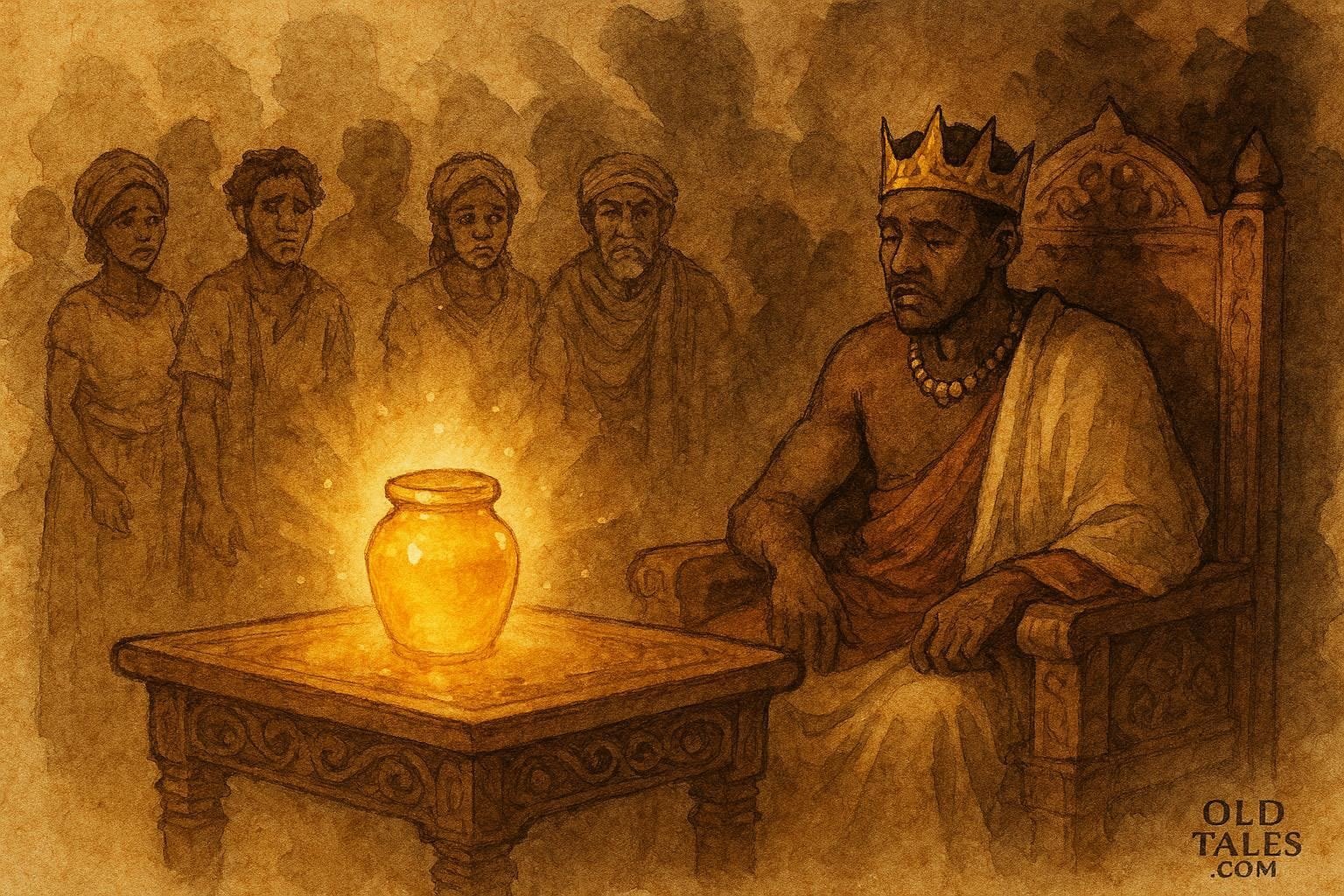
In the royal traditions of Madagascar, where stories were not merely told but used to guide rulers and preserve balance in society, there was once a tale spoken in hushed tones within palace courtyards and village gatherings alike.
It was the story of a sacred honey.
Explore the wisdom and wonder of North African folktales
This honey did not come from ordinary hives. It was said to be gathered deep within a forest believed to be watched over by unseen forces, spirits tied to the land, guardians of natural and moral order. Such things were never taken lightly. In Malagasy belief, gifts from nature were never without consequence.
And so, when the honey was presented to the king, it was treated with reverence.
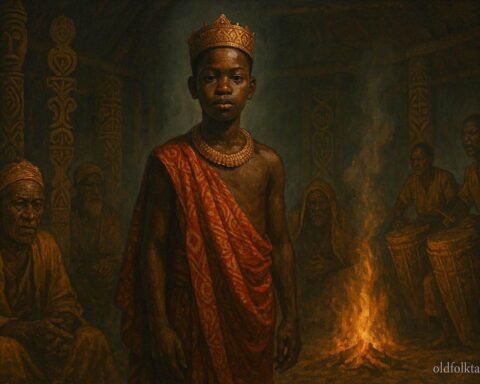
The king who received it was already a man of great authority. His word shaped the kingdom. His decisions affected villages, rivers, harvests, and trade. People looked to him not only for leadership but for stability. A king was expected to remember his duties as clearly as he remembered his name.
But memory, like power, is fragile when tested by temptation.
The honey was offered as a rare blessing. Sweet, golden, and fragrant, it seemed to carry within it something beyond taste, something almost comforting, almost inviting the mind to rest.
The king consumed it.
And nothing seemed to change at first.
He continued his duties. He spoke with his council. He received visitors. The kingdom moved as it always had, and no one suspected that something unseen had begun to shift within him.
But then, after some time had passed, something subtle occurred.
The king forgot.
Not everything.
Not at once.
But small pieces of responsibility began to slip away from his mind, like water through open fingers. Decisions he had made were forgotten. Promises made in council meetings faded. Concerns raised by villagers no longer remained in his memory long enough to be addressed.
Each time he returned to the honey, the effect deepened.
It was not immediate destruction.
It was erosion.
And because it came gently, it went unnoticed.
At first, those around him assumed it was fatigue. Kings carried heavy burdens. Forgetfulness was not unheard of. But as time passed, the pattern became impossible to ignore.
Each time the king consumed the honey, his memory of duty weakened.
And with weakened memory came weakened governance.
Orders were delayed. Matters of urgency were left unresolved. Complaints from villages went unheard. The structure of responsibility, once steady, began to loosen.
And in that loosening, the kingdom began to feel it.
Chaos does not arrive suddenly. It builds in silence.
Fields were left unattended. Disputes remained unsettled. Decisions that required leadership were delayed until they lost meaning. People began to feel the absence of direction, though they did not yet understand its source.
The king, meanwhile, remained unaware of the pattern.
To him, the honey was simply a comfort, something sweet, something soothing, something that eased the weight he could not fully name.
But responsibility does not disappear simply because it is forgotten.
It shifts elsewhere.
And in this case, it shifted toward the people.
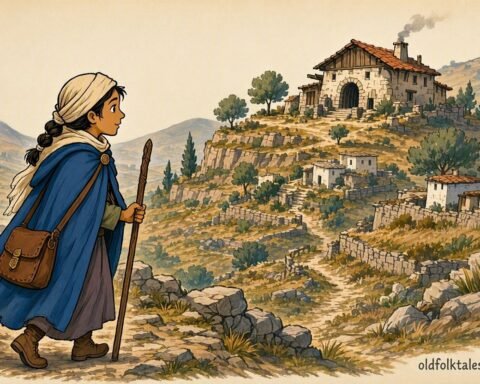
Among them was a young village girl.
She was not part of the royal court, nor did she hold any official role in governance. But she was observant in a way that many adults around her had stopped being. She noticed patterns others dismissed. She listened when others assumed nothing needed attention.
And she noticed the change in the kingdom.
She saw how decisions were delayed after certain visits to the palace. She heard how concerns were repeatedly raised but never resolved. She observed how the king’s attention seemed clear one moment, and absent the next.
And she began to trace the pattern.
Each lapse, each forgotten duty, each moment of absence, it all followed the same quiet cause.
The honey.
She learned of its origin: a sacred forest gift, treated with reverence, never questioned in its presence. But reverence without understanding can become blindness.
And the girl realized something troubling.
The honey was not simply a gift.
It was a test.
Or a warning.
The question now was not what the honey did.
But what it meant for a king to forget responsibility while still holding power.
Because power without memory of duty is not leadership, it is danger.
The girl faced a difficult truth.
If the honey remained, the king would continue to forget. And if he continued to forget, the kingdom would continue to weaken.
But if it were destroyed, the king might suffer for it. The truth might reach him suddenly, without protection, without preparation.
And truth, especially when it has been hidden within comfort, can be painful when revealed.
She stood at the edge of that decision.
Not between right and wrong in the simple sense, but between consequences that both carried weight.
To save the king might mean confronting him with a truth he had long avoided.
To destroy the honey might mean ending its influence, but also ending something the king had come to depend on without understanding.
In Malagasy royal storytelling traditions, such dilemmas were not merely moral, they were lessons in balance. Leadership was never separated from responsibility, and neither was exempt from consequence.
The girl chose action.
She confronted the reality of the honey’s effect, recognizing that continued ignorance would only deepen the collapse of order.
What happened next was not described as triumph or punishment, but as restoration through truth.
The illusion of harmless sweetness was removed.
And with it, the pattern of forgotten responsibility could no longer continue unnoticed.
The king, faced with the reality of what had been happening, could no longer rely on forgetting.
He had to remember.
And remembering, once truth is revealed, cannot be undone.
The kingdom, shaken but no longer blind, began the process of repair.
Not because power was removed, but because awareness returned.
And the village girl, who had seen what comfort had hidden, understood something that many in power forget:
Memory is not just personal.
In leadership, it is responsibility.
Don’t stop yet! See our complete East African folktales collection
Moral Lesson
Power without memory of responsibility leads to collapse. Temptation can slowly distort leadership, and truth, though difficult, must sometimes be confronted in order to restore balance and prevent greater harm.
Knowledge Check
- What is the effect of the sacred honey in the folktale?
The honey causes the king to forget his responsibilities each time he consumes it. - Why did the kingdom begin to fall into chaos?
Because the king repeatedly forgot his duties, leading to poor governance and delayed decisions. - Who discovered the truth about the honey?
A young village girl who noticed the pattern of forgetfulness linked to the honey. - What does the honey symbolize in the story?
It symbolizes temptation and the dangers of comfort that disconnect leaders from responsibility. - What is the main lesson of “The Honey That Made Kings Forget”?
That leadership requires constant awareness of duty, and forgetting responsibility leads to societal collapse. - How is Malagasy royal tradition reflected in the tale?
It reflects cautionary storytelling used in royal courts to teach responsibility, balance, and moral governance.
Source: Inspired by royal cautionary tales from “Folklore de Madagascar” by Grandidier (1890)
Cultural Origin: Malagasy royal court storytelling traditions, Madagascar