In the mist-covered highlands of Madagascar lived the Zafimaniry people, a community famous for their woodcraft, mountain villages, and deep spiritual connection to the forests surrounding their homeland. Their homes, carved with intricate wooden patterns passed down through generations, stood among hills wrapped in cool air and dense woodland.
To the Zafimaniry, the forest was far more than a source of wood or shelter.
It represented ancestry, identity, and survival itself.
Trees provided materials for homes, tools, and sacred objects used during ceremonies, while rivers flowing through the mountains sustained farms and villages below. Elders taught children from an early age that the land must be treated with respect because the ancestors watched closely over the balance between humans and nature.
Among the Zafimaniry’s most important traditions was the Fire Dance.
According to oral history, the ceremonial dance began generations earlier during a time of disaster when large sections of forest mysteriously began dying. Rivers shrank unexpectedly, crops failed, and unusual illnesses spread through isolated mountain villages.
Fear gripped the communities.
Some believed angry spirits caused the destruction.
Others warned that younger generations had forgotten sacred customs protecting the forests.
Keep reading: Discover more Central African folktales
At the center of the old legend stood an ancestral leader named Rainisoa, remembered as both a skilled woodcarver and spiritual guide. During the crisis, Rainisoa traveled through the mountains seeking answers from elders, healers, and ancestral shrines hidden within the forests.
Finally, after many days alone in the wilderness, he experienced a vision beside a mountain fire.
According to tradition, ancestral spirits appeared to him through the flames and revealed a ceremonial dance meant to restore harmony between the people and the land. The ritual would honor the ancestors, strengthen unity among villages, and remind future generations that the forests could survive only through respect and cooperation.
When Rainisoa returned, he instructed the people carefully.
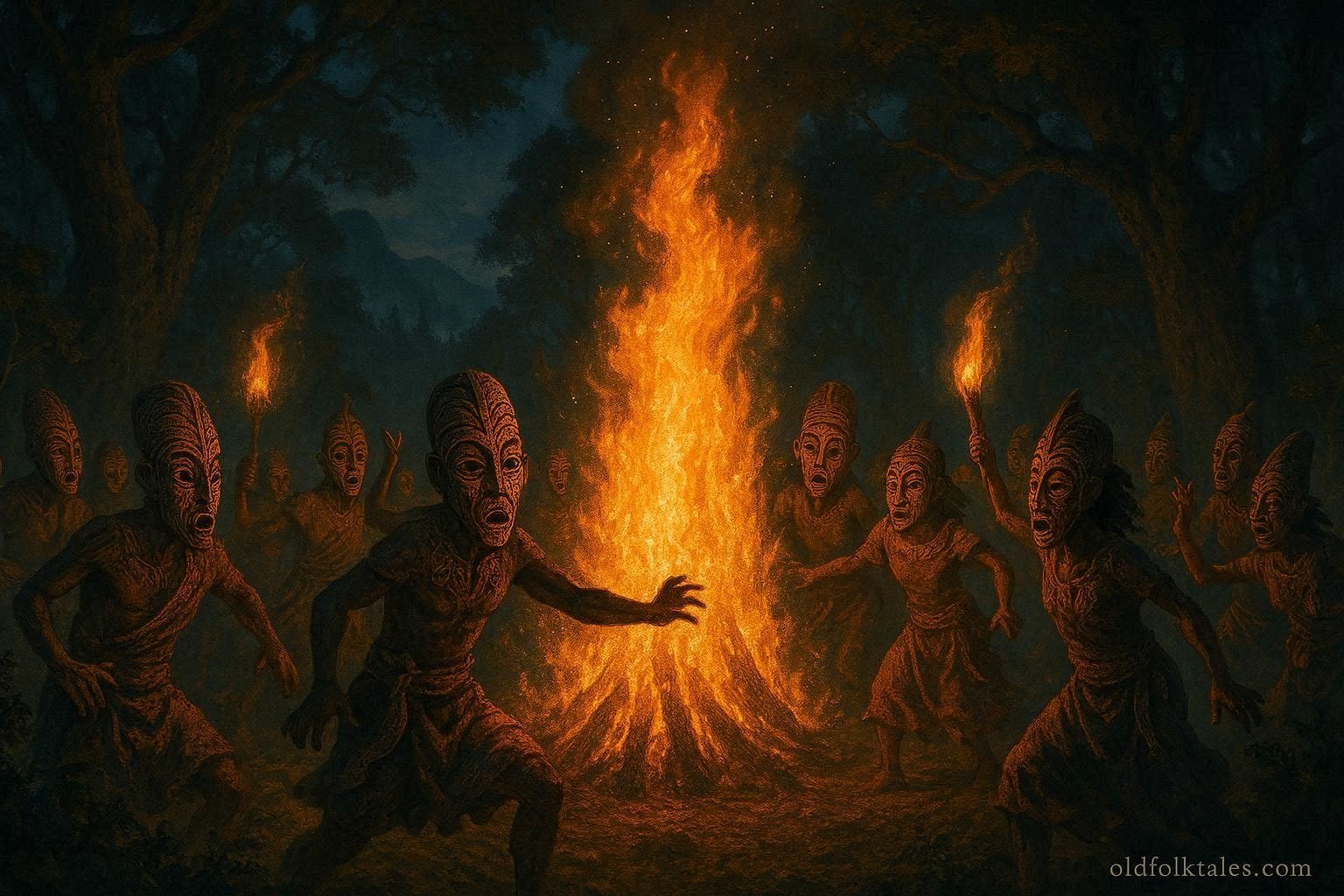
The ceremony would take place once every year during the dry season beneath the oldest trees of the mountain forest. Villagers would gather carrying carved torches, drums, and ceremonial offerings while dancers moved in circles around sacred fire.
Every movement carried symbolic meaning.
The dance of raised hands honored the trees.
The stamping of feet represented connection to the earth.
The circular formation symbolized unity between the living, the dead, and future generations still unborn.
Most importantly, the ritual reminded the people never to destroy the forest through greed.
According to the story, shortly after the first Fire Dance was performed, heavy rains finally returned to the mountains. Rivers filled once more, crops recovered, and the dying forests slowly began growing again.
From that time onward, the ceremony became sacred tradition among the Zafimaniry.
Generations later, the Fire Dance remained central to village life.
Children learned its rhythms from elders while woodcarvers created ceremonial masks and torches used during the ritual. Travelers visiting the mountain communities often heard stories describing how the ancestors continued protecting the forests whenever the ceremony was performed correctly.
But over time, change reached the highlands.
Trade increased between distant regions, and some younger villagers became less interested in older traditions. Outside merchants arrived seeking valuable hardwood from the forests, offering wealth in exchange for large amounts of timber.
Certain village leaders accepted eagerly.
Trees once considered sacred began disappearing from the hillsides.
At first, the changes seemed harmless.
But gradually, the forests surrounding several villages thinned dangerously. Streams became smaller during dry seasons, animals disappeared from hunting grounds, and landslides damaged farmland after heavy rainstorms.
Older elders grew deeply worried.
“The mountains are losing balance,” one elder warned during a village gathering. “The ancestors are reminding us of what we have forgotten.”
Despite the warnings, arguments divided the community.
Some villagers wanted continued logging for economic survival. Others insisted the traditions protecting the forests must be restored fully before greater disaster arrived.
At the center of the conflict stood a young woodcarver named Faly.
Unlike many others his age, Faly respected the old traditions deeply because his grandfather had once served as a ceremonial leader during the Fire Dance. From childhood, he learned the songs, drum patterns, and spiritual meanings connected to the ritual.
Yet even Faly questioned whether ancient ceremonies still carried real power.
Then disaster struck the mountains.
One season, massive fires broke out unexpectedly across parts of the forest during severe drought conditions. Villages struggled desperately to stop the flames spreading toward homes and farms.
Fear spread rapidly.
Many believed the destruction reflected the anger of neglected ancestors.
As the crisis worsened, village elders announced an emergency gathering to perform the Fire Dance for the first time in many years with full ceremonial tradition restored.
Preparations lasted several days.
Families traveled from distant mountain settlements carrying offerings, carved torches, musical instruments, and ceremonial clothing. The atmosphere across the villages mixed fear with hope as people gathered beneath the ancient forest trees.
On the night of the ceremony, fires illuminated the mountain clearing while drums echoed through the cold air.
At the center stood Faly holding one of the sacred torches once carried by his grandfather.
For several moments, silence covered the gathering.
Then the drums began.
Slowly, dancers moved around the fire in wide circles while elders sang ancient songs honoring the mountains, rivers, ancestors, and forests protecting the Zafimaniry people for generations.
The flames rose higher as the dance continued.
Smoke drifted upward into the dark sky while the rhythmic movement of hundreds of villagers created powerful unity rarely seen in the divided communities before.
Faly felt something change within him.
For the first time, he understood the Fire Dance was never simply performance or superstition. It preserved collective memory and reminded people of responsibilities greater than personal wealth or temporary gain.
As dawn approached, rain clouds gathered unexpectedly above the mountains.
Soon afterward, heavy rainfall spread across the forests, helping extinguish many of the dangerous fires threatening the region.
Whether coincidence or ancestral blessing, the people interpreted the event as a sign.
After the ceremony, forest protections strengthened throughout the villages. Sacred groves received renewed protection, younger generations resumed learning traditional practices, and community leaders limited destructive logging activities.
The Fire Dance itself continued surviving as one of the Zafimaniry’s most important ceremonies.
Even today, stories about the ritual remain connected to respect for nature, ancestral memory, and the fragile relationship between humans and the environment.
And according to old belief, whenever firelight flickers beneath the forests of the Malagasy highlands, the ancestors of the Zafimaniry may still be dancing silently among the trees.
Don’t stop yet! See our complete East African folktales collection
Moral Lesson
Communities survive when they respect nature, preserve tradition, and protect the environment for future generations.
Knowledge Check
- Who are the Zafimaniry people?
The Zafimaniry are a Malagasy community known for woodcraft and mountain traditions. - Why was the Fire Dance created?
It was created to restore harmony between people, ancestors, and the forests. - What did the dance symbolize?
The dance symbolized unity, environmental balance, and ancestral protection. - Why did the forests begin suffering again?
Sacred traditions were neglected, and excessive logging damaged the environment. - Who helped revive the ceremony?
A young woodcarver named Faly helped restore the Fire Dance tradition. - What lesson does the story teach?
Protecting nature and preserving tradition benefits both present and future generations.
Source
Madagascan ceremonial folklore. Adapted from Zafimaniry ceremonial traditions documented in UNESCO-linked Malagasy cultural heritage studies.