In western Madagascar, where the wide waters of the Tsiribihina River cut through forests, cliffs, and dry plains before reaching the distant sea, generations of villages depended upon the river for survival. Fishermen traveled its currents daily, traders crossed its waters carrying goods between communities, and elders told stories warning people to respect the powerful spirits believed to live beneath its surface.
Among the people living near the Tsiribihina, crocodiles were not viewed as ordinary animals.
Many believed they carried spiritual importance connected to ancestral law and the protection of sacred agreements. Certain crocodiles were considered guardians of the river itself, watching silently over human actions and punishing those who broke important promises.
Children grew up hearing old warnings:
“Never lie beside the Tsiribihina. The river remembers.”
For many years, peace existed among the riverside communities.
Then conflict divided two powerful families.
The rivalry began after a dispute over fishing territory during a severe dry season when water levels dropped dangerously low across the region. As resources became scarce, arguments between the families intensified into violence.
Keep reading: Discover more Central African folktales
At the center of the conflict stood the households of Andriatsilo and Bemaro.
Both families possessed influence, cattle, boats, and strong ties to nearby villages. Each accused the other of breaking traditional agreements concerning access to the river’s richest fishing grounds.
What began as disagreement soon became hatred.
Fights erupted during market gatherings. Fishing nets were destroyed at night. Young warriors from both sides carried weapons openly while elders struggled unsuccessfully to calm growing tensions.
Over time, fear spread through neighboring communities.
Trade slowed along parts of the river because travelers feared becoming trapped between the rival groups. Ceremonies once shared peacefully between villages stopped entirely.
Worst of all, several mysterious drownings occurred along disputed sections of the river.
Many believed the crocodile spirits themselves had become angered by the violence poisoning the Tsiribihina.
As conditions worsened, village elders organized a gathering beneath sacred trees near the riverbank to prevent further bloodshed.
There, an elderly spiritual mediator named Rafeno addressed both families publicly.
“The river carried life to your ancestors long before this conflict began,” he declared. “If hatred continues, the Tsiribihina will judge everyone equally.”
Neither family trusted the other enough to negotiate openly.
Then Rafeno proposed an ancient solution rarely used anymore — the Crocodile Oath.
According to local tradition, the oath was among the most sacred agreements possible within riverside communities. Rival parties seeking peace would swear truth and loyalty beside the river under spiritual witness from the crocodile guardians believed to inhabit the waters.
Breaking such an oath invited terrible consequences.
Stories claimed oath-breakers later disappeared mysteriously, suffered repeated misfortune, or became victims of crocodile attacks along the riverbanks.
Though feared, the ritual remained deeply respected.
At first, younger warriors from both families rejected the idea angrily. But older relatives understood the danger of continued conflict and slowly pressured their households toward acceptance.
Finally, both sides agreed.
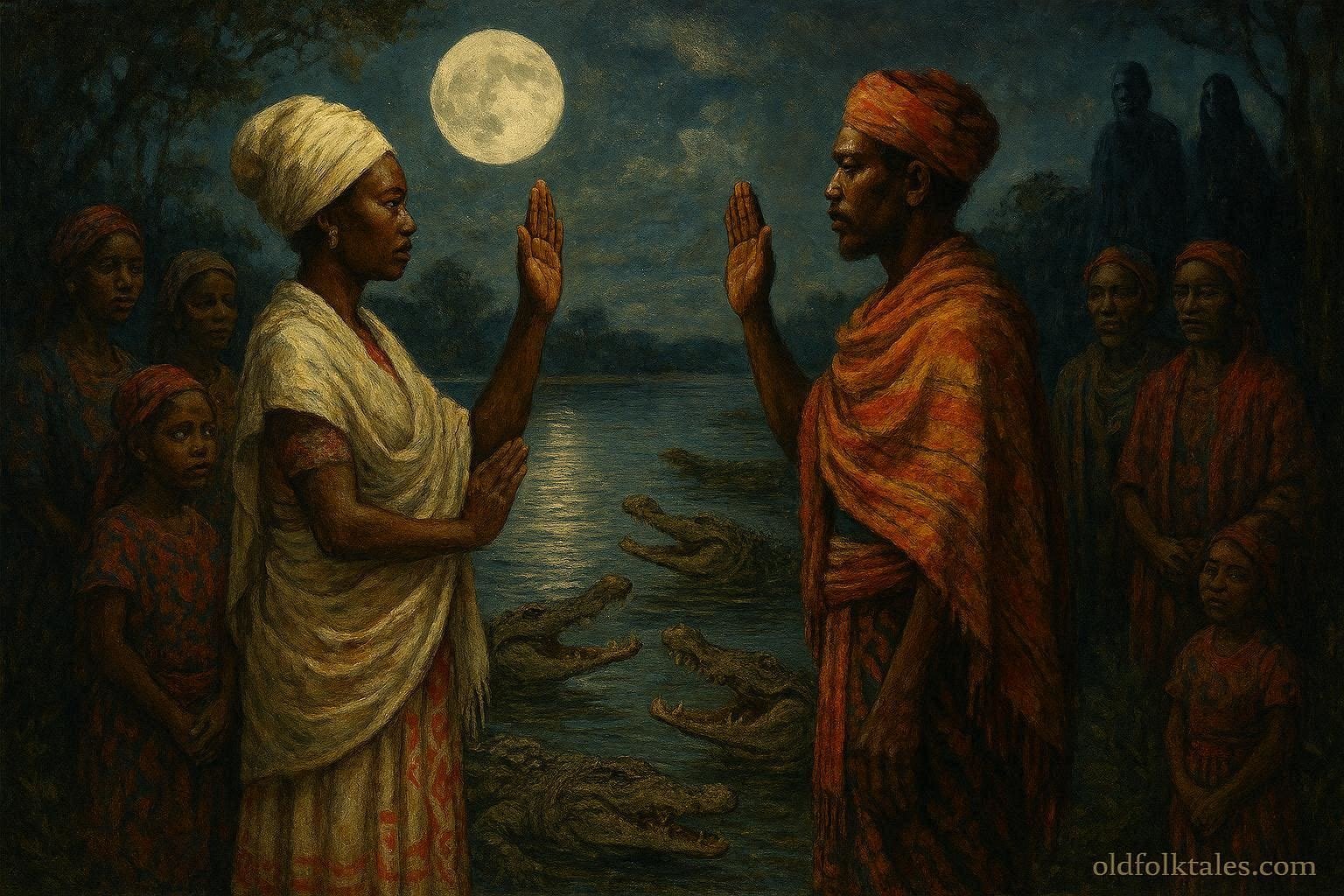
The ceremony took place during the first full moon after the rainy season began.
Villagers gathered silently along the Tsiribihina River while drums echoed softly across the water. Elders prepared ceremonial offerings including rice, honey, medicinal plants, and carved wooden symbols representing peace between families.
The atmosphere felt heavy with tension.
At the center stood Andriatsilo and Bemaro themselves, surrounded by relatives watching carefully from opposite sides of the riverbank.
Rafeno stepped forward holding a sacred staff decorated with crocodile carvings.
“The river hears all words spoken tonight,” he warned. “False promises cannot hide from the spirits beneath the water.”
Then the oath began.
Both family leaders knelt beside the river and repeated ancient vows promising peace, cooperation, and an end to revenge between their households. Each swore before the ancestors never again to spill blood over the Tsiribihina.
As the final words were spoken, strange movement disturbed the water.
Several crocodiles surfaced silently near the ceremony.
The crowd froze immediately.
Moonlight reflected across the animals’ eyes while they remained completely still facing the gathering. No one spoke.
For many villagers, the appearance confirmed the river spirits had come to witness the oath directly.
Rafeno lowered his head respectfully.
“The guardians have heard,” he whispered.
After several moments, the crocodiles disappeared slowly beneath the water once more.
The ceremony ended peacefully, and for the first time in years, hope returned to the communities along the Tsiribihina.
At first, the peace remained fragile.
Some younger men still carried anger and suspicion. Minor disagreements continued occasionally between members of the rival families. Yet gradually, cooperation returned.
Fishing routes reopened.
Trade resumed along the river.
Ceremonies once divided by hostility brought communities together again.
For several years, the oath held firm.
Then temptation appeared.
A younger relative from Bemaro’s family named Toky secretly began stealing fish traps from Andriatsilo’s territory hoping to weaken their economic recovery. Believing no one would discover the thefts, he ignored warnings from older relatives who reminded him about the sacred oath protecting the peace.
“The oath belongs to the elders,” Toky argued carelessly. “Not to us.”
One night during heavy rain, Toky disappeared while crossing the river alone.
His canoe was later discovered overturned near a stretch of water known for crocodile activity.
No trace of him was ever found.
Fear spread rapidly through the villages.
Many believed the crocodile spirits themselves had punished the violation of the sacred covenant. Whether accident or supernatural judgment, no one dared challenge the meaning of the event openly.
Afterward, respect for the oath deepened permanently.
Generations later, the story of the Crocodile Oath of the Tsiribihina River continued surviving throughout western Madagascar as a warning about loyalty, sacred promises, and the spiritual consequences of betrayal.
Even today, many riverside communities still speak carefully when making important agreements near the water.
Because according to old belief, the Tsiribihina River never forgets an oath spoken in its presence.
Don’t stop yet! See our complete East African folktales collection
Moral Lesson
Peace survives only when promises are honored with sincerity, loyalty, and respect for sacred agreements.
Knowledge check
- Why did the two families begin fighting?
They argued over fishing territory during a severe dry season. - Why were crocodiles considered sacred?
People believed crocodiles guarded the river and witnessed important promises. - What was the Crocodile Oath?
It was a sacred peace agreement sworn beside the Tsiribihina River. - What happened during the ceremony?
Crocodiles appeared silently in the water as the oath was spoken. - Why did Toky disappear?
He violated the sacred peace agreement through theft and betrayal. - What lesson does the story teach?
Sacred promises must be respected to preserve peace and trust.
Source
Madagascan river folklore. Adapted from Tsiribihina River oral traditions documented in Malagasy ethnographic and cultural studies.