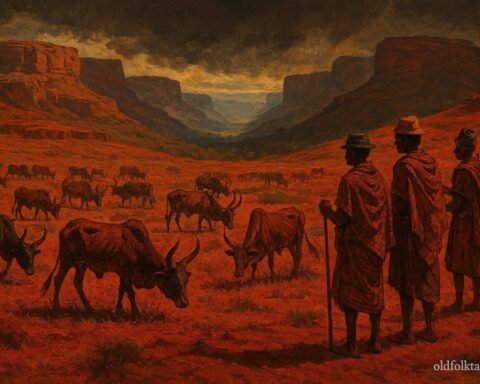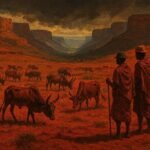
Across the dry sandstone landscapes of southern Madagascar stretched the dramatic cliffs and deep canyons of Isalo, a region known for towering rock formations, hidden caves, and ancient burial grounds protected by generations of tradition. The Bara people who lived across the surrounding lands believed the ancestors remained spiritually connected to the living, watching carefully over families, cattle, and sacred customs.
Among the Bara, tombs carried enormous importance.
They were not merely places where the dead rested.
A family tomb represented ancestry, identity, memory, and spiritual continuity linking the living to those who came before them. Great care surrounded burial rituals, and disturbing ancestral tombs was considered one of the most dangerous violations imaginable.
Elders warned that disrespect toward the dead could bring misfortune not only upon individuals, but upon entire communities.
One particular tomb hidden within the Isalo cliffs inspired greater fear than all others.
According to oral tradition, the Forbidden Tomb stood inside a narrow canyon far beyond ordinary travel routes. The entrance remained partially concealed behind rocks and thorn trees, making it nearly invisible to strangers unfamiliar with the region.
Want to dive deeper? Read more North African folktales today
The tomb was believed to belong to an ancient Bara royal lineage whose ancestors once ruled parts of the surrounding plains generations earlier.
Few living people claimed to know its exact location.
Even those who did rarely approached it.
Stories about the tomb spread across villages for decades.
Some claimed mysterious lights appeared near the canyon at night.
Others described hearing distant singing or funeral drums echoing through the rocks after sunset despite no ceremonies taking place nearby.
Many believed ancestral spirits guarded the area directly.
For generations, local families respected the warnings and avoided entering the forbidden canyon.
Then outsiders arrived.
During a period of increased trade across southern Madagascar, a wealthy caravan leader named Rakoto traveled through the Bara territories searching for rare goods, hidden mineral deposits, and ancient artifacts connected to forgotten royal families.
Rakoto was ambitious and proud.
Unlike the local villagers, he dismissed many traditional stories as superstition designed to frighten strangers away from valuable locations.
One evening, while staying near an isolated settlement outside Isalo, he heard elders discussing the hidden royal tomb and the sacred objects believed to remain inside.
His interest grew immediately.
“Ancient royal tombs always contain treasures,” he remarked confidently to his companions.
Several villagers warned him sternly.
“The tomb is protected by ancestral law,” one elder insisted. “Nothing good comes from disturbing the dead.”
But Rakoto ignored the advice.
Driven by greed and curiosity, he hired guides to help locate the canyon. Most refused immediately after hearing his request. Only two desperate young men eventually agreed to assist him in exchange for payment.
At dawn, the group entered the rocky wilderness of Isalo.
The journey became increasingly difficult as they crossed dry riverbeds, narrow cliffs, and winding stone passages beneath the intense southern heat. Strange silence covered parts of the canyon, broken only by distant wind moving through the rocks.
As evening approached, one guide became visibly nervous.
“We should turn back,” he whispered. “This place feels wrong.”
Rakoto refused.
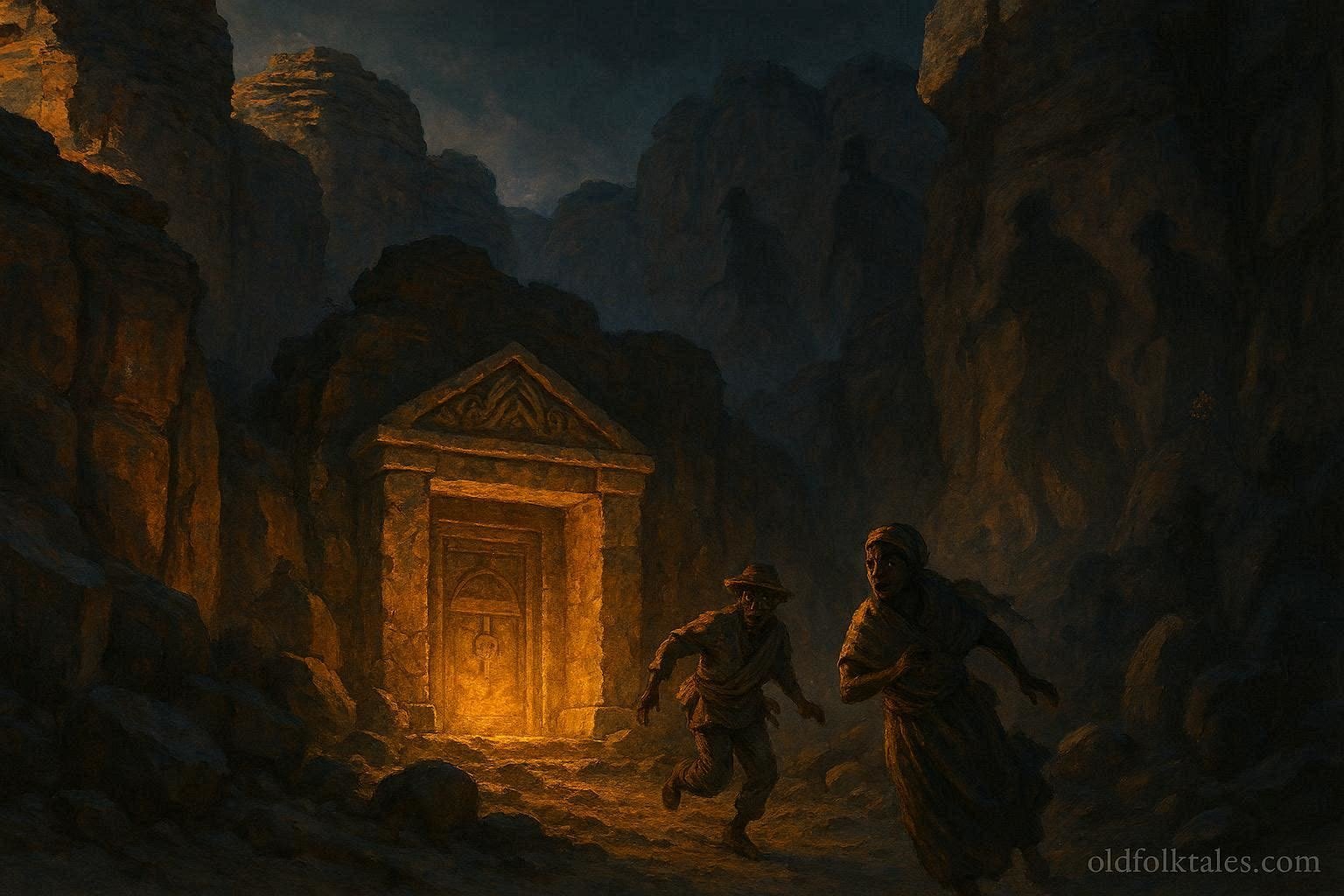
Finally, hidden between steep canyon walls, they discovered the entrance.
Thorn bushes partly covered a narrow opening leading into darkness beneath the cliffs. Ancient carvings decorated the surrounding stone, worn smooth by centuries of wind and time.
The guides hesitated fearfully.
But Rakoto stepped forward eagerly carrying a lantern.
Inside, the tomb stretched deep into the rock.
Stone chambers lined the interior, decorated with faded symbols, woven burial cloths, ceremonial objects, and carved wooden posts connected to ancestral rituals. Though age covered everything in dust, the atmosphere still carried powerful presence.
The air felt unnaturally cold.
One guide refused to continue further.
“The ancestors are watching,” he warned before fleeing outside.
Rakoto mocked the fear openly.
Ignoring the remaining warnings, he began examining objects within the tomb searching for valuables. He collected beads, carved ornaments, and ceremonial items while instructing the others to help him carry whatever appeared valuable.
Then they reached the inner chamber.
At the center rested a large carved coffin surrounded by offerings left generations earlier by descendants of the royal family. Sacred symbols covered the stone walls while animal horns and ceremonial staffs stood arranged carefully around the chamber.
The remaining guide lowered his eyes immediately.
“We cannot touch this place,” he pleaded quietly.
But Rakoto approached the coffin anyway.
The moment he disturbed the ceremonial objects surrounding it, a powerful wind suddenly rushed through the tomb although no outside air could enter the sealed chamber. The lantern flames flickered violently while deep rumbling echoed through the canyon walls.
Then the strange events began.
Outside, dark clouds gathered rapidly above Isalo.
The temperature dropped sharply.
And from somewhere deeper within the tomb came the faint sound of funeral drums.
The guide screamed and ran.
Rakoto himself froze as shadows moved unnaturally across the chamber walls. Though no living person stood nearby, he suddenly felt overwhelming presence surrounding him inside the darkness.
A voice seemed to whisper through the wind.
“The dead are not forgotten.”
Terrified at last, Rakoto abandoned the objects he had taken and fled from the tomb with the remaining members of his caravan.
But the consequences followed him.
As the group attempted leaving Isalo, accidents and misfortunes struck repeatedly. Pack animals disappeared mysteriously during the night. Several men became severely ill without explanation. Violent storms blocked safe travel routes through the region.
Fear spread quickly among the caravan.
Many believed the ancestors themselves demanded justice.
Finally, after days of suffering, Rakoto returned alone to the canyon carrying every sacred object removed from the tomb. Trembling with fear, he replaced the items carefully within the burial chamber and begged forgiveness from the ancestors.
Only afterward did the strange events gradually stop.
Rakoto abandoned his search for hidden treasures completely and later became known for warning travelers never to disturb sacred burial places regardless of wealth or ambition.
Years later, the legend of the Forbidden Tomb of Isalo continued spreading across Madagascar as a powerful reminder about ancestral respect and the dangers of violating sacred traditions.
Among the Bara people, the story reinforced an ancient belief still remembered today:
The dead may rest silently, but they are never truly powerless.
Continue your journey: Read more East African folktales
Moral Lesson
Respect for ancestors and sacred traditions protects communities from the consequences of greed and disrespect.
Knowledge Check
- Where was the Forbidden Tomb located?
The tomb was hidden within the rocky canyons of Isalo in southern Madagascar. - Why were Bara tombs considered sacred?
They represented ancestry, identity, and spiritual connection to the dead. - Who was Rakoto?
Rakoto was a wealthy caravan leader searching for treasures and artifacts. - What happened after the tomb was disturbed?
Strange storms, illness, fear, and supernatural events followed the travelers. - How did Rakoto end the misfortunes?
He returned the sacred objects and asked forgiveness from the ancestors. - What lesson does the story teach?
Sacred ancestral places should never be disturbed out of greed or pride.
Source
Madagascan ancestral folklore. Adapted from Bara burial traditions documented in anthropological studies and Madagascar cultural archives.