Among the green mountains of the Volta Region stood the quiet community of Amedzofe, a place surrounded by thick forests, cool mist, rocky paths, and ancient stories passed from one generation to the next. Travelers crossing the mountain roads often spoke about the unusual silence of the hills at dawn and the spiritual reputation carried by the village for many years.
The people of Amedzofe believed the mountains listened.
Elders taught that certain places within the forests carried spiritual presence connected to the ancestors and unseen forces protecting the land. Sacred groves remained untouched, streams were approached respectfully, and many villagers avoided climbing particular hills after sunset.
Among the most respected and feared traditions of the region was the mountain oracle.
According to oral tradition, the oracle lived in a secluded shrine hidden deep within the hills overlooking the village. People believed the oracle could reveal warnings, hidden truths, and signs about future events through visions and spiritual messages.
For generations, villagers traveled to the shrine seeking guidance during periods of illness, drought, conflict, or uncertainty.
If you liked this story, see our Central African folktales collection
Some returned comforted.
Others returned frightened.
The oracle’s prophecies rarely came with simple answers.
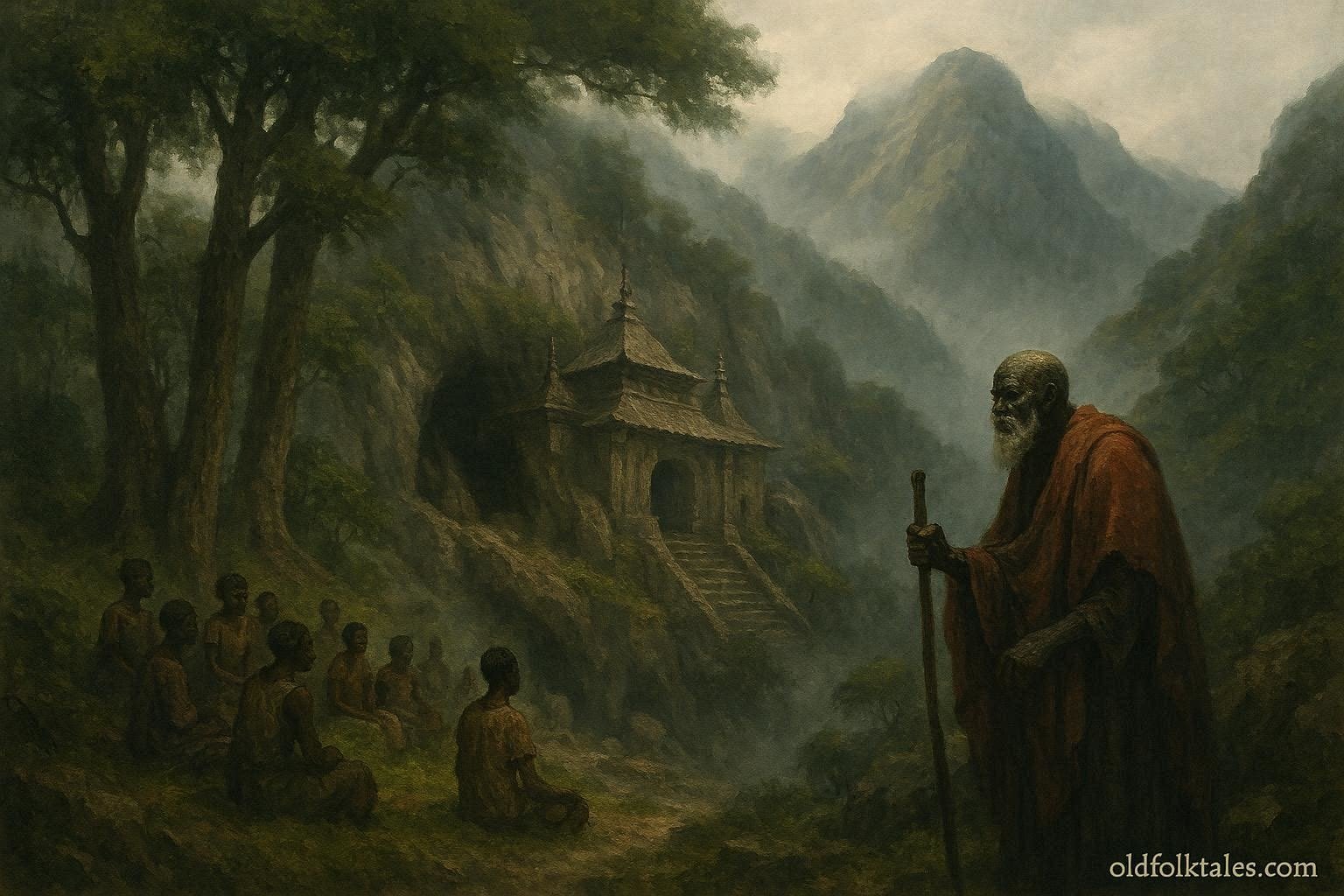
At the center of the tradition was an elderly spiritual figure named Togbe Kosi, the latest guardian of the mountain shrine. He lived alone near the sacred caves above Amedzofe and spoke rarely outside ritual ceremonies.
Though many respected him deeply, others feared the influence his prophecies held over the community.
Togbe Kosi himself often warned people against becoming too dependent on predictions.
“Prophecy is like fire,” he once told a gathering of elders. “It gives light, but it can also destroy those who misuse it.”
For many years, the village remained peaceful.
Then unusual events began troubling the region.
The farming season arrived late after weak rainfall. Several crops failed unexpectedly, and strange illnesses spread among livestock in nearby communities. Traders passing through the mountain roads carried rumors of conflict developing in distant areas.
Anxiety slowly spread across Amedzofe.
Villagers began visiting the mountain shrine more frequently, hoping the oracle could explain the growing uncertainty.
At first, Togbe Kosi offered only cautious guidance.
He advised patience, unity, and respect for communal responsibilities. But as fear grew stronger, people demanded clearer answers about the future.
Finally, during an important gathering beneath the sacred trees near the shrine, the oracle delivered a troubling prophecy.
“A shadow of division approaches this village,” Togbe Kosi declared. “If fear rules the people, the mountain will no longer protect them.”
The message spread rapidly throughout Amedzofe.
Some villagers interpreted the prophecy as a warning about outside threats or coming disaster. Others believed hidden betrayal already existed within the community itself.
Soon, suspicion began replacing trust.
Families argued over the meaning of the oracle’s words. Certain villagers accused others of bringing spiritual imbalance into the community through greed or disrespect toward tradition. Minor disagreements that once passed peacefully now turned into serious conflicts.
The prophecy slowly divided the village.
Among the younger generation was a schoolteacher named Sena Adzor, a thoughtful man respected for encouraging education and cooperation within Amedzofe. Though he respected local traditions, Sena worried that fear surrounding the prophecy was becoming dangerous.
“The oracle warned us about division,” he told his friends one evening. “But people are creating the division themselves.”
Not everyone appreciated his views.
Some accused Sena of disrespecting the mountain shrine and questioning sacred authority. Others believed only strict obedience to the oracle could save the village from disaster.
Meanwhile, visitors from nearby communities continued arriving at the shrine seeking answers about their own problems. Stories about the mountain oracle spread across the region, increasing both fear and fascination surrounding Amedzofe.
Then another prophecy deepened the tension further.
During a ritual gathering, Togbe Kosi announced that “a trusted voice within the village would soon bring great change.”
The message immediately sparked new rumors.
Different groups began suspecting different individuals. Some believed the prophecy referred to a chief, while others accused merchants, hunters, or teachers. Even Sena became the subject of whispers because of his growing influence among younger villagers.
Trust weakened rapidly.
Neighbors avoided discussing important matters openly. Families stopped cooperating during communal farming work. Meetings between elders became tense and suspicious.
The very fear people hoped the oracle would remove was now consuming the village itself.
One evening, after hearing renewed accusations against several innocent families, Sena decided to climb the mountain path alone to speak directly with Togbe Kosi.
The journey took hours through mist-covered forests and steep rocky trails.
When he finally reached the shrine, he found the old oracle sitting quietly near the entrance of the sacred cave.
For several moments, neither man spoke.
Then Sena addressed him carefully.
“Your prophecies are tearing the village apart,” he said.
Togbe Kosi looked toward the distant lights of Amedzofe below the mountain.
“The words did not divide them,” the old man replied softly. “Fear divided them.”
Sena remained silent.
“The mountain reveals what already exists inside people,” Togbe Kosi continued. “Some hear wisdom. Others hear only what their fear wants to hear.”
The teacher thought carefully about the words.
“But why continue giving prophecies if they create suffering?” he finally asked.
The oracle sighed deeply.
“Because people demand certainty about the future,” he answered. “And certainty can become more dangerous than ignorance.”
The following morning, Sena returned to the village and gathered several respected elders, farmers, and community leaders together beneath the meeting tree.
Instead of discussing new prophecies, he encouraged people to focus on rebuilding trust through cooperation and honest conversation.
At first, many resisted.
But gradually, some villagers began recognizing how fear had transformed ordinary uncertainty into dangerous suspicion. Families started repairing damaged relationships. Farmers resumed helping one another during planting season. Public gatherings slowly became calmer.
Even Togbe Kosi later addressed the community publicly one final time.
“The future cannot be protected through fear alone,” he warned. “A village survives when people choose wisdom over panic.”
Not long afterward, the old oracle disappeared quietly from the mountain shrine. Some believed he died peacefully within the sacred caves, while others claimed he simply vanished into the forest beyond the hills.
No one ever found his body.
Yet the story of the Oracle of Amedzofe survived throughout the Volta Region for generations afterward. Elders repeated it whenever communities became consumed by fear, rumors, or blind dependence on prophecy.
And according to local belief, the mountains of Amedzofe still listen carefully to the hearts of those who seek answers among the mist.
Want more? Read more West African folktales now
Moral Lesson
Fear and suspicion can divide a community faster than any prophecy if people abandon trust and wisdom.
Knowledge Check
- Where was Amedzofe located?
Amedzofe was a mountain community in the Volta Region of Ghana. - Who was Togbe Kosi?
He was the elderly guardian of the mountain oracle shrine. - What caused fear in the village?
The oracle’s prophecies created suspicion and uncertainty among the people. - Who questioned the growing panic in the community?
A schoolteacher named Sena Adzor encouraged unity and calm thinking. - What did Togbe Kosi say about fear?
He said fear, not prophecy itself, was dividing the people. - What lesson did the villagers eventually learn?
Communities remain strong through trust, cooperation, and wisdom.
Source
Ghanaian mountain folklore. Adapted from Ewe oral traditions recorded in ethnographic research and Volta Region cultural archives.