Near the northern borders of Zambia stretched the vast waters of Lake Mweru, a region long connected to trade, migration, fishing, and oral storytelling across Central Africa. For generations, traders crossed the routes surrounding the lake carrying salt, copper, cloth, ivory, and food between distant villages and kingdoms.
The roads near Lake Mweru were busy during daylight.
But few travelers moved after sunset.
Elders warned that certain paths near the lake belonged to wandering spirits, especially along isolated stretches where old caravans once disappeared during storms, conflict, and disease outbreaks many years earlier.
Among the Bisa people, stories about spirit travelers were treated seriously.
Some believed restless souls remained tied to forgotten trade roads after dying far from home. Others claimed the spirits guarded hidden paths between the human world and the unseen world existing beside it.
The most feared story of all involved the Ghost Caravan.
Continue your journey: Read more East African folktales
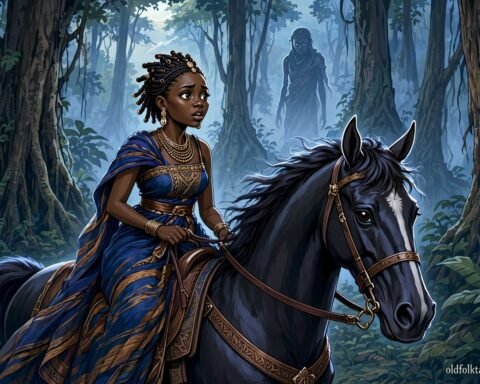
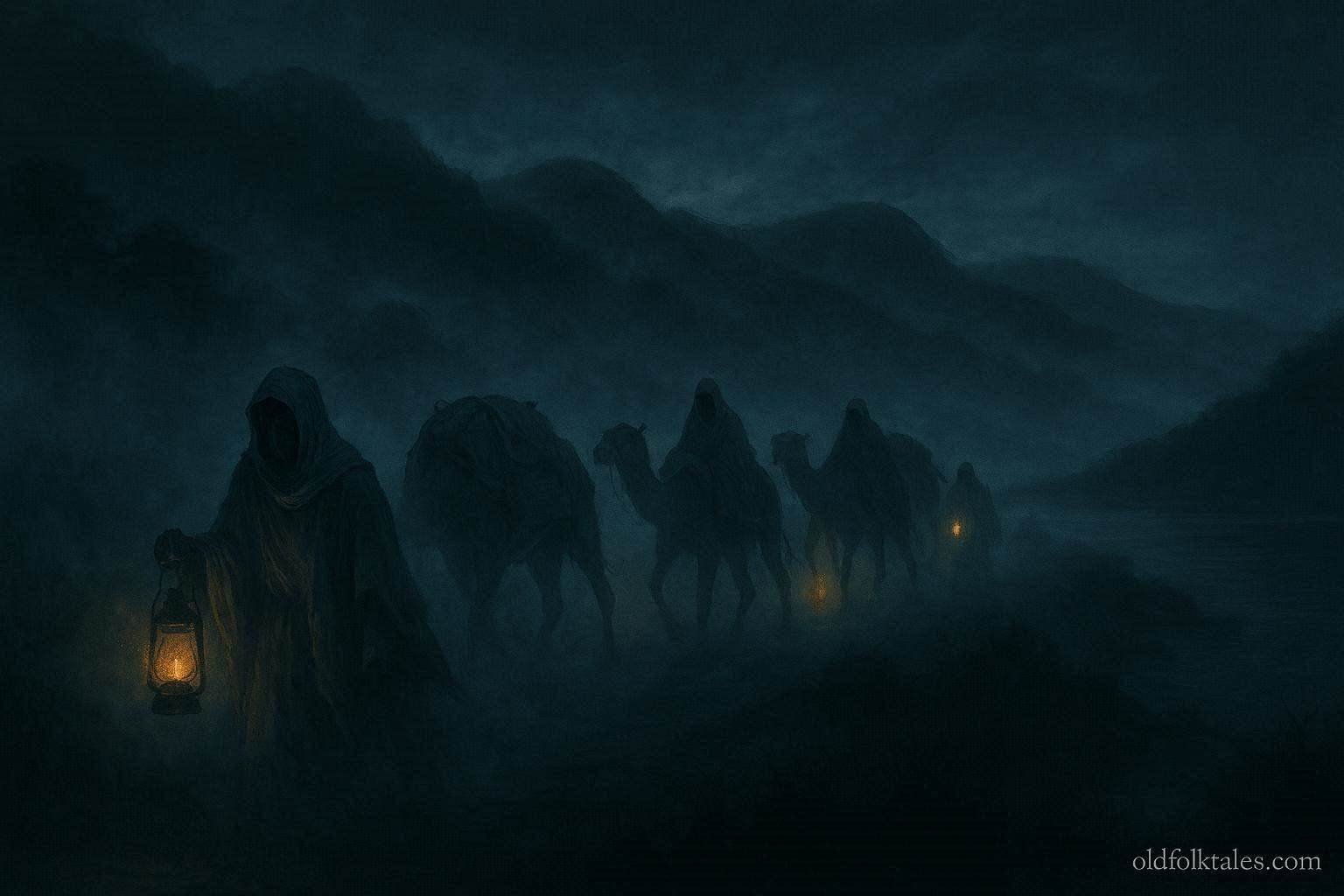
According to oral tradition, the caravan appeared only during cold nights when heavy mist covered the roads near Lake Mweru. Witnesses described silent travelers carrying lanterns and goods through the darkness while moving without sound across the earth.
No ordinary person was supposed to follow them.
Those who did often disappeared or returned changed forever.
The legend began during a period of growing trade activity across the region.
At the center of the story lived a young trader named Lubilo, known for ambition and curiosity. Unlike older merchants who respected traditional warnings carefully, Lubilo believed many spirit stories existed only to frighten inexperienced travelers.
“Fear keeps people poor,” he often told his companions.
One season, Lubilo joined a trading expedition traveling toward settlements near Lake Mweru. The caravan carried valuable copper tools, salt, woven cloth, and dried fish intended for exchange with distant communities across the northern trade routes.
Among the travelers was an elderly guide named Chanda who knew the roads surrounding the lake better than anyone else in the group.
During the journey, Chanda repeatedly warned the younger traders never to travel after nightfall near certain areas along the route.
“If the mist rises from the lake, stop walking immediately,” the old guide instructed. “And if you hear bells or footsteps without seeing faces clearly, do not answer.”
The younger traders laughed quietly at his warnings.
But Lubilo listened with open disbelief.
Several days later, the caravan approached a remote section of road near rocky hills overlooking Lake Mweru. Dark clouds gathered overhead while cold winds spread heavy mist across the landscape much earlier than expected.
Chanda ordered the group to camp immediately before darkness arrived.
“No one leaves the fire tonight,” he warned firmly.
But as night deepened, Lubilo grew restless.
He believed valuable time was being wasted because of old superstitions. Confident the stories were exaggerated, he secretly left the campsite carrying a lantern, hoping to continue traveling ahead before sunrise.
The road disappeared almost completely beneath thick white mist.
At first, Lubilo heard only wind moving across the hills.
Then came the sound of bells.
Soft.
Distant.
Rhythmic.
He stopped walking instantly.
Through the fog ahead, faint lights slowly appeared moving across the darkness. Shapes emerged gradually from the mist.
A caravan.
Dozens of travelers walked silently along the road carrying bundles, staffs, and hanging lanterns glowing with pale light. Large figures resembling porters and traders moved in perfect silence beside heavily loaded animals.
Yet something felt wrong immediately.
The travelers made no sound while walking.
Their feet disturbed no dust.
Even the animals moved silently.
Lubilo called out nervously, asking where the caravan traveled.
No one answered.
Instead, the figures continued moving forward through the mist without acknowledging him.
Curiosity slowly overcame fear.
Believing he had discovered a secret nighttime trade route, Lubilo began following the mysterious travelers deeper along the road.
As he walked, the air grew colder.
The mist thickened unnaturally around him while the lantern lights ahead flickered strangely like distant stars.
Then he noticed something terrifying.
The travelers had no visible faces.
Their heads remained lowered beneath cloaks and coverings while pale light passed unnaturally through parts of their bodies.
Panic seized him.
Lubilo attempted turning back toward the camp, but the road behind him had vanished beneath endless fog. Everywhere he looked, the silent caravan surrounded him moving steadily through the darkness.
Then one figure stopped walking.
Slowly, it turned toward him.
For the first time, Lubilo saw beneath the hood.
There was no face.
Only darkness.
The lantern carried by the figure suddenly extinguished.
At that moment, terrified screams echoed across the hills as Lubilo collapsed unconscious beside the road.
Back at the campsite, Chanda and the other traders heard the cries and rushed into the mist searching desperately for the missing young merchant.
Near dawn, they discovered Lubilo lying motionless beside the trade path.
His lantern was cold and broken beside him.
When they carried him back to camp, he remained feverish and unable to speak for several days.
Eventually, Lubilo recovered physically.
But he never fully returned to his old self.
The once arrogant young trader became quiet and deeply respectful toward spiritual traditions connected to the trade routes. He refused traveling after dark near Lake Mweru ever again and warned younger merchants never to mock the old stories of the region.
Years later, Lubilo finally revealed everything he witnessed that night.
Elders listened silently before explaining an ancient belief preserved among caravan communities for generations.
According to tradition, the Ghost Caravan consisted of restless spirits of traders, travelers, and porters who died far from home while crossing dangerous trade routes around Lake Mweru. Unable to complete their journeys, their souls wandered the roads eternally between worlds.
Whether true spirits or visions born from fear and mist, the legend spread widely across northern Zambia.
Even today, some fishermen and travelers near Lake Mweru still claim mysterious lights occasionally move through the fog during cold nights along forgotten trade paths.
And according to old Bisa belief, certain roads should never be followed after dark because not every traveler belongs to the world of the living.
Explore more Southern African folktales here
Moral Lesson
Wisdom often comes from respecting traditions and warnings passed down through generations.
Knowledge Check
- Where did the story take place?
The story took place near Lake Mweru in northern Zambia. - What was the Ghost Caravan?
It was a mysterious caravan believed to consist of wandering spirits. - Why did Lubilo leave the campsite?
He ignored traditional warnings and wanted to continue traveling at night. - What frightened Lubilo about the travelers?
The figures moved silently and appeared to have no faces. - Who rescued Lubilo?
Chanda and the other traders found him near the road before dawn. - What lesson does the story teach?
Traditional wisdom and ancestral warnings should be respected.
Source
Zambian trade route folklore. Adapted from Bisa oral traditions preserved in Central African trade and ethnographic folklore archives.