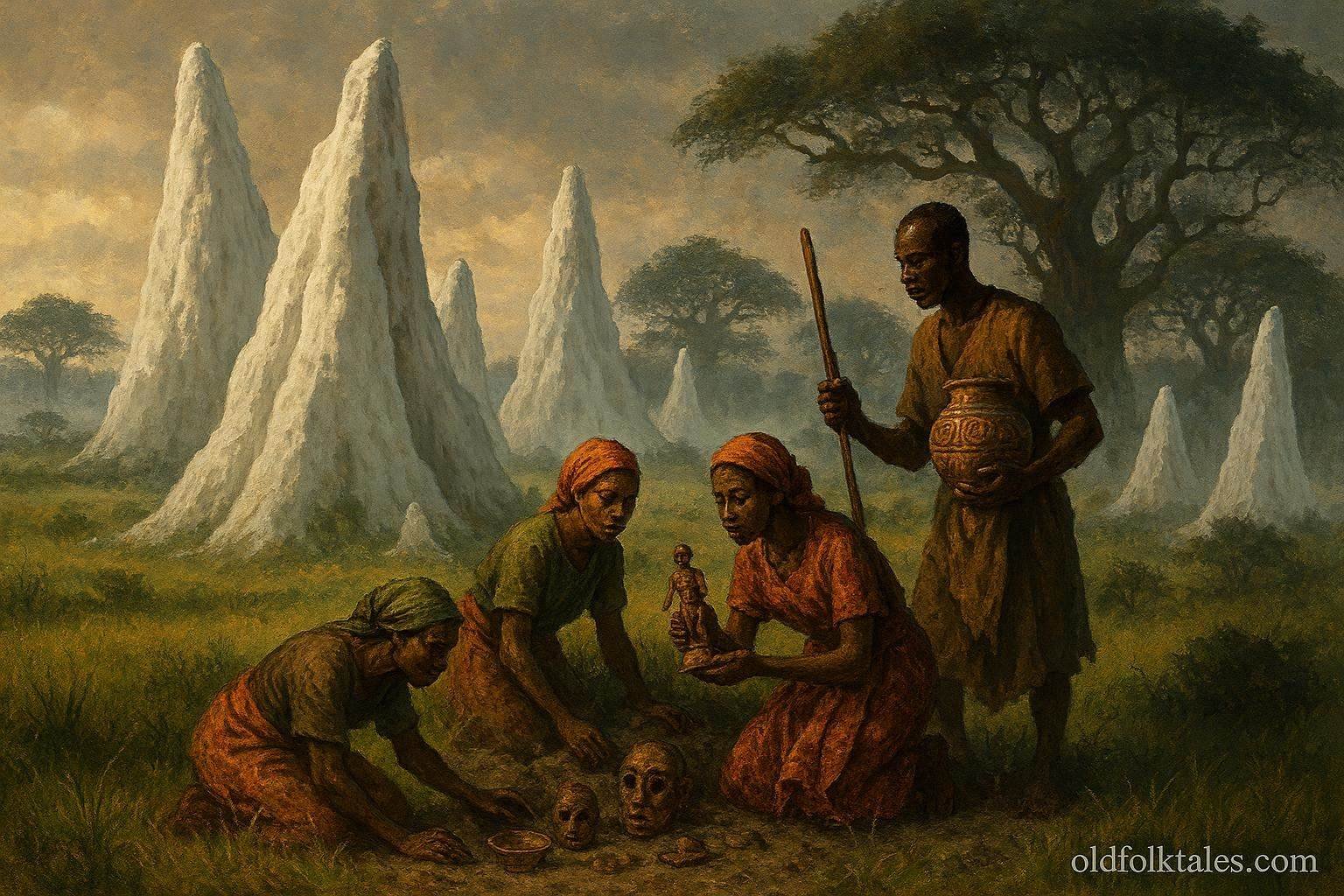
Across the wetlands and forested plains of northern Zambia stretched the region of Kasanka, a land known for rivers, wildlife, fertile soil, and towering white ant hills rising from the earth like ancient stone towers. Some termite mounds stood taller than grown men and had existed for generations beyond memory.
To outsiders, the hills appeared ordinary.
But among the Bisa people, many believed the great white ant hills carried spiritual importance tied to ancestral history and sacred land. Elders taught that certain mounds should never be disturbed because spirits rested beneath them watching over forgotten places connected to the past.
Children were warned never to play near the oldest hills after sunset.
Hunters avoided sleeping beside them during long journeys through the grasslands.
And farmers often left offerings of grain near certain termite mounds before planting crops.
If you enjoyed this story, explore our full West African folktales collection
The most mysterious stories surrounded a group of enormous white ant hills standing deep within a remote part of Kasanka near ancient trees and hidden marshes. According to oral tradition, the hills protected buried secrets from an earlier generation whose history had nearly vanished from memory.
Some claimed an abandoned settlement rested beneath the earth.
Others believed ancestral spirits gathered there during certain nights beneath the moon.
The story began during a season of unusually heavy rainfall across the region.
Floodwaters damaged several farms near the villages while strong storms uprooted trees and exposed hidden areas of ground untouched for many years. After one particularly violent storm, hunters traveling near the remote termite hills discovered strange objects scattered across the wet earth beside one of the largest mounds.
The objects appeared ancient.
Pieces of carved pottery, broken tools, beads, and fragments of decorated wood emerged partially from the soil as though something hidden underground had begun rising slowly toward the surface.
News spread quickly through the nearby villages.
Curious people traveled to the site hoping to understand where the mysterious objects came from. Some believed the discoveries proved old stories about forgotten ancestors living beneath the hills.
Others feared disturbing the area would anger spirits protecting the land.
At the center of the story lived a young man named Chisomo, known for curiosity and intelligence. Unlike many villagers who avoided questioning sacred traditions, Chisomo loved listening to old stories and searching for hidden meanings within them.
When he saw the ancient objects himself, he became fascinated immediately.
“These are not ordinary remains,” he told the village elders. “Someone lived here long ago.”
Most elders warned against disturbing the hills further.
But one elderly storyteller named Mulowa spoke differently.
“The land reveals history only when it chooses,” she said quietly. “Perhaps the ancestors want something remembered.”
Encouraged by her words, Chisomo gathered several villagers to explore the area carefully while respecting traditional customs connected to the site. Before beginning, they performed a small offering ceremony asking permission from ancestral spirits believed to guard the hills.
Only afterward did the search begin.
Over several days, the group uncovered more objects buried around the termite mounds. Ancient clay pots decorated with unfamiliar symbols emerged from the soil beside rusted iron tools and carved stones unlike anything used by the current villages.
Then they discovered something even stranger.
Near the base of the largest ant hill, hidden beneath thick roots and hardened earth, the villagers uncovered the remains of an old stone pathway disappearing underground.
Fear spread immediately among the group.
Some villagers refused continuing further, convinced the pathway led toward a sacred burial place protected by spirits.
But Chisomo believed the discovery connected directly to forgotten history preserved beneath Kasanka for generations.
That night, strange events unsettled the camp beside the hills.
Several villagers reported hearing distant singing carried by the wind despite no nearby settlements existing within miles of the site. Others claimed shadows moved between the termite mounds long after the fires burned low.
One elderly man swore he saw figures standing silently near the largest hill before disappearing into darkness.
By morning, many people wanted to leave immediately.
But Mulowa remained calm.
“The ancestors are near,” she explained. “Not all spirits come to harm the living.”
With caution, the villagers returned to the hidden pathway.
As they cleared more earth carefully, they uncovered the remains of an ancient underground chamber partially collapsed beneath the termite mound. Inside rested broken pottery, ceremonial objects, woven materials preserved by dry soil, and stone carvings depicting people gathered around similar white ant hills generations earlier.
The discovery astonished the villages.
According to Mulowa’s interpretation of the symbols and oral traditions, the site likely belonged to an ancestral settlement abandoned long ago during migration, disease, or conflict. Over time, nature covered the remains while termite hills rose above the forgotten ground, transforming the area into sacred land protected through memory and legend.
For the Bisa people, the discovery carried deep spiritual meaning.
The white ant hills no longer represented only mystery or fear. They became symbols connecting living communities to ancestors whose stories nearly disappeared from history entirely.
The villagers decided not to destroy or remove the site further.
Instead, the area became protected sacred ground where ceremonies honoring ancestral memory were held during important seasons. Elders used the story to teach younger generations about respecting both history and the land itself.
As for Chisomo, he became known across the region for helping uncover the forgotten past hidden beneath Kasanka.
Years later, people still repeated the legend of the White Ant Hills as a reminder that the earth remembers what humans sometimes forget.
According to Bisa belief, ancestral history never disappears completely.
Sometimes it waits patiently beneath the ground until the right generation is ready to listen again.
Explore more Southern African folktales here
Moral Lesson
Respecting history, ancestral wisdom, and sacred land helps preserve the identity of future generations.
Knowledge Check
- What were the white ant hills in Kasanka believed to protect?
They were believed to guard ancestral secrets and sacred history. - Who was Chisomo?
He was a curious young villager interested in history and oral traditions. - What did the villagers discover after the storms?
They found ancient objects and a hidden underground pathway. - Why were some villagers afraid of the site?
They believed ancestral spirits protected the termite hills. - What was hidden beneath the largest mound?
An ancient underground chamber connected to a forgotten settlement. - What lesson does the story teach?
History and sacred land should be respected and preserved.
Source
Zambian ancestral folklore. Adapted from Bisa oral traditions preserved in Central African anthropological and ethnographic studies.