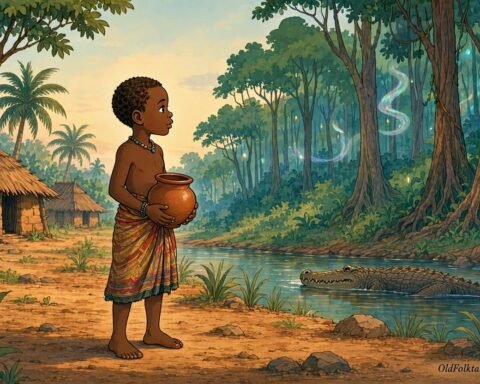
Far across the vast wetlands of northern Zambia stretched the Bangweulu region, a land of endless swamps, floating grasses, winding channels, and hidden islands surrounded by water and mist. The wetlands supported fishing communities, migrating birds, wild animals, and ancient traditions passed carefully from one generation to another.
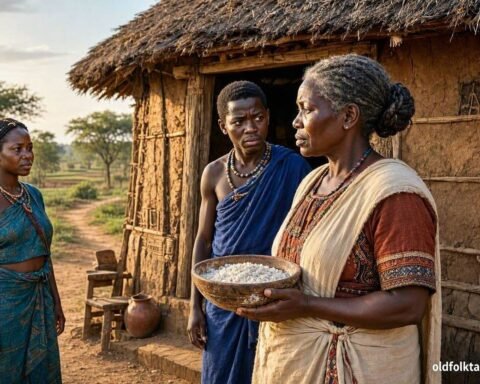
Among the Unga people who lived near the marshes, survival depended upon understanding the rhythms of the land and respecting the unseen forces believed to dwell within it.
The wetlands provided food, water, and protection.
But they also carried danger.
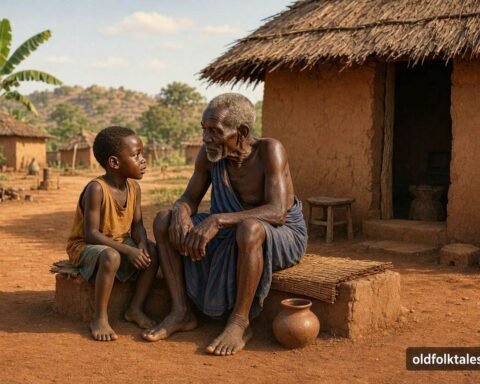
Elders warned that certain places within Bangweulu did not belong entirely to humans. Sacred hunting grounds, hidden islands, and deep channels were believed to be protected by spirits connected to the ancestors and the natural world.
During daylight, experienced hunters avoided these forbidden areas out of respect.
At night, especially during the full moon, no wise person traveled there willingly.
According to old Unga tradition, the spirits guarding the wetlands became strongest beneath bright moonlight. Strange lights, distant voices, and shadowy figures were sometimes seen moving silently across the water long after midnight.
Continue your journey: Read more East African folktales
Most villagers treated these stories seriously.
But not everyone listened.
The story began during a difficult season when heavy flooding reduced fishing and hunting opportunities across several communities near Bangweulu. Food became scarce while many families struggled to survive.
Among the villagers lived a skilled young hunter named Tambo.
Known for bravery and confidence, Tambo earned admiration for providing meat during difficult times. Yet many elders worried about his growing pride because he often ignored traditional warnings and dismissed spiritual beliefs as fear meant for weaker people.
One evening, a group of hunters gathered near the village fire discussing reports of large antelope seen deep within a forbidden section of the wetlands rarely visited by humans.
The animals were said to be plentiful there.
But the area was also feared.
According to village tradition, the territory belonged to ancient spirits protecting the balance of the wetlands. Hunters entering the region without proper rituals supposedly disappeared or returned carrying strange illnesses and terrifying stories.
When the elders warned against traveling there, Tambo laughed openly.
“Spirits do not feed hungry families,” he declared. “Only hunters do.”
Several younger men agreed to follow him despite the warnings.
The group prepared secretly to leave during the next full moon, believing moonlight would help them navigate safely through the swamps at night while tracking animals more easily.
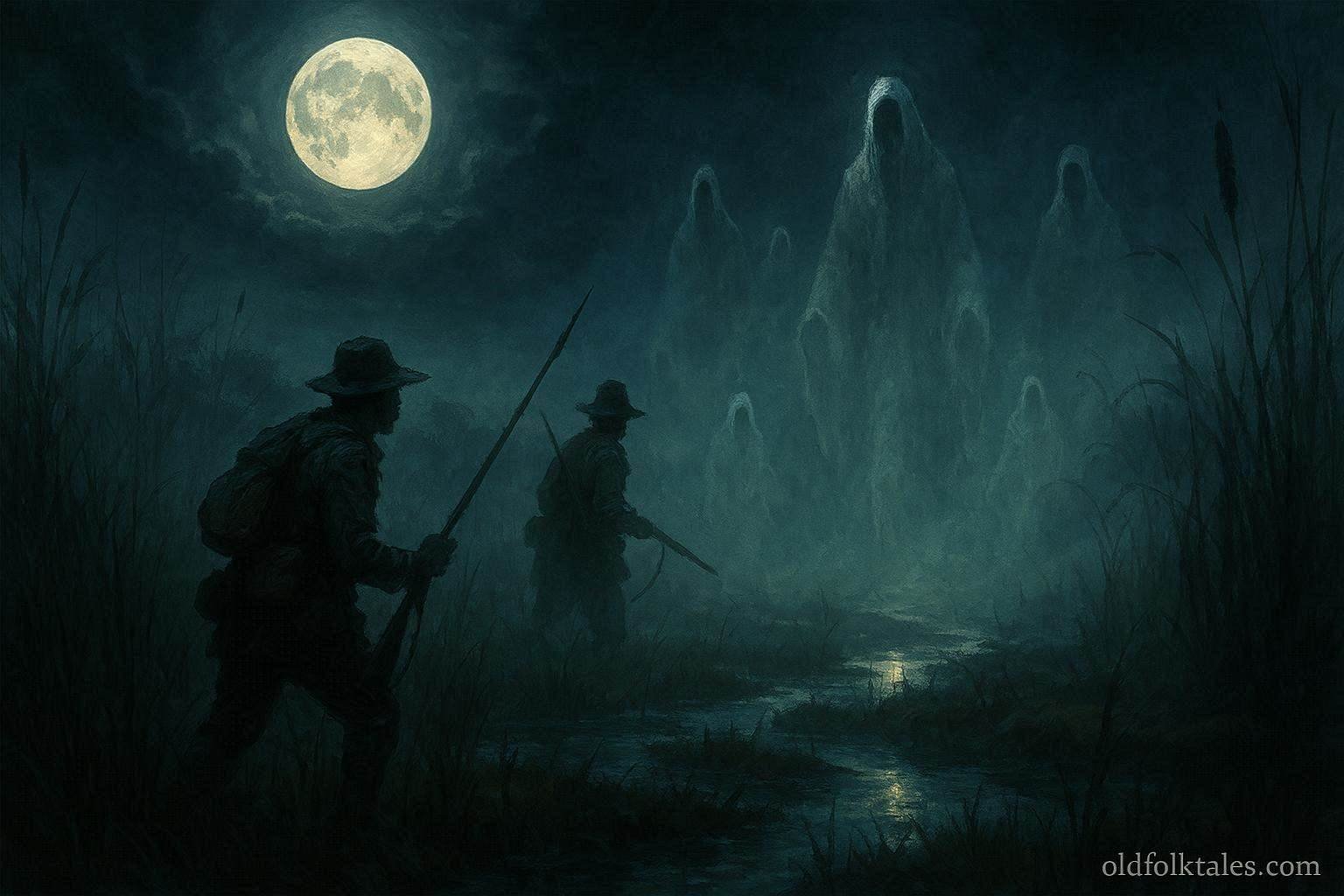
Before dawn on the chosen night, the hunters pushed narrow canoes into the water and entered the wetlands beneath a huge silver moon glowing across the marshes.
At first, the journey seemed peaceful.
The moonlight reflected across still water while distant birds called through the reeds. Tall grasses swayed softly beside narrow channels as the hunters moved deeper into isolated parts of Bangweulu rarely seen even during daylight.
But gradually, strange things began happening.
The air grew unusually cold.
No animals appeared anywhere near the water.
Even the insects became silent.
One hunter whispered nervously that the wetlands felt empty in a way he could not explain.
Tambo ignored the concerns and ordered the group forward.
Hours later, they reached a hidden island surrounded by thick mist and tall reeds. Fresh animal tracks covered the muddy ground, proving large antelope recently passed through the area.
Excited, the hunters followed the tracks inland beneath the bright moon.
Then came the sound.
Drumming.
Slow and distant.
The hunters froze instantly.
No villages existed anywhere near the forbidden territory, yet rhythmic drumbeats echoed faintly across the wetlands as though carried by the wind itself.
Another sound followed.
Voices.
Soft chanting drifted through the mist though no people could be seen.
Fear spread quickly among the younger hunters.
One demanded they return immediately.
But Tambo refused.
Determined to prove his courage, he continued deeper into the island despite growing unease around him.
Suddenly, shapes appeared between the reeds ahead.
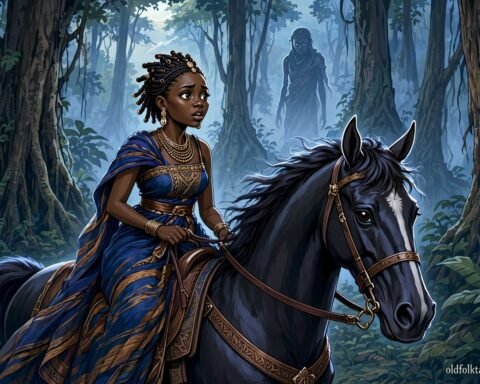
Tall shadowy figures moved silently beneath the moonlight wearing what looked like long ceremonial coverings made from grass and feathers. Their faces remained hidden while pale markings reflected strangely across their bodies.
The drumming grew louder.
Yet no drums could be seen.
One of the hunters dropped his spear in terror.
The figures moved slowly toward them without speaking.
Then the mist surrounding the island thickened unnaturally until the hunters could barely see one another. Panic erupted as strange whispers echoed through the darkness around them.
Several hunters fled blindly back toward the canoes.
Others became separated within the reeds.
Tambo himself attempted following the shadowy figures deeper into the island before suddenly collapsing after hearing a loud voice call his name from the darkness.
When morning finally arrived, the surviving hunters found themselves scattered across different parts of the wetlands far from where they entered the island.
Some had lost weapons.
Others claimed hours of memory had vanished completely.
Tambo was discovered unconscious beside the water near the abandoned canoes.
After returning to the village, none of the hunters spoke openly for several days.
Eventually, Tambo gathered the elders and confessed everything they witnessed during the full moon journey. For the first time, the proud hunter admitted the forbidden territory carried powers beyond ordinary understanding.
The elders listened quietly before explaining that the wetlands demanded respect from those depending upon them for survival.
According to Unga belief, the spirits guarding Bangweulu protected sacred balance within the land. Hunters who entered forbidden places through greed or arrogance risked disturbing forces older than human memory itself.
From that time forward, Tambo became one of the strongest defenders of traditional hunting laws within the community.
He taught younger hunters that courage without wisdom leads only to destruction.
Years later, stories about the Moon Hunters of Bangweulu continued spreading across northern Zambia.
Even now, fishermen and travelers crossing the wetlands during full moons sometimes report hearing distant drumming carried across the water where no villages exist.
And according to old Unga tradition, some territories within Bangweulu still belong to spirits who watch silently beneath the moonlit marshes.
Don’t miss out: Read more Southern African folktales
Moral Lesson
Respect for nature, tradition, and sacred boundaries protects people from unnecessary danger.
Knowledge Check
- Where did the story take place?
The story took place in the Bangweulu wetlands of northern Zambia. - Why did the hunters enter forbidden territory?
They hoped to find more animals during a difficult season. - Who was Tambo?
He was a skilled but proud young hunter. - What strange things happened in the wetlands?
The hunters heard drumming, chanting, and saw mysterious spirit figures. - Why did the elders warn against the area?
It was believed to be protected by sacred spirits. - What lesson did Tambo learn?
He learned that wisdom and respect matter more than pride.
Source
Zambian wetland folklore. Adapted from Unga oral traditions documented in ecological and anthropological folklore studies of the Bangweulu region.