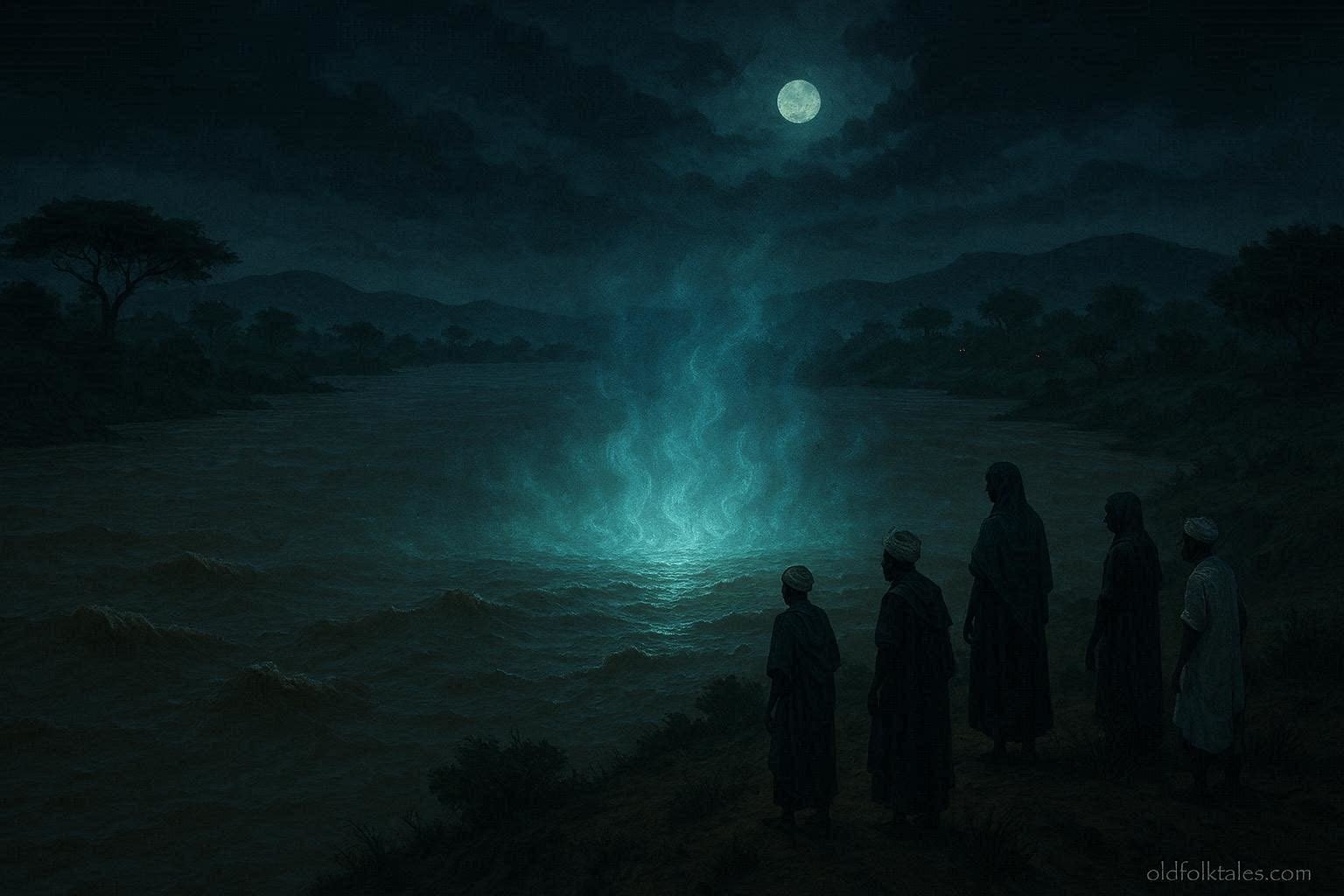
In the heart of central Somalia, the town of Beledweyne rests along the banks of the Shabelle River, one of the most important rivers in the region. For generations, the river has shaped every aspect of life there.
It feeds farmland during planting seasons.
It sustains livestock during dry months.
And it connects villages through trade and movement across the landscape.
But the Shabelle River is also unpredictable.
During certain seasons, heavy rains far upstream cause it to rise rapidly, flooding surrounding areas and transforming familiar land into dangerous waters.
Among the Somali communities living along its banks, the river is not seen as only a natural force.
It is also remembered as a living presence.
A presence that listens.
A presence that remembers.
And sometimes, according to oral tradition, a presence that speaks.
The legend of the Singing River of Beledweyne comes from these beliefs.
It tells of a time when the river began behaving in ways no one could explain.
It started during an unusually heavy rainy season.
Fascinated by this tale? Discover more North African folktales
For weeks, distant storms poured water into the river system far upstream.
At first, villagers welcomed the rising water.
The soil became fertile again.
Crops grew faster than expected.
And herders brought their animals closer to the riverbanks for drinking.
But soon, the river began to rise more than usual.
Its flow became stronger, louder, and more unpredictable.
Elders in Beledweyne noticed signs they had seen only in older stories passed down through generations.
The river changed its sound.
At night, when the winds were still and the village quieted, villagers began hearing something strange rising from the water.
At first, it sounded like wind passing through reeds.
Then it became clearer.
Melodies.
Soft, distant, and sorrowful songs rising directly from the river itself.
Some heard chanting.
Others heard voices layered like many people singing together.
A few claimed the songs carried words they could almost understand.
Warnings.
Names.
And fragments of ancient poetry.
Fear spread quickly through the town.
Fishermen refused to go out at night.
Children were kept indoors after sunset.
And elders gathered frequently to interpret what the river might be trying to communicate.
Among the elders was a respected storyteller named Abdi Warsame, known for preserving old oral traditions about rivers, weather, and ancestral memory.
When asked about the singing, Abdi did not dismiss it.
Instead, he recalled an old teaching.
Rivers, he said, often carry the voices of those who lived and died near them. During times of imbalance, those voices become louder.
Not because the dead return physically, but because the living begin to notice what they previously ignored.
As the river continued rising, the singing grew stronger.
Now entire groups of villagers could hear it at once.
The songs changed depending on the time of night.
Sometimes they sounded like warnings.
Sometimes like mourning.
Sometimes like urgent calls that seemed to rise and fall with the water level itself.
One night, a young fisherman named Hassan decided to follow the sound.
He walked toward the riverbank alone under a pale moon while the rest of the village slept uneasily.
As he approached the water, the singing became clearer than ever before.
It no longer felt distant.
It felt close.
Like it was coming directly from the current in front of him.
Standing at the edge of the river, Hassan saw something unsettling.
The water reflected not only the moonlight, but shifting shapes beneath its surface.
For a moment, he thought he saw silhouettes of people moving within the river itself, as though carried by the current in slow motion.
Then the singing stopped abruptly.
Silence returned.
And the river flowed normally again.
Terrified, Hassan rushed back to the village and told the elders everything he had witnessed.
Some believed he had been frightened by exhaustion.
Others believed the river was warning them of something approaching.
The elders decided to perform a traditional ritual to honor the river and ask for protection.
Sacred offerings were placed along the riverbanks.
Prayers were recited at dawn and dusk.
And fishermen avoided deep waters until further notice.
Days later, the truth of the warning became clear.
Heavy rains intensified upstream, and the river swelled beyond its normal boundaries.
Floodwaters swept through surrounding farmland, destroying crops and forcing entire families to evacuate toward higher ground.
But because the villagers had already been warned by the strange singing, many were able to prepare in advance.
Livestock were moved early.
Homes near the river were protected.
And fewer lives were lost than in previous floods.
After the waters eventually receded, the land slowly began to recover.
But the memory of the singing river remained deeply embedded in the community.
Some said the river spirits were guardians, warning people when danger approached.
Others believed the songs were echoes of ancestors who once lived along the river and still watched over it.
And a few elders insisted the truth was simpler.
The river was not singing.
It was the land itself speaking through natural signs that only become clear when people learn to listen.
Over time, the Singing River of Beledweyne became a lesson passed to younger generations.
A reminder that nature always speaks first.
But whether people hear it depends on whether they are willing to pay attention.
Even today, during heavy flood seasons along the Shabelle River, some villagers claim that if the wind is still and the water rises slowly at night, faint singing can still be heard drifting across Beledweyne.
A sound that warns.
A sound that remembers.
And a sound that asks to be understood before it is too late.
Don’t stop yet! See our complete East African folktales collection
Moral Lesson
Nature often gives warnings before disaster, but only those who pay attention can act in time to survive.
Knowledge Check
- Where is the story set?
It is set in Beledweyne along the Shabelle River in Somalia. - What strange event occurred in the river?
Villagers began hearing mysterious singing coming from the river. - Who tried to understand the river’s message?
Elders and a storyteller named Abdi Warsame interpreted the signs. - What did the singing warn about?
It warned of rising floodwaters and danger approaching the town. - What happened after the warning?
Severe floods eventually occurred, but many people were prepared. - What lesson does the story teach?
Listening to nature’s warnings can help prevent loss and disaster.
Source
Somali folklore. Adapted from Shabelle River oral traditions preserved in ecological folklore archives and central Somali ethnographic studies.