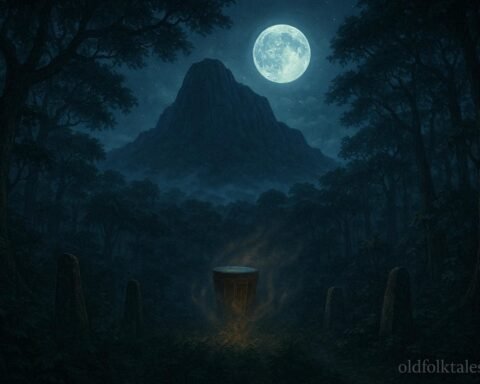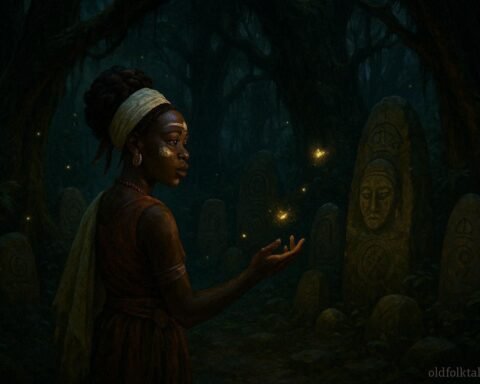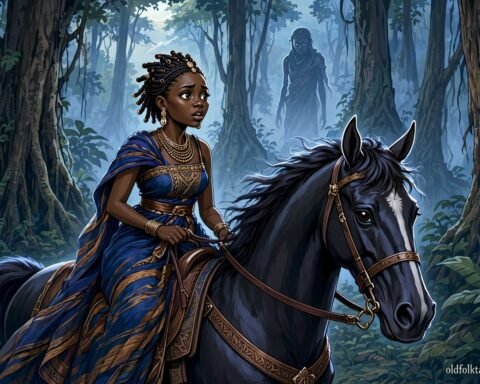
Across the dry deserts and rocky valleys of Namaqualand, travelers speak of glowing spirit figures that appear at night to guard sacred ancestral territory hidden deep within the land.
Expanded Narration
Far across the northwestern regions of South Africa lies Namaqualand, a vast landscape of dry plains, rocky mountains, and endless silence.
For much of the year, the land appears harsh and empty beneath the burning sun.
Dust moves across open ground.
Winds sweep through narrow valleys.
And long stretches of desert seem untouched by life.
Yet beneath this harsh appearance, Namaqualand holds deep cultural memory for the Nama people whose ancestors traveled, hunted, and survived across the region for generations.
The land is more than territory.
It is history.
Every mountain carries stories.
Every dry riverbed remembers movement.
And certain hidden places are believed to hold spiritual importance tied to ancestral presence.
Among the oldest oral traditions preserved in Nama storytelling is the legend of the Desert Spirits of Namaqualand.
Fascinated by this tale? Discover more North African folktales
According to the stories, glowing figures sometimes appear at night in remote parts of the desert.
They are usually seen by travelers who unknowingly approach sacred ancestral territory.
Some believe the spirits protect burial grounds hidden beneath the sands.
Others say they guard ancient pathways once used by ancestors during migration seasons long before colonial settlement reached the region.
Whatever their true nature, the stories all agree on one thing.
The spirits are warnings.
Not every place in the desert is meant to be crossed carelessly.
Many years ago, during a severe drought that affected settlements across Namaqualand, a trader named Willem Coetzee prepared to travel through the desert with a small caravan carrying supplies between distant communities.
Willem was experienced in desert travel and prided himself on fearing nothing.
He respected the harshness of the land but dismissed local spiritual stories as superstition repeated by frightened travelers.
Before leaving, however, an elderly Nama guide named Oasib approached him with concern.
Oasib had spent his entire life navigating desert routes across Namaqualand and knew the region better than anyone in the settlement.
“There are places you must not cross after dark,” Oasib warned quietly.
Willem laughed.
“The desert is empty,” he replied. “Only sand, rocks, and wind.”
But Oasib shook his head slowly.
“The desert is never empty.”
Despite the warning, Willem and his caravan continued their journey westward across the dry plains.
For several days, travel remained normal.
The heat was intense during the afternoons, but nights brought cooler winds and clear skies filled with stars.
As they moved deeper into remote territory, however, the landscape became unfamiliar even to some members of the caravan.
Rock formations rose strangely from the ground.
Dry riverbeds twisted unpredictably between narrow valleys.
And silence settled heavily across the desert.
One evening, after losing valuable time due to broken wagon equipment, Willem decided they would continue traveling after sunset to make up for the delay.
Several workers objected immediately.
Traveling at night in unfamiliar desert terrain was dangerous enough.
But one of the Nama laborers quietly whispered something more unsettling.
“We are near the spirit territory.”
Willem ignored the warning.
As darkness spread across the land, the caravan pressed forward beneath pale moonlight.
At first, everything seemed normal.
Then strange things began to happen.
The air grew colder than expected.
Animals pulling the wagons became restless.
And distant lights appeared along the horizon where no settlements existed.
One of the younger travelers pointed toward the hills nervously.
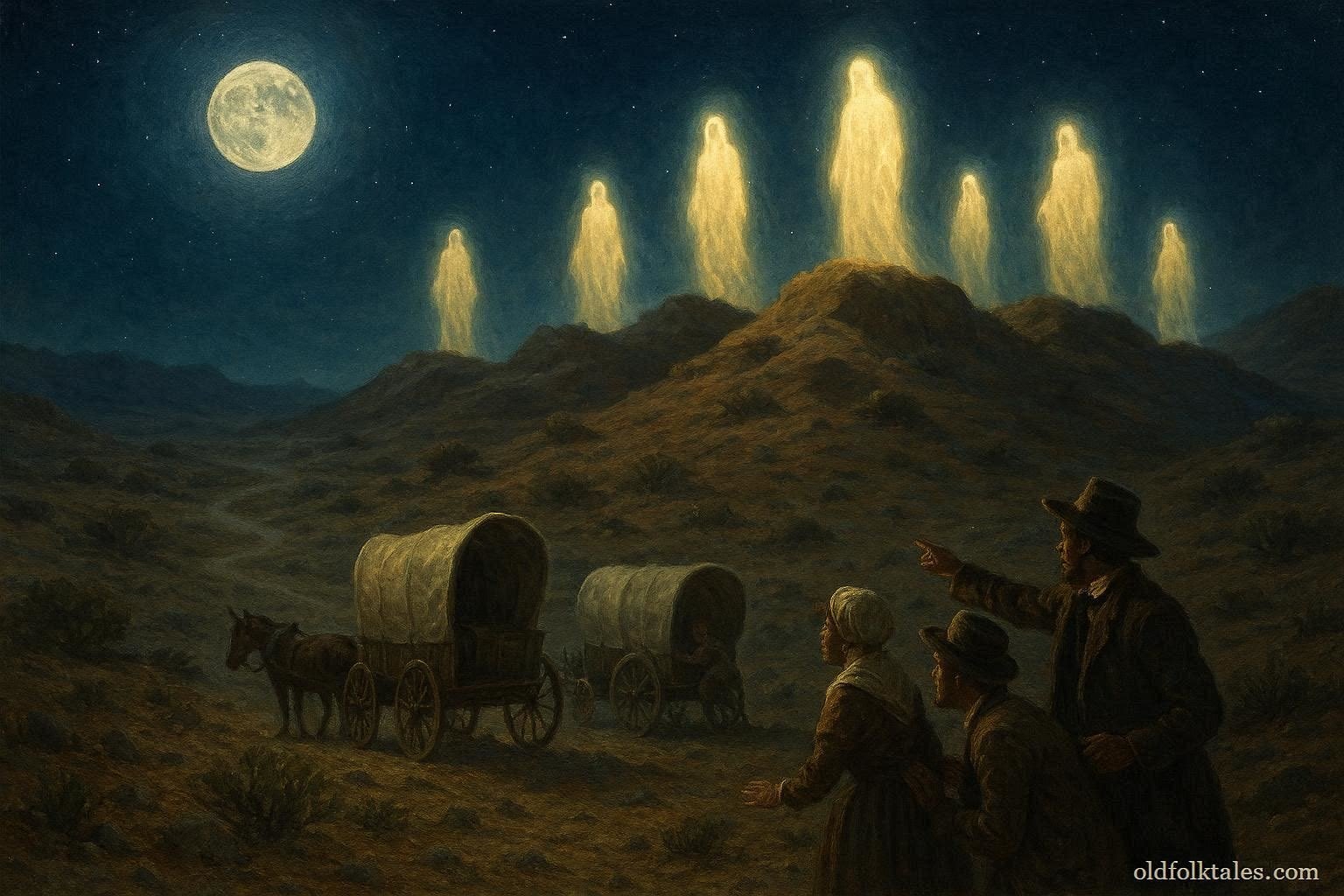
Figures were moving there.
Tall glowing shapes drifting silently between the rocks.
At first Willem assumed they were other travelers carrying lanterns.
But the lights moved too smoothly.
Too silently.
And there were no visible flames.
The caravan stopped completely.
Everyone stared toward the distant figures as they slowly approached across the desert landscape.
The glowing forms appeared almost human, but not entirely solid.
Their outlines shimmered faintly like heat rising from the ground.
Some carried long staffs.
Others seemed wrapped in flowing shapes that moved without wind.
No footsteps could be heard.
No voices.
Only silence.
Fear spread quickly among the travelers.
Several people began praying quietly.
Others refused to look directly at the approaching figures.
But Willem, determined not to appear afraid, stepped forward alone.
“Who goes there?” he shouted into the darkness.
No answer came.
The glowing figures stopped at the edge of a rocky ridge overlooking the caravan.
Then one of them slowly lifted an arm and pointed toward the ground ahead.
At first, Willem saw nothing unusual.
But as moonlight shifted across the terrain, he realized the caravan stood dangerously close to the edge of a deep ravine hidden by darkness.
Had they continued forward, the wagons and animals would likely have fallen into the rocky drop below.
The travelers backed away immediately in shock.
When they looked again toward the ridge, the glowing figures had already begun fading into the darkness.
Within moments, they disappeared completely.
The desert became silent once more.
That night, no one slept.
Even Willem remained deeply unsettled.
The next morning, Oasib carefully examined the area near the ridge.
He found old stone markings partially buried beneath sand and rock.
Ancient symbols connected to ancestral pathways used generations earlier by Nama travelers.
Oasib explained quietly that the caravan had unknowingly entered sacred ground tied to old burial territory and migration routes.
According to oral tradition, the spirits appearing there were not hostile.
They protected the land from disrespect and guided lost travelers away from danger when balance had not yet been broken.
Willem never mocked the stories again.
When the caravan eventually returned safely home, he told others about the glowing figures of Namaqualand and the hidden ravine that nearly claimed their lives.
Over time, the story spread across settlements throughout the region.
Some believed the spirits were ancestors watching over sacred territory.
Others believed exhaustion and moonlight created illusions in the desert.
But among the Nama people, the lesson remained unchanged.
The land remembers those who walked it before.
And those who ignore its warnings may not always survive long enough to learn respect.
Even today, travelers crossing remote parts of Namaqualand sometimes report seeing strange lights moving silently across distant hills after sunset.
Most avoid following them.
Because according to local belief, the desert spirits appear only for two reasons.
To warn.
Or to protect what should never be disturbed.
Explore more Southern African folktales here
Moral Lesson
Respect for ancestral land and traditional wisdom can protect people from dangers they do not yet understand.
Knowledge Check
- Where is the story set?
It is set in the desert region of Namaqualand in South Africa. - Who warned Willem before the journey?
An elderly Nama guide named Oasib warned him about sacred territory. - What did the travelers see at night?
They saw glowing spirit-like figures moving silently across the desert. - What danger did the spirits warn them about?
The caravan was close to falling into a hidden ravine. - What did Oasib later discover?
He found ancient stone markings connected to ancestral pathways and burial grounds. - What lesson does the story teach?
Traditional wisdom and respect for sacred land should never be ignored.
Source
South African folklore. Adapted from Nama oral traditions preserved in Nama folklore archives and Khoisan folklore research studies.