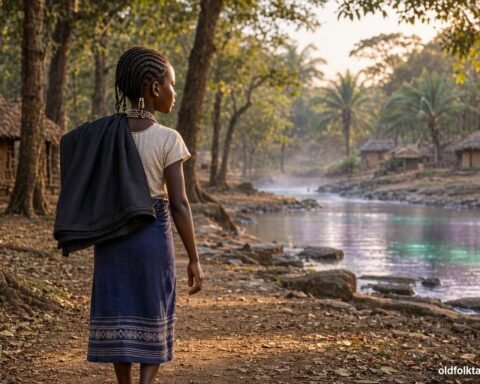
In the eastern lands of South Africa, where forests stretched across rolling hills and rivers moved quietly through deep valleys, there stood a village surrounded by the beauty of Mpumalanga. The people of the village had lived close to nature for generations. They respected the mountains, honored the rivers, and believed the spirits of their ancestors remained connected to the land long after death.
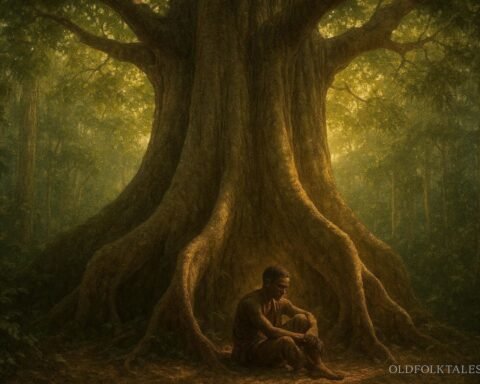
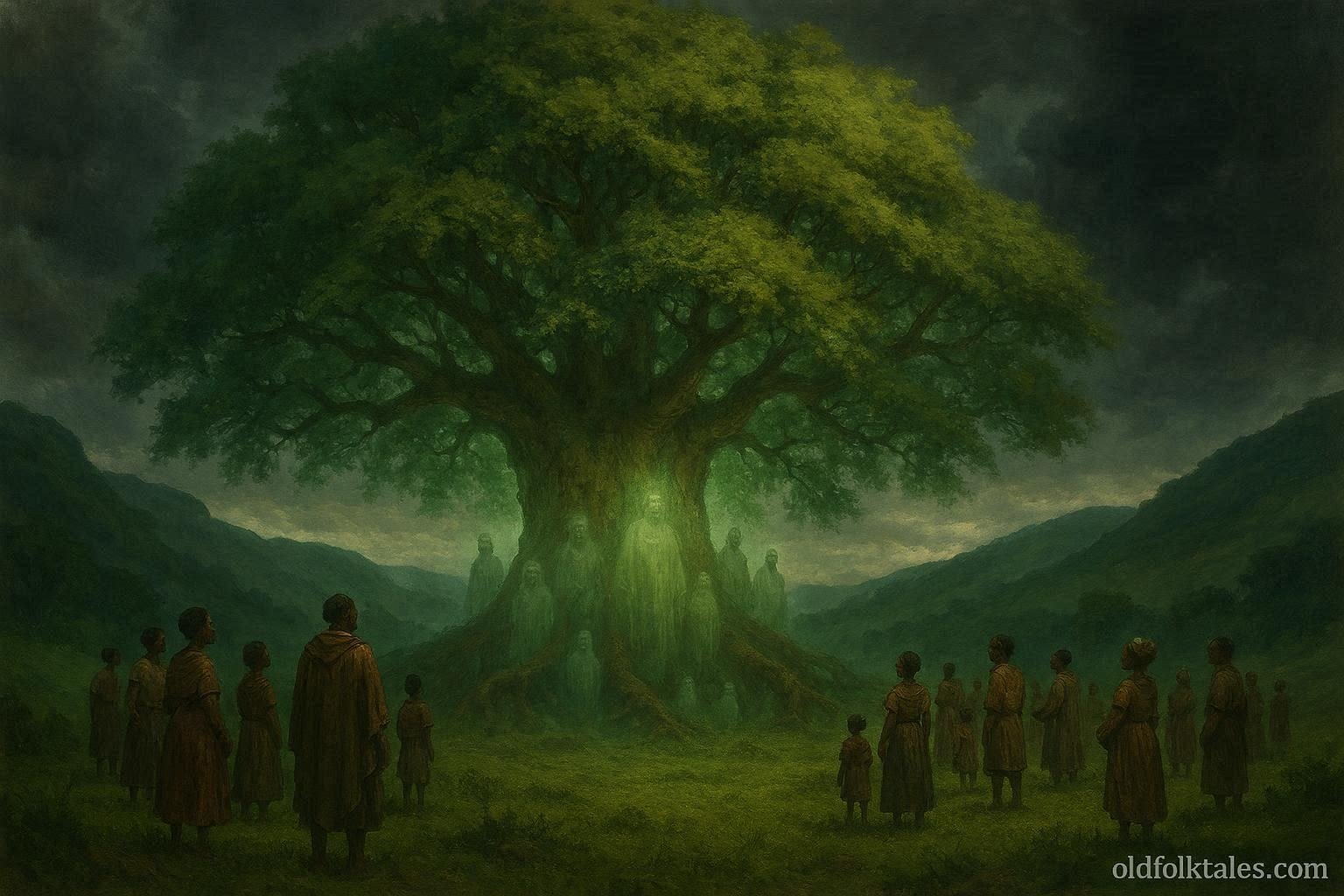
At the center of the village stood a giant tree known as the Tree of Mhlabeni.
The tree was older than anyone could remember. Its enormous branches stretched across the village gathering ground, providing shade during the hottest afternoons. Children played beneath it while elders held meetings beside its roots. Birds nested high among its branches, and travelers often stopped there to rest during long journeys across the valley.
The villagers believed the tree carried sacred power.
According to oral tradition passed down through generations, ancestral spirits lived within the tree and protected the surrounding land from danger and imbalance. Ceremonies were held beneath its branches during harvest seasons, weddings, and times of crisis. Villagers believed the tree listened to prayers and preserved the memory of their people.
Fascinated by this tale? Discover more North African folktales
Among those who deeply respected the sacred tree was a young teacher named Sibusiso.
Unlike many young people who dreamed of leaving the village for the city, Sibusiso loved the traditions of his community. He taught local children at the small village school and often listened carefully when elders shared stories about the land and the ancestors.
One evening, while sitting beneath the tree with the village elder Gogo Thandeka, Sibusiso asked her why the tree was treated with such reverence.
Gogo Thandeka smiled softly as she touched the rough bark beside her.
“This tree has watched over our people longer than any living person,” she said quietly. “It remembers what we forget.”
Sibusiso looked up at the branches moving gently in the wind.
“But how can a tree remember?” he asked.
The elder pointed toward the hills surrounding the village.
“The land carries memory,” she replied. “And some places carry more of it than others.”
Not long after that conversation, news arrived that would change the village forever.
A wealthy businessman named Victor Maseko had purchased large areas of nearby forest for logging and construction projects. His company planned to clear land throughout the region to build roads and commercial developments.
At first, the villagers paid little attention.
But everything changed when Victor’s surveyors reached the village and discovered the Tree of Mhlabeni.
The workers immediately recognized the tree’s value. Its enormous size and strong wood could bring significant profit. Plans were quickly made to cut it down and transport the timber to the city.
When the elders heard this, fear spread through the village.
A meeting was called beneath the sacred tree that same evening. Villagers gathered in silence as Gogo Thandeka stood before them.
“If this tree falls,” she warned, “the balance of this land will fall with it.”
Some villagers agreed immediately.
Others were uncertain.
Many younger villagers were struggling financially and hoped the construction project might bring employment and development to the area.
Victor arrived several days later accompanied by company officials and workers carrying equipment.
He spoke confidently during the meeting.
“This project will bring progress,” he explained. “Roads, jobs, business opportunities. You cannot stop development because of old stories.”
Sibusiso stepped forward carefully.
“This tree is part of our history,” he said. “Once it is destroyed, it can never be replaced.”
Victor remained calm but dismissive.
“History cannot feed people,” he replied.
Despite growing protests, the company prepared to begin clearing land around the tree.
Then strange things began happening.
The first bulldozer brought near the tree stopped working without explanation. Mechanics spent hours trying to repair the engine, but nothing seemed broken. The machine simply refused to start.
The next day, another vehicle became trapped after the ground beneath it suddenly collapsed into deep mud despite weeks of dry weather.
Workers began whispering among themselves.
Several claimed they heard voices near the tree after sunset.
Others said they saw movement between the branches late at night even when no one was there.
Victor grew frustrated with the delays and accused the villagers of spreading fear intentionally.
One evening, determined to prove nothing supernatural existed, Victor ordered his workers to mark the tree for cutting the following morning.
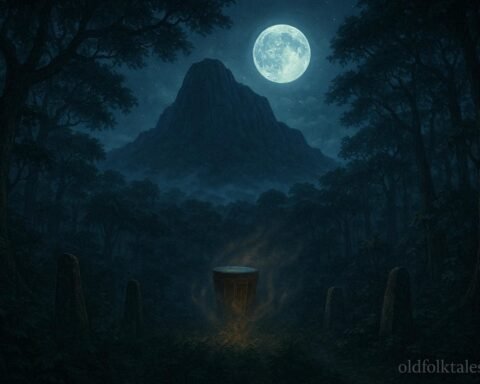
That night, the air over the valley changed.
Dark clouds gathered above the hills though no storm had been predicted. Winds moved strangely through the forest while the rest of the village remained still.
Unable to sleep, Sibusiso walked toward the sacred tree shortly before midnight.
There he found Gogo Thandeka and several elders standing silently beneath its branches. Small offerings had been placed beside the roots while prayers were whispered softly into the night air.
The giant tree moved gently above them.
Not violently.
Almost as if breathing.
Suddenly, a deep sound echoed across the valley.
At first, Sibusiso thought it was thunder.
But then another sound followed.
The cracking of wood.
The elders turned toward the construction area nearby.
One of the large machines parked beside the clearing had collapsed after a massive branch from a nearby tree crashed directly onto it.
Lightning flashed across the hills, illuminating the sacred tree against the dark sky.
For a brief moment, Sibusiso thought he saw shapes standing beneath the branches.
Tall glowing figures watching silently through the storm.
Then darkness returned.
The following morning, fear had spread among the workers. Several refused to continue the project. Some packed their belongings and left before sunrise.
Victor, however, remained stubborn.
He personally led a small team toward the sacred tree carrying cutting equipment.
As they approached, the atmosphere around the clearing became strangely cold.
Birds that normally filled the branches had completely vanished.
Even the wind seemed to stop.
Victor raised his hand, signaling the workers to begin.
At that exact moment, a violent swarm of birds burst from the upper branches of the tree.
Hundreds of birds circled overhead, filling the air with deafening cries.
The workers panicked immediately.
Strong winds swept through the clearing, throwing dust and leaves into the air. Several tools fell from the workers’ hands.
Then another large branch crashed heavily onto the ground directly in front of Victor.
Close enough to stop him completely.
Silence followed.
Heavy silence.
Victor stared at the ancient tree without speaking.
For the first time since arriving in the village, fear appeared clearly on his face.
Gogo Thandeka stepped forward slowly.
“Some things are not meant to belong to men,” she said quietly.
Victor said nothing else that day.
Within a week, the company abandoned all plans to remove the tree. Logging operations were redirected far from the village, and the sacred tree remained untouched.
Years later, environmental organizations helped officially protect the surrounding forest area as part of regional cultural heritage preservation.
Sibusiso continued teaching future generations about the importance of respecting both nature and ancestral wisdom.
And even today, the people of the village still gather beneath the Tree of Mhlabeni during important ceremonies.
Children still play beneath its shade.
Elders still leave offerings near its roots.
And travelers passing through Mpumalanga still hear the story of the sacred tree that refused to fall because the spirits of the land chose to protect what carried the memory of the people.
Love this story? Discover our full Southern African folktales collection
Moral Lesson
Nature and ancestral heritage should be respected and protected rather than destroyed for temporary profit.
Knowledge Check
- Where is the story set?
It is set in Mpumalanga, South Africa. - Why was the tree considered sacred?
Villagers believed ancestral spirits lived within it and protected the land. - Who wanted to destroy the tree?
A businessman named Victor Maseko planned to cut it down for profit. - What strange events happened near the tree?
Machinery failed, storms formed unexpectedly, and workers reported hearing voices. - Who helped defend the sacred tree?
Village elders and a young teacher named Sibusiso protected it. - What lesson does the story teach?
Nature and cultural heritage should be respected and preserved.
Source
South African folklore. Adapted from environmental folklore traditions preserved in Mpumalanga ecological folklore archives and regional ethnographic studies.