Along the banks of the Cross River, where trade, culture, and tradition flourished for generations, the people of Calabar were known for their colorful festivals and lively celebrations. Music echoed through village squares, drums filled the night air, and dancers moved gracefully beneath the glow of the moon.
Among the Efik people, festivals were more than occasions for entertainment. They were opportunities to honor ancestors, strengthen community bonds, and celebrate the traditions passed down through generations.
One year, after a particularly successful harvest season, preparations began for a grand festival unlike any held in recent memory.
Families decorated their homes.
Artisans created beautiful costumes.
Musicians rehearsed songs that had been performed by their ancestors for centuries.
Excitement spread throughout the community as people eagerly awaited the celebration.
Among those looking forward to the event was a young man named Etim. Curious and energetic, he loved listening to stories told by elders, especially those concerning the history of Calabar and the customs of the Efik people.
As the festival approached, Etim noticed that many elders spoke about an old legend.
According to tradition, mysterious dancers sometimes appeared during important celebrations held beneath a full moon.
Explore the wisdom and wonder of North African folktales
The dancers were said to arrive without warning and disappear before sunrise.
Some believed they were spirits.
Others believed they were messengers carrying wisdom from generations long gone.
Many younger villagers dismissed the stories as simple folklore.
Etim, however, remained fascinated.
When the evening of the festival finally arrived, the village square filled with people dressed in colorful garments. Fires illuminated the gathering, musicians played traditional instruments, and dancers performed routines that delighted the crowd.
Laughter and music continued long into the night.
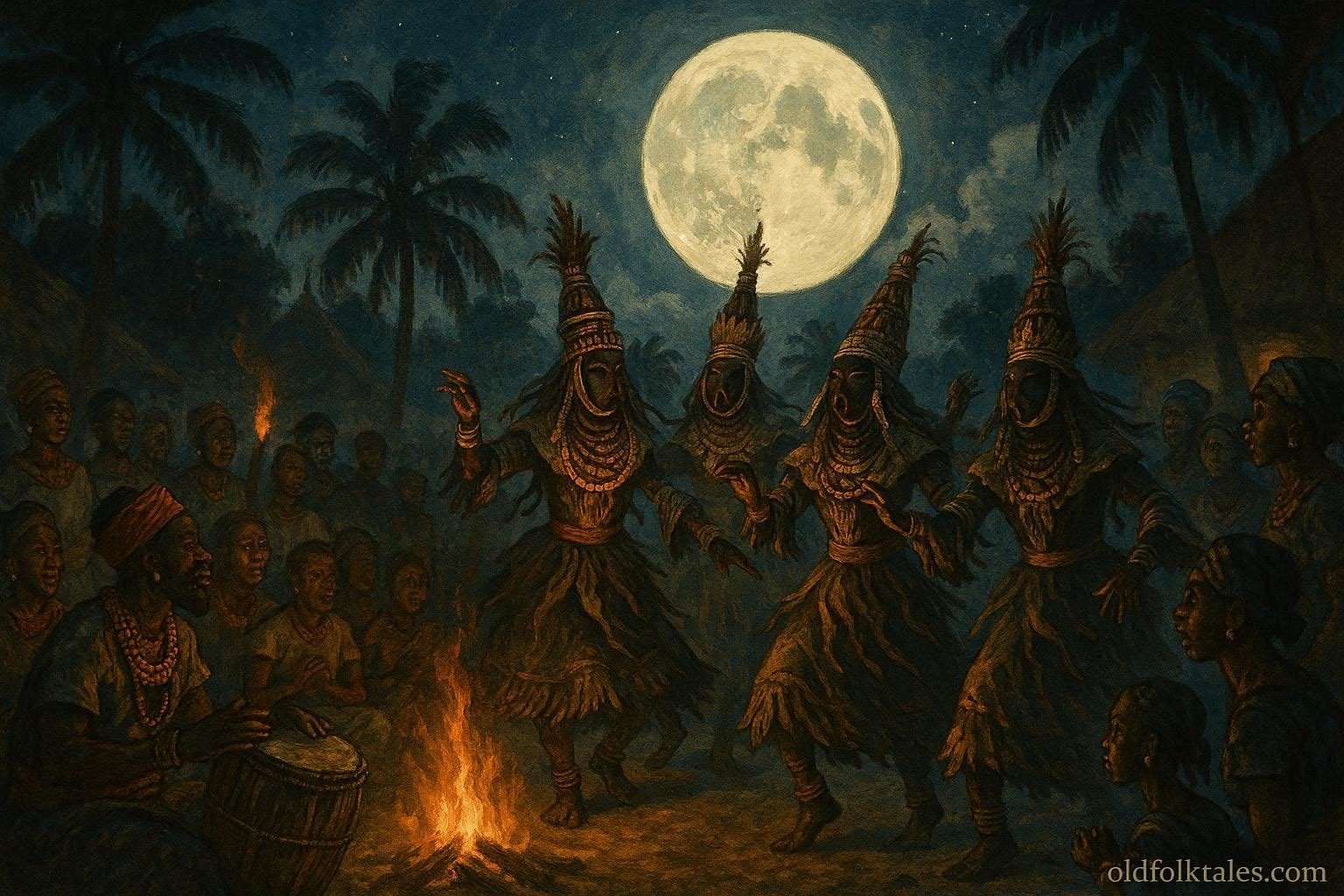
Above them, a bright full moon illuminated the landscape.
As midnight approached, something unusual happened.
A sudden calm settled over the celebration.
The drums seemed quieter.
The breeze slowed.
Conversations faded into silence.
People began looking around in confusion.
Then figures emerged from the edge of the square.
A group of dancers dressed in unfamiliar garments slowly stepped into the moonlight.
No one had seen them arrive.
Their clothing reflected styles that appeared older than any currently worn in the community.
The dancers moved with remarkable grace.
Each step seemed perfectly timed to rhythms that could not be heard.
The crowd watched in astonishment.
Even the musicians lowered their instruments.
The mysterious visitors formed a circle and began performing a dance unlike anything the villagers had ever witnessed.
Their movements told stories without words.
One sequence portrayed fishermen navigating dangerous waters.
Another depicted traders arriving from distant lands.
Others showed farmers planting crops, families gathering for celebrations, and elders teaching younger generations.
As the dance continued, many spectators recognized scenes from stories told by their grandparents.
Some elders quietly wiped tears from their eyes.
The performances seemed to bring forgotten memories to life.
Etim watched carefully.
The dancers never spoke.
Yet their movements communicated powerful messages.
He realized they were not simply entertaining the crowd.
They were preserving history.
Hours passed as the moon climbed higher into the sky.
With each dance, the community gained a deeper appreciation for its heritage.
The younger generation saw traditions they had rarely considered.
The older generation remembered lessons that time had almost erased.
Toward the end of the performance, the dancers formed a final circle.
One by one, they pointed toward different groups within the crowd.
First the elders.
Then the adults.
Then the children.
The gesture seemed simple, yet many understood its meaning.
Every generation carried responsibility for protecting the knowledge inherited from those who came before.
Without that effort, important parts of the community’s identity could be lost.
As the first signs of dawn appeared on the horizon, the dancers slowly moved away from the square.
No one attempted to stop them.
The crowd remained silent as they disappeared into the fading darkness.
When sunlight finally reached the village, the dancers were gone.
Not a single footprint remained behind.
The mysterious visitors were never seen again.
Yet their impact endured.
In the months that followed, elders organized storytelling gatherings more frequently.
Families recorded oral histories that had previously existed only in memory.
Young people became eager to learn traditional songs, dances, and customs.
Etim devoted himself to preserving local stories and helping future generations understand the heritage of their people.
Years later, whenever discussions turned to the remarkable festival, villagers spoke of the Moonlight Dancers.
Some believed they had been ancestral spirits.
Others believed they were symbolic visitors sent to remind the community of its roots.
Regardless of the explanation, everyone agreed on one thing.
The dancers had arrived when they were most needed.
Their message was not about the past alone.
It was about ensuring that the wisdom of the past continued to guide the future.
And so the legend of the Moonlight Dancers of Calabar lived on, passed from one generation to the next beneath the same moon that had illuminated their unforgettable performance.
Click here to discover more legendary tales from West Africa
Moral Lesson
A community remains strong when it remembers, preserves, and shares its cultural heritage across generations.
Knowledge Check
1. Where does the story take place?
The story takes place in Calabar, among the Efik people of Cross River State, Nigeria.
2. Who was Etim?
Etim was a curious young villager interested in the history and traditions of his people.
3. What made the dancers mysterious?
They appeared unexpectedly during a moonlit festival and vanished before sunrise.
4. What did the dancers communicate through their performances?
They shared stories about the community’s history, traditions, and ancestral wisdom.
5. How did the festival affect the villagers?
It inspired them to preserve their cultural heritage and pass it on to future generations.
6. What is the central message of the story?
Cultural traditions and ancestral knowledge should be preserved and shared across generations.
Source
Adapted from Efik festival traditions, ancestral storytelling practices, and oral folklore motifs preserved in cultural heritage studies from Cross River State, Nigeria.