Long ago, during the reign of King Eyo in the ancient kingdom of Calabar, the world was very different from the one we know today. Rivers flowed peacefully through the forests, mighty trees stretched high into the sky, and animals lived side by side upon the land. Even the fish, which now spend their lives beneath the water, once walked freely across the earth.
Among all the creatures of the kingdom, none shared a closer friendship than Fish and Leopard.
Leopard was admired throughout the land for his courage, strength, and generosity. His home stood deep within the forest, surrounded by towering trees and flowering shrubs. Whenever Fish visited, Leopard welcomed him warmly. They shared meals together, exchanged stories of their adventures, and laughed like brothers. Their friendship became an example that many animals hoped to imitate.
Leopard trusted Fish completely.
Fish was always treated with kindness. He never lacked food, shelter, or companionship whenever he visited Leopard’s home. Because of this, no one imagined that such a strong friendship could ever be broken.
Leopard lived with his beautiful wife, whose kindness matched her grace. She welcomed every guest with courtesy and prepared generous meals whenever visitors arrived. Fish often admired the peaceful life Leopard enjoyed.
As time passed, however, admiration slowly turned into temptation.
Fascinated by this tale? Discover more North African folktales
Whenever Leopard left home to hunt in the forest or attend to important matters, Fish began visiting the house more frequently. At first, his visits appeared harmless, but before long he started secretly seeking the company of Leopard’s wife. Instead of honoring the friendship Leopard had shown him, Fish abused the trust that had been freely given.
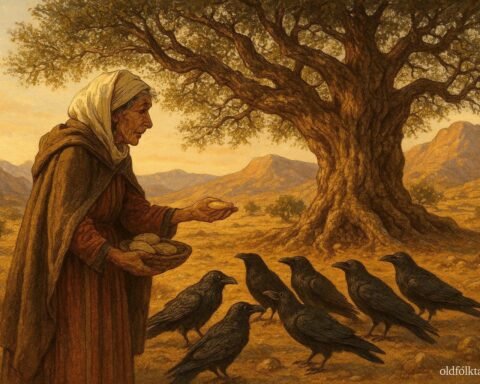
Not far from Leopard’s home lived an elderly woman who carefully observed everything happening in the neighborhood.
Day after day she noticed Fish arriving whenever Leopard was away. She watched him leave before Leopard returned home. Realizing that something was terribly wrong, she decided that silence would only allow the betrayal to continue.
One evening she approached Leopard.
“My son,” she said gently, “there is something you should know. While you are away, your trusted friend Fish often visits your house.”
Leopard frowned.
“I cannot believe such a thing,” he replied. “Fish has been my friend for many years. He would never betray me.”
The old woman lowered her head.
“I have spoken only what my eyes have seen.”
Although Leopard refused to believe her words, doubt quietly entered his heart.
Several days later, Leopard left home as usual, pretending to begin another hunting journey. Instead of travelling deep into the forest, he quietly circled back and hid among the thick bushes near his house.
He waited patiently.
Before long, Fish appeared.
Confident that Leopard had gone, Fish entered the house.
Leopard watched everything with his own eyes.
His heart filled with sorrow more than anger. The friend he had welcomed into his home again and again had broken the sacred bond of trust between them.
Leopard burst from his hiding place.
Fish froze with fear.
For a brief moment Leopard considered taking revenge immediately. His powerful claws could easily have ended Fish’s life.
But after remembering the many years they had spent together as friends, Leopard restrained himself.
“This matter is too important for anger alone,” he declared.
“There is a king whose duty is to judge fairly.”
The next morning Leopard travelled to the court of King Eyo, the respected ruler of Calabar.
News of the dispute spread quickly throughout the kingdom.
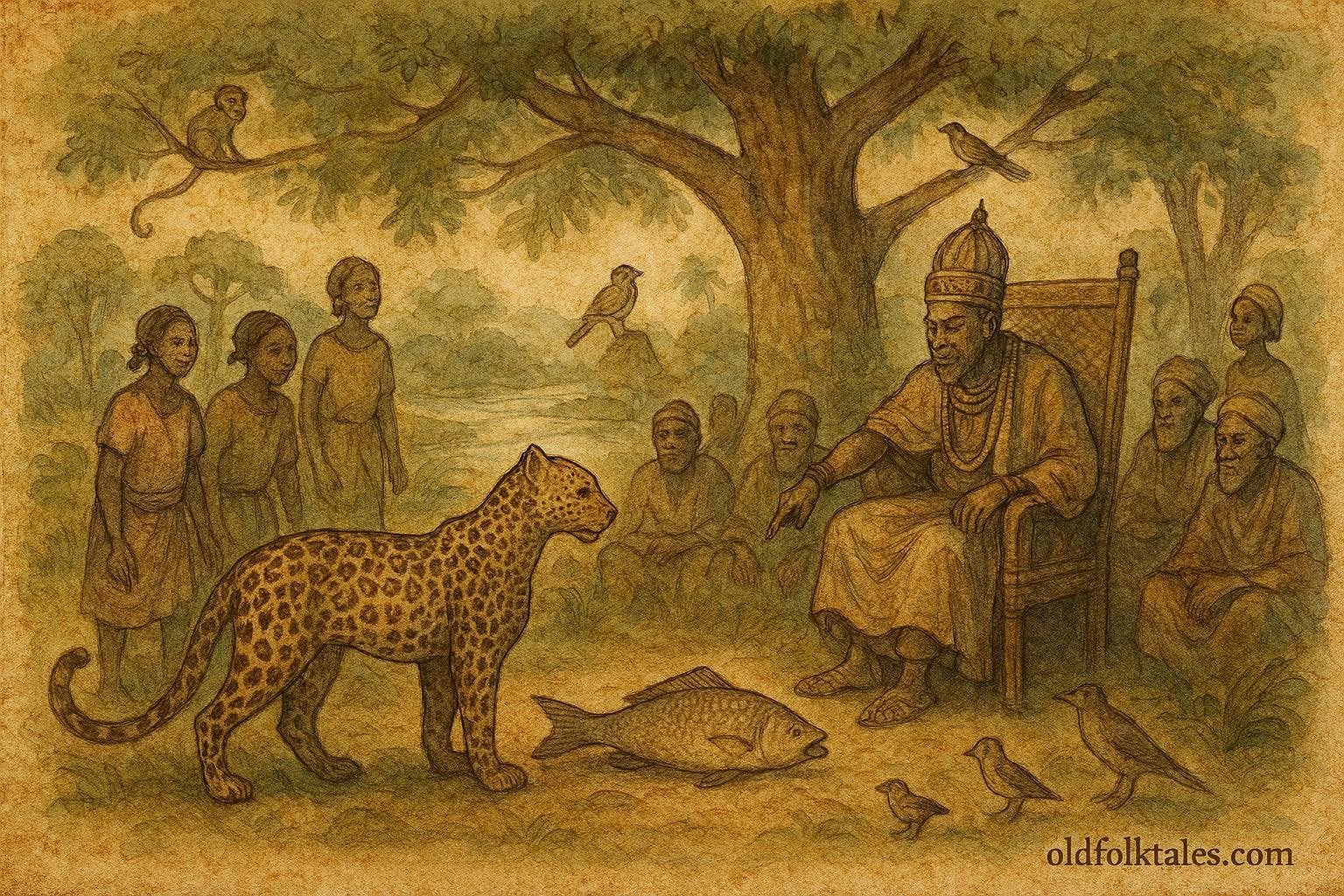
Animals and people gathered beneath the great meeting tree where important judgments were always held. Elders, hunters, chiefs, and villagers filled the royal court, eager to hear the case.
When everyone had assembled, Leopard stepped forward.
Without shouting or exaggerating, he calmly explained how Fish had been welcomed into his home as a trusted companion and how that trust had been broken during his absence.
King Eyo listened without interruption.
When Leopard finished speaking, Fish was called forward to defend himself.
The entire gathering became silent.
Every eye turned toward Fish.
The king gave him every opportunity to explain his actions.
Yet Fish remained speechless.
He could neither deny what had happened nor offer any excuse for betraying the friendship that Leopard had freely given him.
The silence itself became his confession.
King Eyo rose from his seat and looked across the assembly.
“This is indeed a serious matter,” he declared.
“Friendship is built upon trust. A person who receives kindness should return kindness, not betrayal. Fish has taken advantage of Leopard’s confidence and has abused the hospitality that was shown to him.”
The crowd nodded in agreement.
The king continued.
“If such behavior goes unpunished, trust will disappear from our land.”
After a long moment of reflection, King Eyo announced his judgment.
“From this day onward, Fish shall no longer live upon the land.”
A murmur spread through the gathering.
“The rivers, streams, and seas shall become Fish’s permanent home. Whenever Fish leaves the water and comes onto the land, death shall follow. Furthermore, all people and animals may catch Fish for food whenever they are able, so that every generation will remember the consequences of betraying a trusted friend.”
No one challenged the king’s decision.
Fish lowered his head.
He realized that one act of betrayal had cost him far more than he had ever imagined.
Slowly, he left the land forever and entered the rivers.
From that day until now, fish have lived beneath the water, rarely leaving it except to meet certain death. People continue to catch fish from rivers, lakes, and seas, remembering the ancient judgment pronounced by King Eyo.
Among the Efik people, the story has long been told to remind both young and old that friendship is a precious gift that should never be betrayed. Wealth may disappear, strength may fade, but a trustworthy heart remains one of life’s greatest treasures.
If you enjoyed this story, explore our full West African folktales collection
Moral Lesson
This Efik folktale teaches that trust is one of the strongest foundations of every friendship. Betraying someone who has shown kindness and hospitality brings lasting consequences that cannot easily be undone. Loyalty, honesty, and respect preserve relationships, while deceit destroys them.
Knowledge Check
1. Why did Fish lose his home on land in this Efik folktale?
Fish lost his home because he betrayed the trust of his close friend, Leopard, by secretly visiting Leopard’s wife.
2. Who judged the dispute between Fish and Leopard?
King Eyo of Calabar listened to both sides and delivered the final judgment.
3. What does the story explain about nature?
It explains why fish live permanently in water and cannot survive for long on land.
4. What is the main lesson of The Fish Who Lost His Home?
The story teaches that betrayal destroys friendship and brings lasting consequences.
5. Which culture does this folktale come from?
The folktale comes from the Efik people of Old Calabar in Southern Nigeria.
6. Why is King Eyo important in the story?
He represents justice, fairness, and wise leadership by judging the dispute without anger or favoritism.
Source: Efik folktale, Southern Nigeria. Adapted from “The Fish and the Leopard’s Wife; or, Why the Fish Lives in the Water” in Folk Stories from Southern Nigeria by Elphinstone Dayrell (1910).