Long ago, when the bustling markets of Morocco echoed with the voices of traders and storytellers, there stood a prosperous city surrounded by fertile valleys and distant mountains. Merchants arrived from every direction carrying silk, spices, perfumes, and precious metals. Scholars debated beneath shaded courtyards, while travelers rested in caravanserais before continuing their journeys across the desert.
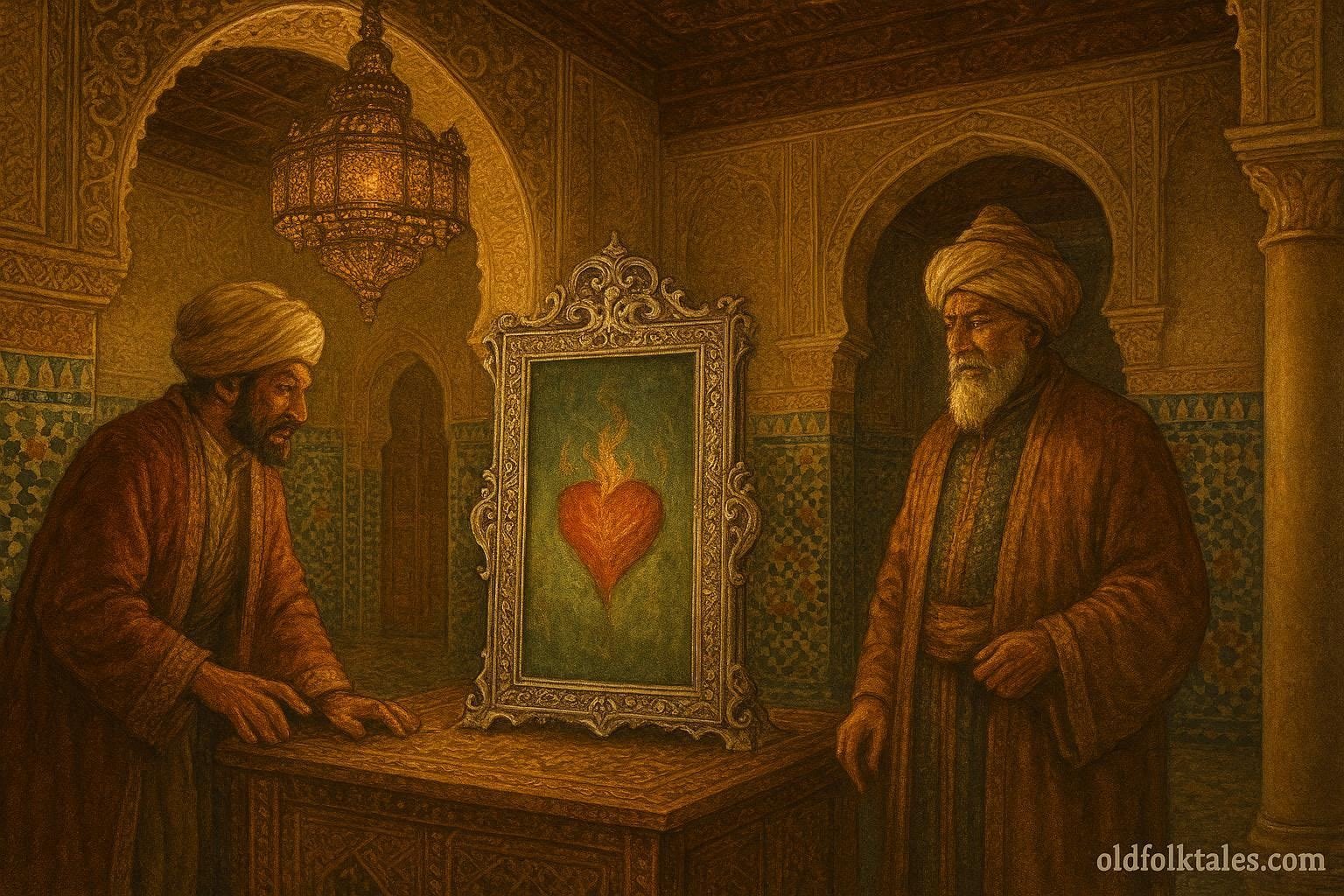
Among the many wonders spoken of in the city, none inspired more curiosity than an object hidden inside the palace of the sultan. It was an ordinary looking glass framed with carved cedar wood and decorated with delicate silver patterns. At first glance, it appeared no different from any mirror found in the homes of wealthy families.
Yet everyone who knew its secret called it The Enchanted Glass.
The elders believed that many generations earlier, a wise sage had crafted the glass after years of prayer, study, and reflection. Rather than showing a person’s face alone, the enchanted glass revealed the truth hidden within the heart. No amount of wealth, beauty, or fine clothing could deceive it. Anyone who looked into its shining surface would see the true nature of their character.
Because such knowledge could change lives forever, the glass remained locked inside a quiet chamber of the royal palace. Only the sultan and a handful of trusted advisers possessed the key.
Want more? Read more West African folktales now
The old sultan believed that power without honesty was dangerous. Before appointing judges, governors, or royal advisers, he invited each candidate into the chamber.
Some entered confidently.
Others entered nervously.
Every one of them emerged changed.
A greedy official once looked into the enchanted glass expecting to admire his handsome appearance. Instead, he saw his own reflection surrounded by bags of gold that turned into heavy chains wrapped around his hands and feet. The image frightened him so deeply that he confessed years of dishonesty before leaving the palace.
Another man who claimed to care for the poor saw himself walking past hungry children while pretending not to notice them. Ashamed by what he witnessed, he dedicated the rest of his life to helping widows, travelers, and orphans.
Word spread quietly throughout the kingdom that no lie could survive before the enchanted glass.
Although many people dismissed the stories as exaggerated legends, few dared to ask the sultan for permission to see it.
Among those who laughed at the tales was a wealthy merchant named Rashid.
Rashid owned large warehouses filled with costly fabrics, spices, and jewels. He dressed in embroidered robes, hosted lavish feasts, and spoke proudly of his generosity.
Whenever people praised another merchant for kindness or honesty, Rashid quickly interrupted.
“There is no man more honorable than I,” he declared.
Those who truly knew him remained silent.
They remembered unpaid workers, dishonest weights in his market stalls, and travelers whom he had cheated during difficult times.
One afternoon, Rashid announced that he wished to become the city’s chief adviser on commerce.
The council agreed that the sultan should interview him.
When Rashid arrived at the palace, he bowed respectfully before the ruler.
“I have served this kingdom faithfully,” he said. “No one understands trade better than I.”
The sultan listened patiently before speaking.
“If your words are true, then you will have nothing to fear from the enchanted glass.”
Rashid smiled confidently.
“I welcome any test.”
The palace servants unlocked the ancient chamber and led him inside.
Sunlight entered through a narrow window, falling gently upon the glass.
Rashid stood before it with folded arms, expecting to admire the image of a successful merchant.
Instead, his smile slowly disappeared.
The reflection staring back at him wore the same robes and the same jeweled turban.
Yet behind the figure stretched a long trail of disappointed customers, exhausted workers, hungry children, and grieving families.
Every dishonest bargain appeared beside him.
Every broken promise returned.
Every selfish choice that he had buried beneath years of pride stood clearly before his eyes.
No one else could see the vision.
The enchanted glass revealed only the truth to the one who looked into it.
Rashid stumbled backward.
“This cannot be real,” he whispered.
But the reflection did not change.
The people behind him continued watching in silence.
Some held empty bowls.
Others carried torn sandals or broken tools.
Then Rashid noticed something even more painful.
The man inside the glass looked wealthy, but his eyes were empty.
His treasure filled countless rooms, yet his heart appeared lonely and dark.
For the first time in many years, Rashid understood that riches could never replace integrity.
He left the chamber without saying a word.
Outside, the sultan observed him carefully.
“What did you see?” the ruler asked.
Rashid lowered his head.
“I saw the man I pretended not to be.”
The sultan nodded gently.
“The glass does not punish anyone. It only removes the masks people wear.”
For many days, Rashid remained at home, speaking little.
His servants wondered whether illness had overtaken him.
Instead, something far greater had begun.
He visited families he had wronged and returned the money he had taken unfairly.
He paid every worker the wages they deserved.
He replaced false market weights with honest ones.
He canceled debts owed by struggling farmers whose harvests had failed.
Whenever someone asked why he had changed, Rashid simply replied, “A man who knows the truth about himself cannot continue living a lie.”
Months passed.
People slowly noticed that the proud merchant had become humble.
He no longer boasted in the marketplace.
Instead, he listened more than he spoke.
He treated strangers with respect and welcomed travelers into his home without expecting reward.
His wealth remained, but it no longer ruled his heart.
One year later, the city faced a severe drought.
Many merchants raised their prices, hoping to profit from scarcity.
Rashid refused.
He opened his warehouses and sold grain at fair prices, even when doing so reduced his fortune.
Some grain he gave away freely to families with nothing left.
When the drought finally ended, the people remembered his kindness.
Not because he had once been rich.
Not because he had become powerful.
But because he had chosen honesty when deception would have been easier.
The sultan invited Rashid back to the palace.
Once again, he stood before the enchanted glass.
This time, the reflection showed no chains, no grieving faces, and no empty eyes.
Instead, Rashid saw himself standing beneath a flourishing olive tree whose branches sheltered travelers, children, and neighbors alike.
Its roots reached deep into the earth, strong enough to withstand every storm.
Tears filled his eyes.
The sultan smiled.
“You have learned what many never discover,” he said.
“Wisdom begins when a person accepts the truth about their own heart.”
From that day onward, the enchanted glass remained hidden within the palace.
It was never displayed as a treasure to impress visitors.
Instead, it served as a quiet reminder that the greatest journey is not across deserts or mountains, but into one’s own conscience.
The people of Morocco continued telling the story from one generation to the next. Parents shared it with their children, judges remembered it before giving their verdicts, and merchants recalled it whenever they weighed their goods.
For they believed that while few people would ever stand before the enchanted glass, everyone would one day face the truth within themselves.
Fascinated by this tale? Discover more North African folktales
Moral Lesson
The story of The Enchanted Glass teaches that truth is the foundation of wisdom, and honesty begins with self reflection. Many people find it easy to recognize the faults of others while ignoring their own. The enchanted glass symbolizes the human conscience, reminding us that no amount of wealth, status, or outward appearance can hide what truly lives in the heart. Genuine change begins when we have the courage to admit our mistakes and correct them. Rashid’s transformation shows that it is never too late to choose integrity over greed, kindness over selfishness, and truth over deception. A person who honestly examines their own heart gains the wisdom to live a life that benefits both themselves and others.
Knowledge Check
1. What does the enchanted glass symbolize in the Moroccan folktale?
The enchanted glass symbolizes truth, self reflection, and the human conscience. Rather than showing physical appearance, it reveals a person’s true character and hidden intentions.
2. Why did the Sultan keep the enchanted glass inside the palace?
The Sultan kept the enchanted glass hidden because its power was too important to be used carelessly. He used it to ensure that those appointed to positions of leadership possessed honesty and wisdom.
3. How did Rashid change after looking into the enchanted glass?
After seeing the truth about himself, Rashid admitted his faults, repaid those he had cheated, treated his workers fairly, helped the poor, and became known for honesty instead of greed.
4. What lesson does the story teach about wealth and character?
The story teaches that wealth alone does not make a person honorable. True greatness comes from integrity, compassion, and living honestly, regardless of one’s possessions.
5. Why is self honesty important according to this traditional Moroccan legend?
Self honesty allows people to recognize their weaknesses, correct their mistakes, and become wiser. Without accepting the truth about ourselves, personal growth is impossible.
6. What is the central message of The Enchanted Glass That Revealed Every Hidden Truth?
The central message is that lasting wisdom begins with truth. People who honestly examine their own hearts become better leaders, neighbors, and members of society.
Source
Source: Adapted from a traditional Moroccan folktale documented by Françoise Légey in Contes et légendes populaires du Maroc (1926).
Cultural Origin: Arab Moroccan.