In the ancient Kingdom of Benin, the leopard was more than a powerful animal. It was a symbol of courage, authority, wisdom, and royal responsibility. Images of leopards appeared in palace carvings, royal artworks, and stories passed down through generations.
Among the many legends told within the kingdom, none was more respected than the tale of the Leopard of the Oba’s Palace.
According to tradition, a mysterious leopard appeared whenever the kingdom faced a moment that would test the ruler’s commitment to justice.
No one knew where the animal came from.
No hunter could track it.
No guard could predict when it would appear.
Yet throughout generations, stories of the leopard continued to spread across the kingdom.
Many years ago, during the reign of a respected Oba named Osemwende, the kingdom enjoyed peace and prosperity. Trade flourished, artisans created remarkable works of art, and communities worked together to strengthen the realm.
Don’t miss out: Read more Southern African folktales
The Oba was admired for his wisdom and fairness.
People trusted him because he listened carefully before making decisions.
One year, however, a dispute arose that threatened to divide the kingdom.
A wealthy chief and a poor farmer became involved in a disagreement over a large piece of farmland located near an important river.
The chief claimed that the land belonged to his family through inheritance.
The farmer insisted that his ancestors had cultivated the land for generations.
Both men presented witnesses.
Both offered evidence.
Soon the disagreement became the most discussed issue in the kingdom.
Some supported the chief because of his influence.
Others supported the farmer because they believed he had been treated unfairly.
The royal court became divided.
As the case approached its final hearing, many people worried that the wrong decision could weaken public trust in the kingdom’s justice system.
On the evening before the Oba was expected to deliver his judgment, something unusual happened.
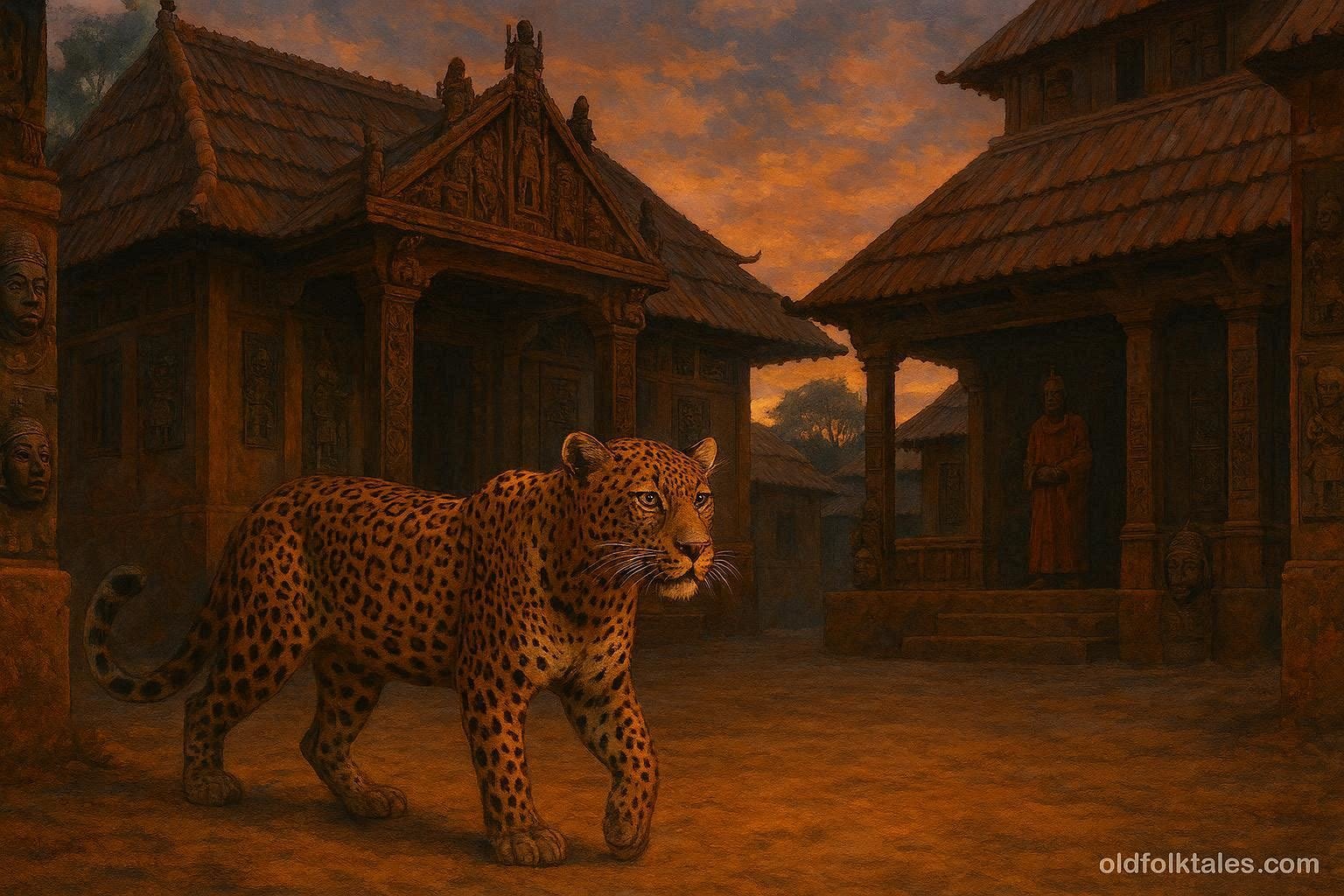
Palace guards reported seeing a leopard walking calmly through the royal courtyard.
The animal showed no fear.
It moved with confidence and dignity before disappearing into the darkness.
News spread rapidly.
The elders immediately recognized the significance of the event.
“The Leopard has returned,” they whispered.
The following morning, the Oba summoned his advisers.
Some urged him to favor the powerful chief in order to avoid political conflict.
Others argued that public opinion would support the farmer.
The Oba listened carefully but remained silent.
That evening, as he reflected on the case, he walked alone through a section of the palace gardens.
To his surprise, the leopard appeared once again.
The animal stood beneath a large tree and watched him quietly.
The Oba felt no fear.
Instead, he felt as though the creature was challenging him to think more deeply.
For several moments, neither moved.
Then the leopard turned and disappeared into the shadows.
The encounter remained in the ruler’s thoughts throughout the night.
Rather than focusing on influence or popularity, he decided to review every detail of the dispute again.
He questioned additional witnesses.
He examined historical records.
He sought advice from elders who understood the history of the land.
As he studied the evidence more carefully, important facts emerged that had previously been overlooked.
The records revealed that the farmer’s family had indeed cared for and cultivated the land for generations.
Although the chief’s family possessed influence in the area, their claim lacked the historical support they had presented.
The truth became clear.
The next day, the royal court gathered to hear the final judgment.
The hall was crowded with chiefs, elders, traders, farmers, and visitors from neighboring communities.
Everyone waited anxiously.
When the Oba rose to speak, silence filled the chamber.
“Justice cannot belong only to the powerful,” he declared.
“It must belong to every person within the kingdom.”
He then ruled in favor of the farmer.
The decision surprised many people.
Some feared the chief would react with anger.
Instead, the careful investigation and transparent process left little room for dispute.
The evidence had spoken for itself.
The kingdom accepted the judgment.
Trust in the royal court grew stronger.
People praised the Oba’s commitment to fairness and truth.
That night, palace guards reported seeing the leopard one final time.
The animal walked calmly across the courtyard before disappearing beyond the palace walls.
Months passed.
Years passed.
The story of the leopard became even more famous.
Whenever difficult decisions arose, people remembered the lesson of the mysterious visitor.
Future rulers were taught that leadership required more than authority.
It required wisdom, patience, and the courage to make fair decisions even when those decisions were difficult.
Generations later, another ruler faced a different challenge involving trade disagreements and accusations of corruption.
Once again, the leopard appeared.
Years after that, during a conflict between powerful nobles, the animal was seen near the palace gates.
Each appearance served as a reminder that justice must never be sacrificed for convenience or personal gain.
Whether the leopard was an ordinary animal, a royal symbol, or a messenger from the ancestors became a matter of debate.
Some believed it was a spirit guardian.
Others believed the stories had grown through generations of storytelling.
Yet everyone agreed on the meaning behind the legend.
The leopard represented the responsibility carried by those entrusted with leadership.
The tale of the Leopard of the Oba’s Palace continued to be shared throughout the Kingdom of Benin and beyond.
Parents told it to their children.
Elders shared it during community gatherings.
Rulers reflected upon it during times of uncertainty.
And through every retelling, the same lesson endured.
A kingdom remains strong when justice guides leadership and wisdom stands above power.
If you enjoyed this story, explore our full West African folktales collection
Moral Lesson
True leadership requires fairness, wisdom, and the courage to uphold justice regardless of wealth, influence, or personal interests.
Knowledge Check
1. What did the leopard symbolize in the Kingdom of Benin?
The leopard symbolized authority, wisdom, justice, and royal responsibility.
2. When did the mysterious leopard appear?
It appeared whenever justice was threatened or an important decision faced the ruler.
3. What dispute challenged the kingdom in the story?
A wealthy chief and a poor farmer both claimed ownership of valuable farmland.
4. How did the Oba reach his final decision?
He carefully reviewed evidence, questioned witnesses, and examined historical records.
5. Why did the leopard appear before the judgment?
The leopard served as a reminder that the ruler must act with wisdom and fairness.
6. What is the main lesson of the story?
Justice should guide leadership, regardless of power, wealth, or influence.
Source
Adapted from Edo royal symbolism, Benin Kingdom oral traditions, and cultural narratives surrounding the leopard as a symbol of authority and responsible leadership.