High above the forests and valleys of southwestern Nigeria stood the majestic hills of Idanre. For generations, the towering rocks watched over the people who lived below, preserving stories, traditions, and memories older than anyone could remember.
The elders often spoke of the hills with great respect.
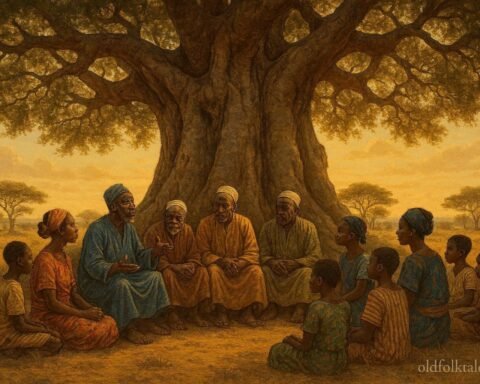
They believed the stones carried the wisdom of past generations and served as silent witnesses to every important event in the community’s history.
Among the people of Idanre lived a young palace scribe named Adeyemi. His responsibility was to record important events, preserve royal decisions, and maintain the kingdom’s historical records.
Unlike many people his age, Adeyemi spent much of his time listening to elders and studying ancient traditions.
One evening, as the sun disappeared behind the hills, a shepherd arrived in the village with unusual news.
Explore the wisdom and wonder of North African folktales
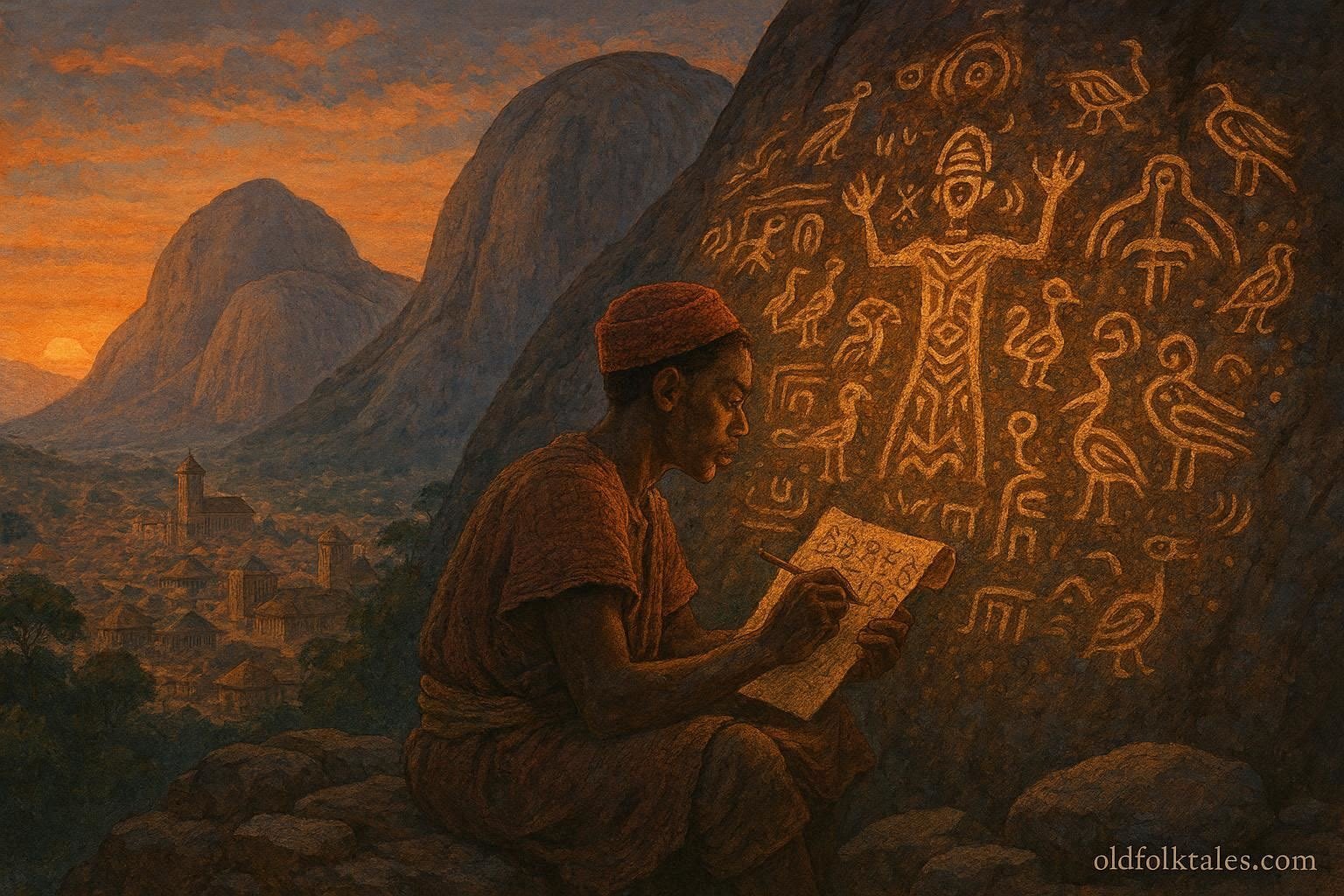
While tending his goats near one of the ancient hilltop paths, he had discovered strange markings carved into a large stone.
The symbols were unlike anything he had seen before.
At first, most villagers dismissed the report.
They assumed the markings had always been there and had simply gone unnoticed.
However, the following morning, another set of symbols appeared on a different stone.
Then another.
And another.
Within a week, strange markings had appeared across several stones scattered throughout the hills.
The mysterious symbols quickly became the subject of conversation throughout the kingdom.
Some believed they were messages from ancestors.
Others suspected they were warnings.
Many simply feared what they could not understand.
At the same time, the kingdom faced an important challenge.
A powerful neighboring ruler had proposed an agreement that promised wealth and expanded trade opportunities.
While some chiefs supported the proposal, others worried that accepting it might weaken the kingdom’s independence.
The royal council became divided.
Meetings grew longer.
Arguments became more frequent.
No clear solution emerged.
As uncertainty spread, the appearance of the mysterious symbols seemed more significant than ever.
The king ordered respected elders, priests, and scholars to examine the markings.
Despite their efforts, no one could fully explain them.
Adeyemi became fascinated by the mystery.
Determined to understand the symbols, he began climbing the hills each day to study them carefully.
He copied every marking into his records and compared them with ancient carvings preserved in the palace archives.
For weeks, he searched for clues.
One afternoon, while examining a weathered stone hidden among the hills, he noticed something unusual.
The symbols were not random.
They appeared to follow a pattern.
Certain shapes repeated themselves.
Others appeared only in specific combinations.
The markings seemed to tell a story.
Excited by the discovery, Adeyemi continued his research.
Night after night, he compared the symbols with ancient records.
Eventually, he found a connection.
Many of the symbols closely resembled markings used by ancestors to record important lessons about leadership, responsibility, and unity.
The realization filled him with excitement.
The stones were not predicting the future.
They were reminding people of the wisdom of the past.
As more symbols appeared, Adeyemi gradually pieced together their message.
The carvings described a period long ago when another ruler had faced a similar decision.
Tempted by promises of wealth and influence, that ruler ignored the advice of his people and entered an agreement that benefited a few individuals but harmed the wider community.
The consequences lasted for generations.
The final symbols carried a simple but powerful lesson.
“A leader must look beyond immediate rewards and consider the future of the people.”
Adeyemi immediately presented his findings to the royal council.
The chiefs listened carefully as he explained the connection between the ancient symbols and the kingdom’s history.
Some were skeptical at first.
Others were deeply moved.
The elders recognized many of the lessons preserved within the carvings.
After several days of discussion, the council reconsidered the proposed agreement.
Rather than accepting it immediately, they negotiated terms that protected the kingdom’s interests while still encouraging cooperation and trade.
The revised agreement benefited both sides without sacrificing the independence of the people.
The decision was widely praised.
Many believed the wisdom contained in the stone symbols had helped guide the kingdom toward a better outcome.
Shortly after the agreement was finalized, the mysterious carvings stopped appearing.
No new symbols emerged on the hills.
The existing markings remained, serving as permanent reminders of the lessons they had revealed.
Years later, the story of the Stone Messenger became one of the most cherished legends of Idanre.
Visitors traveled to see the ancient stones.
Elders retold the story during gatherings and festivals.
Young people learned that leadership required more than ambition and intelligence.
It required the humility to learn from the experiences of those who came before.
Adeyemi eventually became one of the kingdom’s most respected historians.
Whenever people asked whether the symbols had truly been messages from the ancestors, he always gave the same answer.
“The stones did not tell us what to do,” he would say. “They reminded us of what we already knew but had almost forgotten.”
And so the legend of the Stone Messenger of Idanre endured through the generations, teaching that wisdom often lives within history, waiting for those willing to listen.
Want more? Read more West African folktales now
Moral Lesson
Good leadership requires learning from history, respecting wisdom, and considering the long-term welfare of the community.
Knowledge Check
1. Where did the story take place?
The story takes place in Idanre, a historic Yoruba community in southwestern Nigeria.
2. Who was Adeyemi?
Adeyemi was a young palace scribe who investigated the mysterious stone symbols.
3. Why did the symbols appear?
They appeared during an important period when the kingdom faced a major decision.
4. What did the symbols represent?
They preserved ancestral lessons about leadership, responsibility, and unity.
5. How did the symbols help the kingdom?
They encouraged leaders to make decisions that protected the future of the community.
6. What is the central lesson of the story?
History and ancestral wisdom can guide people toward better decisions.
Source
Adapted from Yoruba heritage traditions associated with the Idanre Hills and oral folklore motifs preserved in Yoruba cultural and historical folklore archives.