For countless generations, the Luangwa River flowed through the valleys and woodlands of eastern Zambia, providing water, fish, and fertile land for the communities that lived along its banks. Among the Nsenga people, the river was regarded as a source of life and prosperity. Families depended upon it for survival, and elders taught that its gifts should never be taken for granted.
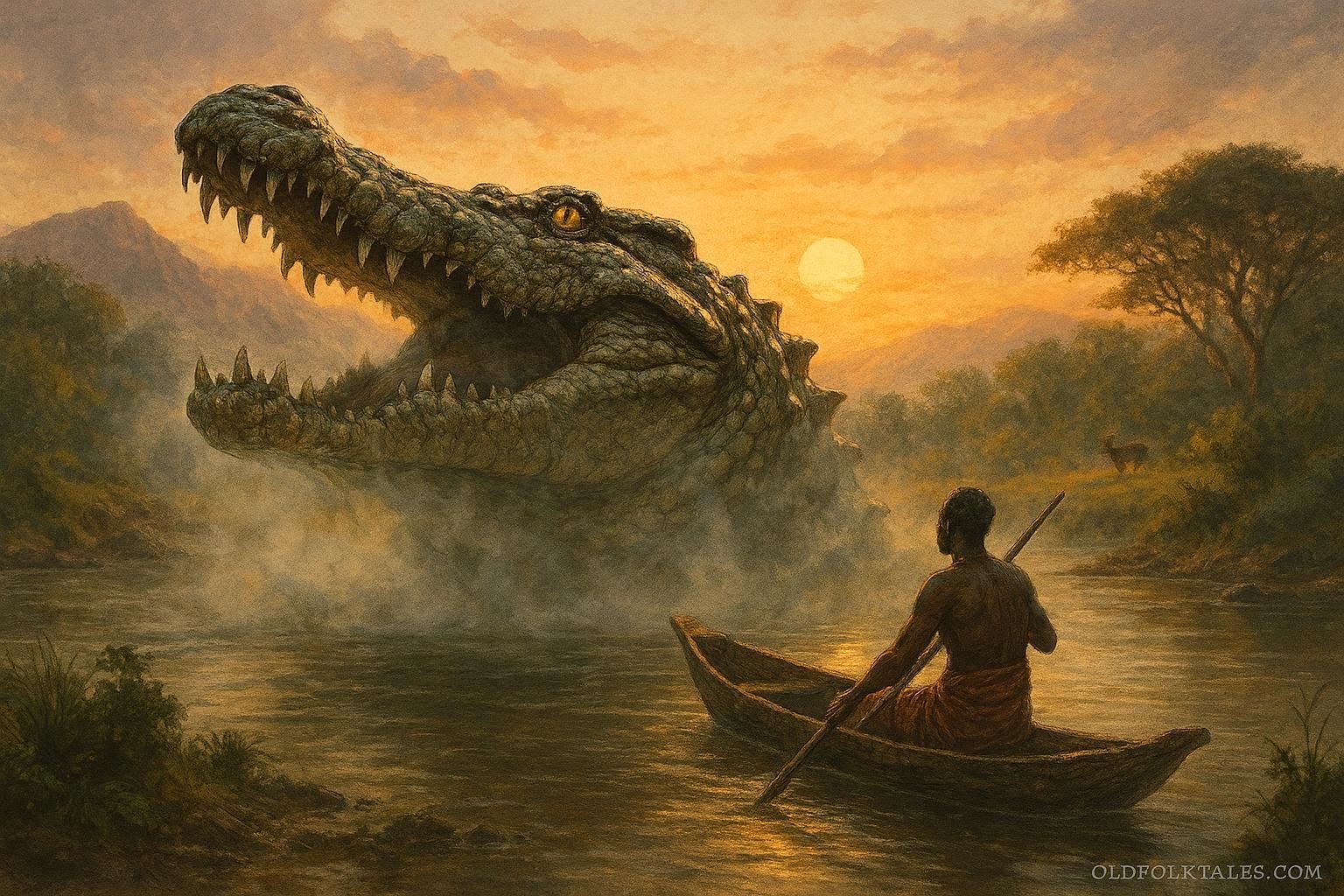
Among the many stories told beside evening fires was the legend of the Crocodile King of the Luangwa. Unlike ordinary crocodiles, this creature was said to be enormous, older than any living person, and rarely seen. According to tradition, the Crocodile King appeared only when the relationship between people and the river had fallen out of balance.
Some believed he was a river spirit.
Others believed he was simply a guardian chosen by nature itself.
Whatever his true nature, the elders agreed on one thing: his appearance always carried an important lesson.
Many years ago, a fishing village thrived along a quiet stretch of the Luangwa River. The people worked hard and respected the customs passed down by their ancestors. Fishermen took only what they needed, leaving enough fish for future seasons. Farmers protected the riverbanks from unnecessary damage, and hunters avoided disturbing breeding areas near the water.
As a result, the community prospered.
The river remained healthy.
Fish were plentiful.
Families lived comfortably.
Keep reading: Discover more Central African folktales
Among the villagers was a young fisherman named Tembo. He had learned to fish from his father and grandfather and understood the traditions of the community. He listened carefully to the advice of elders and believed strongly in respecting the river.
As years passed, however, new fishermen arrived from distant places.
Unlike the local villagers, some cared little for traditional practices.
They caught large numbers of fish without considering future seasons.
They ignored breeding periods.
Some even damaged parts of the riverbank while expanding their fishing activities.
At first, the changes seemed minor.
The river still appeared healthy.
Fish were still available.
Many people saw no reason for concern.
Only the elders warned that such behavior could create problems.
“The river provides for those who respect it,” they often said. “But every gift has limits.”
Unfortunately, their warnings were largely ignored.
Over time, fish became harder to find.
Certain species that had once been common grew increasingly scarce.
Fishermen needed to travel farther from the village to make successful catches.
Concern spread throughout the community.
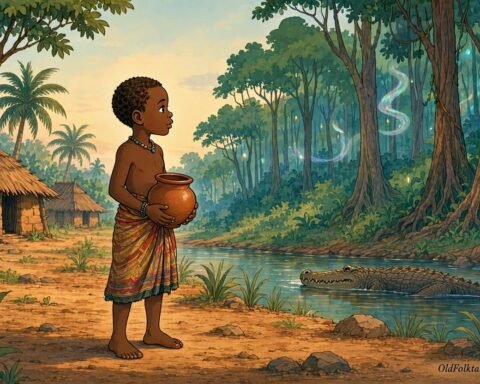
One morning, before sunrise, Tembo paddled his canoe into a quiet section of the river. The mist hung low above the water, and the valley was unusually silent.
As he checked his fishing nets, he noticed a large disturbance ahead.
The water began to ripple.
Then a massive crocodile emerged from the river.
Tembo had seen many crocodiles before, but none like this.
The creature was enormous.
Its scales glistened in the early morning light.
Its eyes seemed calm and intelligent.
The crocodile remained motionless for several moments before slowly turning toward the opposite bank and disappearing beneath the surface.
Tembo returned to the village and shared what he had seen.
The elders immediately grew serious.
“The Crocodile King has appeared,” one elder said quietly.
News spread quickly.
Some villagers were frightened.
Others were skeptical.
Yet within days, several fishermen reported similar encounters.
The giant crocodile had been seen in different parts of the river.
Each appearance seemed deliberate.
The elders called a gathering.
They reminded the community of the old legend and encouraged everyone to reflect on how the river had been treated in recent years.
During the meeting, many people acknowledged that traditional practices had been neglected.
Some admitted catching more fish than necessary.
Others confessed to ignoring seasonal restrictions that had protected fish populations for generations.
After much discussion, the villagers agreed to make changes.
Fishing limits were established.
Breeding areas were protected.
Riverbank conservation efforts began.
Young people were taught the customs that previous generations had followed.
The work required patience and cooperation.
Results did not appear immediately.
But over time, the health of the river improved.
Fish populations gradually recovered.
Wildlife returned to areas where it had become rare.
The balance between people and nature began to strengthen once again.
Several years later, Tembo encountered the giant crocodile one final time.
While fishing at dawn, he noticed the familiar figure resting near the riverbank.
The Crocodile King remained still for a moment before slipping silently into the water.
After that day, no one reported seeing him again.
The elders believed his task was complete.
The people had remembered their responsibilities.
The river was being respected once more.
Generations later, the story of the Crocodile King of the Luangwa continued to be told throughout the valley. Some believed he was a supernatural guardian watching over the river. Others viewed him as a symbol of the consequences that arise when people neglect their relationship with nature.
Regardless of interpretation, the lesson remained unchanged.
Natural resources are gifts that must be protected.
Prosperity depends upon balance.
And communities that respect the environment ensure that future generations can benefit from its blessings.
To this day, fishermen along the Luangwa sometimes glance across the water at sunrise and wonder whether the legendary guardian still watches from beneath the river’s surface.
Explore more Southern African folktales here
Moral Lesson
People must use natural resources responsibly and protect the environment for future generations.
Knowledge Check
1. Who was the Crocodile King of the Luangwa?
He was a giant crocodile believed to judge whether people respected the river and its resources.
2. Who was Tembo?
Tembo was a young fisherman who first witnessed the appearance of the Crocodile King.
3. Why did the Crocodile King appear?
He appeared after people began neglecting traditional practices and overusing the river’s resources.
4. What problems affected the river?
Overfishing and environmental damage caused fish populations to decline.
5. How did the villagers solve the problem?
They restored traditional conservation practices and protected important parts of the river.
6. What is the main lesson of the story?
Nature must be respected and managed responsibly to maintain balance and sustainability.
Source
Adapted from Nsenga oral traditions and river guardian legends preserved in Luangwa Valley folklore archives.