Long before the rise of many modern kingdoms in East Africa, oral traditions tell of a remarkable dynasty known as the Bachwezi. Remembered throughout the Great Lakes region, particularly within the traditions of Bunyoro Kitara, the Bachwezi were celebrated as powerful rulers, skilled organizers, and visionaries whose influence shaped the societies of their time.
Generations of storytellers described them as leaders who introduced new systems of governance, expanded cattle keeping, encouraged trade, and helped communities prosper. Their names became associated with wisdom, prosperity, and authority. Yet despite their achievements, the Bachwezi are remembered most not only for how they ruled but also for the mystery surrounding their departure.
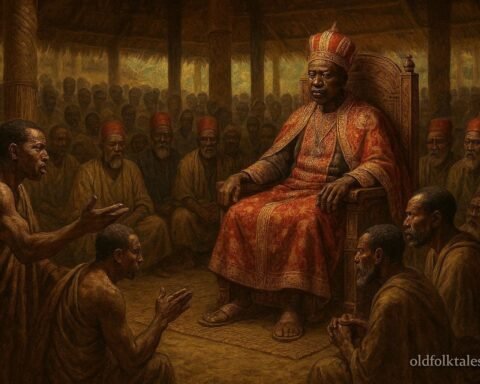
According to oral tradition, the Bachwezi governed during a period often remembered as a golden age. Communities flourished across fertile landscapes. Trade routes connected distant settlements. Herds of cattle grazed across open grasslands. Farmers harvested abundant crops, and local leaders worked together to maintain stability.
Explore the wisdom and wonder of North African folktales
Among the most respected rulers of this era were figures such as Ndahura and Wamara, whose names survived in stories told long after their reigns ended. Under their leadership, the kingdom expanded its influence and developed strong political and economic networks.
Yet even during this period of success, signs began to emerge that change was approaching.
Some traditions speak of unusual events that puzzled elders and advisors. Others describe growing uncertainty within the kingdom. Travelers reported strange occurrences in distant regions. Certain leaders became concerned about the future, though few could explain exactly why.
As time passed, these concerns deepened.
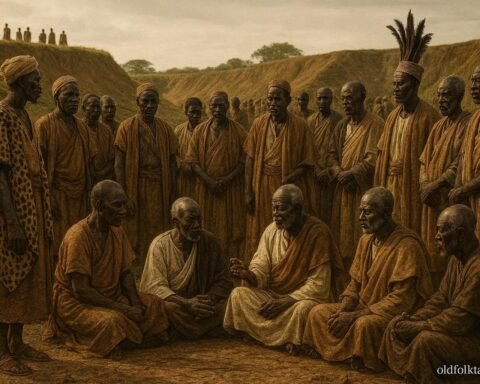
One evening, according to a popular version of the tradition, senior elders gathered to discuss troubling developments. They spoke about changes they had observed across the kingdom and wondered whether the era of the Bachwezi might be nearing its end.
Their discussions produced no clear answers.
Instead, they raised more questions.
What would happen if the rulers disappeared?
Who would guide the people?
How would future generations remember the kingdom?
Meanwhile, ordinary people continued their daily lives, unaware that history was approaching a turning point.
In one settlement lived a young cattle keeper named Isingoma. Like many others, he admired the Bachwezi and viewed them as symbols of stability and strength. He had grown up hearing stories about their accomplishments and expected their rule to continue indefinitely.
One morning, rumors began spreading throughout the region.
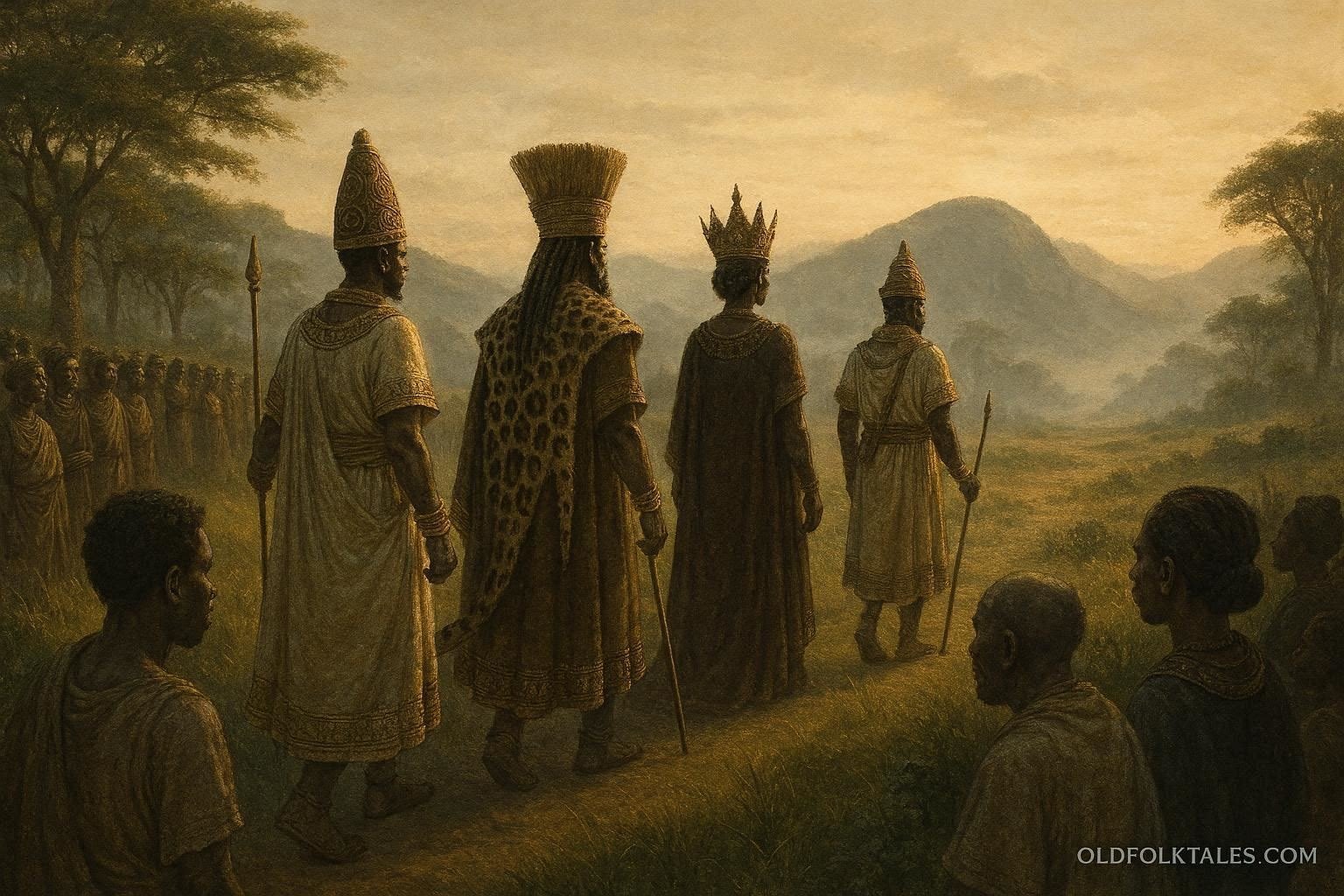
Travelers arriving from distant areas claimed that certain Bachwezi leaders had left their residences and traveled toward remote locations. Some believed they were conducting important ceremonies. Others thought they were inspecting parts of the kingdom.
As the days passed, however, the rumors became increasingly unusual.
People reported seeing groups of Bachwezi traveling together.
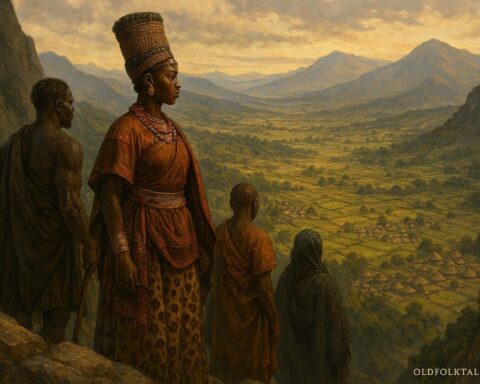
Some said they were moving toward distant hills.
Others claimed they were heading toward sacred landscapes associated with ancestral traditions.
No one seemed certain of their destination.
Concern spread quickly.
Community leaders attempted to gather information, but reliable answers remained elusive. Even respected elders admitted they did not fully understand what was happening.
Then came the event that would become one of the greatest mysteries in regional oral history.
According to tradition, the Bachwezi departed.
Different versions describe the departure in different ways.
Some stories say they vanished into the earth.
Others suggest they entered hidden places beyond ordinary human reach.
Certain traditions claim they crossed into another realm connected to ancestors and spirits.
A few accounts simply state that they left and were never seen again.
Regardless of the version, one fact remained consistent.
The Bachwezi were gone.
The news spread rapidly across the kingdom.
Communities struggled to understand what had occurred.
Many people searched for explanations.
Some believed the rulers had completed a sacred mission.
Others thought their departure fulfilled a destiny that had long been foretold.
Many simply accepted that certain mysteries cannot be fully understood.
For young people like Isingoma, the disappearance was difficult to comprehend.
How could leaders so powerful simply leave?
Why would they depart during a period of prosperity?
Would they ever return?
The questions lingered without answers.
In the years that followed, communities adapted to a new reality.
Leadership structures changed.
New rulers emerged.
Political institutions evolved.
The region entered a different chapter of its history.
Yet memories of the Bachwezi remained remarkably strong.
Storytellers continued recounting their achievements.
Parents shared stories with their children.
Elders preserved traditions connecting the present to the legendary past.
Over time, the mystery of the departure became an important part of the Bachwezi legacy.
Had the rulers truly vanished?
Did they travel elsewhere?
Were the stories symbolic representations of historical changes?
Each generation offered its own interpretations.
The uncertainty ensured that the narrative remained alive.
Historians and researchers who later studied Great Lakes traditions recognized the significance of these stories. While oral traditions often blend history, symbolism, and cultural memory, they provide valuable insights into how communities understand major transitions.
The story of the Bachwezi’s departure may reflect memories of political change, migration, succession, or social transformation. Yet for the communities preserving these traditions, the deeper meaning often matters more than identifying a single historical explanation.
The narrative encourages reflection on the nature of leadership and change.
Even the most powerful dynasties do not last forever.
Every era eventually gives way to another.
The challenge lies in preserving valuable knowledge while adapting to new circumstances.
This lesson became especially important as generations passed.
The descendants of those who remembered the Bachwezi continued building communities, governing kingdoms, and shaping regional history. They honored the past while creating new traditions of their own.
The memory of the Bachwezi endured because it represented more than a lost dynasty.
It symbolized a connection between generations.
It reminded people that history is not only about events but also about the stories communities choose to preserve.
Today, the Bachwezi remain among the most fascinating figures in the oral traditions of the Great Lakes region. Their names appear in historical narratives, folklore, cultural ceremonies, and academic research.
Visitors exploring sites associated with ancient Kitara often encounter stories connected to their legacy.
Scholars continue studying traditions surrounding their rule and disappearance.
Communities continue debating the meaning of their final journey.
Perhaps that enduring mystery explains why the story remains so powerful.
Questions that cannot be fully answered invite continued curiosity.
They encourage each generation to engage with the past and seek its own understanding.
For the people who preserved these traditions, the Bachwezi never truly vanished.
Their influence survives in memory.
Their achievements remain part of cultural heritage.
And their last journey continues to inspire wonder centuries after it was first told.
Don’t stop yet! See our complete East African folktales collection
Moral Lesson
Great legacies are preserved not only through achievements but also through the memories and lessons passed from one generation to the next.
Knowledge Check
1. Who were the Bachwezi?
They were legendary rulers remembered in Great Lakes oral traditions, especially those of Bunyoro Kitara.
2. What is the central mystery of the story?
The unexplained departure of the Bachwezi rulers.
3. How do different traditions describe their departure?
Some say they vanished into the earth, entered hidden realms, or simply left and never returned.
4. How did communities respond after the Bachwezi departed?
They adapted to new leadership while preserving memories of the dynasty.
5. Why has the story remained important for generations?
Because it connects people to their heritage and raises enduring historical questions.
6. What is the main lesson of the story?
Legacies endure when communities preserve history, memory, and cultural knowledge.
Source
Adapted from Bunyoro Kitara oral traditions, Bachwezi dynastic narratives, and materials preserved in Great Lakes historical tradition archives.