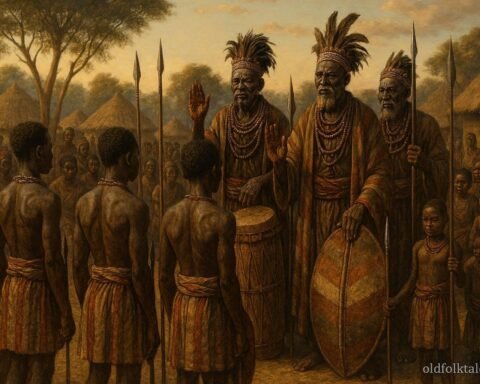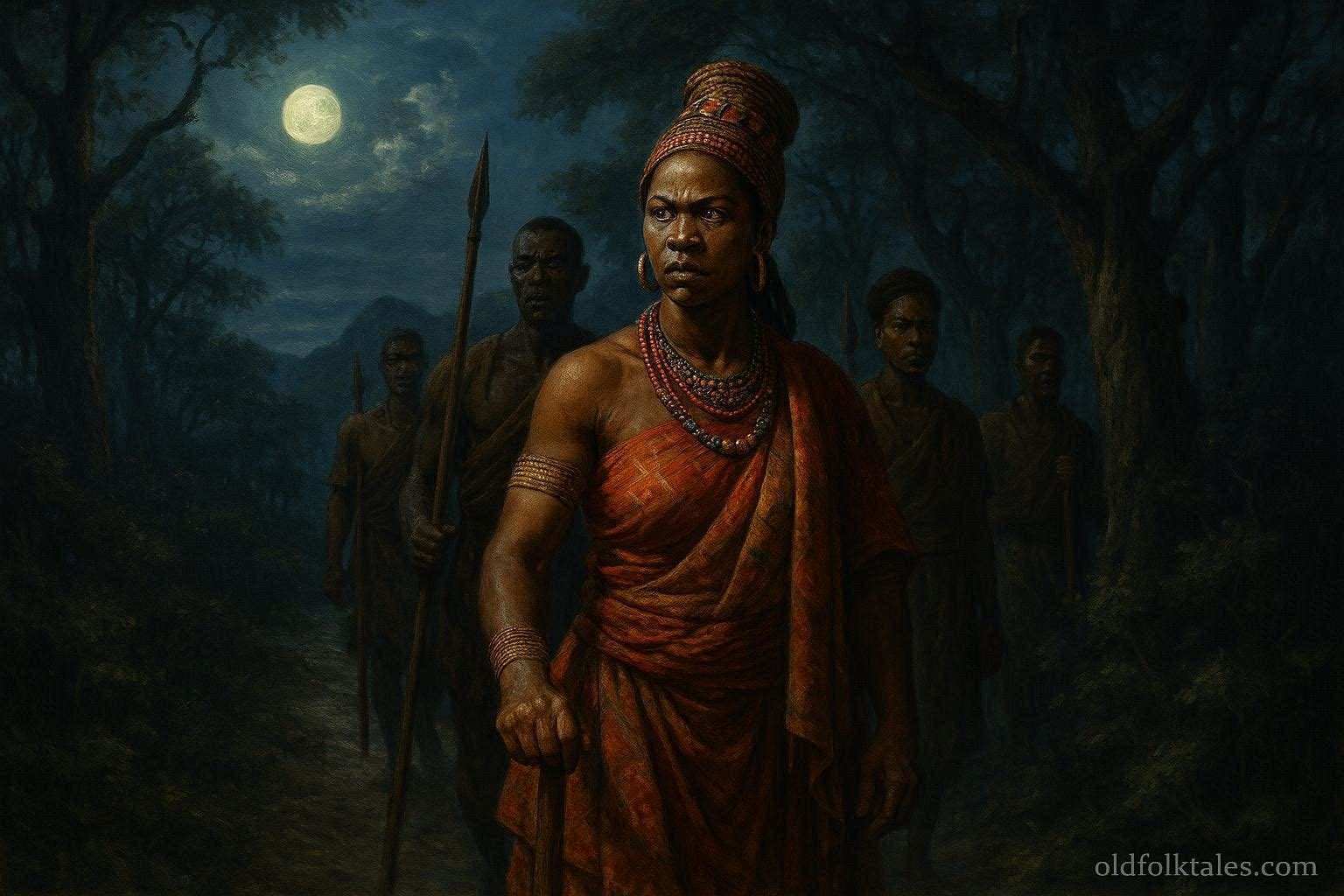
During the seventeenth century, the Kingdom of Ndongo stood at the center of important political and economic developments in Central Africa. The kingdom was home to thriving communities, skilled farmers, respected leaders, and extensive trade networks. Yet it also faced increasing pressure from rival powers and foreign interests seeking influence in the region.
Amid these challenges emerged one of Africa’s most remarkable historical figures, Njinga Mbande.
Born into the royal family of Ndongo, Njinga grew up observing matters of leadership and diplomacy. From an early age, she displayed unusual intelligence and determination. She listened carefully when elders discussed political affairs and learned the importance of negotiation, strategy, and careful decision making.
As she matured, her reputation spread throughout the kingdom.
People admired her confidence and her ability to understand complex situations. She possessed a gift for assessing problems and identifying solutions that others often overlooked.
Don’t stop yet! See our complete East African folktales collection
These qualities would later prove essential during one of the most difficult periods in Ndongo’s history.
At the time, Kabasa served as an important political center within the kingdom. Leaders gathered there to discuss policies, settle disputes, and coordinate responses to emerging challenges. The city symbolized authority and continuity, making it a vital location for those seeking to influence the future of Ndongo.
However, political tensions were growing.
Conflicts involving regional rivals and outside forces created uncertainty. Alliances shifted. Competition for influence intensified. Reports from travelers and messengers suggested that dangerous developments were unfolding across the region.
Njinga understood that the situation required caution.
She spent long hours consulting trusted advisors and gathering information from different sources. Rather than acting hastily, she carefully studied events and considered their possible consequences.
Her attention to detail revealed troubling signs.
Certain groups appeared determined to weaken Ndongo’s leadership. Rumors circulated about plans that could threaten the stability of the kingdom. While some officials dismissed these warnings, Njinga believed they deserved serious consideration.
As conditions deteriorated, tensions within Kabasa increased.
Meetings that once focused on governance became dominated by concerns about security and political survival. Leaders debated how best to protect the kingdom’s interests while avoiding unnecessary conflict.
Njinga remained calm.
She encouraged patience and careful planning. She reminded those around her that fear often leads to poor decisions.
Despite her efforts, the situation continued to worsen.
Eventually, reliable information reached her indicating that remaining in Kabasa could become increasingly dangerous. Political rivals were maneuvering for advantage, and uncertainty surrounded the intentions of several powerful groups.
Njinga faced a difficult choice.
She could remain in the city and risk becoming trapped by circumstances beyond her control, or she could leave and preserve her ability to guide her people through the crisis.
The decision carried enormous consequences.
Leaving Kabasa might be interpreted as weakness by some observers. Yet remaining could place both her and her supporters in grave danger.
After consulting trusted allies, Njinga made her choice.
She would leave Kabasa.
However, the departure required extraordinary care.
Any sign of panic could create confusion. Open preparations might attract unwanted attention. Success depended upon secrecy, discipline, and precise timing.
Over the following days, plans were developed quietly.
Only a small circle of trusted individuals knew the details. Routes were examined. Potential obstacles were identified. Messengers carried information discreetly between allies.
Njinga personally supervised many aspects of the preparation.
She understood that leadership demanded active involvement rather than passive observation.
When the moment finally arrived, the group moved swiftly.
Under cover of darkness, Njinga and her companions departed Kabasa. The journey ahead would be difficult, but remaining behind was no longer a safe option.
The travelers advanced carefully through familiar territory before entering areas where uncertainty increased.
Every decision mattered.
Paths had to be chosen wisely.
Supplies needed to be managed carefully.
Information about conditions ahead had to be evaluated constantly.
Throughout the journey, Njinga demonstrated remarkable composure.
Whenever challenges emerged, she encouraged her companions to remain focused.
When uncertainty created anxiety, she emphasized preparation and discipline.
Her confidence strengthened the resolve of those traveling with her.
Several times, obstacles threatened to delay their progress.
Heavy rains complicated movement.
Difficult terrain slowed the group.
Unexpected developments forced adjustments to carefully prepared plans.
Yet each challenge was met with determination and flexibility.
Rather than viewing setbacks as defeats, Njinga treated them as problems requiring solutions.
This mindset became one of her greatest strengths.
As news of her departure spread, reactions varied.
Some observers predicted failure.
Others questioned whether she could maintain influence after leaving such an important political center.
Many underestimated her ability to adapt.
Njinga proved them wrong.
Far from ending her political role, the escape allowed her to continue shaping events during a critical period.
By preserving her freedom of movement and maintaining the loyalty of supporters, she positioned herself to pursue new strategies and alliances.
Communities that encountered her during this period were often impressed by her leadership.
They observed her ability to remain calm under pressure.
They witnessed her willingness to listen to advice while retaining confidence in her decisions.
Most importantly, they saw her commitment to the welfare of her people.
These qualities strengthened her reputation.
As months passed, stories about her courage spread across the region.
Travelers carried accounts of her determination.
Supporters shared examples of her leadership.
Even some opponents acknowledged her remarkable abilities.
Over time, the escape from Kabasa became more than a political event.
It evolved into a symbol of resilience and strategic thinking.
For later generations, the story illustrated the importance of adapting to changing circumstances without abandoning core principles.
It demonstrated that courage involves more than physical bravery.
True courage often requires difficult decisions, careful planning, and the willingness to act when circumstances demand it.
The narrative also highlighted the value of leadership during times of uncertainty.
Njinga succeeded not because she possessed overwhelming resources but because she combined intelligence, preparation, and determination.
Her ability to think strategically allowed her to transform a dangerous situation into an opportunity for continued influence and survival.
In the years that followed, Njinga’s reputation continued to grow.
She became one of the most respected leaders in Central African history, admired for her diplomatic skill, resilience, and commitment to protecting her people.
Stories about her achievements entered oral traditions and historical memory.
Generations preserved these accounts because they offered valuable lessons about leadership and perseverance.
Today, Njinga remains an enduring symbol of courage throughout Angola and beyond.
Her escape from Kabasa is remembered not simply as a dramatic journey but as an example of how wisdom and determination can overcome seemingly impossible challenges.
The story continues to inspire those facing uncertainty, reminding them that resilience, preparation, and strategic thinking can transform adversity into opportunity.
Love this story? Discover our full Southern African folktales collection
Moral Lesson
Courage is not the absence of danger but the ability to face challenges with wisdom, preparation, and determination.
Knowledge Check
1. Who was Njinga?
Njinga was a celebrated Mbundu leader and one of the most influential figures in Angolan history and oral tradition.
2. Why did Njinga decide to leave Kabasa?
She believed remaining there would endanger her ability to protect and lead her people.
3. How did she prepare for the escape?
She worked with trusted allies, gathered information, and planned carefully in secret.
4. What qualities helped Njinga succeed?
Strategic thinking, resilience, leadership, and determination.
5. How did people react to her escape?
Some doubted her, while others admired her courage and leadership.
6. What is the main lesson of the story?
Preparation and wise decision making are essential during times of crisis.
Source
Adapted from Ndongo and Matamba oral traditions, narratives associated with Queen Njinga Mbande, and materials preserved in Ndongo and Matamba oral history archives.