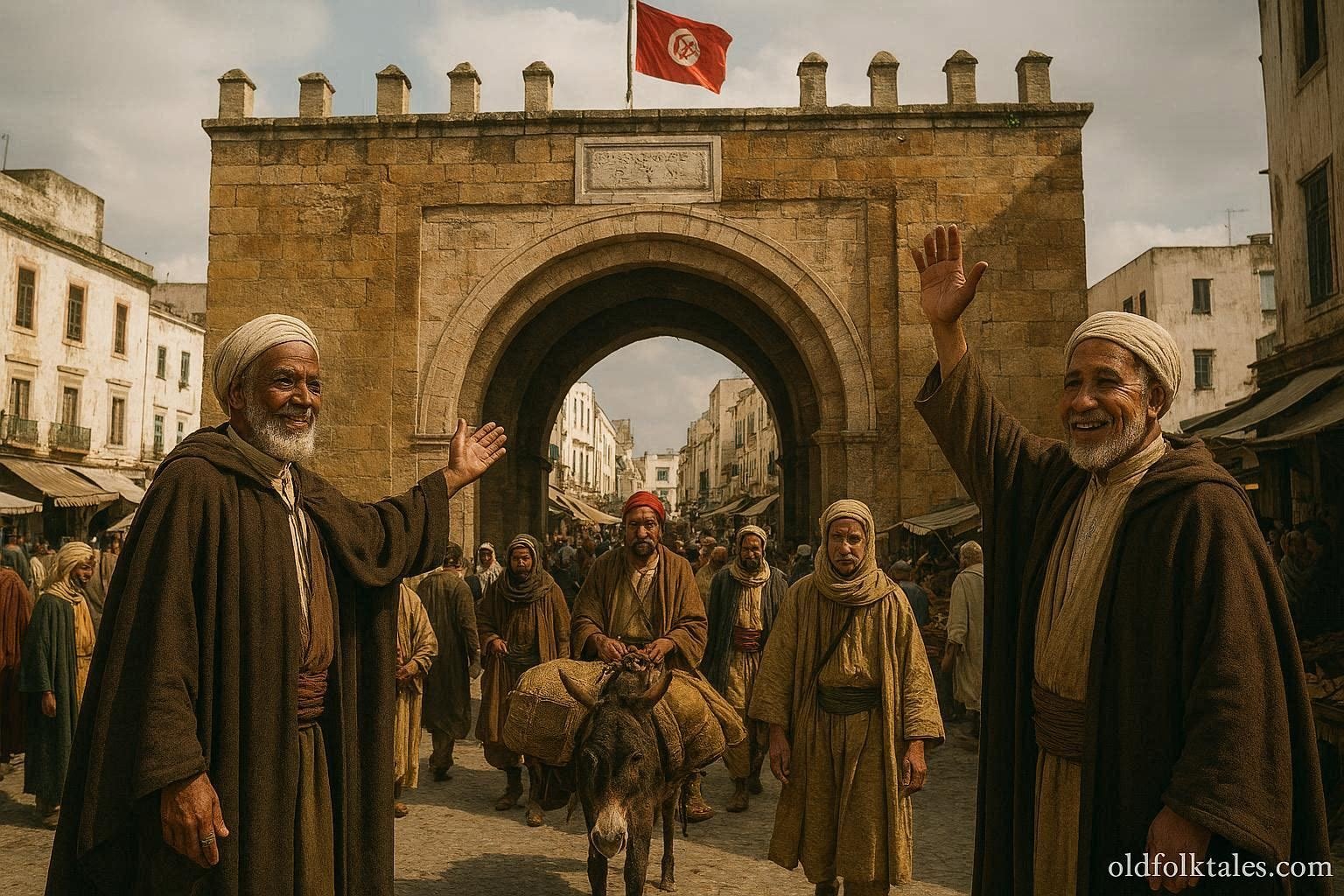
Long before modern streets surrounded the capital of Tunisia, the ancient Medina of Tunis stood behind sturdy walls pierced by magnificent gates. These gateways were more than entrances into a bustling city. They represented the meeting place between the outside world and a thriving community of merchants, scholars, craftsmen, travelers, and families whose lives were woven together within the narrow streets of the medina.
Each gate had its own story.
Some welcomed caravans arriving from the Sahara loaded with salt, dates, leather, and precious goods. Others received merchants crossing the Mediterranean with fine fabrics, spices, ceramics, and books. Pilgrims, scholars, diplomats, and visitors from distant lands all passed beneath the great stone arches, bringing with them new ideas, languages, and customs that enriched the city’s culture.
Yet no matter who arrived, the gates never stood unattended.
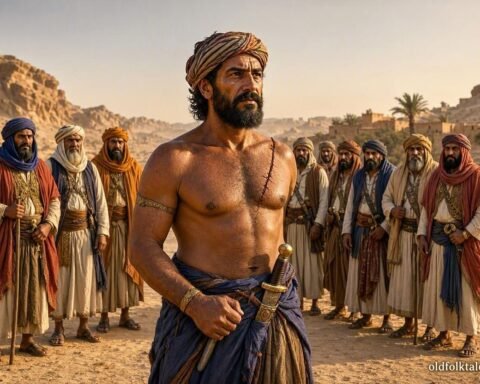
For generations, trusted gatekeepers watched over them with patience and wisdom. Their duty extended far beyond opening and closing heavy wooden doors. They protected the city’s peace, guided unfamiliar travelers, settled misunderstandings, and ensured that every peaceful visitor received a respectful welcome.
If you liked this story, see our Central African folktales collection
Among the families living inside the medina was a young man named Hamza.
His father had spent many years serving as one of the city’s gatekeepers, and from childhood Hamza admired the quiet confidence with which he carried out his responsibilities.
Every morning before sunrise, his father walked to Bab Bhar, one of the city’s historic gates, where merchants already waited with loaded animals and carts prepared for another busy day.
Hamza often accompanied him.
As the first rays of sunlight illuminated the ancient walls, the heavy wooden gates slowly opened.
The city awakened.
Caravans entered one after another.
Camel drivers greeted local traders.
Craftsmen carried their tools toward busy workshops.
The aroma of freshly baked bread drifted through nearby streets.
Musicians, storytellers, scholars, and travelers blended into the lively rhythm of the marketplace.
To Hamza, the opening of the gates felt like watching an entire world come to life.
One morning he asked his father,
“Is your job simply to guard the entrance?”
His father smiled.
“If that were all, anyone could do it.”
Hamza looked surprised.
His father continued,
“A guardian protects people, but he also welcomes them.”
He explained that every visitor formed a first impression of Tunis at its gates.
A kind greeting could begin a lasting friendship.
Clear guidance could help a traveler feel safe.
Fair judgment could prevent unnecessary conflict.
Strength alone could never make someone an excellent guardian.
Wisdom mattered even more.
As weeks passed, Hamza observed his father carefully.
He welcomed merchants with courtesy.
He patiently answered questions from travelers unfamiliar with the city’s streets.
He helped elderly visitors carry heavy belongings through crowded entrances.
When disagreements arose between traders competing for space, he listened calmly before offering fair solutions.
Everyone respected him because he treated every person with dignity.
One afternoon, a frightened young traveler arrived after becoming separated from his caravan.
He carried little more than a small bag and appeared uncertain about where to go.
Instead of turning him away, Hamza’s father offered him water and invited him to rest beneath the shade of the gateway.
He then introduced the traveler to local merchants who helped him reconnect with companions later that evening.
Watching this act of kindness, Hamza realized that hospitality strengthened the city’s reputation as much as its impressive walls.
Several months later, preparations began for an important festival inside the medina.
Visitors poured into Tunis from surrounding villages and distant regions.
The gates remained busy from dawn until sunset.
Gatekeepers worked tirelessly.
They directed crowds through different entrances.
They helped children who had become separated from their families.
They welcomed foreign guests with courtesy while ensuring everyone respected local customs.
Despite the enormous crowds, order prevailed because every guardian understood that patience was as valuable as vigilance.
One evening, after the gates closed, Hamza asked another question.
“Do you ever become tired of standing here every day?”
His father rested a hand upon the ancient stone wall.
“I stand at the place where strangers become guests.”
“There are few responsibilities greater than that.”
Years passed, and Hamza eventually became a gatekeeper himself.
Before beginning his duties, the city’s senior guardians shared the lessons they had inherited from earlier generations.
“Watch carefully.”
“Speak fairly.”
“Welcome kindly.”
“Judge patiently.”
“Protect everyone equally.”
Hamza carried those words with him every day.
He soon discovered that no two mornings were alike.
Some days welcomed scholars carrying precious manuscripts.
Other days brought artisans transporting beautiful ceramics and woven textiles.
Occasionally, ambassadors arrived bearing official messages.
At other times, shepherds entered simply to sell cheese, wool, or livestock.
Every visitor added another thread to the rich tapestry of life within the medina.
One rainy afternoon, a misunderstanding developed between two merchants speaking different languages.
Unable to understand one another, both became frustrated.
Rather than allowing tempers to rise, Hamza invited a local interpreter to assist.
Once communication improved, the disagreement disappeared almost immediately.
The merchants thanked one another before continuing into the marketplace together.
That evening, Hamza reflected upon his father’s advice.
True guardians protected not only walls but also peace between people.
As the years passed, younger apprentices joined the gatekeepers.
Hamza trained them patiently.
He reminded them that every person entering the medina deserved fairness regardless of wealth, nationality, or profession.
“The gate belongs to everyone who comes in peace,” he often said.
His apprentices never forgot those words.
Generations later, although the ancient gates no longer served their original defensive purpose, they continued standing as proud symbols of Tunis’s rich history.
Visitors from around the world walked beneath the same arches once crossed by caravans, scholars, merchants, and pilgrims centuries earlier.
The gates reminded everyone that great cities are remembered not only for magnificent buildings but also for the values practiced within them.
Hospitality.
Responsibility.
Justice.
Respect.
Today, the Medina of Tunis, recognized as a UNESCO World Heritage Site, preserves many of its historic gates, streets, mosques, madrasas, markets, and traditional buildings. These gateways continue to reflect centuries of urban life, trade, and cultural exchange, reminding visitors that the city’s greatest strength has always been its ability to welcome people while safeguarding peace and order.
The story of The Guardians of the Medina Gates teaches that true guardianship is measured not only by vigilance but also by kindness, fairness, and the willingness to make every peaceful visitor feel respected and welcome.
Explore the wisdom and wonder of North African folktales
Moral Lesson
A community grows stronger when its people protect others with fairness, hospitality, and respect.
Knowledge Check
1. What was the main role of the medina gatekeepers?
They protected the city, welcomed visitors, and maintained peace at the gates.
2. What did Hamza learn from his father?
That a true guardian must combine vigilance with kindness and fairness.
3. How did the gatekeepers help travelers?
They offered guidance, assistance, and ensured visitors entered the city safely.
4. How did Hamza resolve the disagreement between the merchants?
He found an interpreter so they could understand one another and settle the issue peacefully.
5. Why were the gates important to the city’s reputation?
They created visitors’ first impression of Tunis through hospitality and order.
6. What is the main lesson of the story?
True leadership protects people through wisdom, fairness, and respectful hospitality.
Source
Adapted from the historical traditions of the Medina of Tunis, with reference to the Institut National du Patrimoine (Tunisia), Medina of Tunis historical archives, and UNESCO documentation.