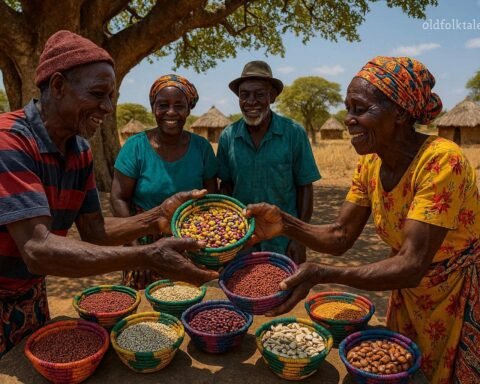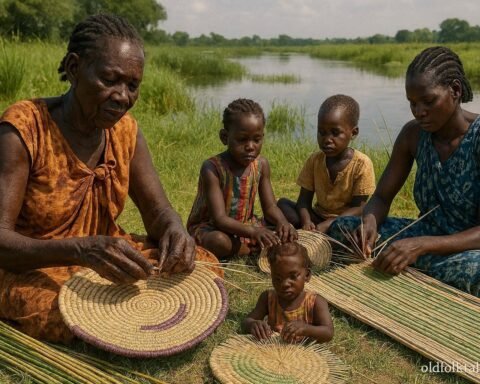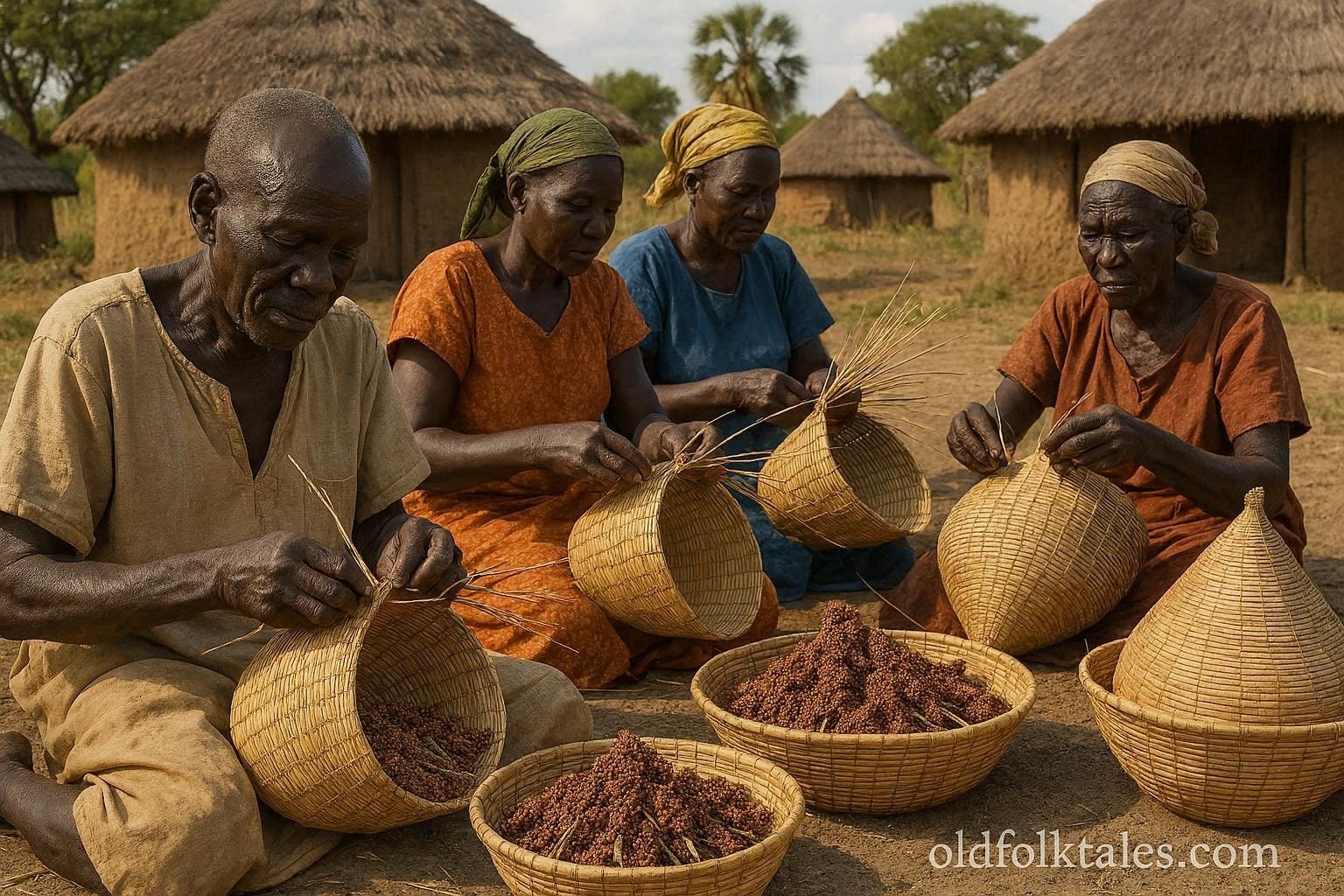
Across the fertile landscapes of Western Equatoria in South Sudan, the Azande people have long been known for their rich farming traditions and remarkable craftsmanship. Their villages have flourished through generations of careful cultivation, producing crops such as sorghum, millet, maize, groundnuts, and cassava that sustained families throughout the year. Yet a successful harvest depended upon more than fertile soil and favorable rains. Once the crops had been gathered from the fields, they needed to be carried safely, stored carefully, and protected from damage. This important responsibility gave rise to one of the community’s most respected crafts, the weaving of strong grain baskets that combined beauty with practical purpose. Every basket reflected patience, careful planning, and knowledge handed down from one generation to the next.
Basket weaving was never viewed as an ordinary household task. It represented a skill that connected families to their ancestors and preserved traditions that had served the community for centuries. Elders selected suitable reeds, climbing vines, grasses, and flexible branches from nearby forests and wetlands with great care. Every material was gathered respectfully, ensuring that enough remained for future seasons. Young people learned early that a skilled weaver never wasted natural resources. The forest provided generously, but only when treated with wisdom and gratitude.
Among one Azande family lived a young girl named Zawadi. She admired the beautifully woven baskets stacked neatly inside her grandmother’s home. Some were large enough to carry freshly harvested grain from distant fields. Others were smaller, designed to store seeds that would be planted when the rains returned. Each basket displayed intricate patterns created by carefully crossing strips of reed in ways that seemed almost magical to her young eyes.
Keep reading: Discover more Central African folktales
One afternoon, while helping sweep the family compound, Zawadi asked her grandmother,
“Who made these beautiful baskets?”
Her grandmother smiled warmly.
“My grandmother taught me.”
“I taught your mother.”
“One day, I will teach you.”
Zawadi’s eyes widened with excitement.
“I want to learn today.”
Her grandmother laughed gently.
“A basket begins long before the first reed is woven.”
The following morning, before sunrise, they walked together toward the edge of a nearby wetland where tall reeds swayed gently in the breeze. The air was cool, and birds filled the morning with cheerful songs.
Instead of cutting the first reeds they found, her grandmother examined each plant carefully.
She chose only mature reeds that were strong and flexible.
Some young shoots were left untouched.
Others that had become too old were also left behind.
Zawadi looked puzzled.
“Why not take them all?”
Her grandmother shook her head.
“If we gather everything today, what will remain for tomorrow?”
“The best weaver always thinks about the future.”
Together they carried the carefully selected reeds home.
The work did not begin immediately.
First, the reeds were cleaned.
Then they were sorted according to length and thickness.
Some were placed in water until they became flexible enough to bend without breaking.
Others were dried beneath gentle sunlight for later use.
Every step required patience.
When Zawadi reached eagerly for the first bundle, her grandmother smiled.
“Strong baskets are made by patient hands.”
Several days later, the weaving finally began.
Her grandmother placed several reeds together to form the base.
Slowly, she crossed additional strips over and beneath them with practiced movements.
Her hands worked steadily without rushing.
The growing basket gradually took shape.
Zawadi watched with complete attention.
When her grandmother invited her to try, the young girl worked quickly, hoping to finish as fast as possible.
Before long, several reeds slipped from place.
The basket became uneven.
She sighed with disappointment.
“I have spoiled it.”
Her grandmother gently untied the loose reeds.
“No.”
“You have started learning.”
She showed Zawadi how each strip supported the next.
“If one reed is careless, the whole basket becomes weak.”
“If every reed supports another, the basket becomes strong.”
Those words remained in Zawadi’s heart.
Every afternoon after finishing her household responsibilities, she returned to practice.
Some days her baskets leaned to one side.
Others developed gaps that allowed grain to fall through.
Each mistake became another lesson.
Her grandmother never became impatient.
Instead, she encouraged her to begin again.
As the weeks passed, Zawadi noticed that weaving required more than careful hands.
It required careful thinking.
She learned to picture each pattern before placing the next reed.
She counted every crossing.
She checked every corner.
Little by little, her hands began moving with confidence.
When harvest season finally arrived, the village became alive with activity.
Families worked together in the fields gathering sorghum and millet beneath the warm sunshine.
Freshly woven baskets appeared everywhere.
Some carried harvested grain from distant fields.
Others transported vegetables, fruits, and firewood.
Children proudly carried smaller baskets made during their own lessons.
Each basket reflected the care of the person who had woven it.
One afternoon, heavy rain surprised several families while they were returning from the fields.
Some baskets became soaked.
A few older baskets weakened beneath the weight of the wet grain.
Zawadi watched as her grandmother calmly examined each damaged basket.
Rather than throwing them away, she carefully repaired the loose sections.
Fresh reeds strengthened the worn edges.
Broken handles were replaced.
Soon the baskets were ready to serve once again.
Zawadi asked,
“Why not make new ones?”
Her grandmother smiled.
“A good craft teaches us to repair before we replace.”
Soon, neighboring families began asking Zawadi to help weave simple baskets.
Although still young, she happily shared everything her grandmother had taught her.
She discovered that teaching required as much patience as learning.
Whenever younger children became frustrated, she reminded them of her grandmother’s words.
“Strong baskets are made by patient hands.”
One dry season, a traveling merchant visited the village carrying brightly colored cloth, iron tools, and finely carved wooden spoons.
Instead of paying with coins, many families exchanged beautifully woven baskets along with grain and other farm products.
The merchant admired the strength and beauty of the Azande baskets.
He explained that travelers from distant villages often sought baskets woven by skilled Azande craftsmen because they lasted for many years.
Zawadi felt proud knowing that something made by careful hands could be valued far beyond her own village.
As the years passed, she became one of the most respected basket weavers in the community. Young girls and boys gathered beneath the shade of large trees to learn the craft from her just as she had once learned from her grandmother. Before each lesson, she reminded them that weaving was not only about making useful baskets. It was about preserving wisdom, respecting nature, helping families protect their harvests, and honoring the generations who had carefully passed this knowledge from parent to child.
Today, traditional basket weaving remains an important part of Azande cultural heritage. Although modern containers are widely available, many artisans continue to preserve the weaving techniques that have served their communities for generations. Ethnographers and cultural historians recognize these baskets not only as practical tools but also as enduring symbols of craftsmanship, cooperation, sustainable resource use, and cultural identity.
The story of Grain Baskets of the Azande reminds us that lasting strength is created through patience, careful learning, and the willingness to pass valuable knowledge to others.
Don’t stop yet! See our complete East African folktales collection
Moral Lesson
Patience, careful craftsmanship, and the willingness to share knowledge help preserve traditions that strengthen families and communities for generations.
Knowledge Check
1. Why were grain baskets important to the Azande people?
They were used to carry, store, and protect harvested crops and seeds.
2. Why did Zawadi’s grandmother select only certain reeds for weaving?
She chose mature, healthy reeds and left others to ensure the natural resources remained available for future generations.
3. What lesson did Zawadi learn when her first basket became uneven?
She learned that good craftsmanship requires patience, practice, and careful attention to every step.
4. Why did the grandmother repair old baskets instead of throwing them away?
She believed that good craftsmanship values repairing and preserving useful items whenever possible.
5. How did basket weaving benefit the Azande community beyond carrying grain?
It preserved cultural knowledge, supported trade, strengthened cooperation, and connected generations.
6. What is the main lesson of the story?
Patience, perseverance, and sharing traditional skills help preserve cultural heritage and strengthen communities.
Source
Adapted from the traditional basket weaving heritage of the Azande people of Western Equatoria, South Sudan, with reference to Western Equatoria craft studies, South Sudan ethnographic archives, and regional cultural heritage research.