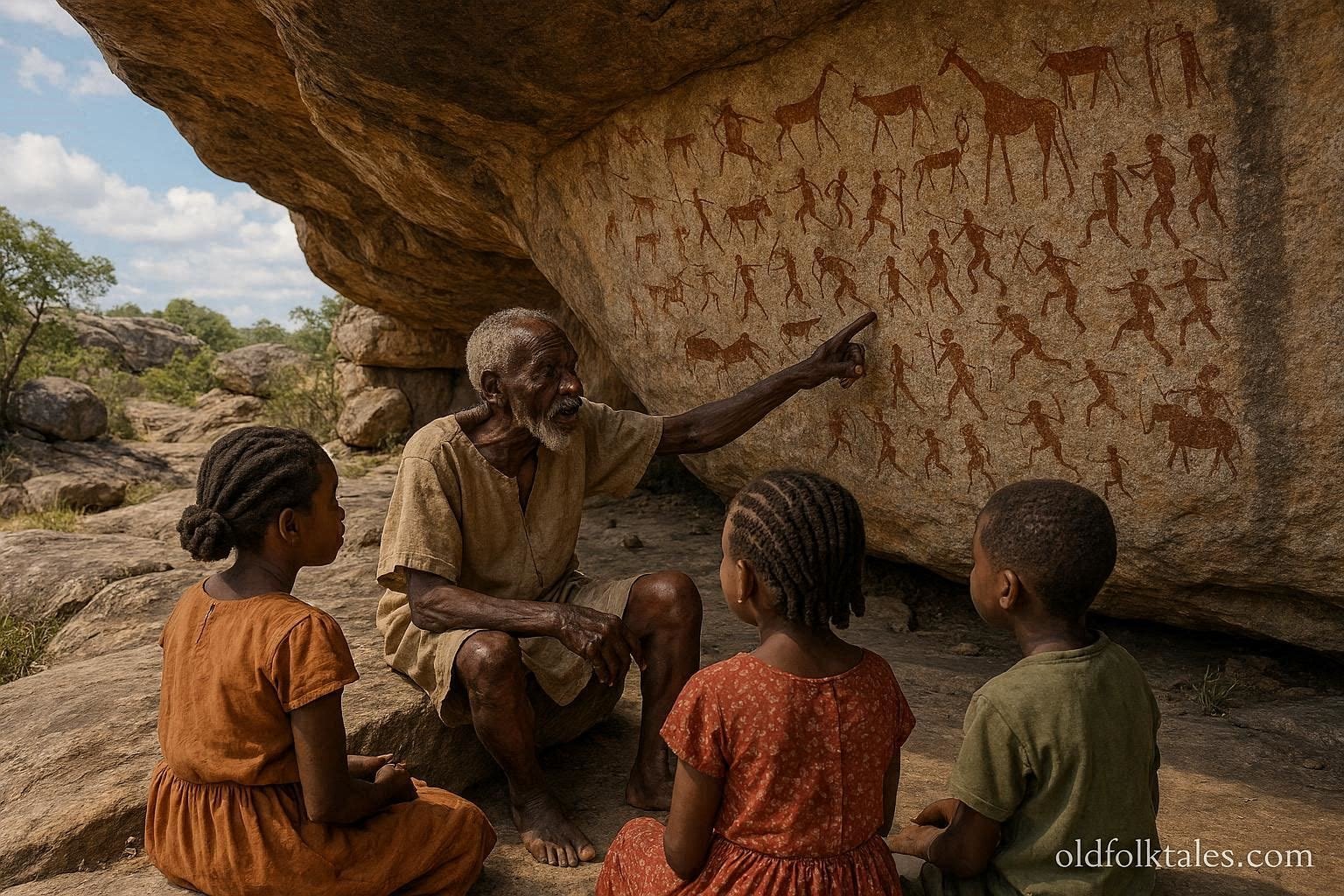
Among the rolling hills of Northern Zambia lies one of the country’s greatest cultural treasures. Hidden beneath broad rock shelters are hundreds of ancient paintings created many generations ago by people who carefully recorded the world around them. These remarkable images portray animals, people, hunting scenes, ceremonies, and symbols whose meanings have been treasured through centuries of storytelling. Although the artists themselves lived long ago, their work continues to inspire respect, curiosity, and pride among the communities living near Mwela today. Elders have long reminded young people that these paintings are not simply marks upon stone. They are lasting reminders that every generation leaves behind a story for the next to protect. By preserving the rock shelters and the traditions connected with them, Northern Zambian communities continue to celebrate their heritage while teaching responsibility, identity, and respect for the wisdom of those who came before them.
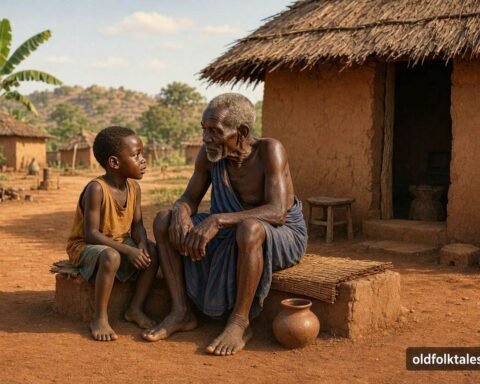
The people living near Mwela understood that history did not belong only to books or monuments. It also lived within landscapes, rivers, forests, and rocky hills where earlier generations had walked, worked, celebrated, and shared their lives. Children often accompanied their grandparents on quiet visits to the rock shelters, where stories filled the silence beneath the great stone overhangs. Elders explained that every painting carried meaning, even when its full story had faded with time. The lessons passed from one generation to another were simple but powerful. Protect what your ancestors have left behind. Respect places that hold the memories of your people. Leave every sacred place as carefully as you found it so future generations may also learn from it.
In one small village near the rocky hills lived a curious boy named Chola. From the time he could walk, he had heard older people speak with great respect about the painted shelters hidden among the hills.
Whenever visitors arrived, someone eventually mentioned the ancient paintings.
Don’t stop yet! See our complete East African folktales collection
Whenever children became careless while playing near the hills, an elder gently reminded them,
“Those rocks are older than all of us.”
Chola often wondered why everyone spoke about them with such admiration.
One cool morning, his grandmother invited him to accompany her on a walk.
They followed a narrow path winding between tall trees and scattered boulders until the great stone shelters appeared before them.
The air felt peaceful.
Birdsong echoed softly among the rocks.
As Chola stepped beneath the shelter, his eyes widened.
Painted across the stone walls were figures unlike anything he had ever seen.
There were graceful antelope.
Large elephants.
Human figures standing together.
Shapes that seemed to dance across the stone.
Some paintings appeared bright despite their great age.
Others had faded gently into the surface of the rock.
Chola stood silently.
“Who painted these?”
His grandmother smiled.
“Our ancestors.”
“They wanted future generations to remember that they once lived here.”
Chola slowly reached out toward one of the paintings.
Before his hand touched the rock, his grandmother gently placed her hand upon his shoulder.
“We never touch the paintings.”
He quickly stepped back.
“Why?”
“Because respect protects what time has already preserved.”
She explained that the paintings had survived through countless rainy seasons because generations of people had cared for them.
“If every visitor touched them, they would slowly disappear.”
Chola nodded thoughtfully.
As they explored the shelter, his grandmother pointed toward different paintings.
Some showed animals that had once roamed the surrounding landscape.
Others reminded the community of successful hunts and important gatherings.
Certain symbols no longer revealed all their meanings, yet the elders believed they still deserved respect because they represented the lives of people who had shaped the history of the land.
Before returning home, Chola looked once more at the painted walls.
“They have been waiting here for many years.”
His grandmother smiled.
“And now they are waiting for your generation.”
Those words stayed with him.
Several weeks later, Chola accompanied other children to gather wild fruits near the hills.
While walking, he noticed two younger boys climbing upon rocks close to one of the painted shelters.
Another child picked up a small stone.
“I want to draw beside the old pictures.”
Chola immediately remembered his grandmother’s words.
He hurried toward them.
“Please stop.”
“They are not ordinary rocks.”
The younger boys looked surprised.
“We only wanted to leave our own marks.”
Chola gently shook his head.
“Our ancestors already left theirs.”
“Our duty is to protect them.”
The children quietly placed the stone back on the ground.
That evening Chola proudly told his grandmother what had happened.
She smiled with quiet satisfaction.
“You have learned the most important lesson.”
“What lesson?”
“Every generation becomes the guardian of the next.”
Months later, respected elders organized a community walk to the rock shelters for many of the village children.
Instead of simply showing the paintings, they invited each elder to share a different story connected with the hills.
One elder spoke about courage.
Another explained the importance of family.
A third reminded everyone that people may forget spoken words, but protected heritage can continue teaching long after voices become silent.
Chola listened carefully.
For the first time, he realized that the greatest treasure was not only the paintings themselves.
It was the wisdom that surrounded them.
The ancient artists had left beautiful images upon stone.
The elders had preserved their meaning through storytelling.
Together they formed a bridge connecting the past with the future.
As the years passed, Chola visited the Mwela Rock Shelters many times with his grandparents, teachers, and village elders. Every visit revealed something new. Sometimes he noticed an animal he had overlooked before. On other occasions, an elder pointed out a small symbol hidden among larger paintings and explained how careful observation often revealed details that hurried eyes failed to see.
One afternoon an elderly storyteller named Mupeta gathered several children beneath the shelter.
He asked them a simple question.
“What do you see?”
One child answered,
“I see animals.”
Another replied,
“I see hunters.”
A third said,
“I see pictures.”
The old storyteller smiled.
“You all see correctly.”
“But there is something more.”
The children looked at him with curiosity.
He pointed gently toward the painted wall.
“I see people who believed their lives were worth remembering.”
His words filled the shelter with thoughtful silence.
He continued,
“They painted what mattered to them.”
“They trusted that someone, many generations later, would still care enough to look.”
Chola quietly wondered whether the ancient painters had ever imagined children like him standing before their work hundreds or even thousands of years later.
As the dry season came to an end, visitors from another district arrived to learn about the famous rock shelters. The village elders welcomed them warmly and guided them carefully along the winding paths leading through the rocky hills.
Before anyone entered the shelter, one elder spoke kindly.
“This place welcomes everyone.”
“But everyone must also respect this place.”
The visitors listened attentively.
Children walked without climbing on the rocks.
Adults admired the paintings from a respectful distance.
Nobody touched the painted surfaces.
Nobody left litter behind.
Before departing, several visitors thanked the elders for protecting such an important place.
One woman said,
“Our children have learned something valuable today.”
The elder smiled.
“So have ours.”
That evening Chola asked his grandmother,
“Why do we teach visitors the same lessons?”
She replied,
“Because heritage belongs to humanity.”
“We care for it here.”
“But its story belongs to everyone.”
Those words helped Chola understand that protecting the rock shelters served not only his own community but also future generations across the world.
As Chola grew older, he became one of the young people chosen to assist community guides during educational visits.
He enjoyed explaining what he had learned from the elders.
He never claimed to know the meaning of every painting because he understood that some mysteries remained unsolved.
Instead, he encouraged visitors to appreciate both what was known and what remained unknown.
“The paintings remind us that our ancestors were skilled observers.”
“They understood animals.”
“They understood their environment.”
“They understood the importance of leaving knowledge behind.”
One day a young visitor asked,
“If we do not know every meaning, why are the paintings still important?”
Chola smiled before answering.
“Because history does not lose its value simply because we continue learning about it.”
“The paintings still tell us that people lived here.”
“They worked here.”
“They celebrated here.”
“They left something beautiful for us to protect.”
The child nodded thoughtfully.
Years later Chola became a respected teacher in his community.
Every year he brought his students to the rock shelters.
Before beginning the walk, he always repeated the lesson his grandmother had taught him many years earlier.
“We are visitors here.”
“Our ancestors are the hosts.”
His students understood immediately.
They walked carefully.
They observed quietly.
They left nothing behind except their admiration.
When the visit ended, Chola reminded them,
“One day you will bring your own children here.”
“They will learn from your example.”
The students promised they would.
Today, the Mwela Rock Paintings remain one of Zambia’s most significant archaeological treasures, containing hundreds of prehistoric paintings spread across numerous rock shelters in Northern Zambia. Archaeological research and heritage conservation efforts continue to protect these remarkable sites, while local communities help preserve the traditions of respect associated with them. The paintings provide valuable insights into the lives, beliefs, and artistic expression of ancient peoples and stand as enduring symbols of Zambia’s rich cultural heritage.
The story of The Painters of Mwela Rock Shelter reminds us that heritage is a gift entrusted to every generation. By protecting historic places, respecting the wisdom of our ancestors, and sharing their stories with others, we ensure that the lessons of the past continue to inspire the future.
Love this story? Discover our full Southern African folktales collection
Moral Lesson
Our ancestors leave behind more than memories. They leave places, traditions, and knowledge that deserve our respect and protection. When we preserve our cultural heritage, we honor the past while educating future generations.
Knowledge Check
1. Why were the Mwela Rock Paintings important to the local community?
They preserved the memories, history, and cultural heritage of earlier generations.
2. Why did Chola’s grandmother stop him from touching the paintings?
She explained that respecting the paintings helps preserve them for future generations.
3. What did the storyteller Mupeta mean when he said the painters believed their lives were worth remembering?
He meant the paintings were created to leave a lasting record of the lives and experiences of the ancestors.
4. How did the community teach visitors to respect the rock shelters?
They encouraged everyone to observe carefully, avoid touching the paintings, and leave the site exactly as they found it.
5. What lesson did Chola learn from visiting the rock shelters?
He learned that every generation has a responsibility to protect cultural heritage.
6. What is the main message of the story?
Protecting historic places preserves the wisdom, identity, and history of our ancestors for future generations.
Source
Adapted from the cultural significance of the Mwela Rock Paintings in Northern Zambia, with reference to archaeological research, the National Heritage Conservation Commission of Zambia, and studies of Zambia’s prehistoric rock art heritage.