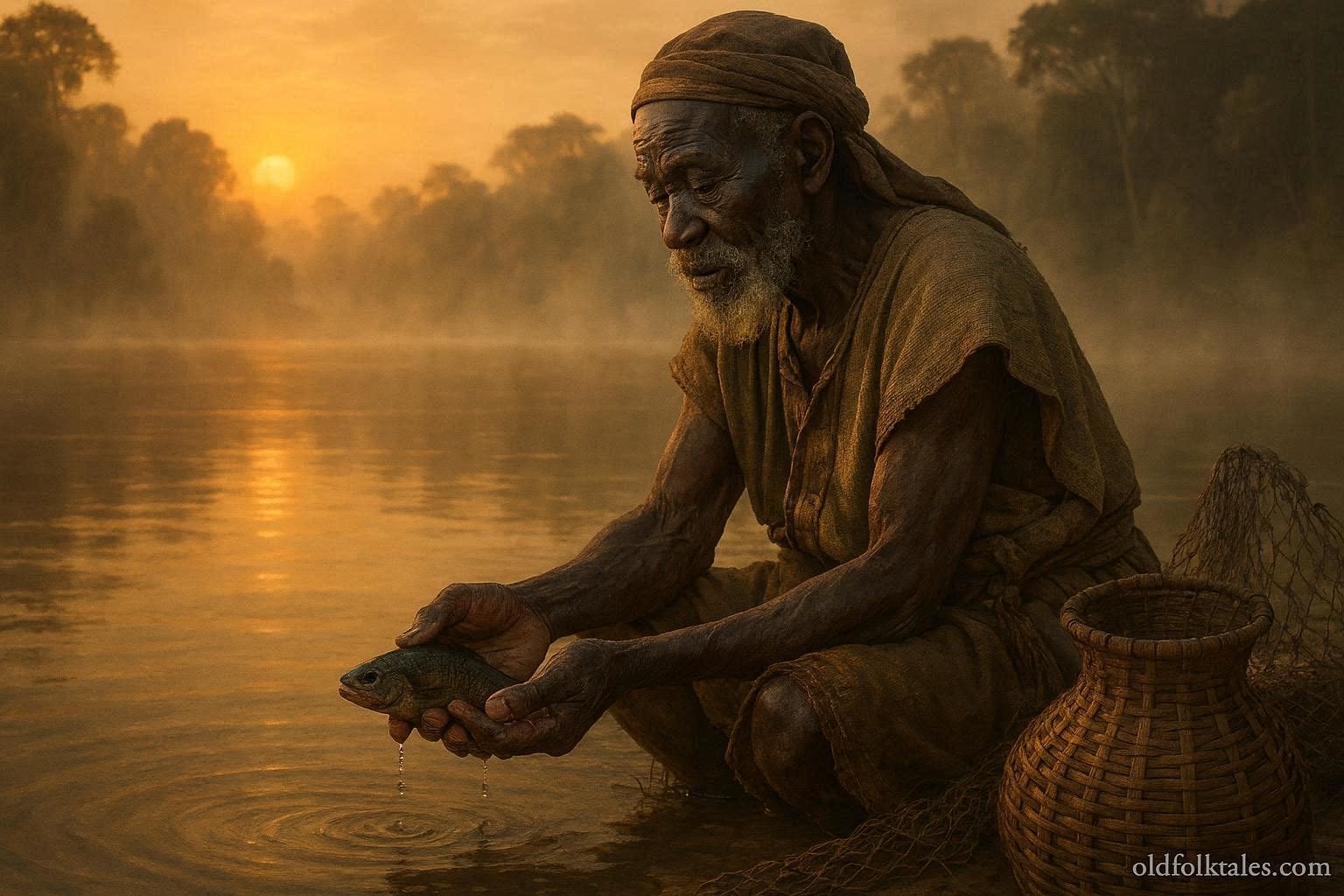
The Sangha River has long sustained the people and wildlife of the Congo Basin. For generations, communities living near its banks have depended on its waters for food while respecting the delicate balance that keeps the river alive. Among the BaAka, elders teach that the forest and its rivers are generous only when people take what they need and leave enough for tomorrow. One cherished legend tells of a mysterious stranger whose wisdom transformed an entire community by teaching that nature rewards restraint more than greed.
Long before outsiders traveled through the forests of the Congo Basin, a small BaAka community lived beside a quiet bend of the Sangha River.
Every morning before sunrise, families walked toward the water carrying woven baskets, fishing traps, and wooden paddles.
The river never failed them.
Fish filled their baskets.
Fresh water nourished their homes.
Birds gathered along the riverbanks while monkeys called from the towering trees above.
The people believed the river was a generous friend.
Yet not everyone treated that friendship with equal respect.
Some fishermen had begun setting too many traps.
Others caught the smallest fish without allowing them time to grow.
A few even emptied entire fishing pools simply because they could.
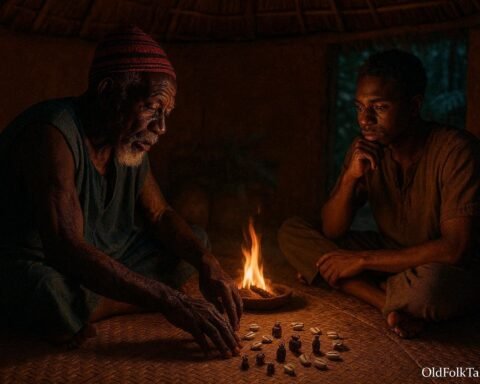
The elders grew concerned.
“If we continue this way,” one of them warned, “our children may one day inherit an empty river.”
Looking for more? Explore the magic of East African folktales here
The younger men laughed.
“The Sangha is too great to become empty.”
“It has always provided.”
“It always will.”
Only old Mama Yeka shook her head.
“The river remembers.”
No one understood what she meant.
Then, one misty morning, something unusual happened.
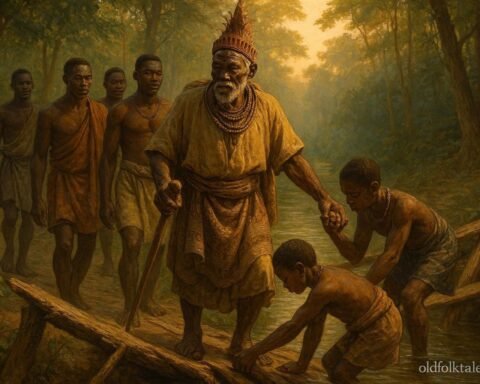
Before the first canoe reached the water, an elderly man was already sitting quietly on a smooth rock beside the river.
No one had seen him arrive.
His clothes were simple.
His fishing net rested neatly beside him.
His hair was as white as river foam.
He smiled warmly as the first fishermen approached.
“Good morning.”
The men greeted him politely.
“You are here early.”
“I have always come before sunrise,” the old man replied.
No one recognized his face.
Still, strangers occasionally traveled through the forest, so no one questioned him further.
That morning the fishermen noticed something surprising.
The old man caught only three fish.
Each was large enough to feed a family.
Then he folded his net.
“You are finished already?” one young fisherman asked.
The stranger nodded.
“My family has enough.”
The young men laughed.
“There are many more fish.”
The old man simply smiled.
“There should still be many more tomorrow.”
The following morning he appeared again.
Always before sunrise.
Always on the same rock.
Always with the same quiet smile.
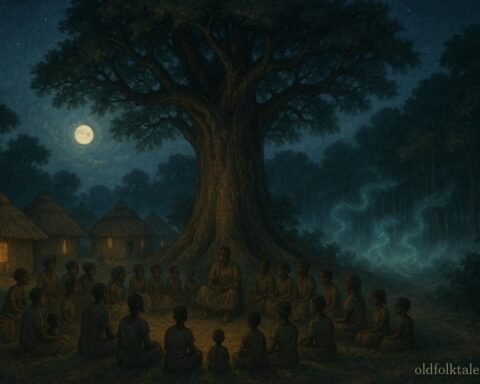
Gradually the children began gathering around him.
Unlike many adults, he welcomed their questions.
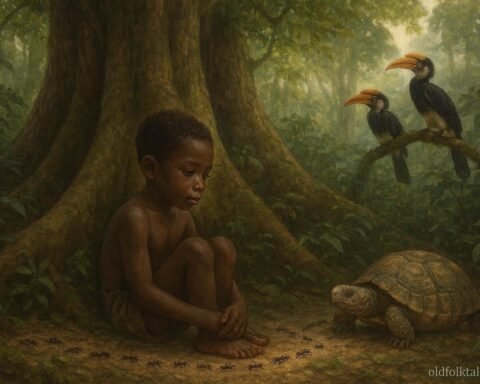
“Why do you return the little fish?” one boy asked.
“They have not yet finished growing.”
“Why do you avoid that shallow pool?”
“Because that is where the mothers protect their young.”
“Why do you leave some traps empty?”
“So that hunger never becomes stronger than wisdom.”
Every answer was simple.
Every lesson remained in the children’s minds.
Some adults listened as well.
Others dismissed him.
One fisherman named Goma believed the stranger was foolish.
“If the river gives,” he said, “why should we refuse its gifts?”
Determined to prove his point, Goma filled every trap he owned.
He ignored the shallow breeding pools.
He caught large fish.
Small fish.
Anything that entered his nets.
That evening his family celebrated the enormous catch.
The old stranger watched quietly from across the river.
He said nothing.
Several days later, heavy rain fell across the forest.
The river swelled.
Many fishing pools changed.
Some disappeared entirely beneath the rising water.
When the rains finally ended, something unexpected happened.
The pools where Goma had taken every fish remained almost empty.
Other fishermen noticed the same thing.
Yet the places where the old stranger had always fished continued to provide healthy catches.
Curiosity slowly replaced laughter.
One morning Goma approached the stranger.
“How did you know?”
The old man looked toward the flowing river.
“I did not teach the river.”
“The river taught me.”
He picked up a handful of water.
“Take only what you need.”
“Leave enough for life to begin again.”
“The river feeds those who think beyond today.”
His words spread quickly through the community.
Soon the fishermen changed their habits.
They stopped taking the smallest fish.
They rotated their fishing places.
Families shared larger catches with elderly neighbors who could no longer paddle their own canoes.
The children became the greatest protectors of the river.
Whenever someone ignored the elders’ advice, it was often the youngest voices that reminded them,
“Leave some for tomorrow.”
Season after season the Sangha remained generous.
Travelers from neighboring communities wondered why fish remained plentiful near the BaAka settlement while catches declined elsewhere.
The villagers always smiled.
“We learned to listen.”
Then, one morning, the stranger did not appear.
The children waited beside his favorite rock.
The fishermen searched both riverbanks.
No canoe had arrived.
No footprints marked the soft mud.
Only his favorite smooth stone remained beside the water.
Mama Yeka slowly walked to the riverbank.
She studied the untouched sand.
Then she smiled.
“I wondered when he would leave.”
The villagers looked at her in surprise.
“You knew him?”
She nodded gently.
“My grandmother told me stories about an old man who appeared whenever people forgot how to respect the Sangha.”
“She said he always vanished once his work was finished.”
One child pointed toward the muddy bank.
“There are no footprints.”
Mama Yeka replied,
“Some visitors leave lessons instead of footprints.”
Years passed.
The children who had listened beside the river grew into wise adults.
Whenever they taught their own sons and daughters to fish, they began with the same words the stranger had spoken years before.
“Take only what you need.”
“Leave enough for tomorrow.”
Even today, elders living near the Sangha River continue to teach that rivers must be respected rather than exhausted. Although The Stranger Before Sunrise belongs to legend, its message reflects traditional knowledge shared across the Congo Basin, where sustainable fishing and gratitude for nature have long been essential to community life. The greatest gift the mysterious visitor left behind was not fish, but the wisdom to protect the river for generations yet to come.
Click here to explore more Central African folktales
Moral Lesson
Nature provides generously to those who use its gifts wisely. Taking only what we need today ensures that future generations will also share in its blessings.
Knowledge Check
1. Why did the mysterious stranger fish only for a short time each morning?
Because he took only enough fish to meet his family’s needs.
2. What concern did the elders have about the Sangha River?
Some fishermen were taking too many fish and harming the river’s natural balance.
3. What happened to Goma’s favorite fishing pools after the heavy rains?
They became nearly empty because he had overfished them.
4. What lesson did the children learn from the stranger?
They learned to respect breeding grounds, avoid waste, and protect the river for the future.
5. Why did the villagers believe the stranger was no ordinary man?
He disappeared without leaving footprints, and his wisdom transformed the entire community.
6. What is the central message of the story?
Respecting nature and taking only what is needed ensures that its blessings continue for future generations.
Source
Inspired by BaAka oral traditions, Sangha River ethnographic studies, Congo Basin oral traditions, and research on traditional ecological knowledge in Central Africa.