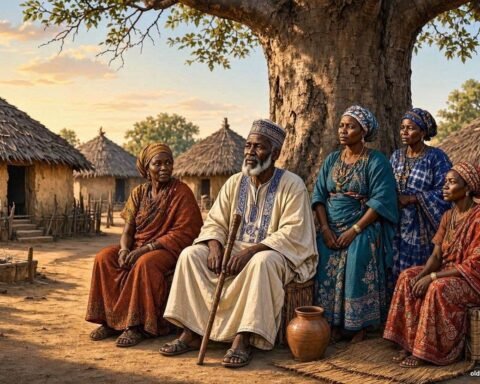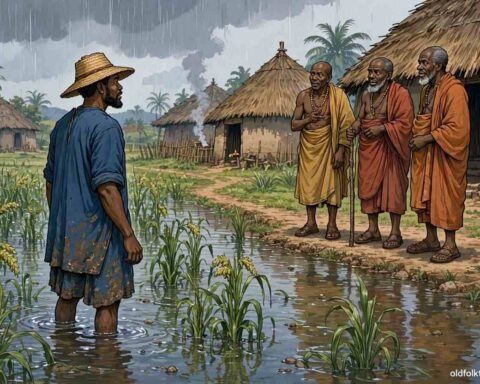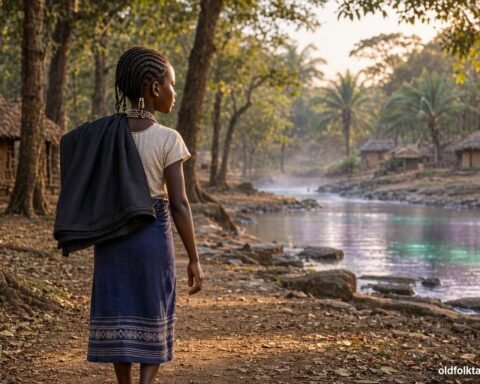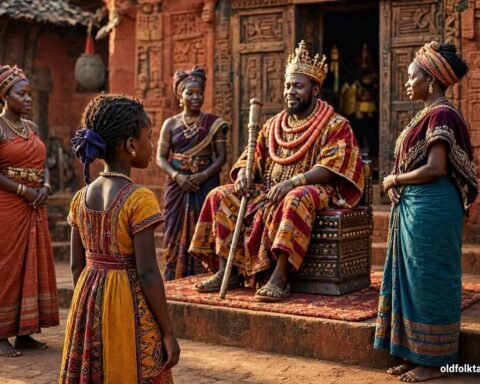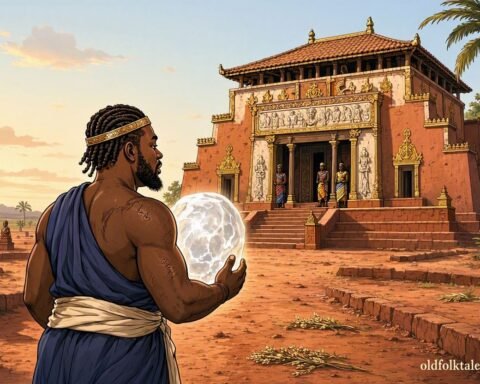
Long before written laws reached every corner of the Gambia, the Mandinka people believed that justice lived not inside books but in the hearts of honorable men and women. Every village had elders who settled disputes, but in the prosperous province of Jarra there served a judge whose reputation had spread far beyond the River Gambia.
His name was Kemo Sillah.
People traveled for days seeking his judgment because they believed he could see truth where others saw only confusion. He listened patiently, asked careful questions, and never accepted gifts before deciding a case.
The people often said,
“A judge who loves wealth soon becomes blind.”
Kemo guarded his honesty more carefully than any treasure.
One planting season, a dispute unlike any before arrived in Jarra.
Two of the wealthiest families in the province appeared before the court.
The Darboes claimed ownership of a vast stretch of fertile farmland beside the river.
The Ceesay family insisted the land had belonged to their ancestors for generations.
Keep reading: Discover more Central African folktales
Both families produced respected witnesses.
Both carried old family traditions supporting their claims.
Neither would surrender peacefully.
The disagreement soon divided the province.
Neighbors stopped speaking to one another.
Farmers refused to share irrigation channels.
Market traders argued openly.
Some feared violence would soon replace peaceful discussion.
The provincial governor ordered Kemo to settle the matter before the next full moon.
That evening, several influential men secretly visited the judge’s compound.
One placed a heavy leather bag before him.
Inside glittered gold coins.
“Our family has always respected you,” the visitor said.
“We simply ask that justice remembers who has served this province longest.”
Kemo quietly pushed the bag back across the mat.
“Justice remembers only the truth.”
The visitors left disappointed.
The following night another delegation arrived.
This time they brought magnificent horses.
“You deserve these.”
“I deserve nothing that belongs to someone else,” Kemo answered.
Again they departed.
Within days whispers spread throughout Jarra.
Some claimed Kemo secretly favored one family.
Others accused him of delaying the judgment because he feared powerful people.
Even his closest friends urged caution.
“You cannot afford to offend everyone.”
Kemo smiled gently.
“A judge who fears people more than truth has already delivered a false judgment.”
Instead of announcing a quick decision, Kemo spent many days walking through the disputed land.
He spoke with elderly farmers.
He listened to women who gathered water nearby.
He questioned fishermen who had worked along the river since childhood.
He even examined ancient baobab trees whose carved markings preserved memories older than any living witness.
Still, uncertainty remained.
One evening Kemo visited the oldest griot in the province.
The elderly storyteller smiled knowingly.
“You seek answers hidden beneath many voices.”
“I seek justice.”
The griot nodded.
“Then remember this.”
“When two drums are beaten loudly, the smallest bell is often the one telling the truth.”
The words stayed with Kemo.
The next morning he invited everyone connected with the dispute—not only family leaders but shepherds, widows, laborers, and children who had lived near the fields.
Hours passed as ordinary villagers shared forgotten memories.
Near sunset, an elderly woman quietly stepped forward.
Few had noticed her earlier.
“My father planted the first boundary trees.”
She pointed toward several ancient silk cotton trees still standing along the edge of the land.
“They were never meant to divide ownership.”
“They marked where both families agreed to share the river during dry seasons.”
The crowd became silent.
Other elders slowly nodded.
One by one, forgotten memories returned.
The land had never belonged entirely to either family.
Long ago, their ancestors had entered into a sacred agreement to cultivate it together.
Over generations, pride had buried that truth.
Kemo requested one final day.
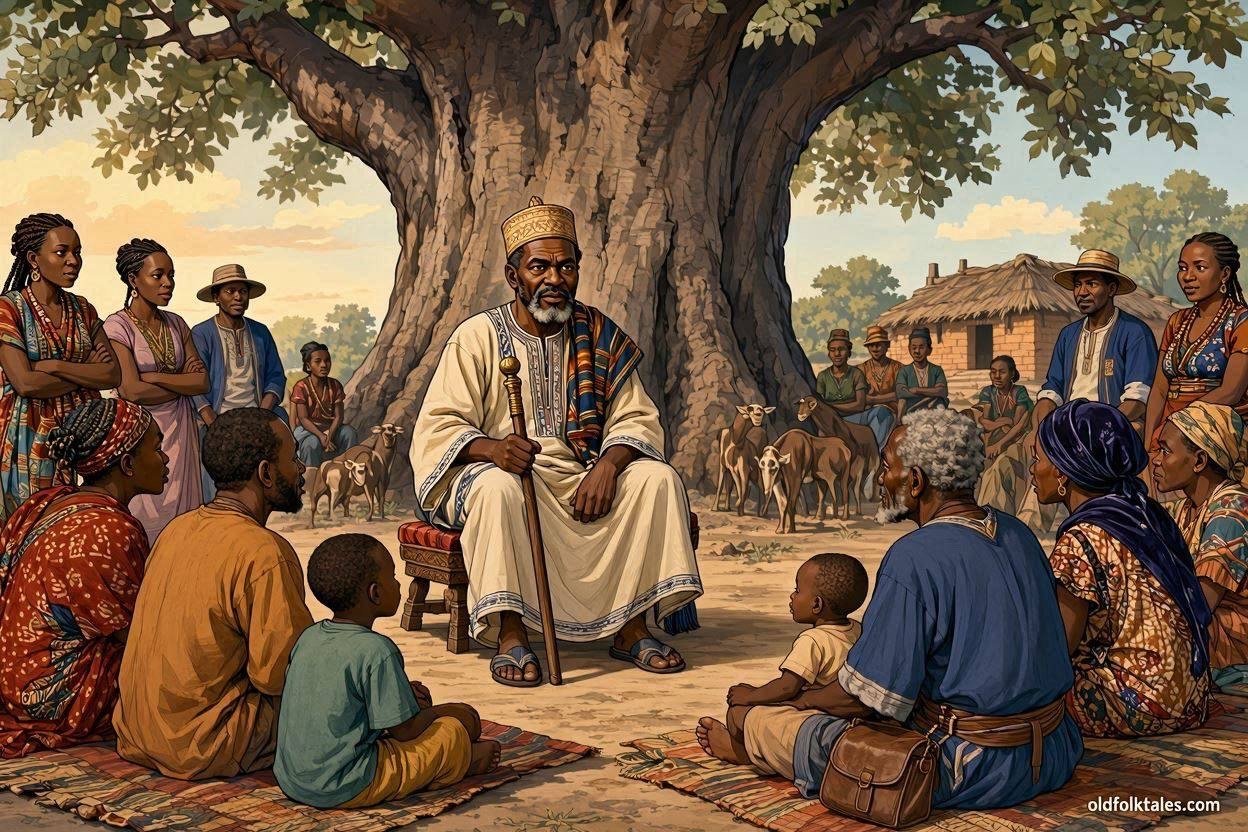
The following morning the entire province gathered beneath the great baobab where judgments were traditionally delivered.
Kemo stood before the crowd.
“I have heard many voices.”
“I have seen many claims.”
“But justice belongs neither to the rich nor the powerful.”
He paused.
“It belongs to the truth.”
He declared that the ancient agreement would be restored.
The riverbanks would remain shared.
Each family would cultivate designated fields while maintaining common access to water during drought.
Neither family would own what their ancestors had intended to protect together.
Some wealthy men frowned.
Others protested.
But before long the oldest elders rose to their feet.
One after another they declared,
“The judge has remembered what we forgot.”
Soon the entire gathering agreed.
The dispute ended.
The following planting season became one of the most successful in many years.
Families once divided worked together repairing irrigation channels.
Children again played beside the river without fear.
The governor later summoned Kemo.
“You disappointed powerful people.”
“I served justice.”
“You refused gifts.”
“I protected my judgment.”
The governor smiled.
“Then Jarra has exactly the judge it deserves.”
Years later, when Kemo’s hair had turned completely white, young apprentices often asked him how they could become wise judges.
He would point toward the old baobab tree where he had delivered his most difficult judgment.
“The law speaks.”
“The people speak.”
“But before either can guide you…”
He placed his hand upon his heart.
“You must first teach your conscience never to accept a price.”
Even after Kemo became one of the honored ancestors of Jarra, storytellers continued repeating the tale of the crooked judgment that nearly divided a province.
The story reminded every generation that justice cannot be bought, threatened, or hurried.
For when leaders protect truth above wealth and power, peace becomes the inheritance of everyone.
If you enjoyed this story, explore our full West African folktales collection
Moral Lesson
True justice requires courage, honesty, and impartiality. A leader who refuses corruption and seeks the truth earns the lasting trust of the people.
Knowledge Check
1. Why was the dispute in Jarra so difficult to resolve?
Because two powerful families claimed the same ancestral land and the conflict threatened the peace of the entire province.
2. Why did Judge Kemo refuse gifts from both families?
He believed accepting gifts would compromise his integrity and prevent him from judging fairly.
3. What lesson did the elderly griot teach Kemo?
That quiet, overlooked voices often reveal the truth when louder voices compete for attention.
4. What values does this Mandinka folktale promote?
Justice, integrity, leadership, courage, honesty, and wisdom.
5. Is The Crooked Judgment at Jarra based on a traditional Gambian folktale?
Yes. It is an original adaptation inspired by documented Mandinka oral traditions preserved in the David P. Gamble Collection at the Indiana University Archives.
6. What is the central message of the story?
Justice belongs to those who remain truthful and impartial, even when powerful people attempt to influence the outcome.
Source
Adapted from: Oral Traditions of the Gambia (David P. Gamble Collection, Indiana University Archives). This is an original retelling inspired by documented Mandinka oral tradition.