Across the rugged hills and forests of the Muchinga region in northern Zambia stood a powerful kingdom feared by rivals and respected by distant trading communities. Protected by mountains, thick woodland, and skilled warriors, the kingdom prospered for generations under rulers connected deeply to ancestral traditions and spiritual beliefs.
Among the Bemba people, leadership carried both political and spiritual responsibility.
Kings were expected to protect the land, preserve balance, honor the ancestors, and defend their people against danger. Some rulers were believed to possess special spiritual gifts inherited through royal bloodlines.
None became more feared than King Chabala.
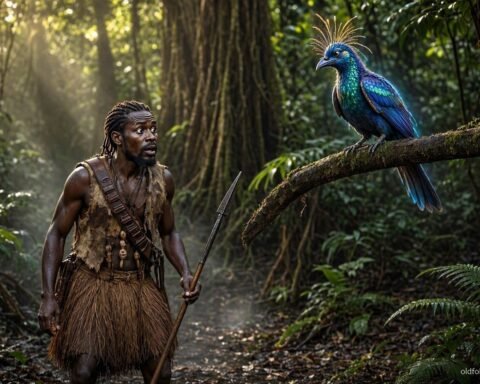
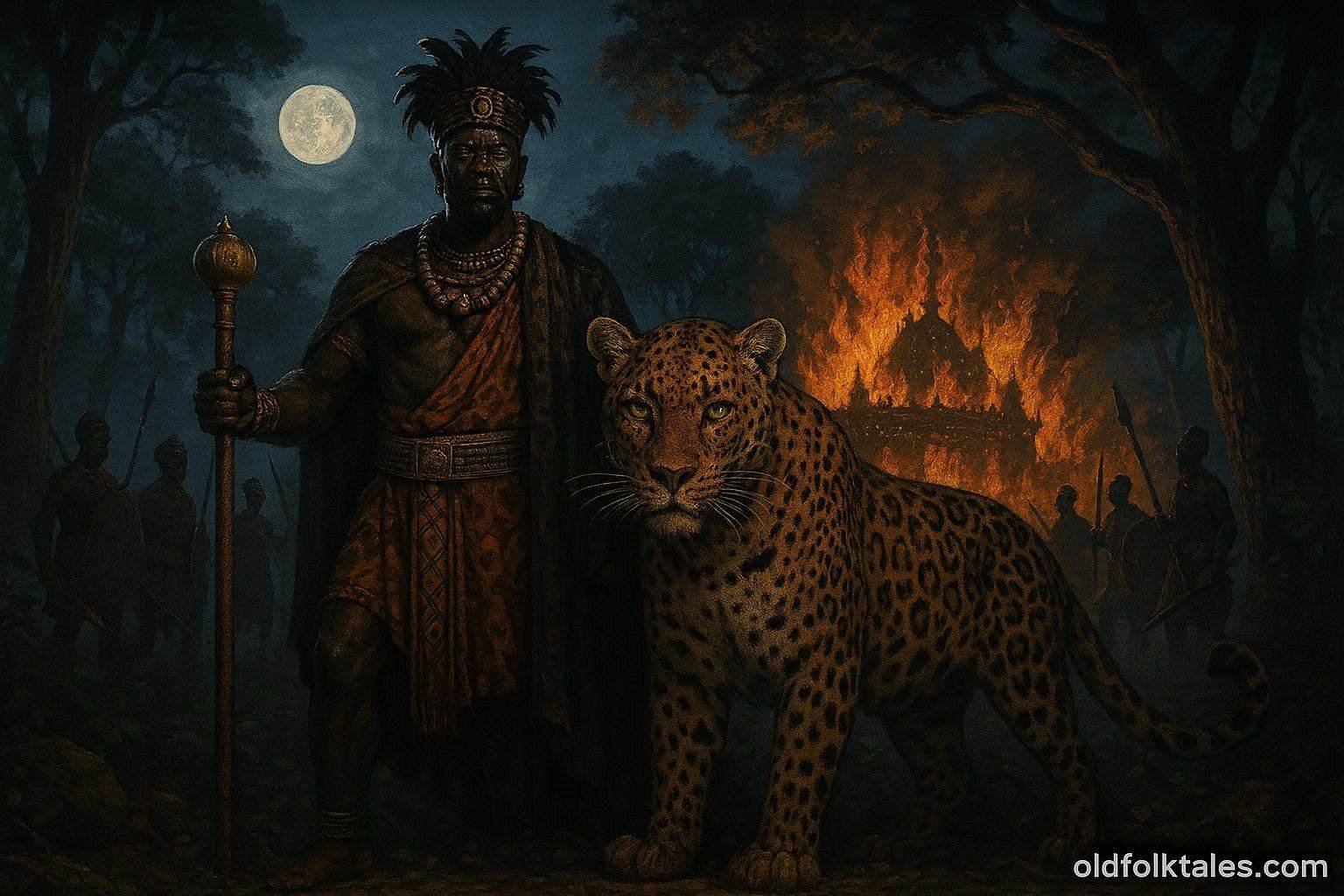
According to oral tradition, Chabala carried the spirit of a leopard.
Stories about him spread across surrounding territories long before many people ever saw him in person. Warriors claimed the king moved silently through forests at night like a hunting animal. Others believed his eyes glowed in darkness during moments of anger or danger.
If you enjoyed this story, explore our full West African folktales collection
The most terrifying stories claimed Chabala could transform into a leopard completely whenever the kingdom faced serious threats.
Whether true or exaggerated, the rumors protected the kingdom powerfully.
Enemies feared challenging a ruler connected to such supernatural force.
Under Chabala’s leadership, the kingdom remained stable and prosperous for many years. Trade expanded across nearby regions while rival groups avoided provoking conflict with Muchinga’s feared warriors.
Yet inside the royal court, fear slowly created another kind of danger.
Many advisers obeyed the king outwardly while secretly fearing his growing power and influence. Some worried the stories about leopard spirits gave Chabala authority beyond ordinary leadership.
Others feared his temper.
Though respected for strength and intelligence, the king became increasingly suspicious of betrayal after surviving several assassination attempts during earlier conflicts. Gradually, trust within the royal court began weakening.
At the center of the growing tension stood a royal adviser named Mwamba.
Clever, ambitious, and highly respected among several noble families, Mwamba served the kingdom faithfully for years while quietly building influence among dissatisfied court officials.
Publicly, he praised the king.
Privately, he encouraged doubts.
“A ruler feared too greatly eventually rules alone,” he whispered to trusted allies.
Over time, rumors spread quietly throughout the palace.
Some claimed the king no longer trusted even his closest advisers. Others insisted Chabala spent nights deep within sacred forest areas performing strange rituals connected to the leopard spirit.
Fear turned ordinary uncertainty into dangerous suspicion.
Meanwhile, attacks from rival territories increased along the kingdom’s borders. Villages near the mountains reported raids from enemies testing Muchinga’s defenses after hearing stories about division inside the royal court.
King Chabala responded harshly.
Believing betrayal existed within his own leadership circle, he ordered investigations into possible conspiracies among nobles and military commanders. Several officials were punished publicly after accusations of disloyalty.
The kingdom grew tense.
Even loyal advisers became afraid of speaking openly.
Only one person still addressed the king honestly without fear.
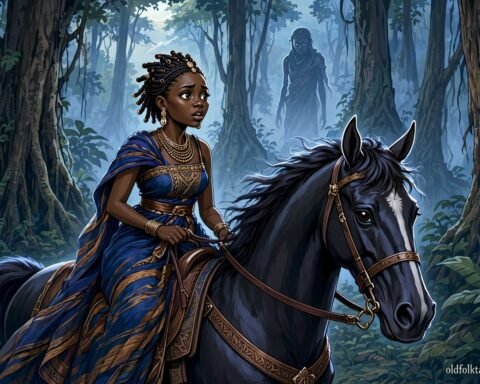
Her name was Namfumu, an elderly royal spiritual adviser respected for wisdom and knowledge of ancestral traditions. She served Chabala since his youth and understood both the king’s strength and growing loneliness.
One evening, she warned him privately.
“A king surrounded by fear cannot see betrayal clearly,” she said. “Fear hides enemies, but it also hides loyal friends.”
Chabala listened silently but remained troubled.
Days later, disaster struck.
During an important gathering involving military leaders and regional chiefs, several armed conspirators suddenly attacked the royal compound hoping to overthrow the king before his supporters could respond.
Chaos erupted across the palace.
Warriors fought through the courtyards while terrified servants fled into the surrounding darkness. Fires spread near parts of the compound as the attackers attempted reaching the royal chambers directly.
At the center of the uprising stood Mwamba.
Believing the kingdom needed leadership without fear and superstition, he declared publicly that Chabala’s connection to the leopard spirit made him dangerous to the future of the people.
Many hesitated uncertainly.
Some supported Mwamba’s rebellion.
Others remained loyal to the king despite their fears.
Then came the moment that transformed the uprising into legend forever.
As fighting spread through the palace grounds, witnesses reported hearing a powerful leopard roar echo from the sacred forest beyond the compound walls.
The sound silenced everyone instantly.
Moments later, a massive leopard appeared near the burning courtyards moving directly toward the attackers. Panic swept through the rebels as the animal passed fearlessly through the chaos while warriors stumbled backward in terror.
Some claimed the leopard’s eyes resembled the king’s own.
Others insisted they saw Chabala himself standing within the shadows moments before the animal appeared.
No one agreed exactly what happened next.
But according to the oldest versions of the story, the leopard attacked several conspirators before disappearing again into darkness. Terrified rebels abandoned the uprising almost immediately believing the king’s ancestral spirit now defended the kingdom openly.
Mwamba himself attempted fleeing the palace but was captured before escaping the mountains.
When dawn finally arrived, the rebellion had failed completely.
Yet the experience changed King Chabala deeply.
Instead of ruling through fear alone afterward, he began rebuilding trust within the kingdom carefully. Guided by Namfumu’s wisdom, the king restored cooperation between leaders, reduced harsh punishments, and encouraged stronger unity among the royal families.
The kingdom recovered gradually.
As for the leopard itself, no one ever proved whether the creature was truly the king, a spiritual guardian, or simply an ordinary animal appearing during chaos.
But throughout Muchinga, the legend endured for generations.
According to Bemba tradition, the Leopard King represented more than supernatural power.
He symbolized the dangerous balance between fear and leadership.
A ruler must inspire strength without allowing fear to destroy trust among the people he protects.
And somewhere within the forests of Muchinga, elders still say the spirit of the leopard watches over leaders who forget the difference between power and wisdom.
Explore more Southern African folktales here
Moral Lesson
Leadership built only on fear eventually creates division, while wisdom and trust create lasting strength.
Knowledge Check
- Who was the Leopard King of Muchinga?
He was King Chabala, a ruler believed to possess the spirit of a leopard. - Why did people fear King Chabala?
Stories claimed he could transform into a leopard and possessed supernatural power. - Who was Mwamba?
He was an ambitious royal adviser who secretly organized rebellion against the king. - What happened during the palace uprising?
A mysterious leopard appeared during the attack, terrifying the rebels. - Who advised the king wisely throughout the story?
An elderly spiritual adviser named Namfumu guided him. - What lesson does the story teach?
Strong leadership requires wisdom, trust, and balance rather than fear alone.
Source
Zambian royal folklore. Adapted from Bemba royal myths preserved in Central African historical and mythological folklore studies.