Flowing across the heart of Zambia, the Kafue River supported generations of fishing communities, traders, farmers, and royal settlements whose lives depended upon the movement of water through the land. Along its banks lived the Ila people, well known for cattle keeping, river traditions, ceremonies, and strong respect for ancestral customs preserved over centuries.
For the Ila, the river was more than a source of survival.
It was sacred.
Elders believed the Kafue carried the presence of ancestral spirits who protected the people, guided leaders, and maintained balance between humans and nature. Ceremonies honoring the river took place during important seasons involving harvests, royal gatherings, marriages, and spiritual celebrations.
At the center of one of the most important royal festivals stood the Sacred Canoe.
Carved many generations earlier from a massive tree trunk, the canoe was decorated with symbols representing unity, protection, leadership, and ancestral blessing. According to oral tradition, the canoe first appeared during a time of conflict when rival communities along the river struggled over fishing territories and trade routes.
Continue your journey: Read more East African folktales
A respected spiritual leader supposedly used the canoe to travel between villages restoring peace and cooperation. After his death, the canoe became a ceremonial object preserved carefully by royal custodians and displayed only during major festivals connected to the wellbeing of the people.
The annual river festival could not begin without it.
During the ceremony, elders placed offerings inside the canoe before leading a sacred procession across part of the river. Villagers believed the ritual strengthened unity and ensured blessings for farming, fishing, rainfall, and community stability throughout the coming year.
For generations, the tradition continued without interruption.
Then one season, disaster struck.
Preparations for the royal festival had already begun when custodians entered the ceremonial storage house beside the river only to discover the Sacred Canoe missing.
At first, confusion spread quietly.
The guards insisted no one entered the building during the night. The heavy doors remained locked, and no signs of forced entry appeared anywhere around the storage grounds.
Yet the canoe had vanished completely.
Fear quickly spread across the villages lining the Kafue River.
Without the Sacred Canoe, the festival could not proceed properly. Some elders worried the disappearance signaled anger from the ancestors while others suspected theft connected to growing tensions between several influential families competing for political influence within the region.
Rumors moved rapidly through marketplaces and riverside settlements.
Some claimed jealous rivals stole the canoe to weaken the royal ceremony.
Others whispered that the river spirits themselves reclaimed it because the people had neglected important traditions.
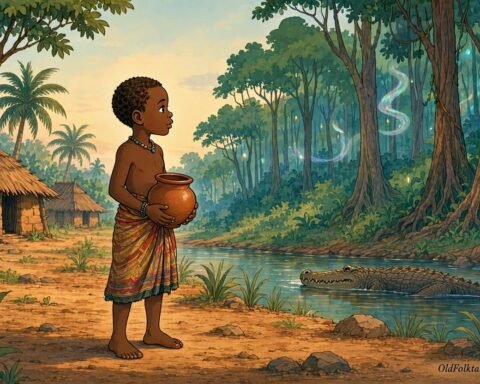
Among those troubled most deeply by the crisis was a young canoe builder named Mwila.
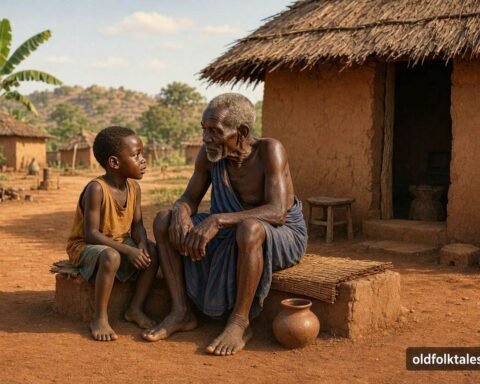
Unlike many villagers his age, Mwila spent years learning traditional carving techniques and river customs from his grandfather, one of the last respected craftsmen connected to ceremonial canoe making.
He understood the spiritual importance of the missing vessel better than most people.
“This is not only about wood,” Mwila explained during a village gathering. “The canoe carries the memory of the ancestors.”
As panic increased, the royal council organized search groups to investigate the riverbanks, nearby forests, and neighboring settlements.
Days passed without success.
Then strange reports began emerging from fishermen traveling early in the morning along isolated parts of the Kafue River.
Several claimed they saw a large canoe moving silently through heavy mist before sunrise despite no rowers being visible inside it. Others described hearing ceremonial singing drifting across the water late at night where no villages stood nearby.
Most dismissed the stories as fear and imagination.
But an elderly river priestess named Namakau took the reports seriously.
According to old Ila belief, sacred objects tied closely to ancestral power sometimes withdrew themselves from human use whenever communities lost spiritual balance.
“The river is speaking,” Namakau warned the council. “The people must listen carefully.”
When asked what the ancestors wanted, the old priestess spoke honestly.
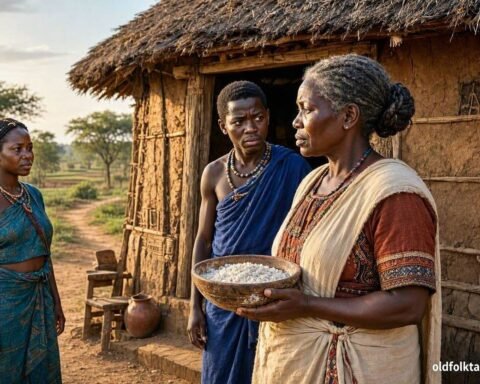
Over recent years, divisions had grown between families competing for influence during royal ceremonies and river trade activities. Community cooperation weakened while some sacred customs connected to the Kafue festival became increasingly neglected by younger generations.
“The canoe disappeared because unity disappeared first,” Namakau declared.
Her words unsettled many leaders.
Still, with the festival approaching rapidly and no other solution available, the council agreed to follow the priestess’s guidance.
Namakau instructed the villages to spend three days restoring harmony before searching for the canoe again. Disputes between families were resolved publicly while elders organized shared meals, river cleanings, and ceremonies honoring forgotten ancestral traditions.
For the first time in years, the riverside communities worked together without rivalry.
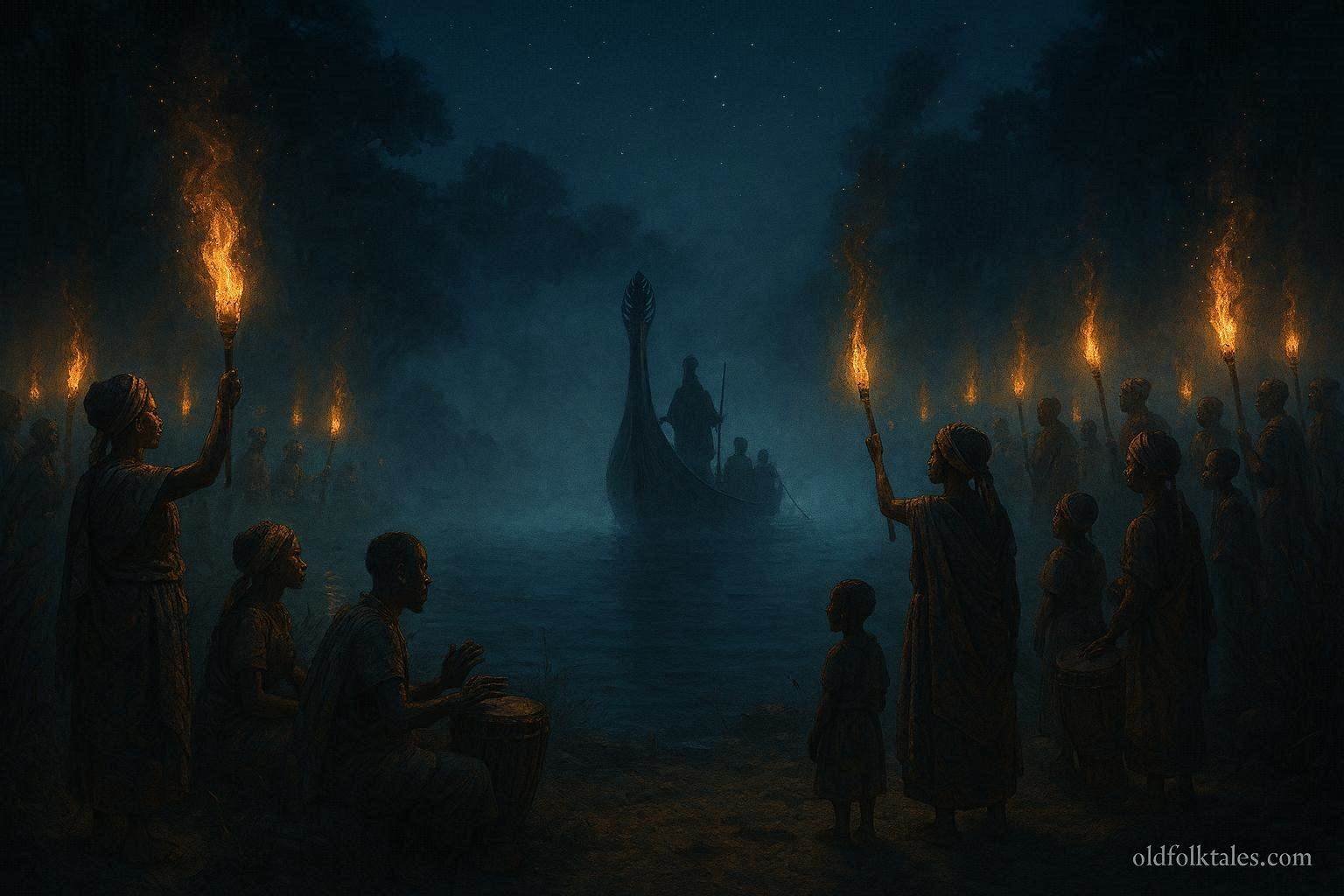
On the final night before the festival, villagers gathered beside the Kafue River beneath torchlight while drummers performed ancient ceremonial rhythms connected to the original river procession.
Mwila sat quietly near the water watching the moon reflect across the river’s surface.
Then suddenly, someone shouted.
Far out within the mist, a large shape appeared moving slowly across the water.
The Sacred Canoe.
Gasps spread through the crowd as the vessel drifted silently toward the shore without any visible paddlers guiding it. Decorated carvings along its sides reflected torchlight exactly as described in the old traditions.
The canoe stopped gently beside the riverbank.
No one spoke for several moments.
Then Namakau stepped forward calmly and touched the side of the vessel before addressing the people.
“The ancestors return what the people are prepared to protect,” she said softly.
The following morning, the royal festival finally began.
Villagers filled the riverbanks singing ceremonial songs while elders placed offerings inside the Sacred Canoe before guiding it across the Kafue River once again. This time, however, the ceremony carried deeper meaning than before.
The people understood the canoe symbolized more than tradition alone.
It represented unity, memory, responsibility, and the living connection between generations past and present.
From that year onward, the Ila communities renewed their commitment to preserving both the river and the traditions tied to it.
And according to old stories still told along the Kafue River today, the Sacred Canoe continues protecting the people as long as they remain united in respect for their ancestors and one another.
Love this story? Discover our full Southern African folktales collection
Moral Lesson
Communities remain strong when they protect their traditions, respect one another, and preserve unity.
Knowledge Check
- What was the Sacred Canoe?
It was a ceremonial canoe connected to ancestral blessings and royal festivals. - Why was the canoe important to the Ila people?
It symbolized unity, spirituality, and protection from the ancestors. - What happened before the festival?
The Sacred Canoe mysteriously disappeared from storage. - Who was Mwila?
He was a young canoe builder who respected traditional river customs. - Why did Namakau believe the canoe vanished?
She believed the ancestors reacted to division and neglected traditions. - What lesson does the story teach?
Unity and respect for cultural heritage strengthen communities.
Source
Zambian river folklore. Adapted from Ila ceremonial traditions preserved in Kafue River ethnographic and cultural studies.