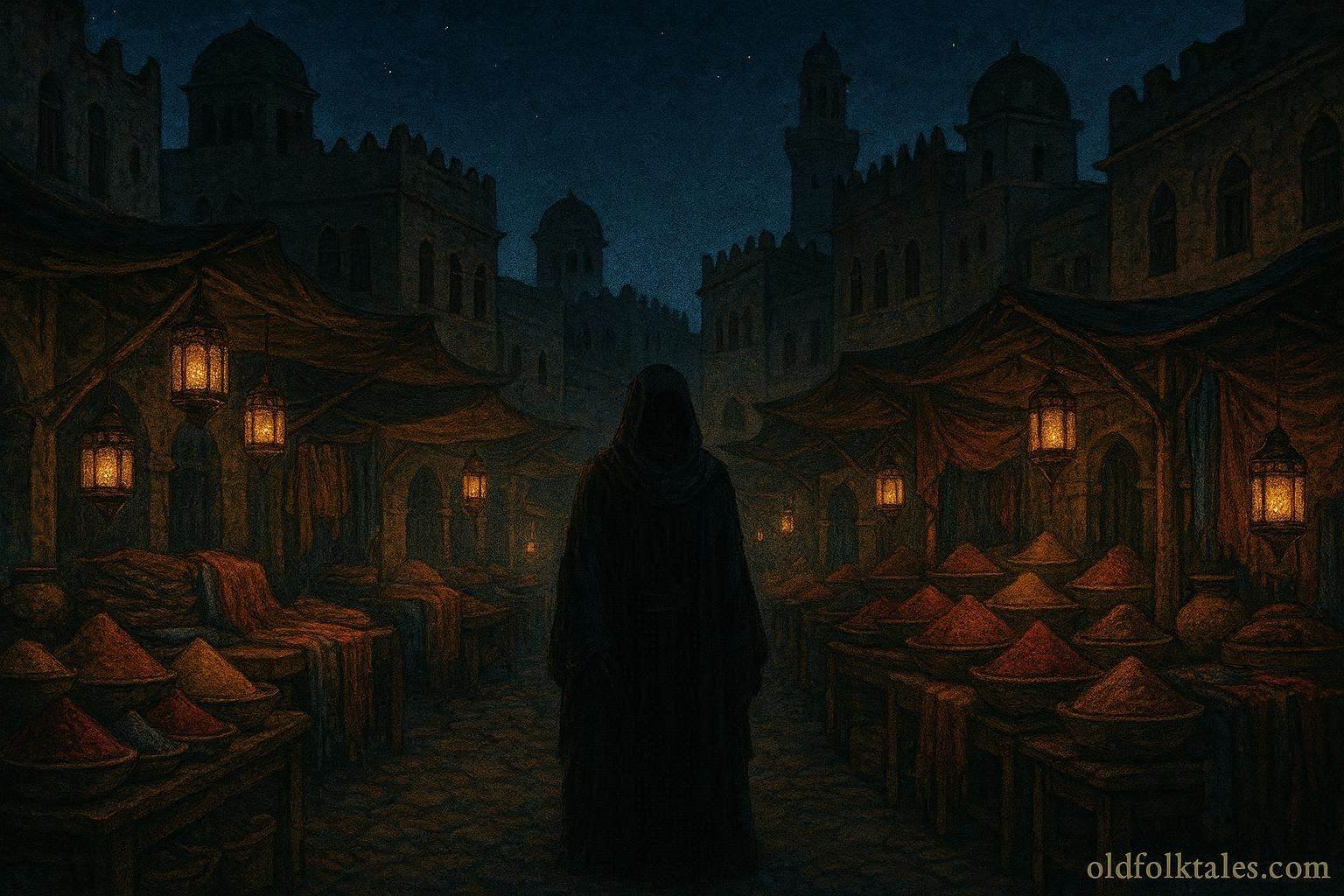
For centuries, the city of Mogadishu stood among the most important trading centers along the East African coast. Long before modern ports and highways connected nations, merchant ships crossed the Indian Ocean carrying spices, gold, ivory, silk, and textiles between Africa, Arabia, Persia, and Asia.
The city’s markets never truly slept.
By sunrise, traders already filled the narrow streets with woven fabrics, carved wood, incense, spices, jewelry, and imported goods from distant lands. Sailors negotiated loudly beside camel caravans arriving from inland territories while fishermen sold fresh catches near the coast.
Among the Benadiri Somali communities who shaped much of Mogadishu’s urban culture, commerce was more than survival.
Trade defined reputation.
Families built influence through generations of successful business relationships stretching across oceans and deserts alike.
But alongside wealth and opportunity, the old city also carried countless stories whispered between merchants after sunset.
Stories about curses.
About hidden fortunes.
About spirits wandering the narrow streets at night.
And among the oldest and most feared of these legends was the story of the Shadow Merchant of Mogadishu.
If you enjoyed this story, explore our full West African folktales collection
According to oral tradition, the mysterious merchant appeared only during moments when disaster quietly approached the city.
No one knew his true name.
No one knew where he came from.
And no one could ever explain how he vanished so completely after each appearance.
The legend became famous during a turbulent period in Mogadishu’s history when political tensions, trade rivalries, and hidden betrayals threatened the stability of the coastal city.
At the center of the story stood a respected spice trader named Yusuf Al-Badawi.
Yusuf operated one of the busiest stalls in the old Hamar Weyne district, where merchants from across East Africa and Arabia gathered daily to negotiate trade agreements.
Unlike many wealthy traders, Yusuf was admired for his honesty and fairness.
He treated sailors, laborers, and wealthy merchants with equal respect, earning trust throughout the markets.
Yet even Yusuf could sense the city changing.
Political rivalries between influential families had intensified.
Rumors of corruption spread through the trading councils.
Foreign interests competed secretly for influence over shipping routes and taxation.
Though business continued publicly, fear quietly moved beneath the surface of everyday life.
One evening, shortly after sunset prayers, Yusuf remained alone organizing spices inside his stall while most merchants closed for the night.
That was when he first saw the stranger.
The man appeared suddenly near the edge of the market corridor dressed in dark robes unlike ordinary merchant clothing. His face remained partially hidden beneath a wrapped shawl, and despite the crowded marketplace, no one else seemed to notice him.
What disturbed Yusuf most was the silence surrounding the figure.
The noisy market somehow felt distant whenever the stranger stood nearby.
The man approached slowly and examined the spice shelves carefully without speaking.
Finally, he selected a small pouch of saffron and placed several old silver coins onto the wooden counter.
Yusuf noticed immediately that the coins belonged to an earlier era no longer used within the city.
“Where did you travel from?” Yusuf asked politely.
The stranger paused.
Then he answered quietly.
“From places that no longer exist.”
Before Yusuf could respond, the merchant added another sentence.
“Tell the harbor masters to watch the sea within three nights.”
Then he disappeared into the crowd.
The encounter unsettled Yusuf deeply.
The following day, he mentioned the strange visitor to nearby traders.
Several older merchants reacted with visible fear after hearing the description.
One elderly sailor whispered the name quietly.
“The Shadow Merchant.”
According to the older traders, similar sightings had occurred throughout the city’s history before major disasters. Some claimed the figure appeared before political assassinations, fires, shipwrecks, and violent unrest.
Others believed he represented a wandering spirit connected to Mogadishu’s forgotten past.
Most dismissed the stories publicly.
But privately, many merchants feared them.
Three nights later, a violent storm struck the coastline unexpectedly.
Several trade ships anchored near the harbor were destroyed after crashing against hidden reefs during powerful winds. Important cargo worth enormous fortunes disappeared beneath the sea.
The city entered mourning immediately.
Yusuf remembered the stranger’s warning with growing unease.
Weeks passed.
Life slowly returned to normal.
Then the Shadow Merchant appeared again.
This time Yusuf encountered him near the old textile quarter shortly before dawn.
Again, the strange silence followed him.
Again, he carried ancient coins.
The mysterious figure purchased nothing at all.
Instead, he studied the marketplace carefully before speaking.
“The loudest voices in the council hide the deepest knives.”
Then he vanished once more.
Disturbed by the warning, Yusuf began paying closer attention to political tensions spreading through the city.
Soon afterward, accusations of corruption erupted publicly within Mogadishu’s trading council. Several powerful leaders were exposed for secretly manipulating taxes and trade agreements for personal profit.
The scandal divided major merchant families and triggered violent confrontations between rival supporters.
Once again, the warning proved true.
As years passed, sightings of the Shadow Merchant continued appearing before moments of crisis.
Before major fires.
Before outbreaks of violence.
Before betrayals that changed the balance of power within the city.
Some merchants became obsessed with finding him, believing his warnings could prevent disaster entirely.
Others avoided speaking about him altogether out of fear.
Yusuf, however, remained deeply curious.
Unlike many people who viewed the merchant as a spirit of doom, Yusuf began wondering whether the figure served another purpose entirely.
Perhaps he appeared not to cause disaster, but to warn people before it arrived.
One night during a period of severe unrest, Yusuf finally decided to follow the mysterious merchant after another sudden appearance near the harbor markets.
Keeping distance carefully, he watched the figure move silently through narrow alleyways lit only by lanterns.
The merchant eventually stopped near an abandoned section of the old city overlooking the ocean.
There, for the first time, he turned fully toward Yusuf.
“You seek answers,” the merchant said calmly.
Yusuf admitted the truth.
He asked who the stranger truly was and why he appeared before disaster struck Mogadishu.
The merchant remained silent for several moments while waves crashed below the stone walls nearby.
Finally, he answered.
“Cities speak long before they fall. Greed speaks. Fear speaks. Betrayal speaks. But people hear only profit until it is too late.”
Yusuf realized then that the warnings were never magical predictions.
The Shadow Merchant simply recognized the signs others ignored.
Corruption.
Division.
Ambition.
Dishonesty.
The disasters affecting the city were born quietly through human actions long before becoming visible publicly.
Before Yusuf could ask another question, footsteps echoed nearby from approaching guards searching the district.
For only a brief moment, Yusuf looked away.
When he turned back, the merchant was gone.
No footprints remained.
No doors had opened.
Only the distant sound of waves moving against the harbor walls filled the night air.
Years later, Yusuf became one of Mogadishu’s most respected elders. He often warned younger traders that prosperity without morality eventually destroys even the strongest cities.
And throughout the old markets of Mogadishu, merchants continued sharing stories about the Shadow Merchant who appeared whenever danger approached silently beneath the surface of everyday life.
Even today, some traders claim that during periods of political tension or unrest, a lone merchant dressed in dark robes still walks quietly through the ancient markets before vanishing once again into the shadows of the city.
Looking for more? Explore the magic of East African folktales here
Moral Lesson
Disaster often begins quietly through greed, corruption, and dishonesty long before its consequences become visible.
Knowledge Check
- Where is the story set?
It is set in the ancient markets of Mogadishu, Somalia. - Who was Yusuf Al-Badawi?
He was a respected spice trader who encountered the mysterious Shadow Merchant. - What made the Shadow Merchant unusual?
He appeared before disasters and used ancient coins from earlier eras. - What warnings did the merchant give?
He warned about storms, political betrayal, and hidden corruption. - What did Yusuf eventually realize?
The disasters were caused by human greed and dishonesty long before they became public. - What lesson does the story teach?
Corruption and division quietly create destruction if ignored for too long.
Source
East African folklore. Adapted from Benadiri Somali trade legends preserved in Mogadishu urban folklore archives and regional oral history studies.