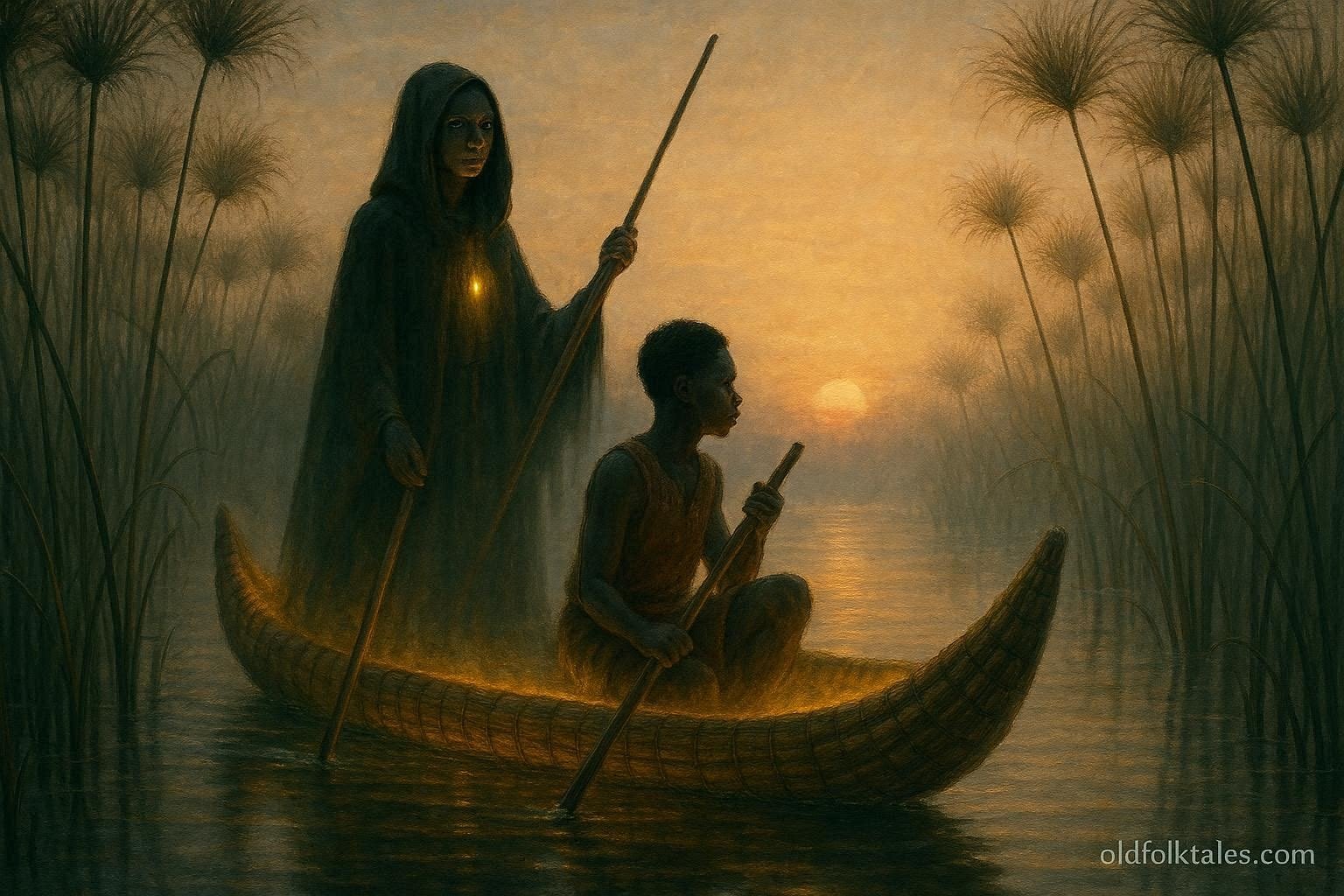
Lake Bangweulu, one of Zambia’s great wetlands, has sustained fishing communities for countless generations. Its vast waters, floating reed beds, and drifting morning mist have inspired many stories among the Unga and Bemba people. Elders speak of a mysterious woman who appears only when the lake chooses to reveal her. She is said to guide respectful fishermen through danger, yet vanish before those who mock the waters or take more than nature willingly offers. Whether regarded as a spirit or a symbol of the lake’s wisdom, her legend continues to remind every generation that gratitude and humility are the greatest companions on any journey.
Before sunrise, Lake Bangweulu was unlike any other place.
The wide expanse of water disappeared beneath a blanket of silver mist.
Papyrus reeds swayed gently with the morning breeze.
The cries of fish eagles echoed across the quiet wetlands while fishermen prepared their dugout canoes for another day upon the lake.
The Unga and Bemba people had lived beside these waters for generations.
The lake fed their families.
Its fish sustained their villages.
Its reeds provided materials for weaving mats, baskets, and shelters.
Every child grew up understanding that Bangweulu was more than water.
It was life itself.
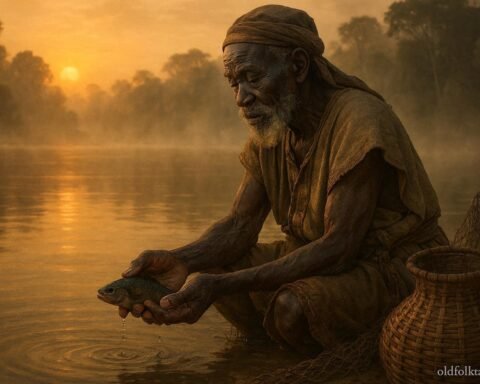
Before launching their canoes each morning, many elders followed an old custom.
Don’t stop yet! See our complete East African folktales collection
They paused at the shoreline.
They dipped their fingers into the water.
Then they quietly whispered words of gratitude.
Young children often copied the tradition without fully understanding it.
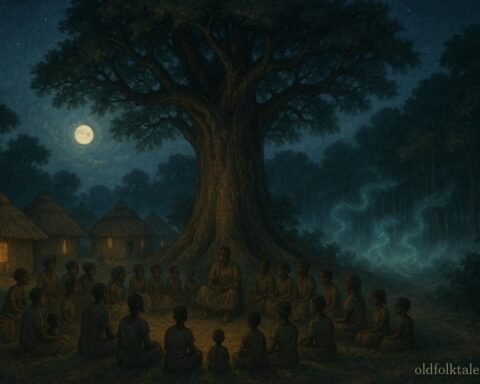
One curious boy named Mutale finally asked his grandmother,
“Why do we greet the lake every morning?”
She smiled gently.
“Because we ask permission before accepting its gifts.”
“The lake has cared for our people long before we were born.”
Mutale nodded thoughtfully.
Among all the stories his grandmother shared, one fascinated him more than any other.
It was the legend of the Spirit Woman of Lake Bangweulu.
According to the elders, a mysterious woman sometimes appeared within the early morning mist.
She wore garments that shimmered like sunlight dancing upon water.
Her footsteps never disturbed the reeds.
Her canoe moved without making a sound.
No one knew where she came from.
No one knew where she disappeared.
Some believed she was an ancestral guardian.
Others believed she was the spirit of the lake itself.
But everyone agreed on one thing.
She appeared only to people who respected the waters.
Those who mocked the lake never saw her.
One cool morning, Mutale accompanied his father on a fishing journey for the first time.
Before pushing the canoe into the water, his father quietly touched the surface of the lake.
“Thank you for another day.”
Mutale remembered his grandmother’s lesson and did the same.
The canoe drifted peacefully through narrow channels lined with tall papyrus reeds.
The morning mist surrounded them so completely that distant islands disappeared from sight.
Only the gentle sound of paddles disturbed the silence.
His father smiled.
“The lake is waking.”
As the sun slowly climbed higher, they lowered their fishing nets into the calm water.
Hours passed peacefully.
Their baskets gradually filled with fish.
When they had caught enough for their family, Mutale expected his father to continue fishing.
Instead, the older man carefully pulled in the nets.
“We have enough.”
“The lake has been generous.”
Mutale looked around.
“There are still many fish.”
His father nodded.
“And they must remain here for tomorrow.”
Just then another canoe appeared nearby.
Several strangers laughed loudly as they pulled fish after fish from the water.
Although their baskets were already overflowing, they continued casting their nets.
One man scoffed when he noticed Mutale’s father paddling toward shore.
“Why stop now?”
“The lake has plenty.”
Another laughed.
“We should take everything before someone else does.”
Mutale noticed his father’s expression grow serious.
“The lake remembers greed.”
The strangers only laughed harder.
As the mist slowly thickened once more, something unexpected happened.
The strangers suddenly became confused.
Although the shoreline remained close, they could no longer find the narrow channels leading home.
Every direction appeared the same.
They paddled in circles.
Their laughter disappeared.
Instead, worried voices echoed through the reeds.
At the same time, Mutale noticed a faint figure emerging from the silver mist ahead of his father’s canoe.
A woman stood silently inside a small canoe woven entirely from reeds.
Her clothing shimmered softly like reflected sunlight.
She raised one hand without speaking.
Then she slowly turned toward a narrow passage hidden between the papyrus.
His father quietly lowered his paddle.
Without hesitation, he followed.
The mysterious canoe glided forward effortlessly.
It made no ripple upon the water.
No paddle touched the lake.
Yet it moved gracefully through a narrow channel that Mutale had never noticed before.
His father remained silent.
He neither questioned nor hurried.
He simply followed.
Within a short time, the thick mist began to thin.
The familiar shoreline slowly appeared before them.
The woman gently turned her canoe toward the open water once more.
For a brief moment, the morning sunlight touched her face.
She smiled kindly.
Then the mist drifted across the lake again.
When it cleared only moments later, she had vanished.
There was no canoe.
No paddle.
Only the quiet waters of Lake Bangweulu.
Mutale looked around in amazement.
“Father…”
“Where did she go?”
His father quietly dipped his fingers into the water.
“We thank those who guide us.”
He said nothing more.
By the time they reached the village, news had already spread that several visiting fishermen were still lost among the papyrus channels.
Without hesitation, Mutale’s father gathered other experienced fishermen.
Together they paddled back into the wetlands.
After many hours they finally found the strangers.
Their baskets of fish had tipped over during their confusion.
Most of their catch had returned to the lake.
Exhausted and frightened, they accepted the villagers’ help.
That evening the visitors sat quietly with the elders.
One of them lowered his head.
“We laughed at your traditions.”
“We believed the lake belonged to anyone strong enough to take from it.”
An elderly fisherman smiled gently.
“The lake belongs to no one.”
“We belong to the lake.”
The visitors remained silent.
Before leaving the village the following morning, they followed the local custom for the first time.
Each knelt beside the shoreline.
Each thanked the lake before beginning the journey home.
Many years passed.
Mutale became one of the most respected fishermen in the Bangweulu wetlands.
He never measured success by the number of fish he caught.
Instead, he measured it by whether the lake remained healthy for future generations.
He taught young fishermen to repair damaged nets instead of abandoning them in the water.
He encouraged families to protect breeding areas where young fish could grow safely.
He reminded everyone to harvest only what their households truly needed.
Whenever children asked whether the Spirit Woman still appeared upon the lake, Mutale smiled.
“Some people spend their whole lives searching for her.”
“But perhaps they are looking in the wrong place.”
The children looked at him curiously.
“What do you mean?”
“The Spirit Woman does not appear because someone demands to see her.”
“She appears when people have already learned the lesson she came to teach.”
One calm morning, as the first mist floated gently across Lake Bangweulu, several young fishermen noticed an elderly woman paddling quietly through the reeds.
Her canoe moved so smoothly that it seemed almost to glide across the water.
Before anyone could greet her, the mist slowly surrounded the canoe.
Moments later she had disappeared completely.
The young men searched every nearby channel.
There was no sign of another canoe.
No sound of paddles.
Only gentle ripples moving across the quiet lake.
When they later told Mutale what they had seen, he simply smiled.
“Whether you saw the Spirit Woman or an ordinary traveler matters very little.”
“What matters is this.”
“Did the sight remind you to respect the lake?”
The young fishermen nodded.
“It did.”
“Then her journey was not in vain.”
Today, Lake Bangweulu remains one of Africa’s great wetland ecosystems, supporting fishing communities, remarkable wildlife, and rich cultural traditions. Oral stories among the Unga and Bemba people continue to emphasize gratitude, humility, and respect for nature. Legends like The Spirit Woman of Lake Bangweulu remind communities that the greatest gifts of the natural world should never be taken for granted, and that those who care for the waters help preserve them for generations yet to come.
The legend teaches that wisdom often arrives as quietly as morning mist. Those who approach nature with humility will always find guidance, even when they cannot explain where it comes from.
Don’t miss out: Read more Southern African folktales
Moral Lesson
Nature rewards those who approach it with gratitude and respect. Humility opens the way to wisdom, while greed often leads people away from the very blessings they seek.
Knowledge Check
1. Why did the fishermen greet Lake Bangweulu before setting out?
They thanked the lake for its gifts and showed respect before beginning their fishing journey.
2. Who was the Spirit Woman according to the legend?
She was believed to be a mysterious guardian who guided respectful travelers through the lake.
3. Why did Mutale’s father stop fishing after catching enough fish?
He believed people should harvest only what they truly needed so the lake would continue providing for future generations.
4. What happened to the greedy visitors?
They became lost in the mist after taking more fish than they needed and mocking the traditions of the lake.
5. What lesson did Mutale teach the younger fishermen?
He taught them to protect the lake by fishing responsibly and respecting its natural balance.
6. What is the central message of the story?
Respecting nature with humility and gratitude brings wisdom, safety, and lasting blessings.
Source
Inspired by Unga and Bemba oral traditions associated with Lake Bangweulu, with reference to Bangweulu oral traditions, Zambian folklore studies, and ethnographic research on indigenous fishing cultures and wetland heritage.