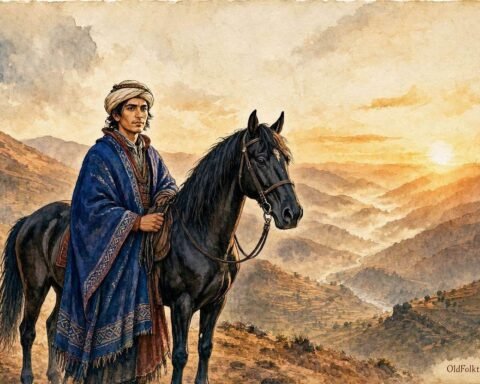
Long ago, among the rugged peaks of Morocco’s Central Atlas Mountains, where cedar forests crowned the hills and crystal clear springs flowed through quiet valleys, there lived a young Amazigh woman named Tislit.
She was admired throughout her village for her gentle heart, wisdom, and deep respect for nature.
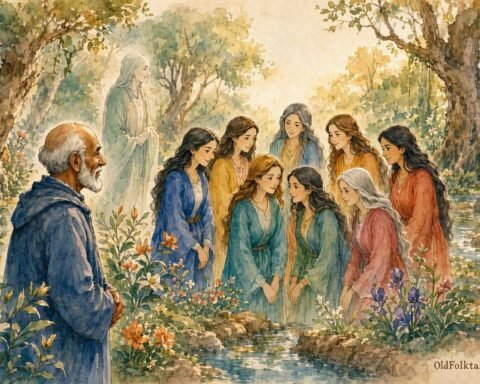
Each morning before sunrise, Tislit climbed the narrow mountain path carrying clay jars to the village’s oldest spring.
The spring was unlike any other.
Its water remained cool even during the hottest summers, and the elders believed it had flowed since the beginning of time.
No one was allowed to pollute its waters or cut the ancient trees that shaded it.
The villagers believed unseen guardians watched over the spring, protecting it from those who acted with greed or disrespect.
Before collecting water, Tislit always placed a small bouquet of wild flowers beside the rocks.
She whispered a prayer of gratitude before filling her jars.
Many people laughed at her quiet tradition.
“The spring does not hear your words,” they would tease.
Tislit simply smiled.
“Whether it hears me or not,” she replied, “gratitude makes the heart pure.”
Don’t stop yet! See our complete East African folktales collection
One evening, after a sudden mountain storm, she climbed to the spring to make sure the water still flowed freely.
The forest was silent except for the sound of rushing water.
As she approached the spring, she noticed a stranger sitting beside the pool.
He wore simple white robes, and his face reflected a calmness unlike anyone she had ever met.
He seemed neither young nor old.
His dark eyes shone with the color of clear water beneath sunlight.
The stranger rose respectfully.
“I fear the storm has delayed your journey,” he said.
“It has,” Tislit answered, surprised that someone would remain alone in such a place after sunset.
“I have never seen you in our village.”
“I do not belong to any village,” the stranger replied with a gentle smile.
“My home has always been here among the mountains.”
Before Tislit could ask another question, he pointed toward a fallen tree that had blocked part of the spring.
Together they cleared the heavy branches until the water flowed freely once again.
When the work was finished, the stranger thanked her.
“You care for this spring as though it were part of your own family.”
Tislit nodded.
“It gives life to every person in our valley.”
“Then your heart understands something many have forgotten.”
As darkness settled over the mountains, the stranger disappeared quietly into the forest.
No footprints remained on the wet ground.
The following evening, Tislit returned to the spring.
The mysterious man was waiting once again.
So began many evenings of conversation beside the flowing water.
The stranger spoke of the mountains as though he had watched them for centuries.
He knew every hidden path, every ancient cedar tree, and every stream that flowed beneath the rocks.
The more Tislit listened, the more she realized that there was something extraordinary about the quiet man who appeared only at the sacred spring.
Yet no matter how many questions she asked about his family or his home, he always answered with the same peaceful smile.
“My home is wherever these waters continue to flow.”
One autumn evening, after the leaves had begun to turn gold, the stranger finally revealed the truth that would change Tislit’s life forever.
The stranger stood quietly beside the spring as the last rays of sunlight disappeared behind the mountains.
Then he spoke.
“For many seasons, I have watched over these waters.”
Tislit looked at him in surprise.
“What do you mean?”
The man smiled gently.
“I am not an ordinary traveler.”
He stepped toward the clear pool.
As his reflection touched the water, it changed.
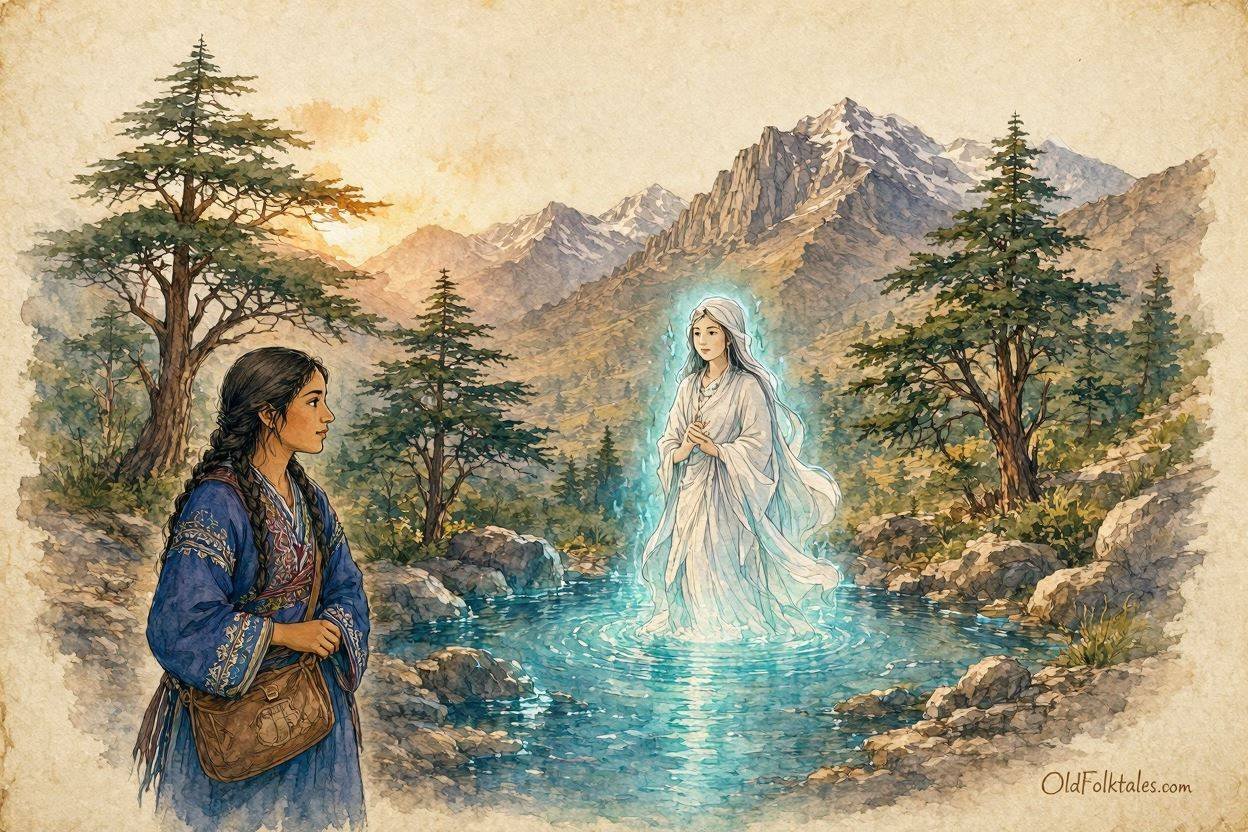
Instead of a human face, Tislit saw a radiant spirit surrounded by flowing streams and shimmering light.
The spring sparkled as though every drop recognized him.
“I am the guardian spirit of this sacred spring,” he said.
“My duty is to protect the waters that give life to these valleys.”
Although astonished, Tislit did not run away.
She had always believed the elders’ stories that unseen guardians cared for the mountains.
Now one stood before her.
“I have come to know your heart,” the spirit continued.
“You honor the spring without expecting a reward.”
“You respect the mountains because you understand that life depends upon them.”
He paused before speaking again.
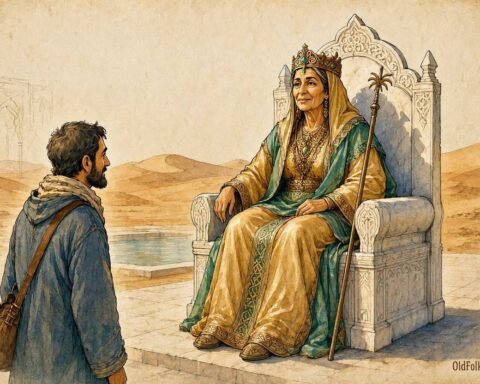
“If you choose, you may remain with me as my wife and share the responsibility of protecting these waters.”
Tislit was silent.
She had grown to care deeply for the mysterious stranger, yet accepting his invitation meant leaving behind her family and the village she loved.
“I cannot answer tonight,” she whispered.
The spirit nodded.
“Return when your heart is certain. A choice made without peace will never bring happiness.”
Tislit spent many days reflecting upon his words.
She sought the wisdom of the oldest woman in the village, who listened without surprise.
“The mountains sometimes choose those whose hearts are pure,” the elder said.
“If you go, you will belong to two worlds. Whatever you decide, let it be guided by love rather than fear.”
At sunrise on the seventh day, Tislit returned to the spring.
The guardian spirit was waiting.
“I have made my choice,” she said.
“I cannot abandon the people who raised me, but neither can I ignore the calling placed before me.”
“I will remain beside the spring and protect it with you, while continuing to serve my village whenever they need me.”
The guardian smiled.
“Wisdom always seeks harmony instead of choosing one good thing at the expense of another.”
As he touched the surface of the water, the spring began to glow with a soft blue light.
Wildflowers bloomed along its banks, and the water became clearer than ever before.
From that day onward, the valleys prospered.
The springs never ran dry, even during years of little rain.
The forests remained green, and the streams continued to nourish the fields below.
The villagers often saw Tislit walking beside the spring at dawn, but they rarely saw the mysterious stranger.
Some believed he was only a traveler.
Others whispered that the ancient guardian still watched over the mountains through the woman who had chosen to share his sacred duty.
Many years later, parents brought their children to the spring and taught them to greet the water with gratitude before filling their jars.
They remembered Tislit’s kindness and the lesson she had learned.
Nature gives generously to those who protect it with respect and love.
Even today, among the Amazigh communities of the Central Atlas, elders say that when the morning mist rises gently above a quiet mountain spring, the guardian spirit is still walking beside the waters with the faithful woman who chose love, sacrifice, and harmony over selfish desire.
And so, The Woman Who Married the Spring Spirit became one of the cherished water legends of the Central Atlas Amazigh, reminding every generation that those who honor nature become its greatest protectors.
Want to dive deeper? Read more North African folktales today
Moral Lesson
This Moroccan folktale teaches that love is strongest when joined with responsibility. Respecting nature and living in harmony with it brings lasting blessings to both people and the land.
Knowledge Check
1. Why did Tislit visit the mountain spring every morning?
She collected water and offered thanks because she respected the sacred spring.
2. Who was the mysterious stranger?
He was the guardian spirit of the sacred mountain spring.
3. What choice did the spirit offer Tislit?
He invited her to become his wife and help protect the spring.
4. Why did Tislit hesitate before answering?
She loved her family and village and did not want to abandon them.
5. What decision did Tislit finally make?
She chose to protect the spring with the guardian while continuing to care for her community.
6. What is the central lesson of this folktale?
The story teaches that love, sacrifice, and respect for nature create harmony between people and the world around them.
Source: Adapted from Beraber Chleuh traditions recorded in Émile Laoust, Contes berbères du Maroc (1949).