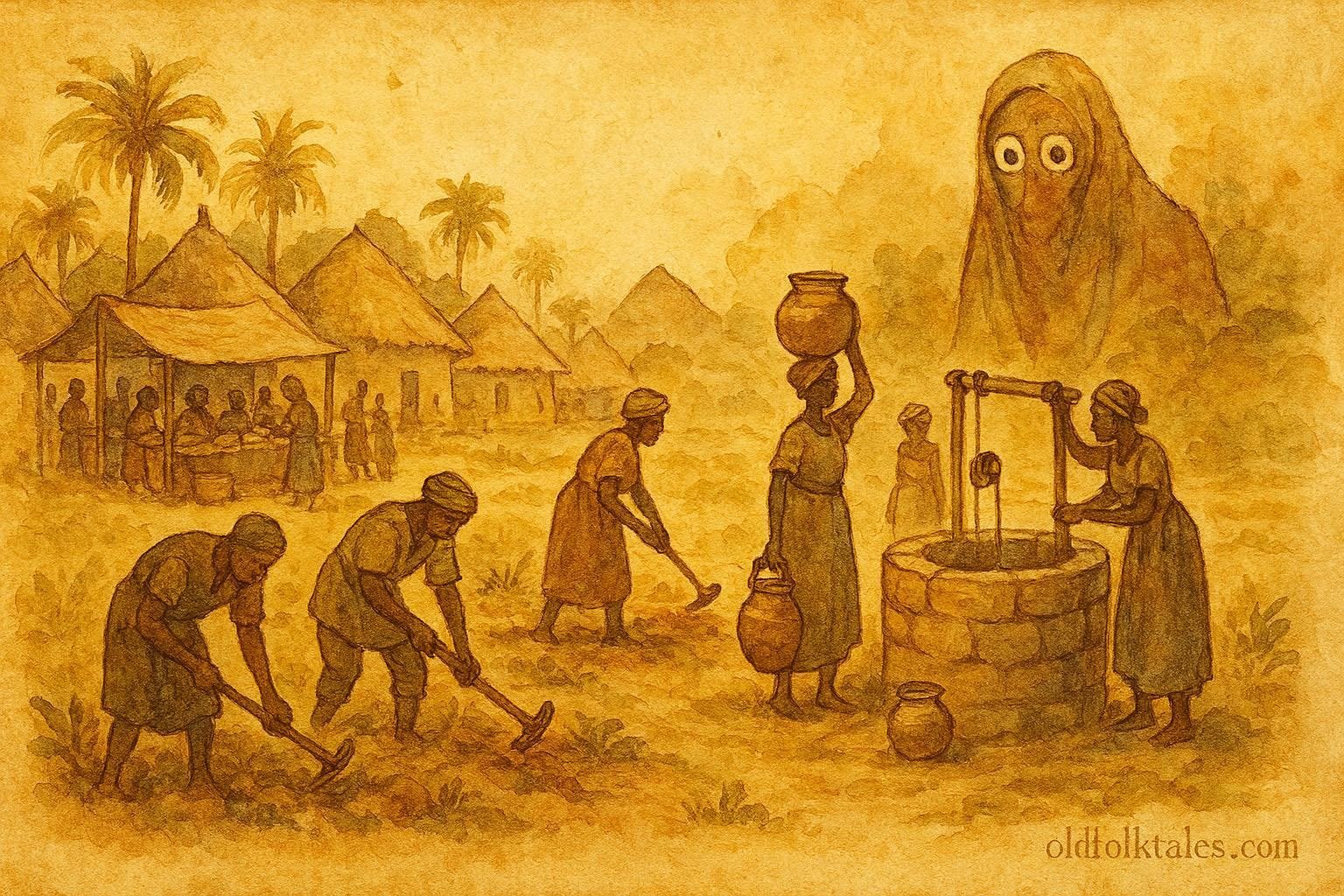
In a quiet village in the land now known as Benin, life moved with a steady and familiar rhythm. At dawn, farmers walked to their fields with hoes resting on their shoulders. Women gathered by the stream, laughing softly as they filled their clay pots with water. Traders displayed their goods in the marketplace, calling out to passersby. To anyone who visited, the village appeared peaceful and well ordered.
Yet beneath this calm surface, not everything was as it seemed.
One morning, as the air carried the gentle dust of the dry season, a stranger appeared at the edge of the marketplace. No one saw where he came from. He simply stood there, dressed in plain clothing that showed signs of long travel.
He greeted the villagers politely and asked if he might stay among them for a while.
The elders, following their custom of hospitality, allowed him to remain. They told him he must respect their ways and live as they did. The stranger agreed without hesitation and bowed his head in gratitude.
From that day on, he lived among them.
At first, he behaved like any ordinary man. He worked whenever work was offered. He helped farmers in their fields, carried heavy loads for the elderly, and fetched water when needed. He spoke little, but when he did, his words were gentle and thoughtful.
Don’t stop yet! See our complete East African folktales collection
Still, there was something about him that set him apart.
He watched everything.
He paid close attention to how people treated one another. He noticed their actions, their words, and even the things they tried to hide. He seemed especially present in moments when no one expected to be seen.
Gradually, the truth about the villagers began to reveal itself.
One day in the marketplace, a trader loudly praised his goods. He told everyone that his yams were the finest in the land. When a poor woman came to buy from him, he secretly placed spoiled yams among the good ones, believing she would not notice.
The stranger stood nearby and spoke calmly.
A man’s goods are known not by his words but by his honesty.
The trader froze. The woman checked her basket and saw the spoiled yams. Filled with shame, the trader quickly replaced them with fresh ones.
On another day, a young man was seen helping an elderly widow carry a heavy bundle of firewood. The villagers praised him for his kindness. They spoke highly of his good character.
Later, when no one else was watching, the young man demanded payment from the widow. He complained that his help should not be free, even though she had nothing to give.
The stranger appeared again and spoke quietly.
Kindness that seeks reward is not kindness.
The young man lowered his head, unable to respond.
Days turned into weeks, and the stranger continued to move through the village. He always seemed to appear at the exact moment when someone’s true character was about to be revealed.
He never shouted. He never insulted anyone. Yet his words carried a weight that made people reflect on their actions.
Soon, whispers began to spread among the villagers.
They wondered who he truly was. They questioned how he always knew the truth. Some began to feel uneasy, while others started to examine their own behavior more carefully.
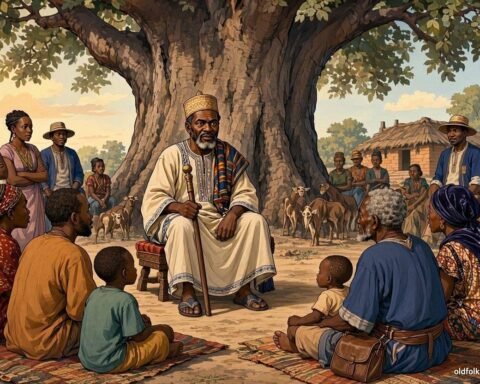
One evening, the elders gathered beneath the great tree at the center of the village. They spoke among themselves and agreed that the stranger was no ordinary man. They decided to summon him and ask him to reveal his identity.
When he stood before them, the air grew still. It felt as though everything around them had paused to listen.
The chief spoke first. He asked the stranger to tell them who he really was and how he knew so much about the hidden actions of the people.
The stranger looked at them calmly and began to speak.
For many days, I have lived among you. I have seen your kindness and your faults. I have watched how you treat one another when you believe no one is watching.
The elders listened in silence.
I am not like you, he continued. I am a spirit sent to live among humans and to see whether truth still lives in their hearts.
A murmur spread through the gathering as the villagers absorbed his words.
The chief rose slowly and asked what the spirit had discovered during his time in the village.
The spirit looked around at the people gathered before him.
I have seen generosity, he said, but I have also seen greed hidden behind fine words. I have seen kindness, but I have also seen selfishness disguised as help. I have seen honesty, but I have also seen deceit practiced in secret.
The villagers shifted uneasily. Many lowered their eyes.
The spirit continued speaking in a calm and steady voice.
You believe that what is hidden cannot be known. But truth does not disappear. It lives in every action, every word, and every thought. Even when no human sees it, the spirit world always does.
The chief bowed his head and asked what the people must do to live rightly.
The spirit answered simply.
Live truthfully. Let your actions match your words. Treat others well, not for praise, but because it is right.
The next morning, the stranger was gone.
No one saw him leave. No one knew where he went.
But the village was no longer the same.
People became more careful with their actions. Traders dealt honestly. Neighbors treated one another with sincerity. Kindness was given freely, not for reward but from the heart.
The villagers never forgot the spirit who had lived among them. They remembered his words and carried them into their daily lives.
And from that time on, they understood that even the things done in secret are never truly hidden.
If you enjoyed this story, explore our full West African folktales collection
Moral Lesson
True character is revealed not by what people show in public, but by what they do in secret. Honesty and kindness must come from the heart, not from the desire for praise.
Knowledge Check
- What is the main message of The Hidden Spirit in the Village?
The story teaches that true character is revealed through actions done in secret. - Who was the stranger in the village?
The stranger was a spirit sent to observe human behavior. - What did the spirit reveal about the villagers?
The spirit exposed hidden greed, dishonesty, and false kindness. - Why did the villagers feel ashamed?
They realized their actions did not match their words. - What lesson did the spirit teach the community?
To live truthfully and treat others with genuine kindness. - What changed in the village after the spirit left?
The villagers became more honest, sincere, and morally upright.
Source
West African folktale, Benin. Collected by Harold Courlander in A Treasury of African Folklore (1975).