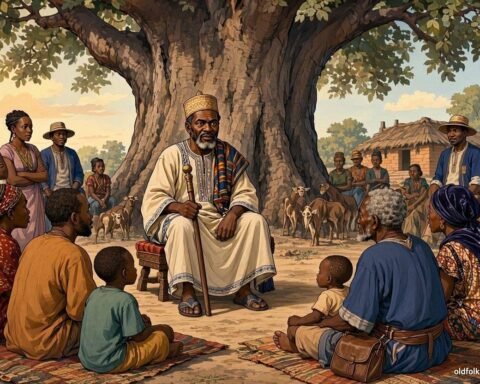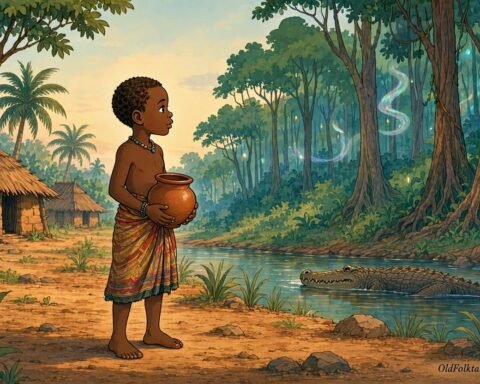
In a small village in Benin, there lived a man known for his endless desire for more. He was never satisfied with what he had. Even when his neighbors shared their harvests and helped one another, he always thought he deserved more than anyone else.
One day, as he wandered near the edge of the forest, he encountered a mysterious figure. The figure was neither old nor young, dressed in simple white robes, and carrying a small wooden chest that glowed faintly in the sunlight.
“I have come to offer you a gift,” the figure said. “It is a gift that will provide for you endlessly, as long as you use it with care and gratitude.”
The man’s eyes widened. “Endlessly?” he asked. “Nothing could be better than that.”
“Yes,” said the figure. “But remember, the gift is not for greed. Use it wisely, and it will never fail you. Use it selfishly, and it will vanish forever.”
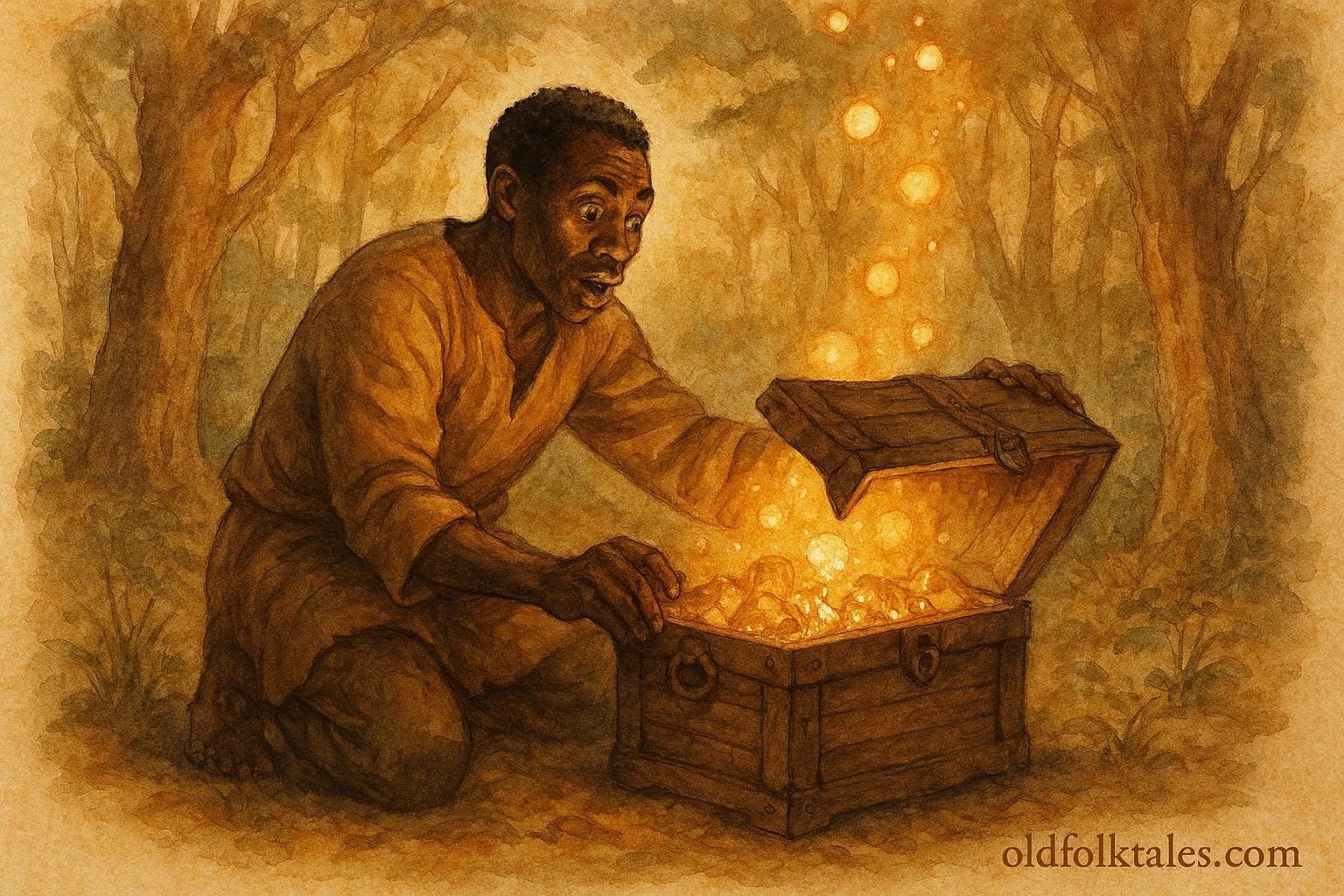
The man eagerly accepted the gift without hesitation, barely listening to the warning. The chest contained a small magical stone that produced whatever he desired: food, gold, and even fine clothing. At first, he was careful, taking only what he needed. His family prospered, and his neighbors admired his newfound fortune.
Keep reading: Discover more Central African folktales
But as time passed, his greed grew. He wanted more than his share. He demanded endless supplies of gold, even when he already had more than enough. He took more food than his family could eat, hoarded fine clothing, and refused to share with those in need.
The magical gift continued to provide, but it began to fade slowly as the man’s selfishness grew. The stone would not produce what he demanded, and the things he already had began to lose their shine. Yet the man ignored these signs.
“I am the master of this gift,” he said. “It must obey me.”
But the gift was no longer under his control. One morning, he opened the chest expecting it to overflow with riches, and it was empty. The glow had vanished, and the magic was gone forever.
Shocked and desperate, he searched the village and the forest, calling for the mysterious figure who had given him the gift. No one appeared, and the villagers shook their heads at his folly.
“You should have been grateful,” they said. “You had enough and more, but your greed has taken it all away.”
The man realized too late that his endless desire had destroyed the one blessing that could have brought him lasting happiness. He had ignored the lesson of gratitude, and the gift that could never fail had vanished because he failed to respect it.
From that day on, the story of the greedy man spread through the village. Children were told to listen, and adults remembered that the true value of gifts lies not in their abundance, but in the wisdom to use them well.
Want more? Read more West African folktales now
Moral Lesson
Greed can destroy even the greatest blessings. True prosperity comes from gratitude, moderation, and respect for what is given.
Knowledge Check
- What magical gift did the man receive?
He received a supernatural stone that provided him endlessly with food, gold, and fine clothing. - Why did the gift disappear?
The man misused it out of greed, ignoring the warning to use it wisely. - What lesson does the story teach about greed?
Greed can destroy blessings and prosperity, while gratitude ensures lasting benefits. - How did the villagers react to the man’s loss?
They reminded him and others that wealth should be used with moderation and wisdom. - What did the magical gift symbolize?
It symbolized the blessings and opportunities that life gives, which require respect and care. - What is the cultural origin of this folktale?
It is a West African folktale from Benin.
Source
West African folktale, Benin. Collected by Harold Courlander in A Treasury of African Folklore (1975).