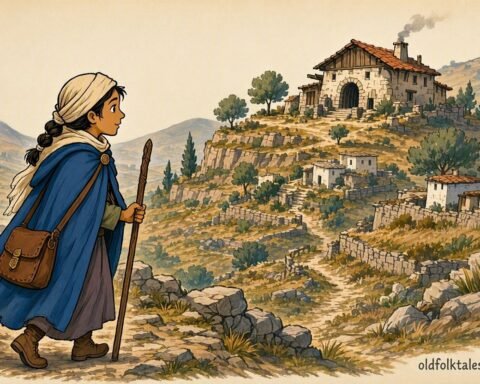
In the green hills and coastal farming villages of northern Algeria, where olive groves stretch across stone terraces and the wind carries the scent of earth and sea, trees are not seen as simple crops.
They are companions of the land.
Click here to explore more Central African folktales
Among Kabyle and coastal farming communities, the olive tree in particular holds deep meaning, symbolizing endurance, patience, and quiet strength.
This is the story of Lalla Aicha, a village woman whose unseen kindness helped a forgotten tree bring life back to an entire community.
A Village That Knew Hard Seasons
There was once a small village nestled between rocky hills and cultivated fields.
Life there was shaped by the rhythm of rain, soil, and harvest. Some years were generous, others difficult. The people depended heavily on their olive trees, which provided both food and oil, sustaining families through long seasons.
But one year, something changed.
A particular olive tree on the edge of the village began to weaken.
Its leaves turned pale.
Its branches became dry.
And slowly, people began to forget it.
The Tree That Was Left Behind
Most villagers passed it without notice.
Some said it was dying.
Others believed it had lost its blessing.
A few even suggested it should be cut down to make space for healthier trees.
But among them was one woman who did not agree.
Her name was Lalla Aicha.
She was known quietly in the village, not for wealth or power, but for wisdom and care.
She often observed things others overlooked.
And when she looked at the dying olive tree, she did not see an end.
She saw something waiting.
A Secret Decision
One evening, when the village had grown quiet, Lalla Aicha walked to the forgotten tree.
She stood before it for a long time.
The wind moved gently through its branches, but there was little life left in its leaves.
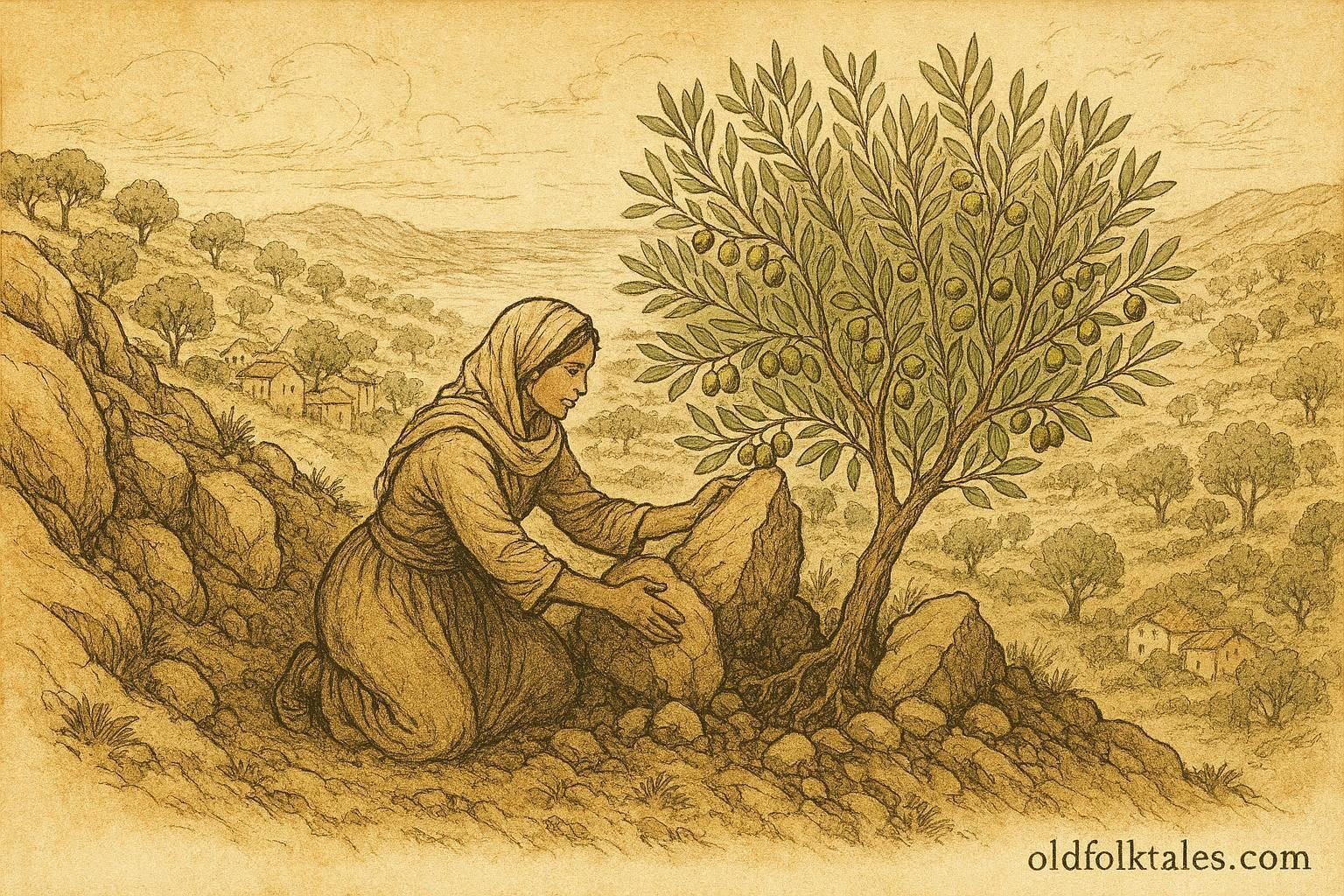
Still, she placed her hand on its trunk.
And made a decision.
Without telling anyone, she began to care for it.
She brought small amounts of water during dry hours.
She cleared stones from its roots.
She spoke softly near it as she worked, as if reminding it that it was not alone.
It was not done for praise.
Not for recognition.
But because she believed the tree still had something to give.
The Village Does Not Notice
Days turned into weeks.
Weeks into seasons.
The village continued its routines.
No one paid attention to the corner where the old tree stood.
Some even forgot it existed entirely.
But Lalla Aicha did not.
Each day, she returned quietly.
Each day, she tended to it without expectation.
And slowly, something began to change.
Not quickly.
Not dramatically.
But steadily.
Signs of Retur
One morning, as she approached the tree, Lalla Aicha noticed something new.
A small green shoot.
Barely visible among the branches.
Then another.
Then more.
The tree was not dead.
It was recovering.
She smiled quietly to herself, but said nothing to the village.
Some things, she believed, must grow in silence before they are spoken about.
The Tree Becomes Alive Again
Over time, the olive tree began to transform.
Its leaves returned with deeper color.
Its branches strengthened.
And eventually, small olives began to appear.
It was no longer dying.
It was becoming alive again.
Still, Lalla Aicha kept it to herself.
She continued her care.
She continued her silence.
And she waited.
The Village Discovers the Change
One day, a child wandering near the edge of the village noticed the tree.
“Look,” the child said. “It has fruit.”
Others came closer.
What they saw surprised them.
The tree they had ignored was now full of olives.
Healthy.
Abundant.
Alive.
Whispers spread quickly.
“How did this happen?”
“Who cared for it?”
People turned toward Lalla Aicha.
She did not speak immediately.
She simply looked at the tree.
The Truth Revealed
When asked, she answered simply.
“It was never gone,” she said. “It was only waiting.”
The villagers stood in silence.
Many had walked past it without care.
Some had suggested removing it entirely.
Yet here it stood, restored.
One elder finally spoke.
“This is not just a tree,” he said. “It is a reminder.”
A reminder that neglect does not always mean the end.
And that care, even unseen, can restore what seems lost.
Shared Prosperity
As the harvest season came, the tree produced more than expected.
Its olives were collected carefully and shared among the villagers.
Not only from that tree, but across all fields, something seemed to shift.
People began to pay more attention to what they had previously ignored.
They began to care for neglected spaces.
They began to notice small signs of life they had once dismissed.
And slowly, the village changed.
Not because of sudden wealth.
But because of renewed awareness.
Lalla Aicha’s Quiet Legacy
Lalla Aicha never claimed credit.
She never asked for recognition.
When people spoke of the tree, she simply continued her daily life.
But in the village, her quiet actions became part of its memory.
She was not seen as someone who changed nature.
But as someone who listened to it.
And responded when others did not.
Want to dive deeper? Read more North African folktales today
Moral Lesson
True kindness does not seek recognition. Patience and quiet care can restore life where others see loss, and harmony with nature brings lasting abundance.
Knowledge Check
- What is “Lalla Aicha and the Hidden Olive Tree” about?
It is an Algerian folktale about a woman who secretly nurtures a dying olive tree until it becomes fruitful again. - Why did others ignore the olive tree?
They believed it was dying and no longer valuable to the village. - How did Lalla Aicha help the tree?
She quietly cared for it by watering, clearing its base, and nurturing it regularly. - What was the result of her actions?
The olive tree recovered and eventually produced abundant fruit for the village. - What theme does this story emphasize?
It highlights hidden kindness, patience, and harmony with nature. - What lesson does this Algerian folktale teach?
It teaches that quiet care and patience can restore life and bring unexpected blessings.
Source: African folktale, Algeria.
Adapted from Kabyle oral storytelling traditions and later recorded in 20th-century Algerian folklore anthologies (1930–1960).
Cultural Origin: Northern Algeria (Kabylie and coastal farming communities)