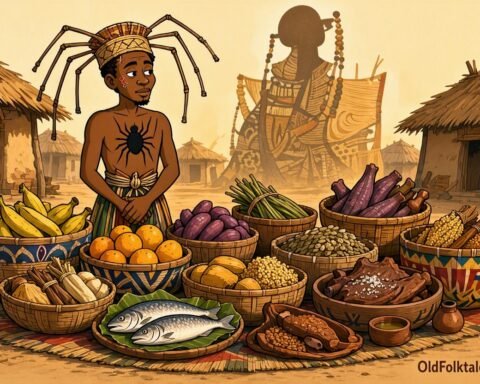
Long before modern cities spread across the coastline of Ghana, Elmina stood as one of the most important trading towns along the Atlantic shore. Canoes moved constantly across the waters while merchants from different regions filled the streets near the coast. Fishermen returned each morning with heavy nets, traders negotiated beneath crowded market shelters, and messengers traveled between powerful families carrying news that could change alliances overnight.
Elmina was a town built on movement and information.
The sea connected the people to distant places, but it also brought tension, rivalry, and political uncertainty. Coastal leaders competed for influence over trade routes, and secret agreements were often made behind closed doors. Trust could disappear as quickly as the tide.
Among the people of Elmina, there existed an old belief whispered quietly during times of unrest.
According to the elders, betrayal never arrived unnoticed.
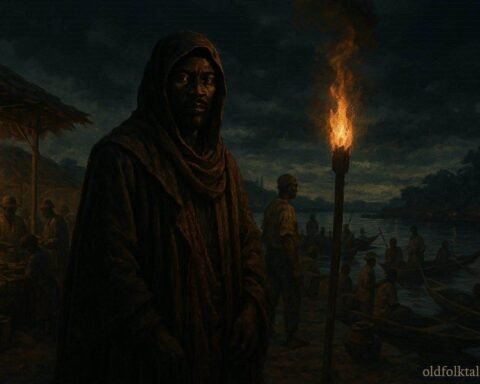
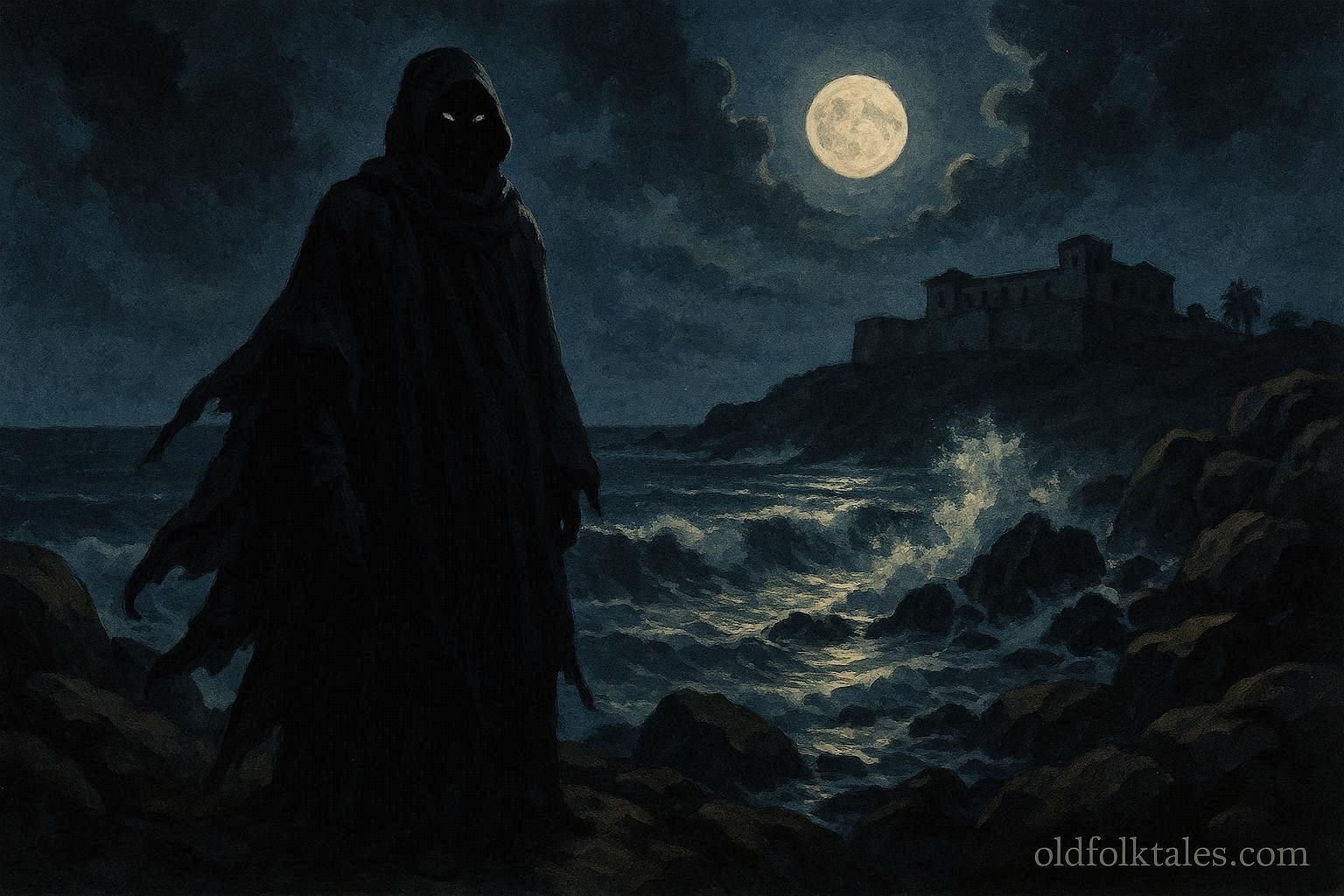
Before major acts of deception or political treachery, a strange figure appeared somewhere near the town. Some described him as tall and silent, dressed in dark cloth that moved strangely in the wind. Others claimed his face was never clearly visible. Fishermen spoke of seeing him standing near the rocks before storms. Traders sometimes reported glimpsing him at the edge of crowded markets moments before disputes erupted.
Don’t stop yet! See our complete East African folktales collection
The people called him the Shadow Messenger.
No one knew exactly who or what he was.
Some believed he was a spirit connected to the ancestors of the coast. Others insisted he was only a story invented to explain misfortune and political conflict. Yet the stories surrounding him continued across generations because too many strange events seemed connected to his appearance.
During one particularly tense period in Elmina’s history, these stories became impossible to ignore.
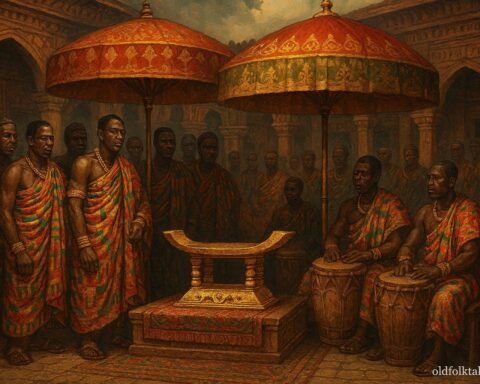
At that time, the coastal town was governed by several influential families whose alliances maintained peace and stability within the region. One of the most respected among them was Chief Kweku Badu, an experienced leader known for his calm judgment and careful diplomacy.
Chief Badu understood the dangers surrounding coastal politics.
Trade along the Atlantic had brought prosperity, but it also attracted greed and rivalry. Competing interests constantly threatened the balance between powerful families, traders, and outside influences arriving through the sea.
To maintain peace, Chief Badu relied heavily on trusted messengers and advisors.
Among them was a young man named Ebo.
Ebo served within the chief’s household and carried messages between important leaders along the coast. He was intelligent, observant, and ambitious. Many people believed he would one day become one of the chief’s most important advisors.
But ambition can quietly reshape loyalty.
Over time, Ebo became frustrated with his position. He watched wealthy traders gain influence while younger men received opportunities he believed he deserved. Although Chief Badu trusted him completely, Ebo secretly began meeting with rival political figures hoping to increase his own power.
At first, the meetings remained harmless conversations.
Then they became dangerous.
One evening, while returning from a secret gathering near the harbor, Ebo noticed something unusual.
A man stood motionless beside the narrow coastal path leading toward the town.
The stranger wore dark cloth that shifted strangely beneath the moonlight. His face remained hidden in shadow despite the open sky above him.
Ebo slowed his steps uneasily.
The figure said nothing.
For several moments, the two simply faced one another beside the crashing waves below the cliffs.
Then the stranger raised one hand slowly and pointed toward the town before disappearing into the darkness between the rocks.
Ebo’s heart raced.
He searched the area immediately but found no trace of the figure.
The next morning, whispers spread through parts of Elmina.
Several fishermen claimed they had also seen the Shadow Messenger near the shore during the night.
Elders grew uneasy.
Whenever stories of the messenger resurfaced, people expected trouble to follow.
Chief Badu himself heard the rumors but remained calm.
“Fear grows easily during uncertain times,” he told his advisors.
Yet strange events soon began unfolding across the town.
Private discussions between political families somehow became known to rivals. Trade agreements collapsed unexpectedly. Trusted allies accused one another of secrecy and manipulation. Suspicion spread rapidly through the coastal leadership.
Meanwhile, Ebo’s involvement with rival factions deepened.
He secretly passed information about the chief’s plans to powerful merchants seeking greater influence over regional trade. In return, they promised him wealth and authority once Chief Badu’s position weakened.
But despite his growing confidence, Ebo could not forget the figure he had encountered near the cliffs.
Days later, he saw the Shadow Messenger again.
This time the figure appeared near the market shortly before a violent argument broke out between two important trading groups. Panic spread quickly as accusations turned into fighting. Goods were destroyed, and several merchants were injured before order returned.
Again, the messenger vanished before anyone could approach him.
Fear now gripped the town.
Some elders warned that Elmina stood on the edge of serious betrayal. Families began watching one another carefully. Meetings grew tense. Trust weakened.
Chief Badu finally ordered a private investigation into the growing unrest.
Slowly, evidence began pointing toward hidden communication between rival factions inside the town. Several suspicious messages were intercepted near the harbor. One captured messenger eventually revealed Ebo’s involvement.
The discovery shocked the chief deeply.
Ebo had been among his most trusted servants.
When confronted before the council, Ebo initially denied everything. But as evidence mounted against him, his confidence collapsed. He confessed to secretly sharing information in exchange for promises of wealth and influence.
The betrayal sent waves of anger through Elmina.
Many people believed the appearance of the Shadow Messenger had been a warning all along.
Ebo himself became terrified.
“The messenger knew,” he whispered repeatedly during questioning. “He appeared before every disaster.”
Some believed the mysterious figure had exposed hidden betrayal before it could completely destroy the town. Others argued the messenger represented the guilt and fear carried by those involved in deception.
No one truly knew the answer.
After the scandal, Chief Badu worked carefully to rebuild trust among the coastal families. Stricter protections surrounded political communication, and public ceremonies were held to restore unity within the town.
Yet the story of the Shadow Messenger survived long afterward.
Generations later, elders in coastal communities still spoke about the mysterious figure said to appear before moments of betrayal or political disaster. Fishermen claimed they sometimes glimpsed him standing near the rocks during troubled times, watching silently as waves crashed against the shore.
And according to old belief, those who ignore the warnings hidden within shadows often discover danger too late.
Click here to discover more legendary tales from West Africa
Moral Lesson
Betrayal may remain hidden for a time, but truth and consequence eventually reveal it.
Knowledge Check
- What was Elmina known for?
Elmina was an important coastal trading town in Ghana. - Who was the Shadow Messenger?
He was a mysterious figure believed to appear before betrayal or disaster. - Who was Ebo?
Ebo was a trusted messenger who secretly betrayed Chief Badu. - Why did Ebo betray the chief?
He wanted wealth, influence, and political power. - What happened after Ebo’s betrayal was discovered?
The town experienced fear, conflict, and efforts to rebuild trust. - What did the people believe about the Shadow Messenger?
Many believed he warned the town before acts of betrayal occurred.
Source
Ghanaian coastal folklore. Adapted from Fante oral traditions documented in coastal Ghana historical archives and ethnographic studies.