In the powerful kingdoms of the Akan people, leadership was not carried by kings alone. Behind every respected ruler stood the queen mother, a woman whose wisdom, influence, and authority shaped the future of the royal family and the stability of the kingdom itself. She advised chiefs, settled disputes, guided royal succession, and protected the traditions passed down through generations.
Among the royal regalia of the court, one object carried unusual importance.
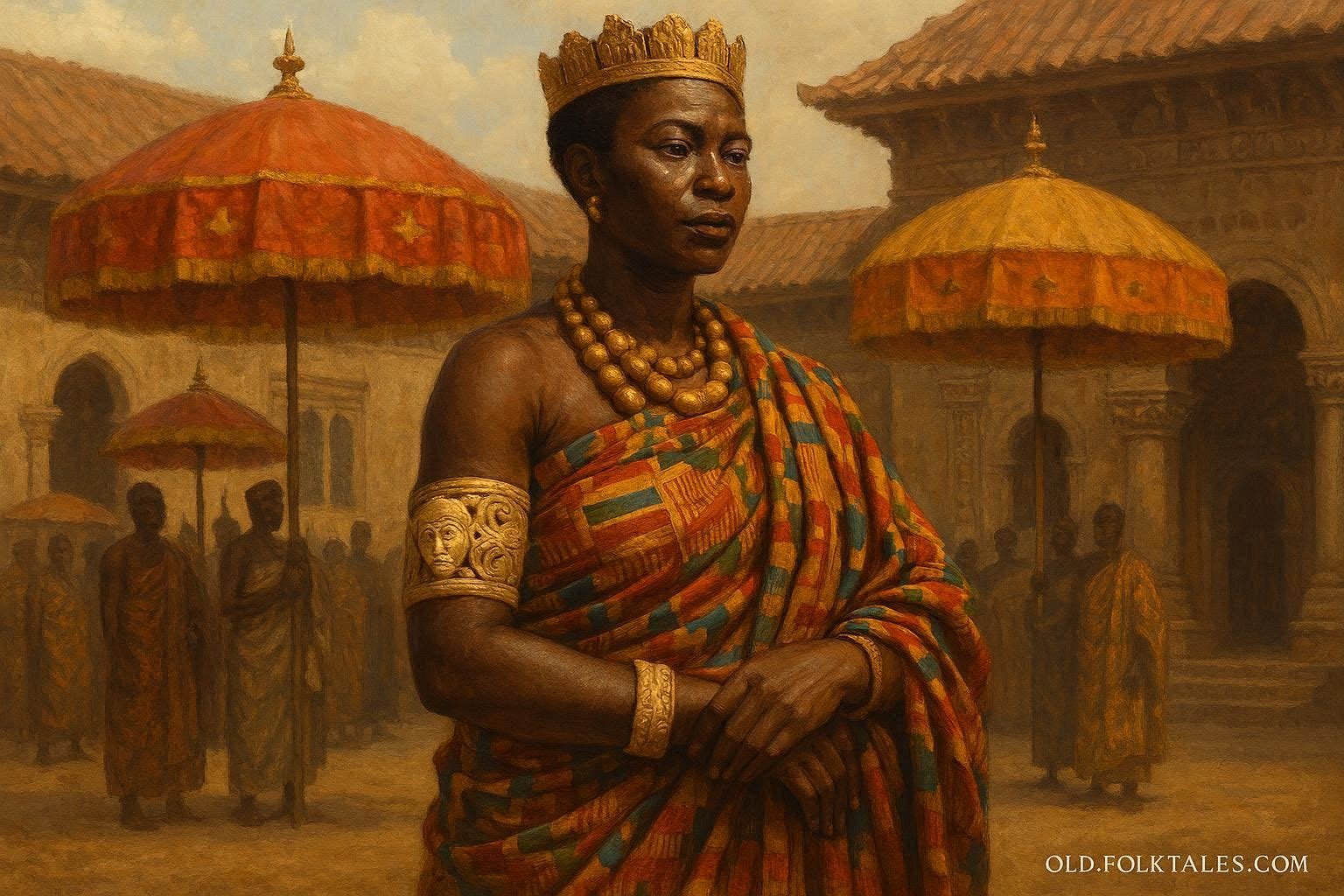
It was an ivory bracelet worn only by the queen mother during major ceremonies and council gatherings. The bracelet was beautifully carved from polished ivory and decorated with ancient symbols connected to wisdom, lineage, and responsibility. According to tradition, the bracelet represented not simply power, but the moral authority required to guide the kingdom wisely.
People believed the bracelet carried the memory of past queen mothers.
Each generation passed it carefully to the next female leader chosen by the royal family. During festivals, the sight of the ivory bracelet reminded the people that leadership required balance, discipline, and service to the community.
For many years, the bracelet remained protected inside the royal palace of Adanwomase, a respected Akan town known for its skilled craftsmen and strong traditions.
Fascinated by this tale? Discover more North African folktales
At that time, the queen mother was Nana Afia Serwaa.
She was admired throughout the kingdom for her intelligence and calm judgment. Chiefs from nearby communities often sought her advice during conflicts, and many trusted her ability to resolve disputes peacefully.
Nana Afia valued unity above personal ambition.
“The strength of a kingdom,” she often told the royal council, “depends on the wisdom of those who guide it.”
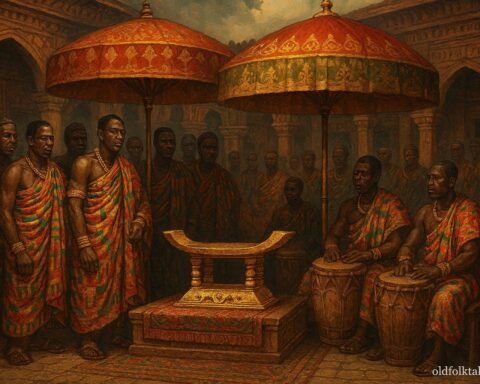
During important gatherings, she wore the ivory bracelet proudly while sitting beside the chief beneath the ceremonial umbrellas of the court. The people respected the symbol deeply, and younger women viewed it as a reminder of honorable leadership.
But not everyone within the palace admired the queen mother’s influence.
Among the royal relatives was a woman named Akosua Dapaa, a distant member of the ruling family who believed she deserved greater authority within the court. Akosua was intelligent and ambitious, but she often felt overlooked during political discussions and ceremonies.
Over time, jealousy quietly grew inside her.
She convinced herself that the ivory bracelet represented power unfairly denied to her. The more she watched Nana Afia receive respect from elders and chiefs, the more resentment she carried in silence.
One year, preparations began for the great Yam Festival, one of the most important celebrations in the kingdom. Chiefs, traders, musicians, and visitors traveled from surrounding communities to participate in the ceremonies. The palace became filled with activity as drummers rehearsed, craftsmen prepared decorations, and royal attendants organized sacred regalia for the event.
The ivory bracelet was placed carefully inside the royal treasury chamber several days before the festival.
Only a few trusted attendants knew its location.
On the morning before the ceremony, disaster struck.
When the treasury guardians opened the chamber, the ivory bracelet was gone.
Panic spread through the palace immediately.
Royal attendants searched every room repeatedly, but the bracelet could not be found. News of its disappearance quickly reached the council elders, who understood the seriousness of the situation.
The loss of ordinary jewelry might cause concern.
But the disappearance of the queen mother’s bracelet threatened something far greater.
Without the sacred regalia, the upcoming ceremony could not proceed properly. Worse still, many feared the disappearance symbolized division or instability within the royal household itself.
Rumors spread rapidly through the town.
Some people whispered that rival kingdoms had stolen the bracelet to weaken Akan authority. Others believed spiritual forces were punishing the royal family for hidden wrongdoing.
Meanwhile, Nana Afia remained unusually calm.
Though deeply troubled, she refused to allow fear to control the court.
“The bracelet matters,” she told the elders, “but wisdom matters more. Panic will destroy us faster than loss.”
Still, tension continued growing.
Several palace servants were questioned. Guards defended themselves angrily against accusations of negligence. Distrust spread quietly through the royal household.
Unknown to everyone, Akosua Dapaa had secretly taken the bracelet herself.
At first, she only intended to hide it temporarily. She wanted the palace to experience confusion and weakness without Nana Afia’s symbol of authority. Deep inside, she hoped the crisis might create an opportunity for her own influence to grow.
But as fear and suspicion spread through the kingdom, Akosua’s confidence began to collapse.
The atmosphere inside the palace changed completely.
People who once trusted one another now exchanged cautious looks. Elders argued during council meetings. Even ordinary citizens became anxious as rumors multiplied throughout the markets.
Akosua had not expected the bracelet’s disappearance to create such deep instability.
Several nights later, she secretly removed the bracelet from its hiding place, intending to return it quietly before anyone discovered the truth.
But as she crossed one of the palace courtyards beneath the moonlight, she encountered Nana Afia standing alone near the royal garden.
Akosua froze immediately.
The queen mother looked directly at her.
For several silent moments, neither woman spoke.
Then Nana Afia noticed the wrapped cloth trembling slightly within Akosua’s hands.
Understanding came instantly.
Yet instead of calling the guards or raising alarm, Nana Afia spoke calmly.
“Power taken through jealousy never brings peace,” she said quietly.
Akosua lowered her head in shame.
Tears filled her eyes as the weight of her actions finally overwhelmed her.
“I only wanted to matter,” she whispered.
Nana Afia stepped closer.
“You already mattered,” she replied gently. “But leadership is not proven by possessing symbols. It is proven by protecting the people.”
The following morning, the bracelet was returned to the royal treasury.
The court publicly announced that the sacred object had been recovered safely, though the full truth of the incident remained known only to a small group of elders. Nana Afia chose mercy over humiliation, believing public disgrace would deepen division within the royal family.
Instead, Akosua was quietly removed from political responsibilities and placed under the guidance of senior women within the palace to learn discipline and humility.
The Yam Festival proceeded successfully, and the queen mother once again wore the ivory bracelet before the gathered kingdom.
But after the ceremony, Nana Afia addressed the people with an important message.
“This bracelet is not powerful because it is ivory,” she declared. “Its meaning comes from the wisdom, honesty, and unity we choose to protect together.”
The elders nodded in agreement.
From that time forward, the story of the missing ivory bracelet became part of Akan oral tradition. It reminded future generations that symbols of leadership carry value only when guided by integrity and responsibility.
And throughout the kingdom, people remembered that true authority cannot survive where jealousy and division are allowed to grow.
Want more? Read more West African folktales now
Moral Lesson
Leadership is sustained by wisdom and integrity, not by symbols of power alone.
Knowledge Check
- What did the ivory bracelet symbolize?
It symbolized female authority, wisdom, and royal leadership. - Who was Nana Afia Serwaa?
She was the respected queen mother of the Akan kingdom. - Why did Akosua Dapaa steal the bracelet?
She felt jealous and wanted greater influence within the royal court. - How did the bracelet’s disappearance affect the kingdom?
It created fear, suspicion, and political tension within the palace. - Why did Nana Afia choose mercy instead of punishment?
She believed public humiliation would increase division in the kingdom. - What lesson did the people learn from the missing bracelet?
True leadership depends on integrity, unity, and wisdom.
Source
Ghanaian royal folklore. Adapted from Akan court traditions and material culture archives documented in Ghanaian royal regalia studies.