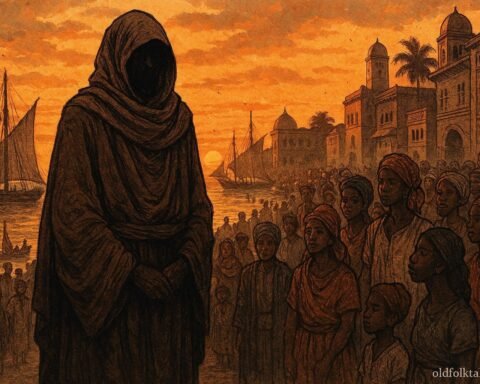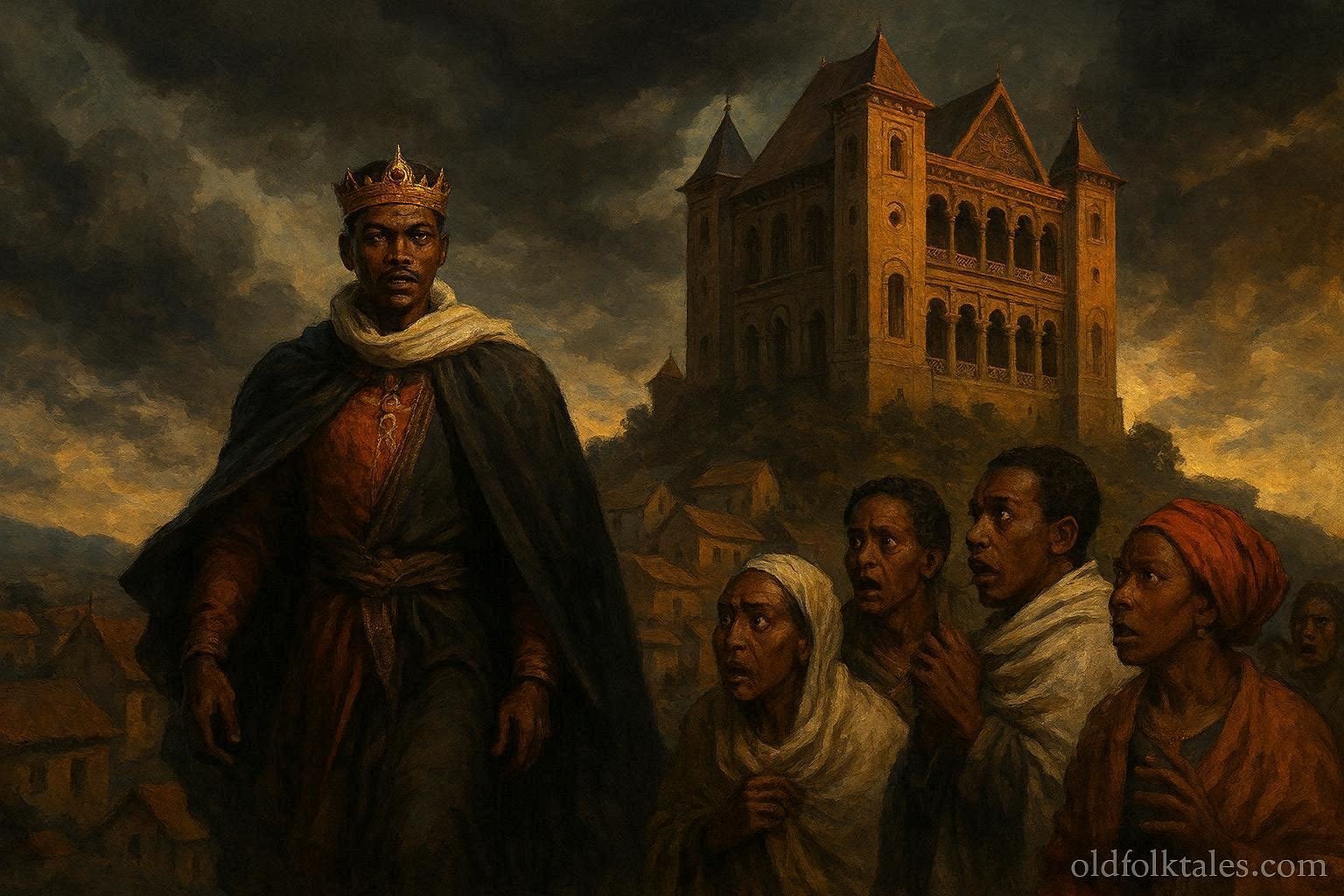
Long ago in the central highlands of Madagascar, the royal city of Antananarivo stood as the heart of Merina political power. Palaces overlooked the hills, royal compounds guarded sacred traditions, and nobles gathered within the kingdom’s courts to debate matters of leadership, inheritance, and loyalty.
The stability of the kingdom depended greatly on royal succession.
Every royal birth carried political importance, and rival noble families watched carefully whenever questions about inheritance emerged within the palace. Behind ceremonies and public celebrations, hidden tensions often shaped the future of the kingdom itself.
Among the most remembered stories from Merina oral tradition was the legend of the Lost Prince of Antananarivo.
According to the tale, the kingdom was once ruled by a respected sovereign named Andriamanelo, whose authority united several rival regions during a difficult period of unrest. Though wise and experienced, the ruler faced growing political pressure because powerful nobles within the court competed constantly for influence over the future of the throne.
Explore the wisdom and wonder of North African folktales
At the center of these tensions was the king’s only son.
The young prince, named Ralambo, was born during a season many royal diviners considered spiritually significant. Elders predicted the child would eventually shape the destiny of the kingdom in extraordinary ways.
Some welcomed the prophecy.
Others feared it.
Certain noble families worried that once Ralambo matured, their own political influence would weaken permanently. Rivalries within the court slowly deepened as the prince grew older.
Then disaster struck.
One night during a violent storm that covered Antananarivo in darkness and heavy rain, the young prince disappeared mysteriously from the royal compound.
Panic spread immediately through the palace.
Royal guards searched throughout the city and surrounding hills, but no trace of the child could be found. Rumors spread rapidly among the people. Some believed kidnappers connected to rival nobles had taken him. Others whispered that spiritual forces or enemies of the throne were responsible.
Despite years of searching, the prince never returned.
Eventually, many accepted that he was dead.
Without a clear heir, political instability increased across the kingdom. Different noble factions attempted strengthening their own claims to influence while uncertainty surrounded the future of royal succession.
As years passed, the disappearance of the prince became part of oral tradition itself.
Stories about him spread across Madagascar.
Some travelers claimed to have seen a young noble living secretly among distant villages. Others insisted the prince had escaped assassination and survived in exile beyond the highlands.
But no one knew the truth.
Meanwhile, Antananarivo itself changed dramatically.
After the death of King Andriamanelo, powerful advisers and noble families competed openly for authority. Rivalries divided the royal court while ordinary people worried about conflict spreading across the kingdom.
It was during this period of unrest that a mysterious traveler arrived at the gates of Antananarivo.
The man appeared young but carried himself with unusual confidence and dignity. Though dressed simply like an ordinary traveler, he spoke the refined language of the royal court and possessed detailed knowledge about palace customs known only to those raised within noble circles.
His arrival immediately attracted attention.
Most unusual of all, he wore around his neck a small royal charm recognized by older palace servants as belonging to the missing prince himself.
Whispers spread quickly through the city.
Could the lost prince truly have returned after so many years?
The traveler gave his name simply as Ralambo.
Many dismissed the claim immediately.
Some nobles accused him of deception, believing he sought political advantage during a dangerous moment of instability. Others, however, became uneasy because the stranger knew details about the royal family impossible for outsiders to learn easily.
Among those most disturbed was a powerful court adviser named Rainiharo.
For years, Rainiharo had gained influence within the kingdom partly because the prince’s disappearance removed a direct royal heir from succession disputes. If the missing prince truly lived, the balance of political power could change completely.
The adviser demanded proof.
Before the royal council, Ralambo calmly answered questions about palace events, family traditions, sacred ceremonies, and private memories connected to the late king. Several elderly servants became visibly emotional hearing him speak.
Still, doubt remained.
Then Ralambo revealed the secret he had carried for years.
According to his account, he had not disappeared accidentally.
On the night of the storm, trusted guards secretly removed him from the palace after learning of a plot by certain nobles to eliminate the royal heir permanently during the growing political crisis. To protect the child, loyal servants fled with him beyond the kingdom and raised him in secrecy among distant communities.
Most of those protectors later died before revealing the truth publicly.
Only after hearing news of renewed unrest within Antananarivo did Ralambo decide to return.
The revelation shocked the royal court.
Several older nobles exchanged fearful looks while others demanded investigation into the accusations. Rumors about past betrayals spread rapidly through the kingdom.
Rainiharo immediately denounced the story as manipulation.
But tension continued growing because many people believed the returned prince carried himself with undeniable royal authority.
The kingdom stood dangerously divided.
Some supported Ralambo’s claim, hoping his return could restore legitimate leadership and stability. Others feared civil conflict if rival factions refused to accept him.
As uncertainty deepened, an elderly royal historian named Razafindrabe requested permission to examine ancient palace records and sacred family relics preserved since the prince’s disappearance.
After days of investigation, the historian appeared before the council carrying a sealed royal document hidden years earlier during the crisis.
Inside was testimony from palace guards confirming the existence of a plot against the child prince.
Silence filled the court.
The evidence transformed everything.
Though some rivals still resisted, the people increasingly accepted that the missing prince had truly returned after surviving years of exile.
Yet Ralambo himself surprised the kingdom.
Instead of demanding revenge against rival families, he called publicly for reconciliation and unity.
“A kingdom divided by fear destroys itself,” he declared before the court. “The future cannot survive if the past controls every decision.”
His response strengthened public support dramatically.
Gradually, peace negotiations began between rival factions, and Antananarivo avoided the civil conflict many feared.
For generations afterward, the legend of the Lost Prince of Antananarivo survived within Merina oral tradition as a story about exile, legitimacy, hidden truth, and the fragile nature of political power.
The tale reminded future rulers that authority built through fear and conspiracy rarely remains secure forever.
And according to old storytellers, the hills surrounding Antananarivo still remember the prince who vanished during a storm only to return when the kingdom needed him most.
Looking for more? Explore the magic of East African folktales here
Moral Lesson
Truth and legitimate leadership eventually rise again even after years of secrecy and political deception.
Knowledge Check
- Where did the story take place?
The story took place in Antananarivo, the royal center of the Merina kingdom. - Who was the lost prince?
The missing royal child was Prince Ralambo. - Why did the prince disappear?
Loyal guards secretly removed him to protect him from a political plot. - Why did his return create tension?
His return threatened the power of rival noble families. - How was the prince’s identity confirmed?
Ancient palace records and witnesses supported his story. - What lesson does the story teach?
Truth and rightful leadership can survive even through exile and deception.
Source
Madagascan royal folklore. Adapted from Merina royal oral histories preserved in Malagasy historical folklore collections.