Across the wide grasslands and river-fed valleys of the Sankuru region in central Democratic Republic of Congo, life has always depended on the rhythm of rain. The land fed villages, forests, and hunting grounds, but when the skies remained silent for too long, even the strongest communities began to weaken.
Rivers shrank.
Crops failed.
And hunger slowly spread through the plains.
Among the Tetela people, rain was never seen as ordinary weather. It was a sacred gift controlled through the balance between the living world and the ancestors. Only those chosen through spiritual signs could appeal to the forces believed to govern the skies.
In one such season of severe drought, the Sankuru Plains suffered longer than anyone could remember.
For many moons, no rain fell.
The earth cracked under the sun, and villages began to argue over remaining water sources. Even elders who once guided ceremonies with confidence began to fear that the ancestors had turned away.
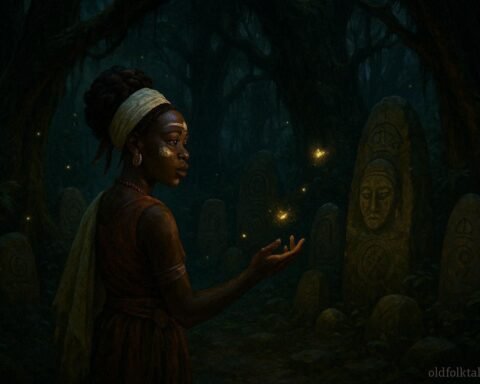
At the center of this growing crisis lived a young woman named Nalia, daughter of a respected lineage tied to traditional spiritual service.
If you enjoyed this story, explore our full West African folktales collection
Nalia was not a warrior.
She was not a political leader.
But she carried something unusual.
Since childhood, she was said to dream of rainfall long before clouds appeared. Villagers often noticed that after her dreams, distant winds would rise, even when the sky looked empty.
At first, these signs were ignored.
But as the drought worsened, the elders gathered to interpret the meaning behind them.
After consulting sacred traditions, they concluded that Nalia had been chosen by ancestral forces to become the Rain Queen of the Sankuru Plains.
The responsibility was not symbolic.
It was spiritual.
She would need to perform rituals known only through oral transmission, passed carefully from generation to generation by those who once guided rainfall ceremonies.
When the announcement was made, the village reacted with mixed emotions.
Some believed she was the land’s only hope.
Others feared placing such responsibility on someone so young.
Nalia herself did not speak for a long time.
The weight of expectation pressed heavily on her, especially knowing that failure could deepen suffering across the entire region.
Before beginning the rituals, she visited the riverbank where her grandmother once performed ceremonies during earlier drought cycles.
There, she was taught the forgotten steps.
The offerings.
The chants.
And the silence required before calling upon ancestral forces.
For three days and three nights, Nalia prepared without interruption. She fasted, observed sacred silence, and learned the ancient songs believed to open communication between the living and the spiritual world of the ancestors.
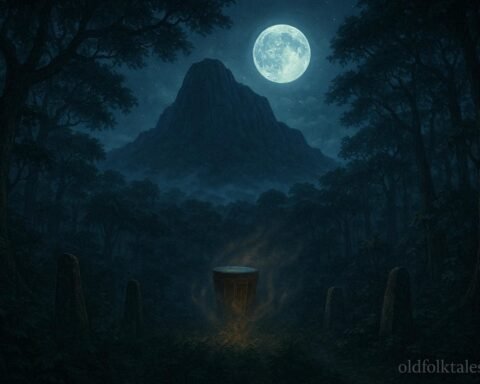
On the fourth night, under a sky filled with unbearable stillness, the entire village gathered at the ceremonial ground overlooking the plains.
Drums were not played.
Fire was kept low.
Even conversation was reduced to whispers.
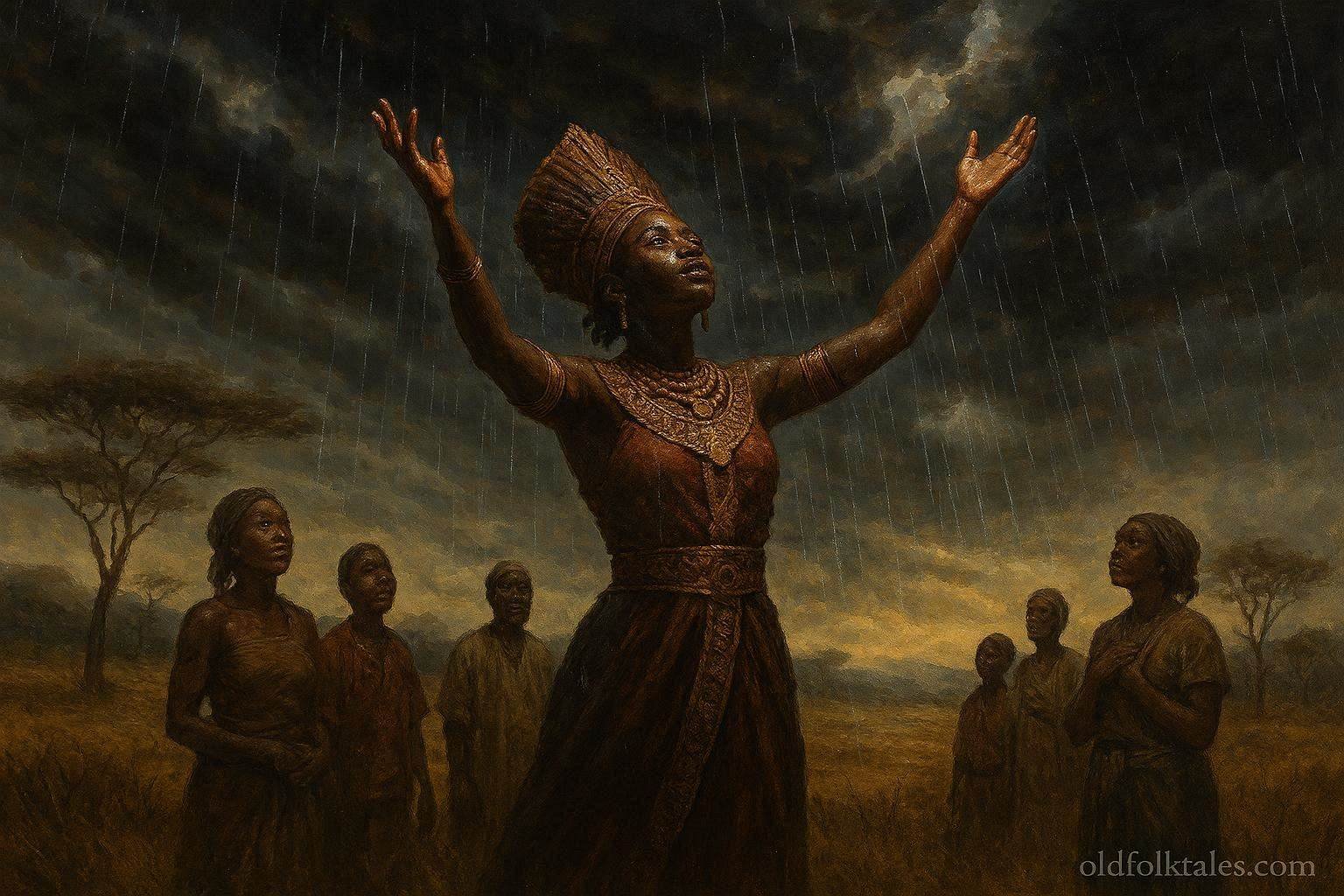
Nalia stood alone at the center of the circle.
She raised her hands toward the empty sky and began the ritual chant.
At first, nothing happened.
The air remained hot and unmoving.
Some villagers began to lose hope.
But Nalia continued without stopping, following every instruction exactly as she had been taught, trusting the ancestors would respond in their own time.
Then something changed.
A distant wind moved across the plains.
It was weak at first, almost unnoticeable.
Then stronger.
Leaves began to shake in the surrounding trees.
The silence of the night shifted.
From far beyond the horizon, a deep sound rolled across the land like distant drums hidden inside the sky.
Clouds slowly gathered above the Sankuru Plains, thickening and spreading until they covered the stars completely.
A few villagers fell to their knees in disbelief.
Nalia remained standing, continuing the final part of the ritual until the first drop of rain touched the ground.
Then another.
And another.
Soon, rain began to fall across the entire plains, growing heavier until the dry earth softened and rivers began to swell once again.
The drought had ended.
For days, rain continued, restoring life to fields, forests, and rivers.
But what the people remembered most was not only the return of water.
It was the silence before it arrived.
The discipline.
The faith.
And the courage of the young queen who stood alone between her people and despair.
From that time onward, Nalia became known as the Rain Queen of the Sankuru Plains.
Not as a ruler of power.
But as a guardian of balance between humanity and the ancestral world.
And even today, among the Tetela people, elders say that when the Sankuru sky grows unusually quiet for too long, it is because the land is waiting for someone with pure faith to speak to the ancestors again.
Keep reading: Discover more Central African folktales
Moral Lesson
True leadership requires faith, patience, and responsibility, especially in times of crisis.
Knowledge Check
- Where is the story set?
It is set in the Sankuru Plains of the Democratic Republic of Congo. - Why was the Rain Queen needed?
The land was suffering from a severe drought. - Who was Nalia?
She was a young woman chosen to perform rainmaking rituals. - What did the villagers believe about rain?
They believed rain was controlled through ancestral spiritual balance. - What happened during the ritual?
Clouds formed and rain eventually fell across the entire plains. - What lesson does the story teach?
Faith and responsibility can restore balance in times of hardship.
Source
Central African folklore. Adapted from Tetela rainmaking traditions documented in Sankuru ritual and anthropological studies of the Democratic Republic of Congo.