In Central Africa, within what is now the Democratic Republic of Congo, the Kuba Kingdom developed one of the most organized and respected traditional systems of governance in the region. The society was structured in a way that balanced authority between the king and a wide network of council elders, clan representatives, and court officials. This structure ensured that leadership was not concentrated in one individual but shared across different levels of responsibility within the kingdom.
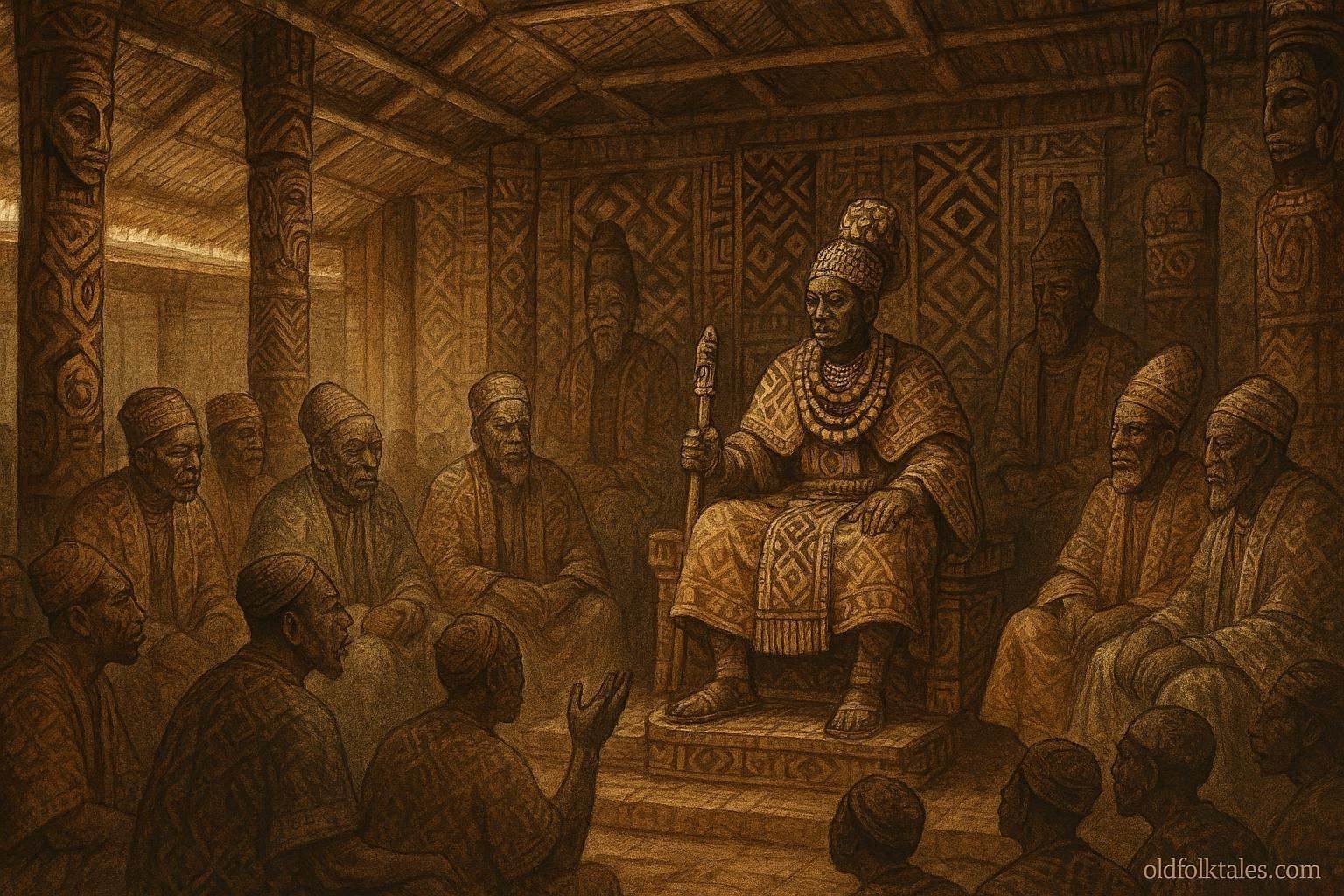
At the heart of this system stood the royal court, which functioned as the central institution for decision-making, justice, and cultural preservation. The king, known as the Nyim, held a position of high respect and symbolic authority. He was seen as the unifying figure of the kingdom, representing both political leadership and spiritual continuity. However, his authority operated within a system of consultation and balance, meaning that he did not govern in isolation.
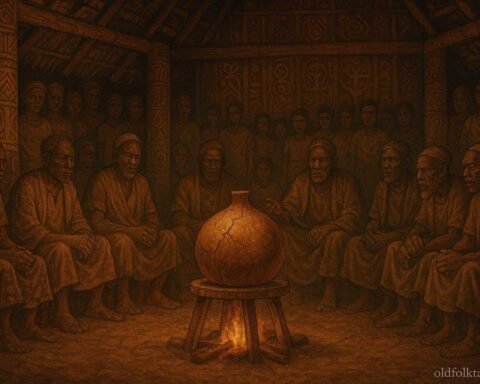
Council elders played a critical role in this system. They were chosen from different clans and regions within the kingdom to ensure fair representation. These elders acted as advisors, judges, and guardians of tradition. Their responsibility was to ensure that decisions made by the court reflected the values and customs of the Kuba people. Through regular gatherings, they discussed matters affecting the kingdom and contributed to shaping collective decisions.
Don’t stop yet! See our complete East African folktales collection
The royal court was more than a governing body. It was a structured space where the identity of the kingdom was actively maintained. Every gathering at the court followed established customs that had been passed down through generations. These customs guided how people spoke, how disputes were presented, and how decisions were reached. The system valued order, patience, and careful reasoning over speed or individual emotion.
When disputes arose between individuals, families, or entire communities, the matter was brought before the court. Each side was given the opportunity to present their account fully and without interruption. Elders listened attentively, often asking detailed questions to clarify facts and uncover deeper truths. This process ensured that decisions were not based on assumption but on careful understanding of the situation.
Justice in the Kuba Kingdom was not focused solely on punishment. Instead, it aimed to restore balance and harmony within the community. The goal of the court was to resolve conflict in a way that preserved relationships and maintained unity. In many cases, reconciliation was considered more important than strict punishment, as long as fairness was upheld.
The court also played an important cultural role. The Kuba Kingdom was widely known for its artistic traditions, including sculpture, weaving, ceremonial dress, and symbolic design. These artistic expressions were closely connected to the royal court, where ceremonies reinforced cultural identity and reminded the people of their shared heritage. Governance and culture were deeply intertwined, and the court served as the space where both were preserved and expressed.
During times of tension or disagreement, the court system helped prevent conflict from escalating into larger divisions. Because different clans and groups were represented within the council system, there was always a structured way to address grievances. This ensured that disagreements could be resolved through dialogue rather than violence.
The Nyim was expected to uphold moral responsibility in his leadership. While he held significant influence, his decisions were guided and sometimes questioned by council elders. If a decision was considered inconsistent with tradition or fairness, it could be reviewed through formal discussion. This system created accountability and ensured that leadership remained connected to the values of the people.
Over time, this shared system of governance allowed the Kuba Kingdom to maintain stability and continuity. It demonstrated that leadership could be both structured and participatory, combining authority with consultation. The royal court became a symbol of balance, showing how a society could function effectively through cooperation and respect for tradition.
Even today, the legacy of the Kuba Kingdom Court is remembered as an important example of African political organization. It reflects how indigenous systems developed complex and effective methods of governance long before modern state structures were introduced.
If you liked this story, see our Central African folktales collection
Moral Lesson
Leadership is strongest when it is guided by balance, accountability, and respect for tradition.
Knowledge Check
- Where is the story set?
It is set in the Kuba Kingdom in the Democratic Republic of Congo. - Who was the Nyim?
The Nyim was the king and symbolic leader of the Kuba Kingdom. - What was the role of council elders?
They advised the king and ensured decisions followed tradition and fairness. - How were disputes handled?
Through structured hearings where both sides were heard and questioned. - What was the main purpose of the royal court?
It was used for governance, justice, and cultural preservation. - What is the lesson of the story?
Leadership works best when it is shared and guided by tradition and accountability.
Source
Central African folklore. Adapted from Kuba political structure, royal court traditions, and governance systems documented in ethnographic and historical studies of the Democratic Republic of Congo.